

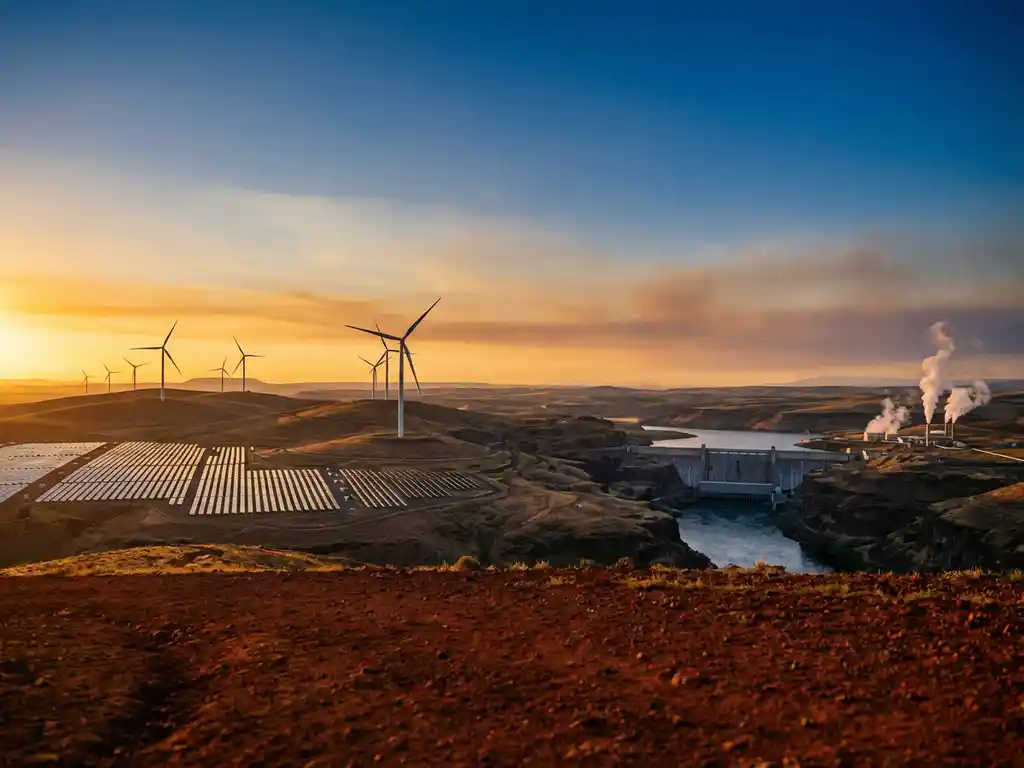
Renewable energy is no longer a niche concept reserved for rooftop solar panels and wind farms. For industrial companies facing mounting pressure to cut emissions, understanding the full landscape of renewable energy options has become a strategic necessity. Whether you’re a sustainability manager in food processing, specialty chemicals, or pulp and paper, the question isn’t just what renewable energy is—it’s which types actually work for your operations.
This guide walks through the seven main types of renewable energy, explains which ones are genuinely suited to industrial heat, and introduces some of the newer technologies—including iron fuel—that are expanding what’s possible for hard-to-decarbonize sectors.
What is renewable energy, and why does it matter for industry?
Renewable energy is energy derived from natural sources that replenish themselves faster than they are consumed. Unlike fossil fuels, which release stored carbon when burned, renewable sources generate power or heat with significantly lower or zero direct carbon emissions. For industry, this matters because heat generation alone accounts for roughly two-thirds of all industrial energy use—and around 80% of that heat still comes from fossil fuels.
Industrial companies sit at the center of the decarbonization challenge. Regulatory frameworks like the EU Emissions Trading System are raising the cost of carbon-intensive operations, while customers and investors are increasingly scrutinizing Scope 1 emissions. Switching to renewable energy isn’t just an environmental choice anymore—it’s a business imperative that directly affects competitiveness, regulatory compliance, and long-term value.
The good news is that the range of viable renewable energy options for industry is growing. Understanding each type helps sustainability managers make informed decisions about which technologies fit their specific processes, infrastructure, and timelines.
What are the seven main types of renewable energy?
The seven main types of renewable energy are solar, wind, hydropower, geothermal, biomass, tidal and wave energy, and green hydrogen. Each harnesses a different natural process to generate electricity or heat, and each comes with its own strengths, limitations, and infrastructure requirements.
- Solar energy — Converts sunlight into electricity via photovoltaic panels or concentrates heat using solar thermal systems. Widely available but intermittent and dependent on geographic location and weather conditions.
- Wind energy — Generates electricity through turbines driven by moving air. Highly scalable at the utility level but equally intermittent and unsuitable for direct heat generation in industrial processes.
- Hydropower — Uses flowing or falling water to generate electricity. One of the most reliable renewable sources, but largely limited by geography and existing infrastructure.
- Geothermal energy — Taps heat stored beneath the earth’s surface. Excellent for consistent, low-carbon heat supply but accessible only in specific geological regions.
- Biomass energy — Burns organic materials such as wood, agricultural residues, or waste to produce heat and electricity. Widely used in industry but raises questions about sustainability and land use.
- Tidal and wave energy — Harnesses the movement of ocean water. Still in the early stages of development and not yet commercially viable at an industrial scale for most applications.
- Green hydrogen — Produced by splitting water using renewable electricity, green hydrogen can be used as a fuel or energy carrier. Promising for industry but currently constrained by cost and infrastructure availability.
Each of these technologies plays a role in the broader energy transition. The challenge for industrial operators is that most of them were developed primarily for electricity generation—which creates a significant gap when the core need is high-temperature heat.
Which types of renewable energy are best for industrial heat?
For industrial heat applications, biomass, geothermal, green hydrogen, and emerging solid-fuel technologies like iron fuel are the most relevant renewable energy types. Solar and wind generate electricity efficiently, but converting that electricity into high-temperature industrial heat introduces significant energy losses and infrastructure costs that make them less practical for many facilities.
Industrial heat demands vary widely. Low-temperature processes—below 100°C—can often be served by solar thermal or heat pumps. Medium-temperature processes up to around 400°C are more challenging. High-temperature processes above 500°C, which are common in food processing, chemicals, and paper manufacturing, require combustion-based or very high-intensity energy sources.
Why biomass has limits
Biomass is currently one of the most widely deployed renewable heat sources in industry. It produces high-temperature heat and can integrate with existing boiler infrastructure. However, its long-term sustainability credentials are increasingly questioned, and supply chains for quality feedstock can be unreliable or geographically constrained.
Why hydrogen faces practical barriers
Green hydrogen is theoretically well suited to high-temperature industrial heat, but in practice, most facilities face real barriers: the need for new pipelines or on-site storage, high production costs, and limited regional availability of green hydrogen supply. For many companies, these constraints push hydrogen solutions years into the future.
This is precisely the gap that newer technologies are being developed to fill—solutions that can deliver carbon-free, high-temperature heat without requiring a complete overhaul of existing infrastructure.
If you’re currently mapping out which renewable heat technology fits your operations, the tool below can help you identify the most relevant options based on your sector and temperature requirements.
How does iron fuel technology work as a renewable energy source?
Iron fuel technology is a circular, carbon-free energy system that uses fine iron powder as a solid-state energy carrier. When iron fuel burns, it generates a flame of up to 2,000°C with zero direct CO₂ emissions and ultra-low NOₓ emissions. The only combustion byproduct is iron oxide—essentially rust—which can then be regenerated into iron fuel using hydrogen, completing a fully closed loop.
The process works in four stages. Iron powder is stored and transported to industrial sites in standard containers—no special pipelines or pressurized tanks required. It then combusts inside a boiler to produce steam, hot water, or hot air for industrial processes. The resulting iron oxide is collected, transported to a production facility, and converted back into iron fuel using low-carbon hydrogen. The material is then ready to be used again.
Think of it like a rechargeable battery, but for heat. The iron fuel carries energy in solid form, releases it cleanly through combustion, and the spent material is fully recoverable. Our Iron Fuel Technology has been demonstrated at megawatt industrial scale at Technology Readiness Level 7, with a boiler facility operating in Helmond, the Netherlands, achieving up to 95% energy efficiency.
The full production and combustion chain, using low-carbon hydrogen as defined under EU methodology, delivers a CO₂ reduction of 0.55 tonnes of CO₂ equivalent per tonne of iron fuel produced. The combustion process itself contributes only 10 kg of CO₂ per megawatt-hour of thermal energy—attributable solely to a small pilot safety flame, not the iron fuel itself.
What’s the difference between electrification, hydrogen, and iron fuel for industry?
Electrification, hydrogen, and iron fuel each represent a distinct pathway to decarbonizing industrial heat. The key difference is how they deliver energy, what infrastructure they require, and which industrial processes they are practically suited to right now.
Electrification converts electrical energy into heat, typically through electric boilers or heat pumps. It works well for low-to-medium-temperature processes but becomes increasingly inefficient and costly at high temperatures. It also requires significant grid upgrades and depends on the carbon intensity of the local electricity supply.
Hydrogen combustion produces high-temperature heat with no direct CO₂ emissions, making it theoretically attractive for industry. In practice, however, it requires dedicated infrastructure—new burners, pipelines, or on-site storage—and green hydrogen remains expensive and scarce in most regions. Many companies find that a full hydrogen transition is technically feasible but commercially out of reach in the near term.
Iron fuel takes a different approach. It is a solid-state energy carrier that can be transported and stored using existing logistics infrastructure. It integrates with current boiler setups rather than replacing them entirely, and it delivers high-temperature, carbon-free heat without the infrastructure dependencies of hydrogen or the temperature limitations of electrification. Explore our industrial heat solutions to see how iron fuel compares in practice for energy-intensive sectors.
The right choice depends on your facility’s temperature requirements, existing infrastructure, energy costs, and decarbonization timeline. For many companies, a combination of approaches will make the most sense—and iron fuel is increasingly positioned as a practical complement to, rather than a replacement for, other renewable strategies.
How can industrial companies start switching to renewable energy?
Industrial companies can start switching to renewable energy by following a structured approach: assess your current heat demand profile, identify which processes can be electrified and which require combustion-based heat, evaluate available technologies against your infrastructure and cost constraints, and pilot a solution before committing to full-scale deployment.
Here is a practical starting framework:
- Map your energy use — Identify how much heat you consume, at what temperatures, and which processes are most carbon-intensive. This shapes which renewable technologies are even viable options.
- Assess infrastructure constraints — Understand your grid connection capacity, available space, logistics access, and any regulatory requirements that affect technology choice.
- Evaluate technology fit — Match technologies to your temperature requirements. Low-temperature processes may suit heat pumps or solar thermal; high-temperature processes need combustion-based or equivalent solutions.
- Build the internal business case — Quantify emissions reductions, calculate total cost of ownership, and model the impact on your carbon reporting obligations and ETS exposure.
- Start with a pilot — Deploying a new technology at a smaller scale reduces risk, generates real operational data, and builds internal confidence before broader rollout.
- Secure long-term fuel supply agreements — For any combustion-based renewable technology, reliable fuel supply is as important as the technology itself. Look for suppliers who offer long-term contracts alongside equipment delivery.
The transition doesn’t have to happen all at once. Many industrial companies find the most practical path is to decarbonize incrementally—replacing fossil fuel capacity as it comes up for renewal, rather than undertaking a single large-scale overhaul.
How RIFT helps industrial companies switch to renewable heat
We develop and deliver industrial Iron Fuel Boilers—clean energy systems designed to replace fossil fuel-fired heat generation with a circular, carbon-free alternative that integrates with your existing setup. For sustainability managers in energy-intensive industries, this means a practical path to decarbonization that doesn’t require waiting for hydrogen infrastructure or accepting the temperature limitations of electrification.
- Zero direct CO₂ emissions and ultra-low NOₓ emissions from combustion
- Up to 95% energy efficiency—outperforming many fossil fuel systems
- Drop-in compatible with existing boiler infrastructure
- Long-term fuel supply agreements for operational certainty
- Cost-competitive pricing aligned with fossil fuel benchmarks
- Backed by €113.8 million in funding and a first commercial contract already signed
Whether you’re in the early stages of building a decarbonization roadmap or ready to evaluate a specific technology for your facility, we’re here to help. Get in touch with our team to discuss how iron fuel could work for your operations.
Related Articles
- How does renewable energy affect the environment?
- What will replace fossil fuels in the future?
- What is the difference between solar and wind energy?
- Is renewable energy affordable for the average household?
- Why is renewable energy important?
This content was generated with the help of AI and it may contain mistakes