

Renewable energy is no longer a distant promise — it is actively reshaping how industries generate power, heat, and fuel. For sustainability managers tasked with cutting Scope 1 emissions, understanding the full landscape of renewable energy sources is an essential first step toward making informed decisions. Whether you are evaluating a full switch or looking for practical, drop-in alternatives to fossil fuels, knowing what each source offers — and where it falls short — makes all the difference.
This article walks through the five main renewable energy sources, how they work, and how they measure up when industrial heat is your primary challenge. We also introduce a newer addition to the renewable energy toolkit that is gaining serious traction in energy-intensive industries.
What are the main renewable sources of energy?
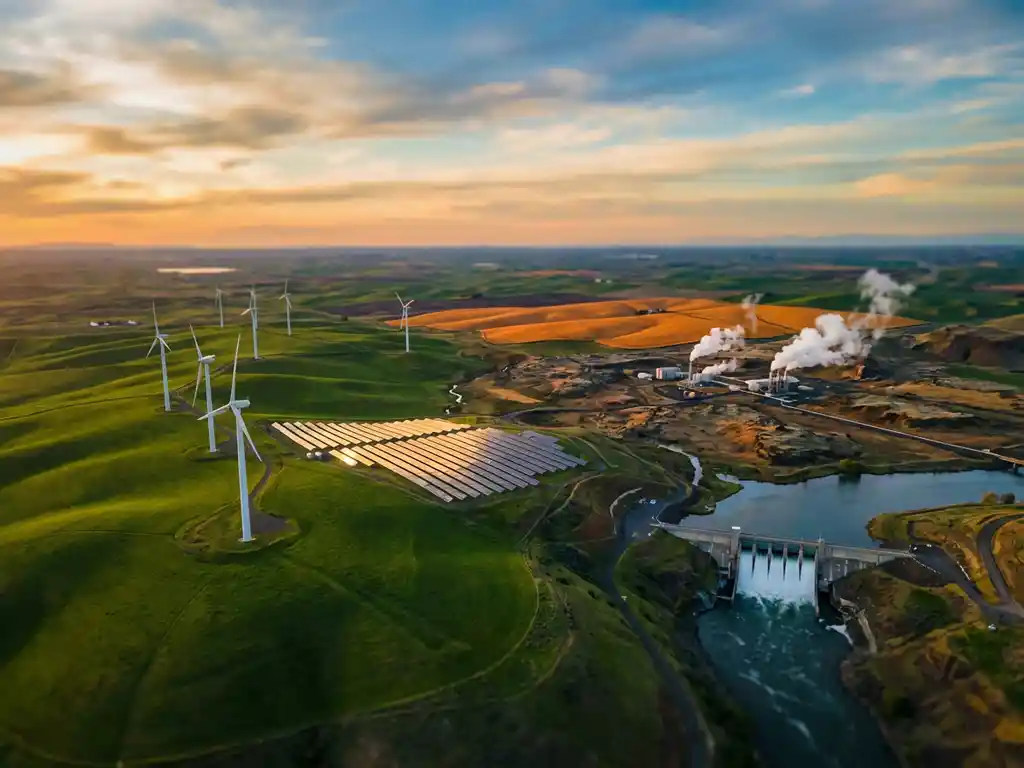
The five main renewable sources of energy are solar, wind, hydropower, biomass, and geothermal. Each harnesses a naturally replenishing resource to generate electricity or heat, producing significantly fewer emissions than fossil fuels. A sixth source — iron fuel — is now emerging as a circular, carbon-free energy carrier purpose-built for industrial heat applications.
Here is a brief overview of each:
- Solar energy — captured from sunlight using photovoltaic panels or concentrated solar thermal systems
- Wind energy — generated by turbines that convert the kinetic energy of moving air into electricity
- Hydropower — produced by harnessing the flow or fall of water through turbines
- Biomass energy — derived from organic materials such as wood, agricultural residues, or dedicated energy crops
- Geothermal energy — extracted from heat stored within the Earth’s crust
Together, these sources form the foundation of the global clean energy transition. However, their suitability varies widely depending on the application — and for industrial heat, the differences are significant.
How does each renewable energy source generate heat or power?
Each renewable energy source generates heat or power through a distinct physical or chemical process. Solar and wind convert natural forces into electricity. Hydropower and geothermal tap into the Earth’s physical energy flows. Biomass releases stored chemical energy through combustion. Understanding these mechanisms helps identify which source fits a given industrial need.
Solar and wind: electricity-first technologies
Solar panels convert photons from sunlight into direct current electricity through the photovoltaic effect. Concentrated solar power (CSP) systems use mirrors to focus sunlight onto a receiver, generating heat that drives a steam turbine. Wind turbines work by capturing kinetic energy from moving air, spinning a rotor connected to a generator. Both are fundamentally electricity-generating technologies, which means using them for industrial heat requires an additional conversion step.
Hydropower and geothermal: continuous and location-dependent
Hydropower uses the gravitational potential energy of water — typically stored in reservoirs — to spin turbines and generate electricity. It is one of the most reliable renewable sources, but it is strictly tied to geography. Geothermal energy taps into the heat beneath the Earth’s surface, either to generate electricity or to supply heat directly. It offers excellent consistency but is only commercially viable in regions with accessible geothermal activity.
Biomass: the combustion-based option
Biomass burns organic material to release heat, which can be used directly in industrial processes or converted into electricity. It is one of the few renewable sources that produces heat through direct combustion, making it more compatible with existing industrial boiler infrastructure. However, biomass combustion still produces CO₂ and particulate emissions, and its sustainability depends heavily on the source and supply chain of the organic feedstock.
Which renewable energy source is best for industrial heat?
For industrial heat, biomass and geothermal are the most directly applicable conventional renewable sources, but both come with significant limitations. Geothermal is geographically restricted, and biomass still produces carbon emissions. Iron fuel — a circular, carbon-free energy carrier that combusts like a solid fuel — is emerging as the most purpose-built renewable solution for high-temperature industrial heat.
The core challenge with most renewables in industrial contexts is the temperature gap. Solar thermal and heat pumps typically deliver low-to-medium-temperature heat, which is insufficient for many industrial processes that require temperatures above 500°C. Biomass can reach higher temperatures but brings emissions and supply chain complexity. Hydrogen combustion is technically capable but faces infrastructure and cost barriers for many operators.
Iron fuel addresses this directly. When iron powder combusts with ambient air, it generates a flame of up to 2,000°C — enough to produce steam, hot water, or hot air for the most demanding industrial applications. The only combustion by-product is iron oxide, which is then regenerated back into iron fuel using hydrogen, completing a fully closed loop. The system achieves up to 95% energy efficiency, outperforming many conventional fossil fuel boilers.
For sustainability managers in sectors like food and beverage, specialty chemicals, and pulp and paper, where electrification is often impractical and hydrogen infrastructure is limited, iron fuel offers a genuinely viable path to decarbonizing heat. You can explore more about how the technology works on the Iron Fuel Technology page.
What are the challenges of switching to renewable energy in industry?
The main challenges of switching to renewable energy in industry are high upfront investment, infrastructure incompatibility, intermittency, and the temperature limitations of most renewable technologies. For industrial operators, these barriers are not theoretical — they directly affect production continuity, capital planning, and the pace at which decarbonization can realistically happen.
The following challenges come up most consistently for sustainability managers evaluating a switch:
- Capital cost and payback periods — clean energy systems often require significant upfront investment, and the cost difference between fossil fuels and decarbonized alternatives can be difficult to justify without long-term price certainty.
- Infrastructure requirements — technologies like green hydrogen require new pipelines, storage systems, and safety protocols that many industrial sites are not equipped for.
- Intermittency — solar and wind generate power only when conditions allow, which creates reliability challenges for continuous industrial processes.
- Temperature limitations — many renewable heat technologies cannot reach the high temperatures required for industrial processes, limiting their applicability.
- Regulatory and permitting complexity — introducing new energy technologies often involves navigating emissions standards, safety certifications, and local planning requirements.
These are real constraints, not excuses. The good news is that the landscape is changing. Technologies designed specifically for industrial decarbonization — rather than adapted from electricity generation — are beginning to address these barriers head-on, offering solutions that work within existing infrastructure rather than requiring a complete overhaul.
If you are currently navigating these challenges, the tool below can help you identify where Iron Fuel Technology might fit your specific situation.
Are there renewable energy sources that work as drop-in fuel replacements?
Yes, some renewable energy sources can function as drop-in fuel replacements, meaning they integrate with existing combustion infrastructure without requiring a complete system redesign. Biomass and biogas are the most established examples. Iron fuel is a newer and more promising option, designed specifically to replace fossil fuels in industrial boilers with minimal disruption to existing operations.
The concept of a drop-in replacement matters enormously in industrial settings. Most factories and processing plants have invested heavily in their existing boiler and heat generation infrastructure. A technology that requires that infrastructure to be scrapped carries a much higher adoption barrier than one that slots in alongside it.
Biomass can substitute for coal or gas in some boiler configurations, but it introduces new logistics, storage requirements, and emissions considerations. Biogas is a cleaner option but is constrained by supply availability and energy density. Hydrogen is technically a drop-in for some burner systems but requires pressure vessels, modified burner tips, and safety upgrades that make it far from seamless.
Iron fuel takes a different approach. The Iron Fuel Boiler is designed to complement existing fossil fuel boilers rather than replace the entire system at once. It integrates with current infrastructure, providing clean heat as a primary or supplementary source while the broader transition takes place. This plug-and-play compatibility makes it particularly well suited to operators who cannot afford downtime or who need to manage the transition incrementally. Learn more about how this works in practice on our industrial solutions page.
How Iron Fuel Technology helps with renewable industrial heat
We developed Iron Fuel Technology specifically to solve the problem that most renewable energy sources cannot: delivering high-temperature, carbon-free heat that works within existing industrial infrastructure, reliably and cost-competitively.
Here is what makes our approach different:
- Zero direct CO₂ emissions — iron fuel combustion produces no carbon dioxide, with only 10 kg CO₂ per MWh attributable to the pilot safety flame
- Ultra-low NOₓ — less than 5 mg/MJ, the lowest NOₓ emissions of any fuel, supporting air quality compliance
- Up to 95% energy efficiency — outperforming many conventional fossil fuel boiler systems
- Circular fuel cycle — iron oxide produced during combustion is regenerated back into iron fuel using hydrogen, creating a fully closed loop
- Drop-in compatible — designed to integrate with existing boiler infrastructure, reducing disruption and capital risk
- Long-term fuel supply — backed by supply agreements that give operators cost predictability and operational security
We are already working with industrial partners across food and beverage, specialty chemicals, and pulp and paper — sectors where the need to decarbonize heat is urgent and the alternatives are limited. If you are building the business case for renewable heat in your organisation, we would be glad to talk through what Iron Fuel Technology could mean for your operations. Get in touch with our team to start the conversation.
Related Articles
- What does a drop-in heat solution mean for existing industrial boiler systems?
- How do batteries store renewable energy?
- Can renewable energy reduce dependence on energy imports?
- Why do some countries rely more on renewable energy than others?
- What industries are most affected by the shift to renewable energy?
This content was generated with the help of AI and it may contain mistakes