

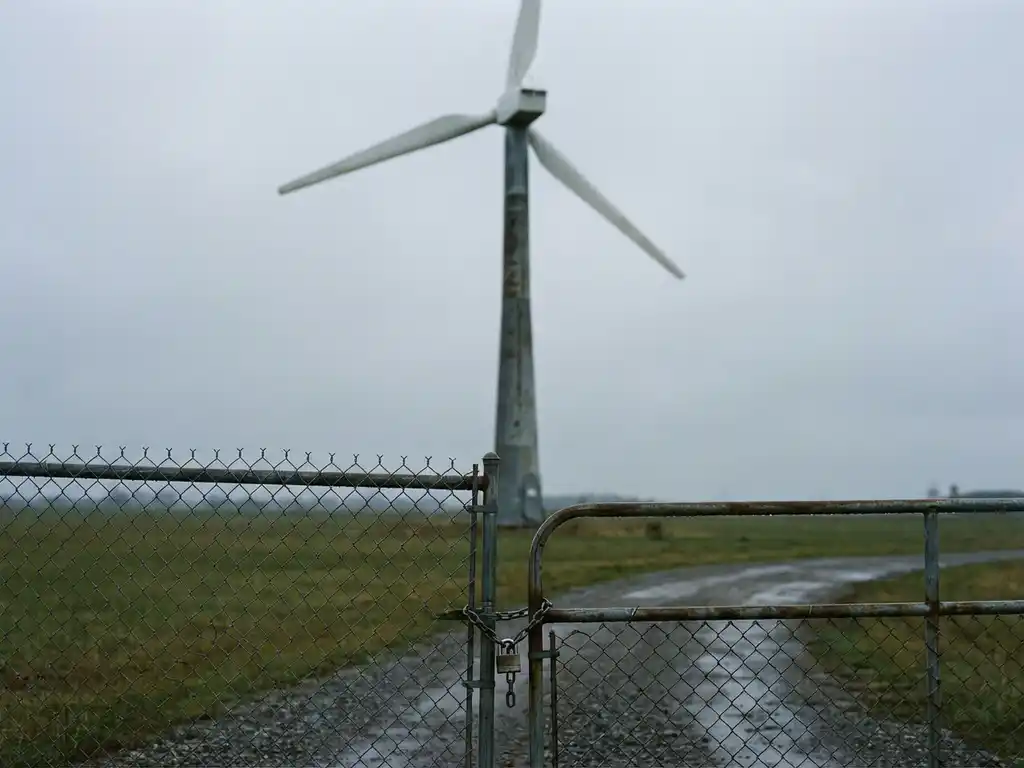
Renewable energy enjoys near-universal support in public discourse. Politicians back it, companies commit to it, and consumers increasingly demand it. Yet when you look at the industrial sector, progress is frustratingly slow. Factories, food processors, and chemical plants continue to burn fossil fuels at an enormous scale, even as pressure to decarbonise intensifies. So what is actually going on?
The honest answer is that resistance to renewable energy in industry is rarely ideological. It is about practicality, cost, and the absence of solutions that actually fit the way industrial operations work. Understanding those barriers is the first step towards overcoming them.
Why do some industries resist switching to renewable energy?
Industries resist switching to renewable energy primarily because most available alternatives do not match the operational requirements of high-temperature industrial processes. The resistance is not philosophical—it is practical. Electrification requires expensive grid upgrades, hydrogen demands infrastructure that does not yet exist at scale, and biomass introduces supply-chain complexity. For many plant managers, the path to clean energy looks unclear and risky.
There is also structural inertia at play. Industrial facilities are built around long asset lifetimes. A boiler installed today is expected to run for decades, and replacing it mid-life carries significant financial and operational risk. Decision-makers are accountable not just for emissions targets but for production uptime and budget performance. When a clean alternative cannot guarantee both, the default is to stick with what works.
Regulatory uncertainty adds another layer. Companies investing in decarbonisation need confidence that the rules, incentives, and carbon-pricing frameworks will remain stable long enough to justify the investment. Where that confidence is lacking, caution tends to win.
What makes decarbonising industrial heat so difficult?
Decarbonising industrial heat is difficult because heat demand in industry is enormous, highly varied, and overwhelmingly dependent on combustion. Industry accounts for roughly 37% of global energy consumption, and around two-thirds of that goes to heat generation. Approximately 80% of that heat is still produced by burning fossil fuels. No single clean technology currently covers the full range of temperatures, scales, and sectors involved.
The temperature problem
Many industrial processes require heat at very high temperatures—often above 500°C and sometimes well above 1,000°C. Electric resistance heating and heat pumps work well at lower temperatures, but they struggle to reach the levels required for processes like sterilisation, drying, or chemical reactions. This is not a gap that clever engineering alone can bridge overnight.
The infrastructure problem
Hydrogen is frequently cited as the solution for high-temperature industrial heat, but it requires dedicated pipelines, storage systems, and safety infrastructure that most industrial sites simply do not have. Building that infrastructure takes years and requires significant capital. For a sustainability manager trying to hit a 2030 emissions target, a solution that arrives in 2035 is not a solution at all.
This combination of temperature requirements and infrastructure constraints means that many industrial companies face a genuine gap: they cannot electrify, they cannot access hydrogen, and they are under growing pressure to act. That gap is exactly where new approaches to renewable energy for industrial heat are beginning to emerge.
Are renewable energy alternatives actually ready for industry?
Some renewable energy alternatives are ready for industry today, but readiness varies significantly by technology and application. Solar and wind power are mature and cost-competitive for electricity generation. For industrial heat, however, the picture is more complex. Technologies targeting high-temperature heat are at varying stages of commercial readiness, and the gap between pilot demonstrations and full commercial deployment remains a real consideration for industrial buyers.
The good news is that the technology landscape is advancing faster than many expected. Iron Fuel Technology, for example, has been demonstrated at megawatt industrial scale at Technology Readiness Level 7 in the Netherlands, with a working boiler facility in Helmond delivering real heat under real operating conditions. That is not a laboratory concept—it is a proven system moving towards commercial deployment.
For sustainability managers evaluating options, the key questions to ask of any technology are:
- Has it been demonstrated at industrial scale, not just in a lab?
- Can it integrate with existing infrastructure without a complete overhaul?
- Is there a reliable, long-term fuel or energy supply behind it?
- Do the economics work without relying on subsidies that may not last?
Technologies that can answer yes to all four are genuinely ready for serious consideration. Those that cannot yet answer all four may still be worth tracking, but they are not yet ready to carry the weight of a company’s decarbonisation strategy. You can explore how Iron Fuel Technology works in practice to see how it measures up against these criteria.
What are the real costs of sticking with fossil fuels?
The real costs of sticking with fossil fuels extend well beyond the price of gas or oil. Companies that delay decarbonisation face rising carbon costs under frameworks like the EU Emissions Trading System, growing exposure to energy-price volatility, and increasing reputational risk with customers, investors, and regulators who are all paying closer attention to Scope 1 emissions.
Carbon pricing is perhaps the most tangible financial pressure. As the cost of emitting CO₂ rises, the economics of fossil-fuel combustion deteriorate over time. A boiler that looks cost-effective today may become a significant liability within the decade. Companies that lock in long-term fossil-fuel infrastructure now are effectively betting that carbon prices will stay low—a bet that most analysts and regulators would not encourage.
There are also softer but real costs to consider. Large industrial buyers and retailers increasingly require their suppliers to demonstrate credible decarbonisation progress. Losing a major customer relationship because your emissions profile no longer meets their procurement standards is a cost that does not appear on an energy bill but is very real nonetheless.
The framing of “the cost of going green” often misses the other side of the equation: the cost of staying brown. Regulatory tightening, carbon levies, stranded assets, and supply-chain pressure all accumulate into a financial case for action that grows stronger every year.
How can industrial companies start decarbonising heat today?
Industrial companies can start decarbonising heat today by taking a phased, pragmatic approach rather than waiting for a perfect solution. The most effective first step is to conduct an honest audit of your current heat demand: what temperatures are required, what fuels are currently used, and where the largest emissions concentrations sit. From there, you can match available technologies to specific use cases rather than searching for a single solution that covers everything.
A practical starting framework looks like this:
- Map your heat demand by temperature range and volume to identify where decarbonisation is most feasible and most impactful.
- Assess infrastructure constraints honestly—grid capacity, space, and logistics all shape which technologies are viable at your site.
- Evaluate drop-in solutions first—technologies that integrate with existing boiler infrastructure reduce risk and shorten deployment timelines.
- Build the internal business case using total cost of ownership over a realistic asset lifetime, not just upfront capital cost.
- Engage suppliers early—the best technology partners can help you model scenarios and structure fuel-supply agreements that protect long-term cost predictability.
The key insight here is that decarbonising heat does not have to mean replacing everything at once. Technologies designed to complement existing fossil-fuel boilers allow companies to reduce emissions progressively, managing risk while building operational confidence in new systems. Explore the industrial heat solutions available today to see what a phased approach could look like for your sector.
If you are currently navigating these decisions and want to explore what might be viable for your specific operation, the short questionnaire below can help point you in the right direction.
How Iron Fuel Technology helps industrial companies decarbonise heat
We developed Iron Fuel Technology specifically to close the gap that leaves so many industrial companies stuck: too much heat demand for electrification, not enough infrastructure for hydrogen, and too much pressure to wait. Our Iron Fuel Boiler delivers a practical, high-efficiency path forward.
Here is what makes it work for industrial operations:
- Zero direct CO₂ emissions from combustion, with ultra-low NOₓ—iron fuel burns cleanly, leaving only iron oxide as a by-product
- Up to 95% energy efficiency, outperforming many conventional fossil-fuel boilers
- Plug-and-play integration with existing boiler infrastructure, minimising disruption and capital outlay
- Long-term fuel-supply agreements that give you cost predictability and supply security from day one
- A fully circular fuel cycle—iron oxide is regenerated back into iron fuel using low-carbon hydrogen, so nothing is wasted
We have already signed the world’s first commercial contract for industrial Iron Fuel Technology with Kingspan Unidek, and we are actively working with companies in the food and beverage, specialty chemicals, and pulp and paper sectors. If your organisation is ready to move from ambition to action on industrial heat decarbonisation, we would love to talk. Get in touch with our team to explore what Iron Fuel Technology could do for your operations.
Related Articles
- What is the cleanest energy to use?
- What are the six sources of clean energy?
- What role does renewable energy play in fighting climate change?
- Is renewable energy reliable enough for everyday use?
- What is the most efficient renewable energy?
This content was generated with the help of AI and it may contain mistakes