

Renewable energy reduces carbon emissions by replacing fossil fuels—the primary source of CO₂ in our atmosphere—with energy sources that produce little to no carbon emissions during operation. When wind, solar, or other clean energy sources power our homes, transport, and industries, the carbon that would otherwise come from burning coal, oil, or gas simply never enters the atmosphere. The result is a measurable, direct reduction in greenhouse gas emissions at the source.
Fossil fuel dependency is still costing the planet its carbon budget
Despite decades of progress in solar and wind energy, fossil fuels still dominate the global energy supply—particularly in industry. Around two-thirds of all industrial energy consumption goes toward heat generation, and roughly 80% of that heat is still produced by burning fossil fuels. Every tonne of coal or cubic metre of natural gas combusted releases CO₂ that accumulates in the atmosphere. The fix is not complicated in theory: replace the fossil fuel with a clean alternative. In practice, the challenge is finding alternatives that work at the temperatures, scales, and costs industrial operators actually need.
Switching to renewables without the right infrastructure is slowing down real decarbonization
Many companies want to reduce their carbon footprint but find that the most talked-about renewable options—full electrification or direct hydrogen combustion—require infrastructure upgrades that are either too expensive or simply not available in their region. This gap between ambition and action is one of the main reasons industrial CO₂ emissions remain stubbornly high. The most effective path forward is often not a full system replacement, but a drop-in solution that works alongside existing infrastructure, reducing emissions immediately without waiting years for grid upgrades or hydrogen pipelines to materialize.
What does it mean for energy to reduce carbon emissions?
Energy reduces carbon emissions when it delivers the same useful output—heat, electricity, or motion—as fossil fuels, but without releasing CO₂ in the process. This can happen because the energy source contains no carbon (like wind or solar), or because any carbon involved is captured or offset within a closed cycle.
The key concept here is substitution. Every unit of fossil fuel energy replaced by a clean alternative is a unit of CO₂ that never reaches the atmosphere. At scale, this substitution effect is what drives national and global emissions reductions. The more completely an economy shifts its energy supply away from carbon-based fuels, the lower its total greenhouse gas output becomes.
It is also worth distinguishing between direct and lifecycle emissions. A solar panel produces no CO₂ while generating electricity, but manufacturing the panel does have a carbon cost. Renewable energy technologies that perform best on a full lifecycle basis are those for which the operational carbon savings far outweigh the emissions involved in producing and maintaining the system.
How does renewable energy actually cut CO₂ output?
Renewable energy cuts CO₂ output by removing combustion from the energy equation. Fossil fuels release carbon when burned because they are made of hydrocarbons. Renewable sources like wind, solar, and certain circular fuel technologies convert energy without burning carbon-containing material, so there is no CO₂ to emit during operation.
The mechanism differs depending on the technology. Solar panels convert sunlight directly into electricity through photovoltaic cells. Wind turbines convert kinetic energy from moving air into electricity. Neither process involves combustion, so neither produces CO₂ during operation. The carbon savings come directly from the fossil fuel generation that no longer needs to happen.
For industrial processes that require heat rather than electricity, the picture is more complex. High-temperature heat has historically been difficult to produce without burning something. This is where newer approaches—including circular fuel technologies that use non-carbon energy carriers—are opening up new possibilities for sectors that cannot simply plug into a solar panel.
What types of renewable energy reduce emissions the most?
The renewable energy types that reduce emissions the most are those that can replace the largest volumes of fossil fuel use at the lowest carbon cost per unit of energy delivered. Wind and solar lead in electricity generation, while emerging technologies are beginning to address the harder challenge of industrial heat.
- Wind energy has one of the lowest lifecycle carbon footprints of any energy source and can generate electricity at large scale consistently.
- Solar photovoltaic has become the fastest-growing renewable energy source globally and is highly effective at displacing coal and gas in power grids.
- Hydropower provides reliable, dispatchable clean electricity and remains the largest source of renewable power worldwide.
- Green hydrogen can decarbonize processes that need a fuel rather than electricity, though production costs and infrastructure remain barriers in many regions.
- Circular fuel technologies such as iron fuel use non-carbon energy carriers to deliver high-temperature industrial heat, addressing a sector that wind and solar cannot easily reach.
The most impactful choice depends on the application. For electricity, wind and solar are proven and cost-effective. For industrial heat—which accounts for a disproportionately large share of global emissions—the renewable options are fewer, and the technology is still maturing. This is precisely why industrial heat has become a priority area for clean energy innovation.
Why is industrial heat such a large source of carbon emissions?
Industrial heat is one of the largest sources of carbon emissions because it is both energy-intensive and almost entirely dependent on fossil fuels. Industry accounts for about 37% of total global energy consumption, and two-thirds of that goes to heat. The vast majority of that heat—around 80%—still comes from burning natural gas, coal, or oil.
The reason industrial heat has been so hard to decarbonize is that many processes require very high temperatures—often above 500°C—that are difficult and expensive to reach with electricity or hydrogen at current infrastructure levels. Cement kilns, paper-drying systems, chemical reactors, and food-processing equipment all depend on reliable, high-temperature heat delivered at scale. Replacing that with clean alternatives requires either massive grid upgrades, new hydrogen infrastructure, or an entirely different type of fuel.
This is why industrial heat consistently shows up as a blind spot in national climate strategies. Progress in electricity generation gets headlines, but the harder problem—decarbonizing the heat that keeps factories running—receives far less attention and investment relative to its share of global emissions.
How does iron fuel technology reduce industrial carbon emissions?
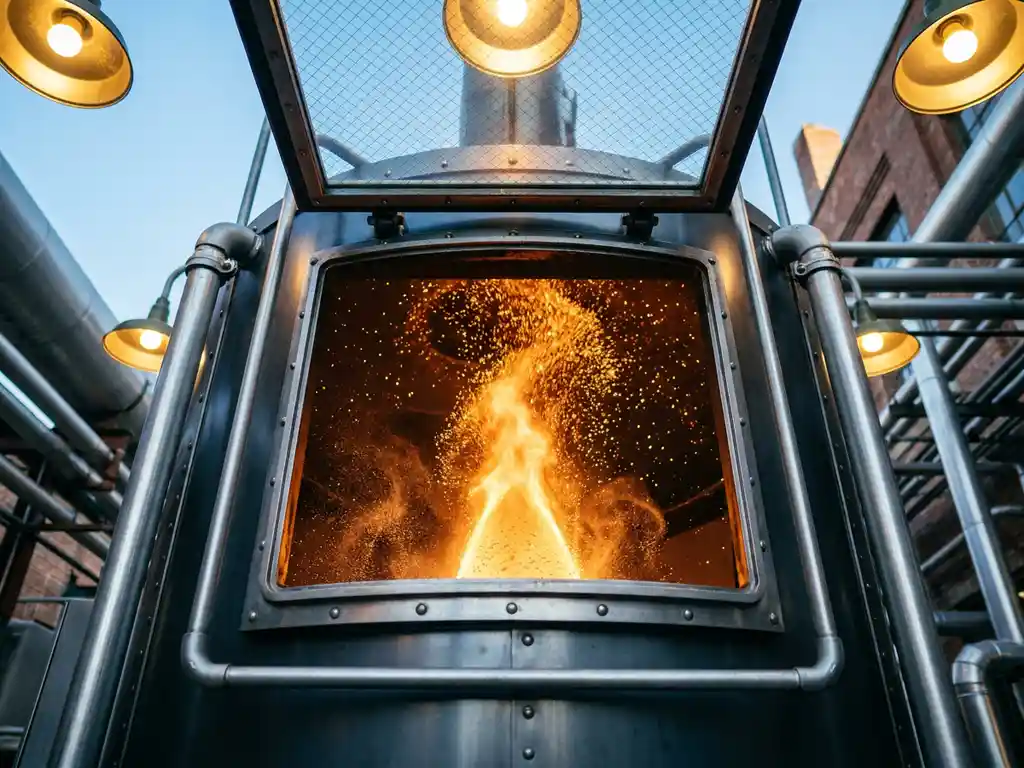
Iron fuel technology reduces industrial carbon emissions by replacing fossil fuel combustion with the burning of iron powder, which produces zero direct CO₂. When iron fuel burns, it reacts with oxygen to generate high-temperature heat, and the only byproduct is iron oxide—which can then be regenerated back into iron fuel using hydrogen, completing a closed, carbon-free cycle.
The emissions profile of the technology is one of its most distinctive features. The Iron Fuel Boiler produces just 10 kg of CO₂ per megawatt-hour of thermal energy, and that small amount comes entirely from a pilot safety flame—not from the iron fuel combustion itself. By comparison, natural gas boilers typically emit around 200 kg of CO₂ per megawatt-hour. That is a near-complete elimination of combustion-related carbon emissions.
Across the full production and combustion chain—including transport and the use of low-carbon hydrogen as the feedstock for regeneration—the technology delivers a CO₂ reduction of 0.55 tonnes of CO₂ equivalent per tonne of iron fuel produced. This figure is calculated using the EU Innovation Fund greenhouse gas methodology, making it directly applicable for carbon accounting and regulatory reporting purposes.
You can read more about how the full system works on the Iron Fuel Technology page.
What’s the difference between iron fuel and other renewable energy options?
The key difference between iron fuel and most other renewable energy options is that iron fuel is a physical, storable energy carrier designed specifically for high-temperature industrial heat—not electricity generation. Wind and solar produce electrons; iron fuel produces flames of up to 2,000°C that can run directly in existing boiler infrastructure.
This distinction matters enormously for industrial operators. Most renewable energy technologies address the electricity sector. Iron fuel addresses the heat sector, which is where a large portion of industrial emissions actually originate. Rather than requiring companies to electrify their entire heat supply—which often demands costly grid upgrades and significant process changes—iron fuel can work alongside existing boiler systems as a drop-in fuel.
Compared to hydrogen combustion, iron fuel is a solid at room temperature, which makes it easier to store and transport without the pressurized infrastructure hydrogen requires. Compared to biomass, it produces no CO₂ during combustion and does not compete with land or food systems. And unlike electrification, it delivers the high flame temperatures that many industrial processes genuinely need.
Explore the full range of industrial heat solutions to see how different approaches compare for your specific application.
How RIFT helps reduce industrial carbon emissions
We developed Iron Fuel Technology specifically to close the gap that other renewable options leave open: high-temperature industrial heat with zero direct CO₂. Here is what working with us looks like in practice:
- Drop-in compatibility: Our Iron Fuel Boiler integrates with existing boiler infrastructure, so you do not need to replace your entire setup to start reducing emissions.
- Zero direct CO₂: Iron fuel combustion produces no carbon dioxide. The only CO₂ in the system comes from a small pilot safety flame—just 10 kg per MWh of heat produced.
- Ultra-low NOₓ: The technology achieves the lowest NOₓ emissions of any combustion fuel, supporting compliance with tightening air quality regulations.
- Reliable fuel supply: We offer long-term fuel supply agreements so you can plan your energy transition with confidence, not uncertainty.
- Cost-competitive pricing: Iron fuel is priced to be competitive with fossil fuels, making the business case for decarbonization significantly easier to build internally.
If you are a sustainability manager evaluating how to decarbonize your industrial heat operations, we are ready to talk through what this could look like for your site. Get in touch with our team to start the conversation.
Related Articles
- What are examples of clean energy?
- What is the role of hydrogen in the energy transition?
- How does renewable energy create jobs?
- What is a solar battery and do you need one?
- How do I switch to renewable energy at home?
This content was generated with the help of AI and it may contain mistakes