

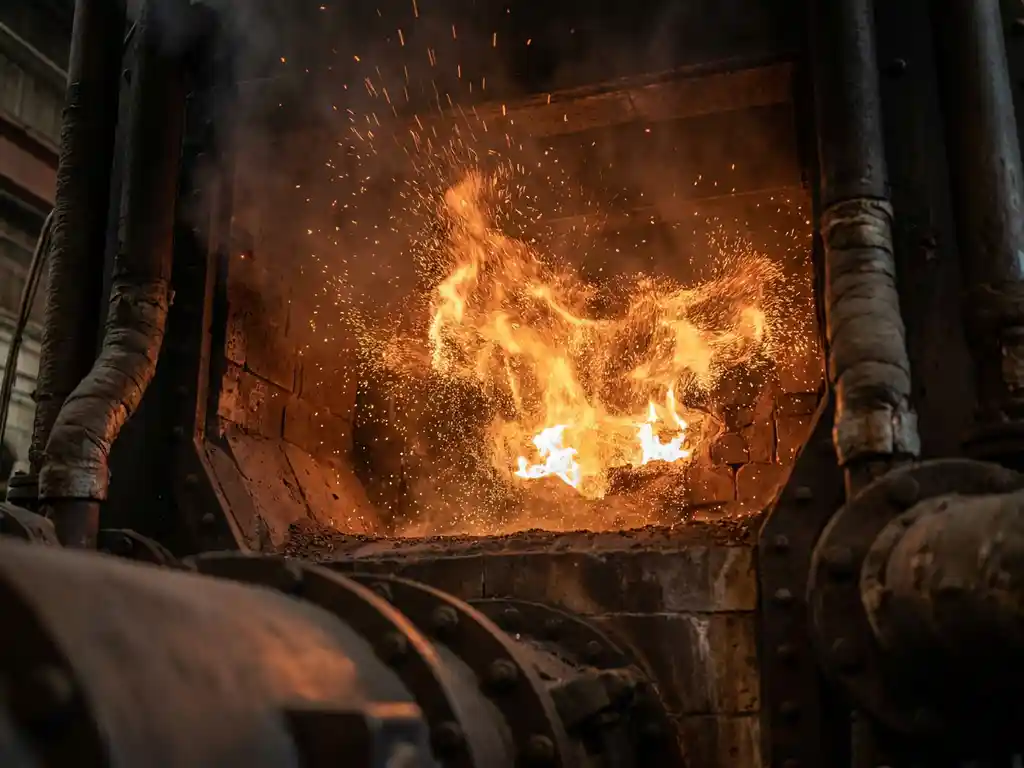
Renewable energy comes from natural sources that replenish themselves continuously, such as sunlight, wind, water, and biomass. Unlike fossil fuels, these sources do not run out and, in most cases, produce little to no carbon dioxide when generating power. Renewable energy works by converting naturally occurring forces into usable electricity or heat, making it the foundation of the global shift away from carbon-intensive energy systems.
Sticking with fossil fuels is costing industry more than just carbon credits
The financial and regulatory pressure on industrial companies that continue to burn fossil fuels is intensifying rapidly. Costs under the EU Emissions Trading System are rising, corporate net-zero commitments are tightening timelines, and customers are beginning to ask tougher questions about supply chain emissions. For many sustainability managers, the real cost is not just today’s carbon price but the stranded-asset risk of infrastructure that will need replacing within a decade. The fix is not necessarily a full overhaul. Many industrial operators are finding that the most practical path forward is a drop-in technology that works alongside existing systems, reducing emissions without halting production.
Waiting for the “perfect” clean energy solution is delaying real emissions reductions
Full electrification and green hydrogen get a lot of attention, but for a large share of industrial facilities, both options face serious constraints. Grid capacity is limited, infrastructure upgrades take years, and the cost gap between fossil fuels and these alternatives remains wide. Meanwhile, Scope 1 emissions continue to accumulate. The more useful question is not which technology is theoretically ideal, but which one can be deployed now, at a competitive cost, without requiring a complete rebuild of existing infrastructure. Focusing on what is commercially available and operationally compatible tends to deliver faster, more measurable results.
What is renewable energy and why does it matter?
Renewable energy is energy generated from natural processes that replenish on a human timescale. It matters because the global energy system still relies heavily on fossil fuels, which release carbon dioxide when burned. Switching to renewable sources reduces greenhouse gas emissions, improves energy security, and helps countries and companies meet climate targets.
The urgency behind renewable energy is not abstract. Industry alone accounts for roughly 37% of total global energy consumption, and the vast majority of that energy is used for heat. Most of that heat is still produced by burning gas, coal, or oil. That single fact explains why renewable energy is not just an electricity story, but an industrial challenge that affects manufacturing, food production, chemicals, and dozens of other sectors.
Renewable energy also matters economically. As the cost of technologies like solar panels and wind turbines has fallen sharply, renewable sources have become cost-competitive with fossil fuels in many markets. That shift changes the business case: decarbonization is no longer only an environmental obligation, but increasingly a financial one.
How does renewable energy actually generate power?
Renewable energy generates power by converting a naturally occurring force into electricity or heat. Solar panels convert sunlight into electricity through the photovoltaic effect. Wind turbines capture kinetic energy from moving air and convert it into electricity. Hydropower uses the movement of water. Each technology converts a different natural input into usable energy output.
The conversion process varies significantly by source. In solar photovoltaic systems, semiconductor materials absorb photons from sunlight and release electrons, creating an electrical current. In wind turbines, rotating blades drive a generator. In biomass systems, organic material is burned or converted chemically to release heat or produce gas that powers a generator.
One important distinction is between renewable energy that produces electricity and renewable energy that produces heat directly. Most public discussion focuses on electricity generation, but heat accounts for a large share of total energy demand, particularly in industry. Technologies that generate renewable heat directly, without first converting it into electricity, can be more efficient for industrial applications because they avoid conversion losses.
What are the different types of renewable energy sources?
The main types of renewable energy are solar, wind, hydropower, geothermal, biomass, and emerging energy carriers such as green hydrogen and iron fuel. Each source has different characteristics in terms of output type, reliability, geographic availability, and suitability for different applications.
- Solar energy: Converts sunlight into electricity via photovoltaic panels or into heat via solar thermal systems. Widely available but intermittent, depending on daylight and weather.
- Wind energy: Converts wind into electricity. Cost-effective at scale but variable and location-dependent.
- Hydropower: Uses flowing or falling water to generate electricity. Reliable and dispatchable, but limited by geography and environmental constraints.
- Geothermal energy: Taps heat from within the Earth. Consistent and low-emission, but only viable in specific regions.
- Biomass: Burns organic material or converts it into biogas. Can produce both electricity and heat, but sustainability depends on feedstock sourcing.
- Green hydrogen and iron fuel: Energy carriers produced using renewable electricity or hydrogen. These store renewable energy in a form that can be transported and used on demand, addressing the intermittency of solar and wind.
The diversity of renewable sources is one of their collective strengths. No single technology suits every location or application, but together they cover a wide range of energy needs across electricity, heat, and transport.
What’s the difference between renewable energy and clean energy?
Renewable energy refers specifically to energy from sources that naturally replenish, such as sunlight or wind. Clean energy is a broader term that includes any energy source that produces little or no greenhouse gas emissions. All renewable energy is generally considered clean, but not all clean energy is renewable. Nuclear power, for example, produces minimal emissions but uses a finite fuel source.
The distinction matters in practice because some renewable sources are not entirely emissions-free across their full lifecycle. Biomass, for instance, releases carbon dioxide when burned, though it can be considered carbon-neutral if the feedstock is sustainably managed. Evaluating energy sources based on their full lifecycle emissions, rather than only emissions at the point of combustion, provides a more accurate picture of their climate impact.
For industrial companies working toward net-zero targets, the relevant question is often not whether a technology is technically renewable, but whether it delivers a meaningful and measurable reduction in Scope 1 emissions. That framing shifts the focus toward lifecycle carbon accounting and away from simple labels.
How does renewable energy work for industrial heat?
Renewable energy can provide industrial heat by replacing the combustion of fossil fuels with low-carbon or zero-carbon alternatives. Options include electric heating powered by renewable electricity, biomass combustion, green hydrogen burners, and solid energy carriers like iron fuel that burn without producing carbon dioxide. Each approach suits different temperature requirements and infrastructure contexts.
Industrial heat is one of the most challenging areas to decarbonize because many processes require very high temperatures, a continuous supply, and cost certainty. Electricity-based heating works well at lower temperatures but becomes expensive and infrastructure-intensive at the high end of the temperature range. Hydrogen can reach high temperatures but requires new storage, transport, and burner infrastructure.
Iron fuel is a newer approach that addresses some of these barriers directly. Iron powder burns at temperatures up to 2,000 degrees Celsius, producing high-temperature heat with zero direct CO2 emissions. The only by-product is iron oxide, which is then regenerated into iron fuel using hydrogen, completing a closed cycle. You can read more about how this works on the Iron Fuel Technology page.
For sustainability managers evaluating options, the practical considerations are temperature compatibility, fuel supply reliability, capital cost, and how well the technology integrates with existing boiler infrastructure. A solution that can work alongside existing systems, rather than replacing them entirely, tends to reduce both cost and operational disruption during the transition.
Which renewable energy source is best for industry?
There is no single best renewable energy source for all industrial applications. The right choice depends on the required temperature level, the industry sector, available infrastructure, and cost constraints. For high-temperature heat above 500 degrees Celsius, options are more limited, with green hydrogen, biomass, and iron fuel among the most viable current alternatives to fossil fuels.
For lower-temperature processes, electrification powered by renewable electricity is often the most straightforward path. Heat pumps, electric boilers, and resistance heating are mature technologies that work well where grid capacity allows. For medium to high temperatures, the economics and logistics become more complex.
Green hydrogen is promising but faces real-world constraints. Storage requires specialized infrastructure, transport is costly, and the supply chain is still developing. Biomass is available today but raises sustainability questions around land use and feedstock sourcing. Iron fuel offers a solid-state alternative: it stores and transports like a conventional fuel, integrates with existing boiler systems, and produces no carbon dioxide during combustion. The industrial solutions overview covers how these options compare in practice for sectors like food and beverage, specialty chemicals, and pulp and paper.
The most effective approach for many industrial operators is not to search for one perfect solution, but to match the technology to the specific process, starting with the highest-emission applications where the business case is strongest.
How RIFT helps with industrial renewable heat
We develop and supply Iron Fuel Technology specifically for industries that need high-temperature, carbon-free heat but cannot wait for full electrification or hydrogen infrastructure to mature. Here is what we offer:
- Iron Fuel Boiler: Burns iron powder to produce heat up to 2,000 degrees Celsius with zero direct CO2 emissions and ultra-low NOx output, achieving up to 95% energy efficiency.
- Drop-in compatibility: Designed to work alongside existing fossil fuel boilers, so you do not need to replace your entire setup to start reducing emissions.
- Long-term fuel supply: We supply iron fuel under long-term contracts, giving you the cost predictability and supply security that industrial operations require.
- Proven at scale: Our technology has been demonstrated at megawatt-scale in the Netherlands and has reached Technology Readiness Level 7, with the first commercial contract already signed.
If you are evaluating how to decarbonize your industrial heat operations and want to understand whether iron fuel fits your setup, get in touch with our team to discuss your specific situation.
Related Articles
- How does the EU ETS influence the business case for alternative fuels?
- What does the EIA report stand for?
- What is the best clean energy?
- What is the environmental impact of large-scale solar farms?
- What is the energy transition and why does it matter?
This content was generated with the help of AI and it may contain mistakes