

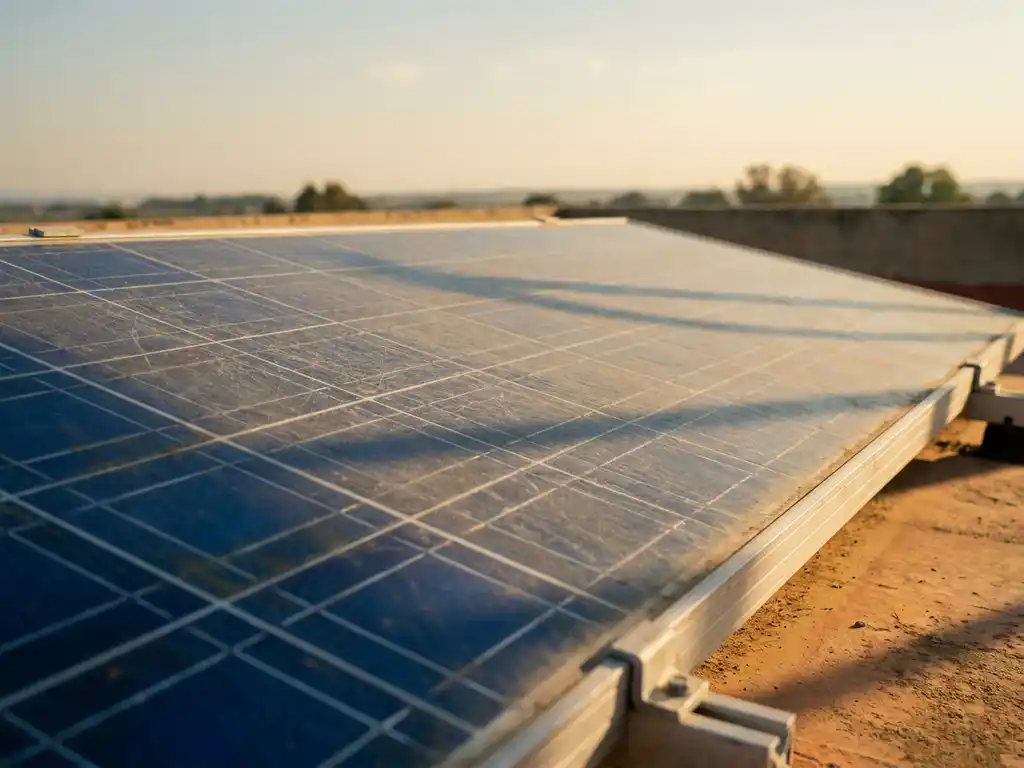
Solar panels typically last 25 to 30 years, though many continue generating electricity well beyond that. Most manufacturers design their panels to retain at least 80% of their original output after 25 years. That said, longevity depends on panel quality, installation conditions, the local climate, and how well the system is maintained over time. “Lasting” doesn’t mean the panels stop working—it means output gradually decreases to a point where replacement or upgrading makes financial sense.
Ignoring panel degradation is quietly shrinking your energy returns
Solar panels don’t fail suddenly—they fade. Each year, a panel produces slightly less electricity than the year before, and most owners never notice until the difference shows up in their energy bills or system reports. By the time degradation becomes obvious, years of reduced output may already have cost more than a timely upgrade would have. The fix is straightforward: track your system’s annual output against its original performance baseline. If you see consistent year-on-year drops beyond the expected rate, that’s your signal to act—whether by cleaning, repairing, or replacing underperforming panels.
Choosing the wrong panel type upfront is the most expensive mistake you can make
Not all solar panels age the same way. Cheaper panels degrade faster, perform worse in heat, and come with warranties that don’t reflect real-world conditions. The savings at purchase can disappear within five years if output drops faster than projected. Before buying, compare the degradation rate and warranty terms of different panel types—not just the upfront price. A panel that costs 15% more but degrades 30% more slowly over 25 years is almost always the better investment.
How long do solar panels typically last?
Most solar panels are rated to last 25 to 30 years. After this period, panels don’t stop producing electricity—their output simply drops below the level at which the system remains cost-effective. Many well-maintained panels continue operating at reduced capacity for 35 years or more. The rated lifespan reflects the point at which performance degrades to around 80% of original capacity.
The 25- to 30-year figure comes from manufacturer testing and long-term field data. Panels installed in the 1990s are still producing electricity today, which gives researchers a solid picture of real-world longevity. That said, early panels were often lower quality than what’s available now, so modern systems—particularly premium monocrystalline panels—frequently outperform older benchmarks.
Climate plays a significant role. Panels in hot, humid environments or areas with frequent hail and heavy snow tend to age faster than those in mild, stable climates. Proper installation, good airflow behind the panels, and routine cleaning all contribute to reaching or exceeding the rated lifespan.
What causes solar panels to degrade over time?
Solar panel degradation is caused by a combination of UV exposure, thermal cycling, moisture ingress, and physical stress. These factors gradually damage the photovoltaic cells and their protective layers, reducing the panel’s ability to convert sunlight into electricity. No panel is immune—degradation is a natural result of continuous outdoor exposure.
UV radiation breaks down the encapsulant material that protects the cells. Over years, this can cause yellowing or delamination, both of which reduce light transmission to the cells. Thermal cycling—the daily expansion and contraction of materials as temperatures rise and fall—creates microcracks in cells and solder joints. These cracks accumulate over time and interrupt the flow of electricity.
Moisture is another significant factor. If the panel’s protective layers develop small gaps, water vapour can enter and corrode internal components. This is particularly common in older panels or those with manufacturing defects. Physical stress from wind, hail, and snow loading can also cause visible cracking or more subtle structural damage that accelerates cell degradation.
One less obvious cause is potential-induced degradation (PID), which occurs when voltage differences between the panel and its frame cause ion migration through the glass. This can significantly reduce output in some system configurations, particularly in high-voltage installations in humid conditions.
What is the solar panel degradation rate?
The average solar panel degrades at a rate of approximately 0.5% to 0.8% per year. This means a panel producing 400 watts at installation will typically produce around 320 to 340 watts after 25 years. Premium panels often degrade at the lower end of this range, while budget options may degrade faster.
The degradation rate is not constant. Most panels experience a slightly higher rate of degradation in the first year—sometimes around 1% to 3%—as the materials stabilise under real operating conditions. After this initial period, degradation typically settles into a slower, more predictable annual rate for the remainder of the panel’s life.
When evaluating solar systems, the degradation rate matters more than it might initially appear. A difference of 0.3% per year between two panels sounds small, but over 25 years it compounds into a meaningful gap in total energy production. Always check the manufacturer’s published degradation rate alongside the warranty terms—the two figures together tell you what to realistically expect from a system over its lifetime.
What do solar panel warranties actually cover?
Solar panel warranties typically cover two separate things: product defects and performance guarantees. A product warranty covers manufacturing faults and physical failures, usually for 10 to 12 years. A performance warranty guarantees that the panel will produce a minimum percentage of its rated output—typically 80%—after 25 years.
The performance warranty is the more important of the two for long-term planning. It sets a floor on how much output you can expect over the panel’s rated lifespan. If a panel drops below the guaranteed threshold, the manufacturer is obligated to repair, replace, or compensate—though the practical process of making a claim varies significantly between manufacturers.
What warranties typically do not cover includes damage from improper installation, physical damage from extreme weather events (unless separately insured), or performance losses caused by shading, soiling, or inverter issues. Reading the exclusions carefully before purchase is essential—a 25-year warranty with broad exclusions offers less protection than a 12-year warranty with clear, enforceable terms.
Manufacturer financial stability is also worth considering. A 25-year warranty is only as good as the company standing behind it. Choosing panels from established manufacturers with a long track record reduces the risk that your warranty becomes unenforceable because the company no longer exists.
Which solar panel types last the longest?
Monocrystalline solar panels generally last the longest and degrade the most slowly of the main panel types available today. They are followed by polycrystalline panels, with thin-film panels typically having the shortest lifespan under comparable conditions. The difference comes down to cell structure, material purity, and manufacturing quality.
Here is a comparison of the three main panel types by longevity:
- Monocrystalline panels: Rated lifespan of 25 to 40 years, degradation rate typically 0.3% to 0.5% per year. Made from single-crystal silicon, which is more stable and efficient across a wide range of temperatures.
- Polycrystalline panels: Rated lifespan of 25 to 30 years, degradation rate typically 0.5% to 0.8% per year. Made from multiple silicon crystals fused together, which introduces more internal boundaries where degradation can occur.
- Thin-film panels: Rated lifespan of 10 to 20 years, degradation rate often 1% or higher per year. Lighter and more flexible than crystalline panels, but less durable over time and more sensitive to environmental stress.
For most residential and commercial installations where longevity is a priority, monocrystalline panels offer the best long-term value despite a higher upfront cost. Their lower degradation rate means more total energy production over the system’s life, which typically offsets the price difference within the first decade.
When should solar panels be replaced or upgraded?
Solar panels should be considered for replacement or upgrading when output has dropped significantly below the original rated capacity, repair costs exceed the value of continued operation, or newer technology offers substantially better performance for the same roof space. Age alone is not a sufficient reason—a well-performing 30-year-old panel may still be worth keeping.
A practical approach to deciding whether to replace panels involves these steps:
- Measure current output against the panel’s original rated capacity and compare it to the expected degradation curve provided by the manufacturer.
- Inspect the panels physically for visible cracking, delamination, hotspots, or discolouration—any of which can indicate accelerated degradation beyond normal wear.
- Calculate the energy cost of keeping the existing system running versus the return on investment from a new installation with modern, higher-efficiency panels.
- Check warranty status—if the panels are still within their performance warranty and output is below the guaranteed threshold, pursue a manufacturer claim before replacing at your own cost.
- Consider the full system—inverters typically need replacement after 10 to 15 years, so if the inverter is due for replacement, that’s a natural point to evaluate whether the panels should be upgraded at the same time.
Upgrading rather than simply replacing is worth considering when roof space is limited. Modern monocrystalline panels produce significantly more watts per square metre than panels from 15 to 20 years ago. Replacing an older, lower-efficiency system with fewer, higher-output panels can restore or even increase total generation while simplifying the installation.
How Iron Fuel Technology addresses the limits of renewable energy
Solar panels are a strong solution for electricity generation, but industrial heat—which accounts for the majority of energy use in manufacturing—is a different challenge entirely. Electricity from solar can’t always reach the temperatures that industrial processes require, and storing solar energy at scale remains costly and complex.
We at RIFT developed Iron Fuel Technology specifically to fill this gap. Here is what it offers:
- Zero direct CO₂ emissions during combustion—iron powder burns cleanly, leaving only iron oxide as a by-product
- High-temperature heat up to 2,000°C, suitable for demanding industrial processes in sectors like Food & Beverage, Specialty Chemicals, and Pulp & Paper
- Up to 95% energy efficiency, outperforming many conventional fossil fuel boiler systems
- Drop-in compatibility with existing boiler infrastructure, so adoption doesn’t require a full operational overhaul
- A circular fuel cycle—iron oxide produced during combustion is regenerated back into iron fuel using low-carbon hydrogen, completing the loop
If your organisation is working through its decarbonisation strategy for industrial heat and wants to understand how Iron Fuel Technology works in practice, or to explore the solutions we offer for your sector, we are ready to help. Get in touch with our team to start the conversation.
Related Articles
- What is the difference between onshore and offshore wind energy?
- What is the environmental impact of large-scale solar farms?
- What is energy independence and how do renewables enable it?
- How does hydropower generate electricity?
- What are 10 renewable resources?
This content was generated with the help of AI and it may contain mistakes