

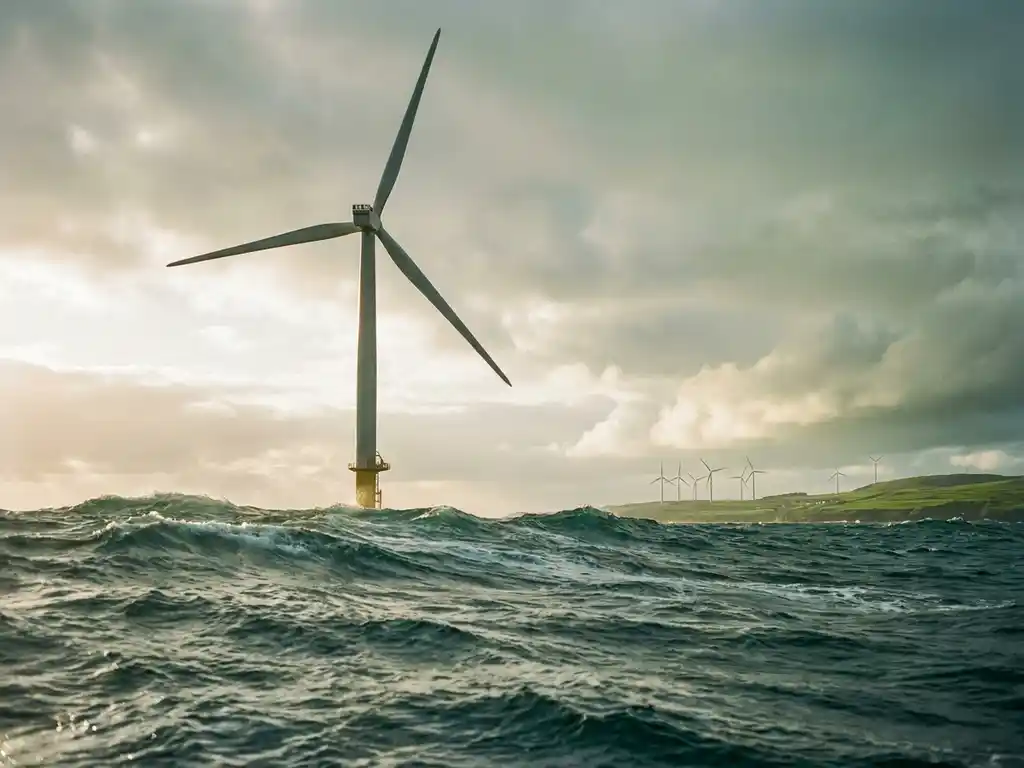
Onshore wind energy is generated by turbines installed on land, while offshore wind energy uses turbines placed in bodies of water, typically several kilometres from the coastline. The core technology is similar in both cases, but location changes almost everything: wind speeds, energy output, installation costs, and how practical each option is for different users. For industrial companies considering renewable energy, understanding this difference matters.
Choosing the wrong renewable energy type is slowing down your decarbonisation plan
Many sustainability managers invest time in building the business case for a specific renewable energy technology, only to find that it doesn’t fit their operational reality. Offshore wind might look attractive on paper, but if your facility is landlocked, the energy still needs to travel through a grid that may not be reliable or affordable enough to power your high-temperature industrial processes. Onshore wind can be more accessible, but output limitations mean it may not cover your full energy demand. The fix is not to pick a winner between the two, but to understand which energy sources actually match your heat requirements, location, and infrastructure constraints.
Relying on electricity-based renewables alone is holding back industrial heat decarbonisation
Wind energy, whether onshore or offshore, generates electricity. For many industrial processes, that electricity then needs to be converted into heat, and that conversion step introduces efficiency losses and infrastructure costs that add up quickly. Industries that need high-temperature heat above 500°C face a particularly difficult challenge: electric heating at that scale is expensive and often constrained by grid capacity. If your decarbonisation strategy is built entirely around wind-powered electricity, you may find that the last and hardest part of the problem—industrial heat—remains unsolved. Broadening your view to include direct clean-heat technologies gives you a more complete path forward.
How does onshore wind energy work compared to offshore?
Both onshore and offshore wind turbines convert kinetic wind energy into electricity using the same basic mechanism: wind turns rotor blades, which spin a generator. The key difference is where they are installed and how they are connected to the grid. Onshore turbines sit on land and connect directly to existing electricity infrastructure. Offshore turbines are anchored to the seabed or to floating platforms and require underwater cables to transmit electricity to shore.
Onshore wind is technically simpler and faster to build. Turbines can be transported by road, foundations are straightforward to construct on solid ground, and maintenance teams can reach the site easily. This makes onshore projects quicker to develop and less expensive overall.
Offshore installations are more complex. Foundations must withstand seawater, salt corrosion, and wave forces. Maintenance requires specialised vessels. Subsea cabling is expensive to install and repair. However, the engineering investment is justified by one significant advantage: wind at sea is stronger and more consistent than wind on land.
Which produces more energy — onshore or offshore wind?
Offshore wind turbines produce significantly more energy than onshore turbines of comparable size. Offshore wind speeds are typically higher and more consistent, which directly increases electricity output. A modern offshore turbine can generate two to three times more electricity per year than a similarly sized onshore turbine, largely because it is not slowed down by terrain, trees, or buildings.
Capacity factor is the standard measure used to compare actual output against theoretical maximum output. Onshore wind typically achieves a capacity factor of 25 to 40 percent. Offshore wind regularly reaches 40 to 60 percent, with newer floating offshore installations pushing even higher in some locations.
For industrial companies evaluating renewable energy solutions, raw output potential is important, but it is not the only factor. How that electricity reaches your facility, what it costs per megawatt-hour delivered, and whether it can reliably power continuous industrial operations all shape whether higher offshore output actually translates into a better deal for your business.
What are the main advantages and disadvantages of each?
Onshore and offshore wind each come with a distinct set of trade-offs. The right choice depends on geography, budget, and what you need the energy to do.
Onshore wind advantages and disadvantages:
- Lower capital and installation costs make projects more financially accessible
- Faster to build and commission, typically within one to two years
- Easier and cheaper to maintain, with no need for specialist marine equipment
- Output is more variable due to terrain interference and lower average wind speeds
- Faces more planning and community opposition, particularly in densely populated areas
- Land use competes with agriculture, housing, and nature conservation
Offshore wind advantages and disadvantages:
- Higher and more consistent wind speeds deliver greater energy output per turbine
- Less visual and noise impact on residential communities
- Turbines can be built larger without the transport constraints that apply on land
- Significantly higher installation and maintenance costs
- Longer development timelines due to permitting complexity and marine logistics
- Grid connection to shore adds cost and introduces additional points of potential failure
For most industrial operators, the practical question is not which type is superior in the abstract, but which is available in your region, at what cost, and whether it integrates with your energy infrastructure without requiring major upgrades.
Which type of wind energy is better for industrial decarbonisation?
Neither onshore nor offshore wind is inherently better for industrial decarbonisation. Both generate electricity, which can support some industrial energy needs, but neither directly solves the challenge of high-temperature process heat, which accounts for the majority of industrial energy consumption. The more relevant question is how wind energy fits into a broader decarbonisation strategy that includes heat.
Wind power works well for industrial facilities that have already electrified lower-temperature processes or that use electricity for auxiliary systems, lighting, and cooling. Pairing wind energy with on-site or nearby clean-heat generation provides a more complete solution. You can read more about how different clean energy technologies address industrial heat specifically.
For industries such as food and beverage, specialty chemicals, and pulp and paper, where continuous high-temperature heat is non-negotiable, wind energy alone is not a sufficient answer. Grid dependency, intermittency, and the cost of electric-to-heat conversion all create gaps that need to be filled by other technologies.
- Assess your total energy demand, separating electricity needs from heat needs
- Identify which processes require high-temperature heat above 200°C and which can be electrified
- Evaluate whether your grid connection can support increased electricity demand without major upgrades
- Consider wind energy as one component of a mixed strategy rather than a standalone solution
- Explore direct clean-heat technologies that can complement wind-sourced electricity for processes that cannot be electrified
How RIFT helps with industrial heat decarbonisation
Wind energy is a valuable part of the renewable energy mix, but for industrial companies, electricity generation solves only part of the problem. High-temperature process heat—the kind that runs your boilers, dryers, and kilns—needs a direct solution.
That is where we come in. RIFT’s Iron Fuel Technology is designed specifically for industrial heat, working alongside your existing infrastructure rather than replacing it entirely.
- Zero direct CO₂ emissions from iron fuel combustion, with ultra-low NOx output
- Up to 95% energy efficiency, outperforming many conventional fossil fuel boilers
- Drop-in compatible with existing boiler setups, reducing disruption and capital expenditure
- Backed by long-term fuel supply agreements for operational reliability
- Already demonstrated at industrial scale and commercially contracted
If you are building the business case for decarbonising your industrial heat and want to understand how Iron Fuel Technology fits your specific situation, get in touch with our team, and we will walk you through it.
Related Articles
- What role does renewable energy play in fighting climate change?
- How does renewable energy affect the environment?
- How long do solar panels last?
- What are the benefits of renewable energy?
- Why is renewable energy important?
This content was generated with the help of AI and it may contain mistakes