

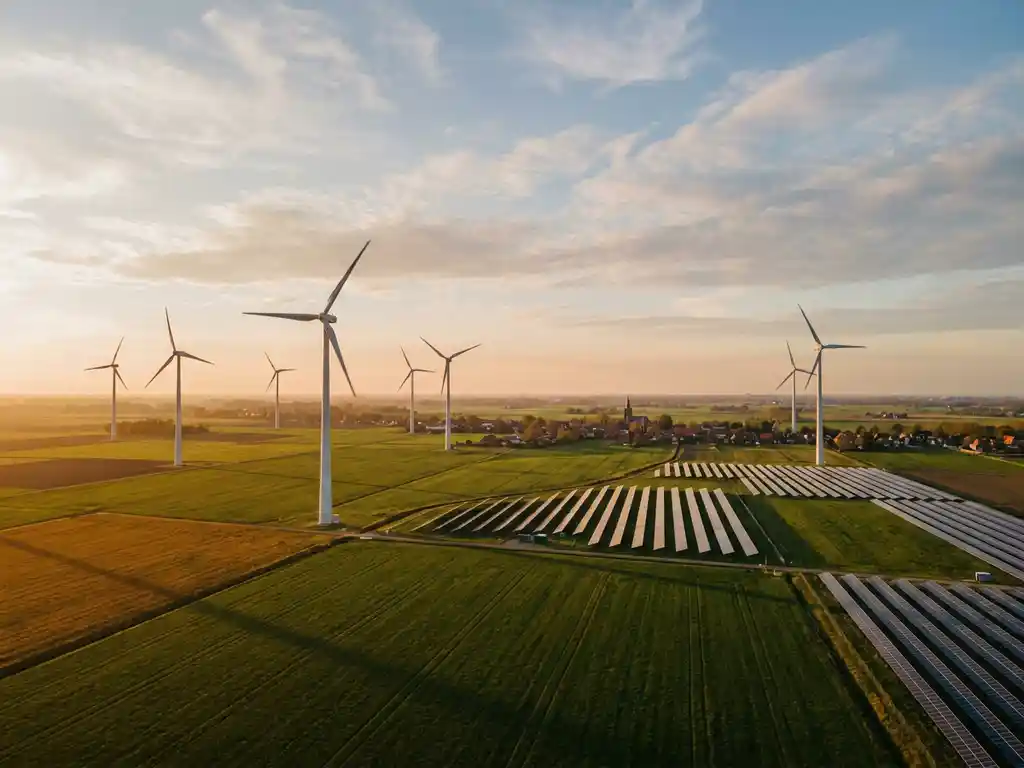
Renewable energy refers to energy sourced from natural processes that replenish continuously, such as solar, wind, and hydropower. For industrial companies, it matters because industry accounts for around 37% of global energy consumption, and the vast majority of that energy goes toward generating heat—most of which still comes from fossil fuels. Shifting to renewable energy sources reduces carbon emissions, lowers exposure to volatile fuel prices, and helps companies meet tightening climate regulations.
Fossil fuel dependency is putting your decarbonisation targets at risk
Most industrial companies have set net-zero commitments, but the path to actually meeting them is where things get complicated. Heat generation, which makes up roughly two-thirds of industrial energy use, is still overwhelmingly powered by gas, oil, and coal. That gap between ambition and reality is becoming more visible as regulatory pressure mounts, particularly through frameworks such as the EU Emissions Trading System. The fix is not necessarily a complete overhaul. Many companies can start by replacing a portion of their fossil fuel consumption with a clean alternative that works within existing infrastructure, rather than waiting for a perfect solution that requires years of capital investment.
Choosing the wrong clean energy path is slowing down your transition
Not every renewable energy technology is suited to every industrial process. Companies that commit too early to a single solution, such as full electrification, sometimes discover that their grid connection cannot handle the load, or that the cost difference compared with fossil fuels is too large to justify. This leads to delayed projects, wasted feasibility spending, and missed emissions targets. A more effective approach is to evaluate options based on your actual heat demand, infrastructure constraints, and total cost of ownership, rather than chasing the most visible trend in the market.
What is renewable energy and why does it matter for industry?
Renewable energy is energy generated from sources that naturally replenish, including solar, wind, hydropower, and hydrogen produced using low-carbon electricity. For industry, it matters because manufacturing and processing sectors are among the largest sources of carbon emissions globally, and most of those emissions come from burning fossil fuels to generate heat.
Industrial heat is not a niche problem. Two-thirds of industrial energy consumption goes toward generating heat, and around 80% of that heat is still produced from fossil fuels. That makes it one of the most significant and least-solved challenges in the global energy transition.
Beyond the environmental case, renewable energy matters for industry because of what fossil fuel dependence costs over time. Companies face rising carbon prices under emissions trading schemes, increasing scrutiny from customers and investors, and the risk of stranded assets if fossil fuel infrastructure becomes unviable before the end of its useful life. Renewable energy addresses all three of these pressures at once.
What are the main benefits of renewable energy for industrial companies?
The main benefits of renewable energy for industrial companies are reduced carbon emissions, greater energy cost stability, improved regulatory compliance, and stronger positioning with customers and investors who increasingly require sustainability credentials. The specific benefits depend on the technology chosen and how well it fits the company’s processes.
Here is a breakdown of the core benefits industrial companies typically see:
- Lower Scope 1 emissions: Replacing fossil fuels in on-site combustion directly reduces the carbon emissions a company is responsible for reporting and paying for.
- Cost predictability: Renewable energy sources are not subject to the same geopolitical price shocks as natural gas or oil, which helps with long-term financial planning.
- Regulatory compliance: As carbon pricing and emissions standards tighten, companies using clean energy are better positioned to avoid penalties and access green financing.
- Competitive differentiation: Customers in sectors such as food and beverage and specialty chemicals are increasingly demanding lower-carbon supply chains, making clean energy a commercial advantage.
- Reduced stranded asset risk: Investing in renewable energy infrastructure now reduces the risk of being locked into fossil fuel assets that may face regulatory restrictions or market devaluation.
The weight of each benefit varies by sector. For a food manufacturer facing customer pressure on supply chain emissions, the competitive angle may matter most. For a chemical company paying significant carbon costs under the EU ETS, direct cost reduction may be the primary driver.
How does renewable energy help reduce industrial CO₂ emissions?
Renewable energy reduces industrial CO₂ emissions by replacing fossil fuel combustion with processes that generate little or no carbon dioxide. The reduction comes directly from changing the energy source used in production, which cuts Scope 1 emissions at the point of generation rather than offsetting them elsewhere.
The scale of the opportunity is significant. A single industrial boiler running on natural gas emits substantial quantities of CO₂ every year. Replacing that fuel source with a zero-carbon alternative removes those emissions from the company’s footprint entirely, rather than managing or compensating for them after the fact.
The extent of the reduction depends on the technology used and how clean the upstream supply chain is. For example, a technology that produces zero CO₂ during combustion but relies on carbon-intensive hydrogen for production would still carry lifecycle emissions. This is why full-chain emissions accounting matters when evaluating any renewable energy solution for industrial heat.
Technologies like Iron Fuel Technology are designed with this full-chain perspective in mind. Iron fuel combustion itself produces no CO₂, and when low-carbon hydrogen is used in the production stage, the total lifecycle reduction across the chain is meaningful and measurable under established EU greenhouse gas methodology.
What’s the difference between renewable energy options for high-temperature heat?
The main difference between renewable energy options for high-temperature industrial heat lies in the temperatures they can reach, how well they integrate with existing infrastructure, and the cost and complexity of switching. Not all clean energy technologies can replace fossil fuels in processes that require sustained high temperatures above 500°C.
The most commonly discussed options are electrification, green hydrogen, and solid fuel alternatives such as iron fuel. Each has a different profile:
- Electrification works well for lower-temperature processes but becomes increasingly expensive and infrastructure-dependent at higher temperatures. Many industrial sites do not have grid connections capable of handling the load required for full electrification of heat.
- Green hydrogen can reach high temperatures and produces no CO₂ during combustion. However, it requires significant modifications to existing burner systems, and the infrastructure for storing and transporting hydrogen at scale is still developing in most regions.
- Iron fuel burns at temperatures up to 2,000°C, produces no CO₂ during combustion, and is designed to integrate with existing boiler infrastructure. It is stored and transported as a solid powder, which avoids many of the logistics challenges associated with hydrogen or compressed gases.
The right choice depends on the facility’s specific heat-demand profile, existing infrastructure, available grid capacity, and total cost of ownership over the investment horizon.
Why can’t all industries simply switch to electrification or hydrogen?
Not all industries can switch to electrification or hydrogen because of infrastructure limitations, cost barriers, and technical constraints specific to high-temperature heat processes. Both options are viable in certain contexts, but neither is a universal solution for industrial heat decarbonisation at this stage.
Electrification faces a grid capacity problem. Many industrial facilities in energy-intensive sectors would need substantially upgraded grid connections to electrify their heat processes, and those upgrades can take years to complete and cost millions of euros. For companies facing near-term emissions targets, that timeline is simply too long.
Hydrogen faces a different set of challenges. While green hydrogen is a promising clean fuel, the infrastructure for producing, distributing, and storing it at industrial scale is still being built out in most markets. The cost of green hydrogen also remains significantly higher than fossil fuels in most regions, making the business case difficult to justify without substantial subsidies or carbon-pricing incentives.
There is also a technical mismatch. Some industrial processes require very high and stable temperatures that are difficult to achieve with electric heating systems. Hydrogen can reach those temperatures, but retrofitting existing burner systems for hydrogen combustion is not always straightforward or cost-effective.
This is why alternative clean fuels that can work within existing boiler infrastructure, and deliver high-temperature heat without requiring a complete system rebuild, are gaining attention from sustainability managers who need to make progress now rather than waiting for infrastructure to catch up. You can explore how different industrial heat solutions compare in terms of integration and cost.
How can industrial companies start benefiting from renewable energy today?
Industrial companies can start benefiting from renewable energy today by identifying the heat processes where fossil fuel replacement is most feasible, assessing which clean energy technologies fit their existing infrastructure, and piloting a solution at a manageable scale before committing to full deployment.
A practical starting point follows a clear sequence:
- Map your heat demand: Identify which processes require which temperatures and how much energy. This tells you which clean energy technologies are technically compatible.
- Assess infrastructure constraints: Review your grid capacity, available space, and existing boiler setup to understand what changes would be needed for each option.
- Evaluate total cost of ownership: Look beyond the upfront capital cost. Factor in fuel price projections, carbon costs, O&M, and the cost of inaction under tightening regulations.
- Identify a pilot opportunity: Find a process or boiler where you can test a clean energy solution without disrupting core production. A successful pilot builds internal confidence and a business case for wider rollout.
- Engage suppliers early: Long-term fuel supply agreements and phased deployment contracts can reduce risk and improve cost certainty, especially for newer technologies entering commercial scale.
The companies making the most progress on industrial decarbonisation are not necessarily the ones with the largest budgets. They are the ones that started evaluating options early, built internal knowledge, and made a first move rather than waiting for a perfect solution.
How RIFT helps with industrial renewable energy adoption
We developed Iron Fuel Technology specifically to address the gap that electrification and hydrogen cannot fill: clean, high-temperature industrial heat that works with your existing setup, not against it.
Here is what our Iron Fuel Boiler delivers:
- Zero direct CO₂ emissions from combustion, with ultra-low NOx output below 5 mg/MJ
- Up to 95% energy efficiency, outperforming many conventional fossil fuel boilers
- Plug-and-play integration with existing boiler infrastructure, minimising disruption and capital outlay
- Cost-competitive pricing designed to align with fossil fuel benchmarks
- Long-term fuel supply contracts to give you the certainty you need to plan ahead
We are already working with industrial partners on the first commercial deployments of Iron Fuel Technology, and we are ready to help you assess whether it fits your operations. Get in touch with our team to start the conversation.
Related Articles
- How to complete EIA?
- How does offshore wind energy work?
- What is a solar battery and do you need one?
- What state has the most clean energy?
- How much of America's energy is clean?
This content was generated with the help of AI and it may contain mistakes