

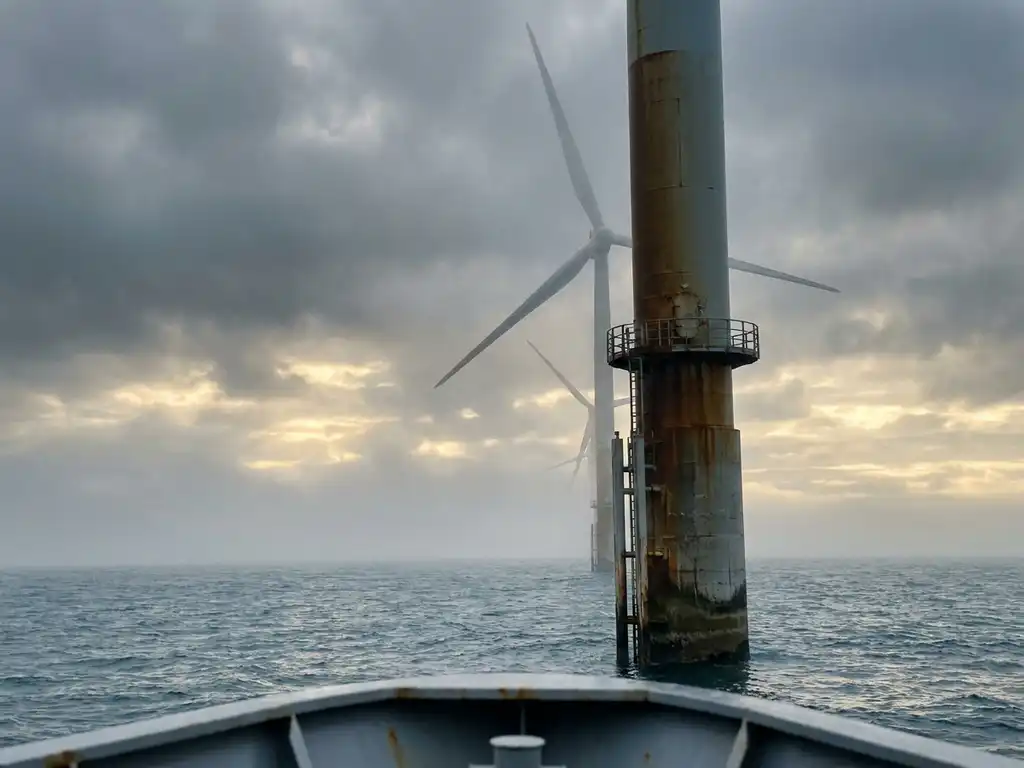
Offshore wind energy is one of the most visible symbols of the clean energy transition. But for industrial companies trying to decarbonize their heat processes, understanding what it can actually deliver—and where its limits lie—is more useful than the headlines. This article explains how offshore wind works, what it can realistically deliver, and why it leaves a significant gap when it comes to industrial heat demand.
Staking your decarbonization strategy on offshore wind alone is a costly bet
Offshore wind is expanding fast, and the capacity numbers are impressive. But capacity is not the same as reliable, on-demand energy delivery. Industrial processes run continuously and require consistent heat input. Wind is intermittent by nature, and offshore installations cannot simply be ramped up when your boiler needs more energy. Companies that build their entire decarbonization roadmap around a single renewable source often find themselves exposed to supply gaps, grid constraints, and rising balancing costs. The smarter approach is to treat offshore wind as one part of a broader clean energy mix, not a complete answer for industrial heat.
Electrification gaps are pushing industrial heat decarbonization further into the future
Even where offshore wind generates abundant electricity, converting that power into high-temperature industrial heat is not straightforward. Electric heating technologies struggle to match the flame temperatures that many industrial processes require, and grid infrastructure in industrial areas often cannot handle the load increases that full electrification demands. The result is that decarbonization timelines slip, capital sits idle, and Scope 1 emissions continue. Companies in sectors such as food and beverage, specialty chemicals, and pulp and paper need solutions that deliver clean, high-temperature heat without relying entirely on grid upgrades or ideal wind conditions.
What is offshore wind energy and how is it different from onshore wind?
Offshore wind energy is electricity generated by wind turbines installed in bodies of water, typically the sea. It differs from onshore wind primarily in wind speed and consistency. Offshore locations experience stronger, more stable winds than land-based sites, which means higher energy output and more operating hours per year. Turbines can also be built larger offshore because there are fewer logistical and noise constraints.
Onshore wind farms are cheaper to build and easier to maintain because crews and equipment can reach them by road. Offshore installations require specialized vessels, marine engineering, and subsea cabling to bring electricity back to shore. That added complexity drives up capital and operational costs significantly.
The trade-off is performance. Offshore turbines typically achieve higher capacity factors, meaning they generate electricity closer to their theoretical maximum for more hours each year. This makes offshore wind particularly attractive for countries with strong coastal wind resources and limited available land, such as the Netherlands, Denmark, and the United Kingdom.
How does an offshore wind turbine generate electricity?
An offshore wind turbine generates electricity through electromagnetic induction. Wind pushes the rotor blades, which turn a shaft connected to a generator. Inside the generator, rotating magnets move past copper coils, inducing an electrical current. That current travels down the turbine tower, through subsea cables, and into the onshore grid.
The blades are aerodynamically shaped, similar to aircraft wings, so they capture kinetic energy from the wind efficiently rather than simply catching it like a sail. The angle of the blades, called pitch, is adjusted automatically to optimize energy capture across different wind speeds and to protect the turbine during storms.
Most modern offshore turbines use a gearbox or direct-drive system to connect the rotor to the generator. The electricity produced is typically alternating current, which is then converted and stepped up in voltage before transmission. High-voltage direct current cables are increasingly used for longer offshore distances because they lose less energy over distance than alternating-current systems.
What are the main components of an offshore wind farm?
An offshore wind farm consists of multiple turbines, a foundation system, an array of subsea cables connecting the turbines, an offshore substation, and an export cable running to shore. Each component is engineered to survive decades of saltwater exposure, strong currents, and storm conditions.
- Turbine tower and nacelle: The nacelle sits atop the tower and houses the generator, gearbox, and control systems. Modern offshore nacelles can weigh several hundred tonnes.
- Rotor blades: Typically three blades, each stretching 80 to 100 metres or more on the largest current models. They are made from composite materials to balance strength and weight.
- Foundation: The structure anchoring the turbine to the seabed. Monopiles are the most common type and are driven directly into the seabed. Jacket foundations are used in deeper water or more complex conditions.
- Array cables: Subsea cables connecting each turbine within the farm, carrying electricity to the offshore substation.
- Offshore substation: Steps up voltage for efficient long-distance transmission to shore.
- Export cable: Carries electricity from the offshore substation to the onshore grid connection point.
How is an offshore wind turbine installed at sea?
Installing an offshore wind turbine involves several sequential steps carried out by specialized marine vessels. The foundation goes in first, followed by the tower, nacelle, and blades. The entire process requires precise coordination between heavy-lift vessels, crew-transfer boats, and onshore logistics teams.
- Seabed preparation and foundation installation: Survey vessels map the seabed. Monopile foundations are driven into the seabed using hydraulic hammers mounted on jack-up vessels, which raise themselves above the waterline on legs for stability during the work.
- Transition piece installation: A transition piece connects the foundation to the tower and is grouted or bolted into place. It also provides a platform for access and cable management.
- Tower and nacelle assembly: The tower sections and nacelle are lifted into position by heavy-lift vessels, often pre-assembled onshore to reduce time at sea.
- Blade installation: Blades are attached one by one using crane vessels, a technically demanding operation given their size and sensitivity to wind conditions.
- Cable connection and commissioning: Array cables are laid and connected, the turbine is powered up, and performance testing is completed before the turbine enters commercial operation.
Weather windows are the biggest constraint. Offshore installation can only proceed within defined limits for wind speed and wave height, which means project schedules are heavily influenced by seasonal conditions and can face delays.
How much electricity can an offshore wind farm produce?
A modern offshore wind farm can produce several gigawatt-hours of electricity per installed megawatt of capacity each year. A single large turbine rated at 15 megawatts, operating at a typical offshore capacity factor of around 45 to 50 percent, generates roughly 60,000 to 65,000 megawatt-hours per year. A 500-megawatt offshore wind farm could power hundreds of thousands of homes.
Capacity factor is the key metric here. It represents how much electricity a turbine actually produces compared to what it would generate if it ran at full power continuously. Offshore wind typically achieves capacity factors significantly higher than onshore wind or solar, making it one of the most productive renewable electricity sources per unit of installed capacity.
That said, output is still variable. Production peaks during windier months and drops during calmer periods. Grid operators manage this variability through a combination of storage, flexible generation, and interconnection with other markets.
What are the limitations of offshore wind for industrial heat demand?
Offshore wind generates electricity, not heat. Converting that electricity into high-temperature industrial heat introduces efficiency losses and infrastructure requirements that make it an incomplete solution for many industries. Sectors requiring sustained temperatures above 500 degrees Celsius face particular challenges, as electric heating at those temperatures is technically complex and costly at scale.
Variability is a further constraint. Industrial processes run continuously and need reliable heat input. Offshore wind output fluctuates with weather patterns, so companies relying on wind-powered electrification for heat must either invest in significant storage capacity or maintain fossil-fuel backup systems. Neither option is cost-free.
Grid infrastructure is also a limiting factor. Industrial sites with high heat demand are not always located near strong grid connections, and upgrading infrastructure takes time and capital that many companies cannot commit to within near-term decarbonization timelines. For sustainability managers under pressure to reduce Scope 1 emissions now, waiting for grid upgrades is not a strategy.
This is the gap that alternative clean-heat technologies are designed to address. Iron Fuel Technology is one example of an approach that delivers high-temperature industrial heat without relying on electricity supply or grid capacity, offering a direct-combustion pathway to carbon-free heat that works within existing boiler infrastructure.
How Iron Fuel Technology helps with industrial heat decarbonization
We developed Iron Fuel Technology specifically to address the industrial heat challenge that offshore wind and electrification cannot fully solve. Here is what it offers sustainability managers looking for a practical, near-term path to clean heat:
- Zero direct CO₂ emissions from combustion: Iron fuel burns to produce heat with no carbon emissions from the combustion itself. The only CO₂ in the system comes from a small pilot safety flame, resulting in just 10 kg of CO₂ per megawatt-hour of thermal energy.
- High-temperature heat output: The Iron Fuel Boiler generates flames up to 2,000 degrees Celsius, making it suitable for demanding industrial processes in food and beverage, specialty chemicals, and pulp and paper.
- Drop-in compatibility: Our Iron Fuel Boiler system integrates with existing boiler infrastructure, so companies do not need to rebuild their heat systems from scratch.
- Up to 95% energy efficiency: This outperforms many conventional fossil-fuel boilers and minimizes energy waste across the system.
- Circular fuel cycle: Iron oxide left after combustion is regenerated back into iron fuel using low-carbon hydrogen, completing a closed loop with no waste.
- Long-term fuel supply agreements: We offer contracted fuel supply to give industrial operators the certainty they need for planning and investment decisions.
If you are evaluating clean-heat options for your site and want to understand whether Iron Fuel Technology fits your operations, get in touch with our team to start the conversation.
Related Articles
- How often does the EIA release reports?
- Who uses the EIA report?
- What is the importance of green energy?
- What is geothermal energy used for?
- What is wind energy and how is it generated?
This content was generated with the help of AI and it may contain mistakes