

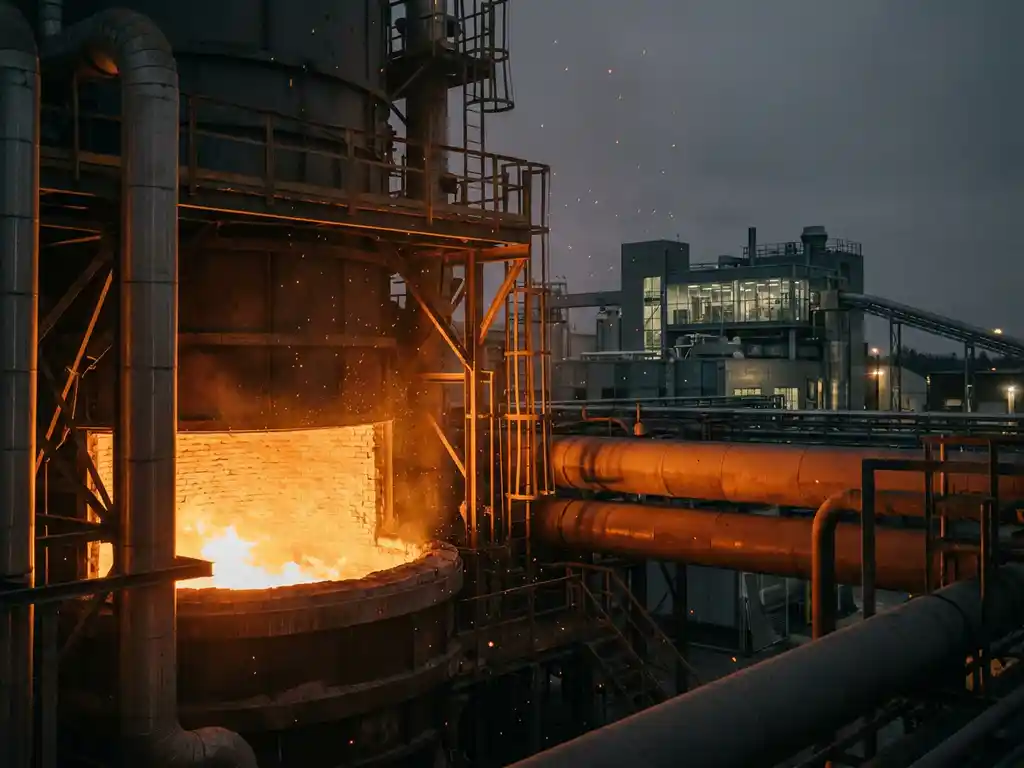
The industries most affected by the shift to renewable energy are those that depend heavily on high-temperature heat: food and beverage processing, specialty chemicals, and pulp and paper manufacturing. These sectors burn enormous quantities of fossil fuels every day, making them both major contributors to emissions and the most exposed to tightening climate regulations, rising carbon costs, and growing pressure from customers and investors to decarbonise.
Sticking with fossil fuels is becoming more expensive every year
For industrial companies, the cost of doing nothing is no longer zero. Carbon pricing under the EU Emissions Trading System keeps rising, and industries that rely on gas- or oil-fired boilers are absorbing those costs directly. At the same time, customer procurement teams and institutional investors are scrutinising Scope 1 emissions with increasing seriousness. Companies that cannot show a credible decarbonisation plan risk losing contracts, access to capital, and their social licence to operate. The fix starts with understanding which part of your energy use is hardest to clean up—for most manufacturers, that is heat.
Waiting for the perfect solution is slowing down your decarbonisation progress
Many sustainability managers are caught in a holding pattern: full electrification is too expensive or constrained by grid capacity, hydrogen infrastructure is not ready at scale, and biomass comes with its own sustainability questions. While the search for the perfect option continues, emissions targets keep drawing closer. The practical path forward is to evaluate technologies that can work within your existing infrastructure now, rather than waiting for a single silver-bullet solution that may arrive too late to meet your commitments.
Why is industrial heat so difficult to decarbonise?
Industrial heat is hard to decarbonise because most processes require very high temperatures—often above 500°C—that electricity and hydrogen struggle to deliver cost-effectively at scale. Unlike lighting or transport, heat demand in manufacturing is continuous, intensive, and deeply embedded in existing equipment and infrastructure.
Industry accounts for roughly 37% of total global energy consumption, and around two-thirds of that energy goes towards heat generation. Of that heat, approximately 80% is still produced by burning fossil fuels. The sheer scale of this dependency is one challenge. The other is technical: electric boilers and heat pumps lose efficiency at high temperatures, and direct hydrogen combustion requires significant infrastructure investment that most facilities cannot absorb quickly.
For sectors like specialty chemicals and pulp and paper, process temperatures are not negotiable. The heat must be reliable, consistent, and available on demand. That combination of requirements rules out many otherwise promising technologies and explains why industrial heat has lagged behind other sectors in the clean energy transition.
What are the main clean energy alternatives for industrial heat?
The main clean energy alternatives for industrial heat are electrification, green hydrogen, biomass, and iron fuel. Each works differently and suits different operational contexts. No single option fits every industry or facility.
Here is a brief overview of each approach:
- Electrification: Electric boilers and heat pumps work well for lower-temperature applications, but efficiency drops at high temperatures and grid connection costs can be prohibitive for large facilities.
- Green hydrogen: Hydrogen can reach the temperatures industrial processes need, but it requires new storage, handling, and burner infrastructure. Supply chains are still developing in most regions.
- Biomass: Widely used today, but increasingly scrutinised for land use, supply chain emissions, and sustainability certification requirements.
- Iron fuel: Iron powder burns cleanly at very high temperatures, producing zero direct CO₂ and ultra-low NOₓ. The combustion by-product, iron oxide, is regenerated back into iron fuel using hydrogen, creating a circular cycle. The boiler integrates with existing infrastructure, which reduces the cost and disruption of switching.
The right choice depends on your process temperatures, existing infrastructure, available grid capacity, and budget for capital investment. For many companies, a combination of technologies will be the most realistic path, rather than a single replacement for fossil fuels. You can explore how clean heat solutions compare for industrial applications to get a clearer picture of what fits your operation.
Which sectors are closest to making the renewable energy switch?
Food and beverage, specialty chemicals, and pulp and paper are currently the sectors closest to making the renewable energy switch for industrial heat. These industries face strong regulatory pressure, high energy costs, and growing customer expectations around sustainability—all of which create a real business case for acting now.
Food and beverage companies often operate at process temperatures that are achievable with current clean heat technologies, and many have already set public net-zero targets that require action on Scope 1 emissions this decade. Specialty chemicals producers face significant exposure to EU carbon pricing and are actively evaluating alternatives to gas-fired processes. Pulp and paper manufacturers have long experience with biomass but are now looking for options that offer better emissions credentials and a more reliable supply.
What these sectors share is a combination of urgency and operational readiness. Their existing boiler infrastructure can, in many cases, be complemented by new clean heat systems without requiring a complete rebuild. That makes the transition more financially manageable and operationally less disruptive than in sectors where the entire production process would need redesigning.
How does the EU’s energy policy affect industrial companies?
EU energy policy affects industrial companies primarily through the Emissions Trading System (ETS), which puts a direct price on CO₂ emissions. As free allowances are phased out and carbon prices rise, companies that have not reduced their emissions face growing costs that erode margins and competitiveness.
Beyond the ETS, the EU’s Industrial Emissions Directive sets strict limits on pollutants, including NOₓ, which affects what fuels and combustion technologies are permissible. The EU taxonomy for sustainable finance also influences access to capital: companies that cannot demonstrate credible decarbonisation plans may find green financing harder to secure.
On the positive side, EU policy also creates funding opportunities. The EU Innovation Fund, for example, has provided significant grant support for clean industrial technologies, including iron fuel. For sustainability managers building the business case for new heat technologies, these funding mechanisms can meaningfully improve the financial picture and accelerate internal approval processes.
What should industrial companies do first to prepare for the energy transition?
The first step for industrial companies preparing for the energy transition is to map their heat demand: understand which processes require heat, at what temperatures, and how much energy they consume. Without this baseline, it is impossible to evaluate which clean technologies are actually viable for your site.
Once you have a clear picture of your heat demand, a practical sequence looks like this:
- Audit your current boiler infrastructure — identify which systems are nearing end-of-life and where retrofits or complements are feasible without major disruption.
- Assess your temperature requirements — technologies that work at 150°C are very different from those needed at 800°C or above. This narrows your options quickly.
- Evaluate total cost of ownership, not just capital cost — factor in carbon pricing, fuel supply stability, and long-term contract options when comparing alternatives.
- Explore available funding — EU Innovation Fund grants, national subsidy schemes, and green financing instruments can significantly change the economics of switching.
- Start a pilot or demonstration project — real-world operational data from your own facility is far more persuasive for internal stakeholders than theoretical projections.
The companies making the most progress are those that treat decarbonisation as an operational planning challenge, not just a sustainability reporting exercise. Getting the technical and financial groundwork right early creates options; waiting until regulatory or market pressure forces a decision usually means fewer of them. Understanding the mechanics of iron fuel technology can help you assess whether it belongs in your transition plan.
How RIFT helps industrial companies decarbonise their heat
We developed Iron Fuel Technology specifically for industries where electrification and hydrogen are not yet viable—and where the pressure to cut emissions is real and growing. Here is what working with us looks like in practice:
- Drop-in compatibility: Our Iron Fuel Boiler integrates with your existing boiler infrastructure, so you do not need to rebuild your entire heat system to get started.
- Zero direct CO₂ emissions: Iron fuel combustion produces no CO₂. The only by-product is iron oxide, which we recover and regenerate back into fuel.
- Up to 95% energy efficiency: Our boiler system outperforms many conventional fossil fuel systems on efficiency, which matters for your operating costs as well as your emissions.
- Long-term fuel supply agreements: We provide iron fuel under long-term contracts, giving you the supply security you need to plan ahead.
- Cost-competitive pricing: Iron fuel is priced to be competitive with fossil fuels, which makes the business case easier to build internally.
We have already signed the first commercial contract worldwide for industrial iron fuel use, and our technology has been demonstrated at an industrial megawatt scale. If you are ready to explore what this could mean for your facility, get in touch with our team to start the conversation.
Related Articles
- What is EIA?
- What is tidal energy and how does it work?
- What are the benefits of renewable energy?
- What is wind energy and how is it generated?
- What is the biggest renewable resource?
This content was generated with the help of AI and it may contain mistakes