

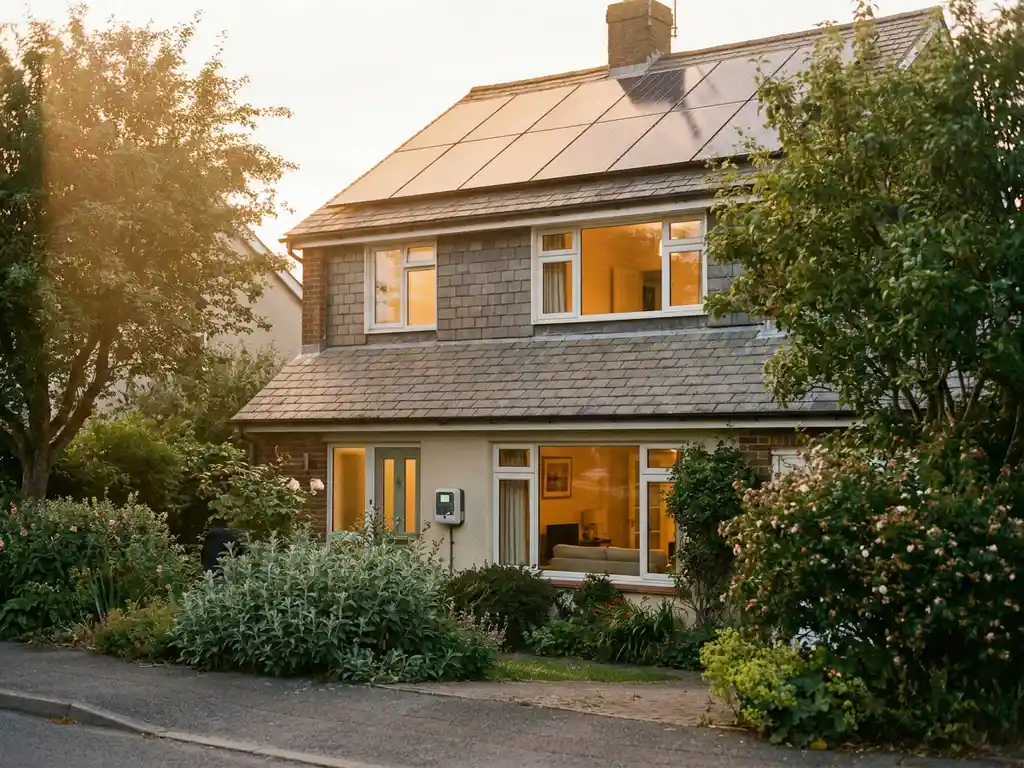
Renewable energy is increasingly affordable for average households, though upfront costs remain a real barrier. Solar panels, heat pumps, and green energy tariffs have all dropped in price significantly over the past decade. Whether renewable energy makes financial sense for your home depends on your location, energy usage, and the technology you choose — but for most households, the long-term savings outweigh the initial investment.
Upfront costs stop households from switching before they even compare prices
The sticker price of a solar panel system or heat pump is often the first thing people see — and it stops the conversation before it starts. A typical home solar installation can run into several thousand pounds or euros, and heat pumps often cost more to install than a conventional boiler. What gets missed is the payback calculation: in many cases, households recoup installation costs within several years through lower energy bills and continue saving after that. The fix is straightforward: look past the purchase price and compare the total cost over ten or fifteen years with what you currently spend on energy. That shift in framing changes the decision entirely.
Waiting for renewable energy to get cheaper could cost you more than acting now
Renewable technology prices have fallen sharply over the past decade and are now close to their floor in many categories. Meanwhile, fossil fuel energy prices remain volatile — and households that delay switching keep paying those unpredictable rates. Government incentive schemes, grants, and subsidies also change over time and are not guaranteed to remain in place. If you qualify for support today, waiting could mean missing out. The practical step is to get a current quote, check what financial support is available in your area, and run the numbers based on your actual energy bills — not a hypothetical future price.
What is renewable energy, and how does it work for homes?
Renewable energy for homes refers to electricity or heat generated from naturally replenishing sources — primarily solar, wind, and geothermal energy. Home systems typically convert sunlight into electricity via solar panels, use heat pumps to extract warmth from the air or ground, or source electricity from renewable-backed grid tariffs. The energy is used directly in the home or, in some cases, exported back to the grid.
The most common home renewable setup is a rooftop solar photovoltaic (PV) system. Solar panels generate direct current electricity from sunlight, which an inverter converts into alternating current for household use. Any surplus electricity can be stored in a battery or sold back to the grid through an export tariff.
Heat pumps work differently. Rather than generating heat by burning fuel, they move heat from one place to another — extracting warmth from outdoor air or the ground and transferring it into the home. This process is highly efficient and produces no direct emissions at the point of use, making it a strong option for replacing gas boilers in suitable homes.
How much does renewable energy actually cost for households?
The cost of renewable energy for households varies by technology. A rooftop solar PV system for an average home typically costs between £5,000 and £10,000 in the UK, or a comparable range in euros across Europe. Air-source heat pumps generally cost between £8,000 and £15,000 installed. Green energy tariffs from suppliers carry little or no premium over standard tariffs in many markets.
These figures represent installed costs before any grants or subsidies. The actual out-of-pocket expense for many households is lower once government support is factored in. Running costs after installation are generally lower than those of fossil-fuel equivalents, which is where the financial case builds over time.
Battery storage adds to the upfront cost of a solar system — typically £2,000 to £5,000 extra — but increases the proportion of your solar energy that you actually use, improving the overall return. Whether it makes sense depends on your household’s energy consumption patterns and whether you are on a time-of-use electricity tariff.
Does switching to renewable energy save money in the long run?
Yes. For most households, switching to renewable energy saves money over the long term. Solar panels typically pay back their installation cost within seven to twelve years and have a lifespan of twenty-five years or more. Heat pumps have lower running costs than gas boilers in most scenarios, particularly as electricity-to-gas price ratios improve under decarbonisation policies.
The savings depend on several factors: how much energy you use, when you use it, your local electricity and gas prices, and whether you have battery storage. Households that use more energy during daylight hours benefit most from solar. Those in colder climates or with poor insulation may see smaller savings from heat pumps until the building fabric is improved.
Over a fifteen- to twenty-year horizon, the combination of lower bills, reduced exposure to fossil fuel price volatility, and potential income from energy exports can make renewable systems financially compelling — even without grants.
What are the biggest barriers to affordable renewable energy at home?
The biggest barriers to affordable home renewable energy are high upfront capital costs, unsuitable housing stock, limited access to financing, and uncertainty about technology choices. These factors affect different households in different ways, and no single barrier applies to everyone.
Upfront cost is the most commonly cited obstacle. Renters face an additional layer of difficulty because they cannot install systems in properties they do not own. Older homes with solid walls, limited roof space, or poor insulation may require additional investment before renewable technologies perform efficiently.
The main barriers, summarised:
- High installation costs — particularly for heat pumps and solar-plus-storage combinations
- Unsuitable housing — properties with small or shaded roofs, or without space for ground-source systems
- Renting — tenants cannot install systems without landlord agreement
- Access to finance — upfront loans or green mortgages are not equally available to all income groups
- Information gaps — households often lack clear, trustworthy guidance on which technology suits their situation
Which renewable energy option is cheapest for most households?
For most households, a green electricity tariff is the cheapest entry point into renewable energy — it requires no installation and no upfront cost. Among installed technologies, solar PV typically offers the strongest financial return for owner-occupiers with suitable roofs, combining relatively low installation costs with a long operational life and visible bill savings.
Heat pumps have higher installation costs but can deliver significant long-term savings, particularly as gas prices rise relative to electricity. They work best in well-insulated homes and are often most cost-effective as a replacement for oil heating rather than gas in markets where gas is still relatively cheap.
The cheapest option for your household depends on your starting point:
- No upfront budget — switch to a renewable electricity tariff from your current supplier
- Moderate budget, own your home — solar PV is typically the highest-return first step
- Replacing a heating system — compare heat pump costs with your current fuel type and local grant availability
- Want to maximise self-sufficiency — combine solar with battery storage once the core system is in place
What government schemes make renewable energy more affordable?
Most countries offer some form of financial support for household renewable energy, ranging from direct grants and subsidies to low-interest loans and tax incentives. In the UK, the Boiler Upgrade Scheme provides grants toward heat pump installation. Across the EU, national and regional programmes vary but commonly include subsidised loans and investment grants for solar and heat pump systems.
Feed-in tariffs and smart export guarantees allow households to earn money by selling surplus electricity back to the grid, improving the payback period on solar installations. Some energy suppliers offer their own incentive schemes on top of government programmes.
Eligibility criteria, payment levels, and programme availability change regularly. The most reliable way to find current support is to check your national energy agency or government website directly, or speak with a certified installer who works with the schemes in your area. Acting while current programmes are open is worth considering, as support levels are not guaranteed to remain unchanged.
How RIFT helps with industrial renewable energy
While this article focuses on household renewable energy, the challenge of decarbonising heat extends far beyond the home. Industrial heat — used in food production, chemicals, and paper manufacturing — is one of the hardest sectors to clean up, and it is where we at RIFT focus our work.
We developed Iron Fuel Technology as a practical solution for industries that cannot simply electrify or switch to hydrogen. Our Iron Fuel Boiler delivers high-temperature, carbon-free heat with up to 95% energy efficiency and near-zero emissions — and it integrates with existing boiler infrastructure without requiring a full system overhaul.
- Zero direct CO₂ emissions from iron fuel combustion
- Ultra-low NOₓ emissions — the lowest of any fuel
- Cost-competitive pricing aligned with fossil fuel alternatives
- Long-term fuel supply agreements for operational reliability
- Designed to complement existing fossil fuel boilers
If you are a sustainability manager evaluating clean heat options for your facility, we would be glad to talk through how Iron Fuel Technology works and whether it fits your operations. You can also explore our industrial heat solutions to see which sectors we currently serve. When you are ready to take the next step, get in touch with our team to start the conversation.
Related Articles
- Is nuclear energy considered renewable?
- What is the difference between solar and wind energy?
- What are the benefits of renewable energy?
- What state has the most clean energy?
- What are the 7 types of renewable energy?
This content was generated with the help of AI and it may contain mistakes