

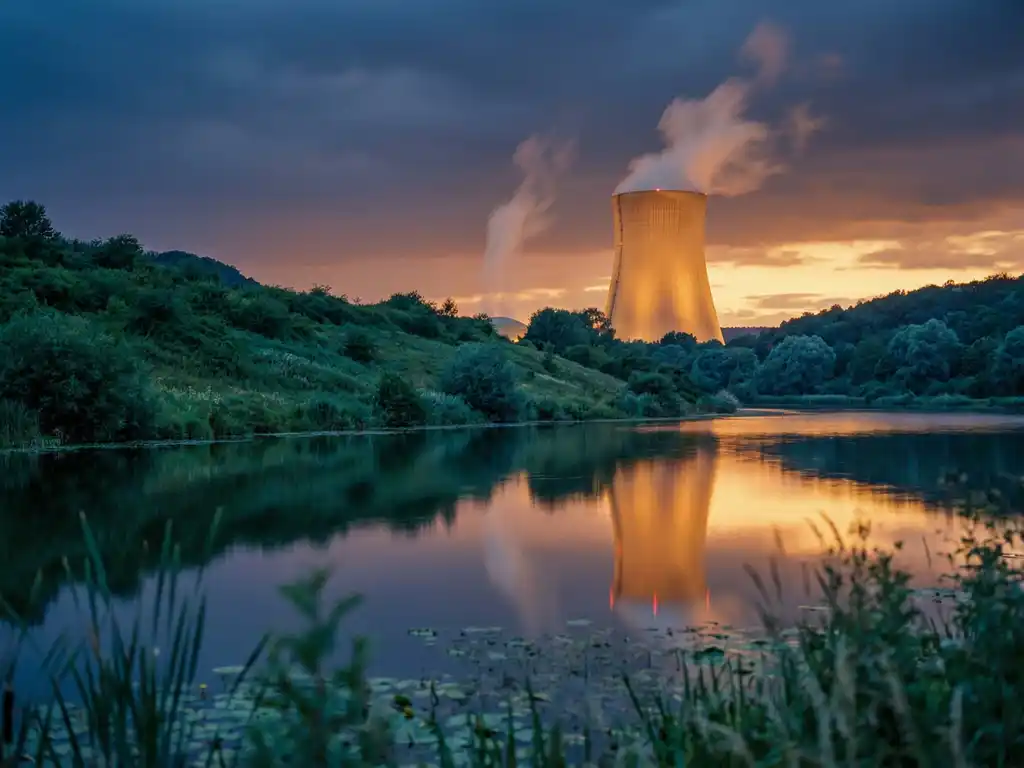
Nuclear energy is not universally considered renewable energy. Most scientific and regulatory definitions classify renewables as energy sources that replenish naturally on a human timescale, such as solar, wind, and hydro. Uranium, the primary fuel for nuclear reactors, is a finite resource extracted from the Earth. However, nuclear power is widely recognised as a low-carbon energy source, which places it in a separate but important category in the clean energy conversation.
Conflating ‘low-carbon’ and ‘renewable’ is slowing down your decarbonisation strategy
When sustainability managers treat nuclear as renewable simply because it produces little CO₂, they risk building a decarbonisation roadmap on a misclassification. Nuclear power plants can take decades to permit and build, uranium supply chains carry geopolitical risk, and the technology is largely inaccessible to industrial operators who need heat, not electricity. The practical fix is to separate the question of carbon intensity from the question of renewability, and then evaluate each technology against your specific operational needs, timeline, and infrastructure constraints.
Waiting for the perfect clean energy solution is costing your operations real emissions today
Many industrial companies are in a holding pattern, waiting to see whether nuclear, hydrogen, or full electrification will become viable at scale before committing to a decarbonisation path. Meanwhile, Scope 1 emissions from industrial heat continue to accumulate, regulatory pressure through frameworks such as the EU Emissions Trading System intensifies, and the cost of inaction compounds. A more productive approach is to evaluate technologies that are commercially available now and can integrate with existing boiler infrastructure, rather than waiting for a single silver-bullet solution to mature.
What does ‘renewable energy’ actually mean?
Renewable energy refers to energy derived from sources that replenish naturally and continuously on a human timescale. Common examples include solar radiation, wind, moving water, geothermal heat, and biomass. The defining characteristic is that the resource is not depleted through use, making it theoretically inexhaustible compared with fossil fuels or uranium.
The concept of renewability is distinct from the concept of being clean or low-carbon. A renewable energy source can still produce emissions depending on how it is used, and a non-renewable source can produce very low emissions during operation. This distinction matters enormously when evaluating energy policy, corporate sustainability strategies, and technology investment decisions.
Different bodies define renewable energy with slight variations. The International Energy Agency, the European Commission, and national regulators all use broadly similar definitions, but the details affect how energy is classified for subsidy eligibility, carbon accounting, and regulatory compliance. For industrial operators, understanding exactly which definition applies in your jurisdiction is a practical starting point.
Is nuclear energy considered renewable by scientists and policymakers?
Nuclear energy is generally not classified as renewable by mainstream scientific definitions or most major regulatory frameworks because uranium is a finite, mined resource. However, some policymakers and national governments treat nuclear as a low-carbon or clean energy source and include it in climate strategies alongside renewables. The EU taxonomy, for example, includes nuclear under certain conditions, though not as a renewable.
The scientific community largely agrees that nuclear does not meet the strict definition of renewable energy. Research institutions and energy agencies tend to place nuclear in its own category, often labelled as low-carbon or zero-emission, rather than grouping it with solar or wind.
At the policy level, the picture is more varied. France, for instance, has long championed nuclear as a cornerstone of its clean energy mix. The United States includes nuclear in several federal clean energy incentive programmes. The EU’s inclusion of nuclear in its sustainable finance taxonomy was controversial and came with strict conditions around waste management and safety. So while the scientific classification is fairly clear, the political and regulatory treatment of nuclear energy varies significantly by country and context.
How does nuclear energy compare to fossil fuels in carbon emissions?
Nuclear energy produces dramatically fewer lifecycle carbon emissions than fossil fuels. When measured across the full lifecycle, including construction, fuel processing, and decommissioning, nuclear power generates roughly 10 to 30 grams of CO₂ equivalent per kilowatt-hour. Natural gas produces around 400 to 500 grams per kilowatt-hour, and coal can exceed 800 grams. On carbon intensity alone, nuclear compares favourably with most renewable sources, too.
The key word is lifecycle. Nuclear plants themselves produce no direct CO₂ during electricity generation. The emissions associated with nuclear come from mining and enriching uranium, constructing the plant, and managing waste. These are real emissions, but they are spread across decades of operation, making the per-unit carbon footprint relatively low.
For industrial operators focused on Scope 1 emissions, this comparison has limited direct relevance. Nuclear plants generate electricity, not the high-temperature heat that most industrial processes require. Converting electricity back into heat introduces efficiency losses, and the infrastructure requirements are substantial. The carbon comparison with fossil fuels is useful for electricity grid discussions, but it does not translate directly into a solution for industrial heat decarbonisation.
What are the main arguments for and against calling nuclear energy ‘green’?
The case for calling nuclear energy green rests primarily on its low carbon emissions during operation and its ability to generate large amounts of reliable baseload power without burning fossil fuels. The case against centres on uranium being a finite resource, the unresolved challenge of long-term radioactive waste storage, high construction costs, and long build times. Both sides have legitimate technical grounding.
Arguments in favour of the ‘green’ label include:
- Very low lifecycle CO₂ emissions compared with fossil fuels
- Reliable, continuous power generation regardless of weather conditions
- No air pollutants such as NOₓ or particulate matter during operation
- High energy density, meaning a small physical footprint relative to output
Arguments against the ‘green’ label include:
- Uranium is a non-renewable, finite resource
- Radioactive waste remains hazardous for thousands of years, with no globally agreed permanent storage solution
- New nuclear plants can take 15 to 20 years to build, making them too slow for near-term climate targets
- Construction costs have escalated significantly in recent decades, making nuclear among the most expensive forms of new electricity generation
The honest answer is that nuclear occupies a middle ground. It is cleaner than fossil fuels but does not meet the full criteria for green or renewable energy. Whether that middle ground is acceptable depends on the specific climate goal, the available alternatives, and the timeframe in question.
What are the alternatives to nuclear energy for decarbonising industrial heat?
The main alternatives for decarbonising industrial heat are electrification using heat pumps or electric boilers, green hydrogen combustion, biomass, and emerging technologies such as iron fuel. Each option has different temperature capabilities, infrastructure requirements, cost profiles, and maturity levels. No single solution fits every industrial context, which is why many operators are evaluating a portfolio of technologies.
Electrification works well for low- to medium-temperature processes, but many industrial applications require heat above 300°C, where electric heat pumps become less efficient or are technically limited. Direct electric heating can reach higher temperatures but demands significant grid upgrades and can be costly at scale.
Green hydrogen can generate very high temperatures and produces no direct CO₂ when burned. However, hydrogen infrastructure is still developing, storage and transport present practical challenges, and the cost of green hydrogen remains high in most markets. For many industrial sites, hydrogen is a promising but not yet practical near-term solution.
Biomass is already deployed at industrial scale and can generate high-temperature heat, but sustainability concerns around land use and supply chain emissions have led to tightening regulations in several jurisdictions. It is a viable bridge technology for some sectors but not a universal long-term answer.
Iron fuel is a newer option worth understanding. You can learn more about how Iron Fuel Technology works and why it was designed specifically for the industrial heat challenge that other technologies struggle to address.
Which energy source is best for replacing fossil fuels in industry?
There is no single best energy source for replacing fossil fuels across all industrial applications. The right choice depends on the process temperature required, existing infrastructure, available energy carriers in the region, capital budget, and timeline. That said, technologies that can deliver high-temperature heat with zero or near-zero direct CO₂ emissions, without requiring a complete rebuild of existing infrastructure, are generally the most practical starting point for most industrial operators.
For high-temperature processes above 500°C, the options narrow considerably. Electrification becomes technically complex, hydrogen requires new infrastructure, and biomass faces regulatory headwinds. This is the segment of industrial heat that remains most dependent on fossil fuels and where the decarbonisation gap is largest.
The most pragmatic approach for most industrial operators is to evaluate technologies against three criteria: technical fit for your specific process temperatures, compatibility with your existing boiler and site infrastructure, and commercial availability within your planning horizon. A technology that works in theory but cannot be deployed within your emissions-reduction timeline has limited practical value.
Explore the industrial heat solutions available today to understand which options are commercially ready and how they compare with your specific operational requirements.
How RIFT helps with decarbonising industrial heat
We developed Iron Fuel Technology specifically to address the part of the energy transition that most clean technologies overlook: high-temperature industrial heat. Here is what makes our approach practical for sustainability managers evaluating their options today:
- Zero direct CO₂ emissions: Iron fuel combustion produces no carbon dioxide. The only CO₂ in the system comes from a pilot safety flame, resulting in just 10 kg of CO₂ per MWh of heat produced.
- Ultra-low NOₓ: Our Iron Fuel Boiler achieves less than 5 mg/MJ of nitrogen oxide emissions, the lowest of any fuel, which supports regulatory compliance and air quality targets.
- Drop-in compatibility: The Iron Fuel Boiler is designed to integrate with existing boiler infrastructure, reducing the capital disruption and operational risk of switching from fossil fuels.
- High efficiency: The system achieves up to 95% energy efficiency, outperforming many conventional fossil fuel boilers.
- Circular fuel cycle: Iron powder burns to iron oxide, which is regenerated back into iron fuel using hydrogen. The material is reused indefinitely, with no carbon in the loop.
- Commercial readiness: We have signed the first commercial contract for Iron Fuel Technology and are actively scaling towards broader deployment, backed by €113.8 million in funding.
If you are building the business case for industrial heat decarbonisation and want to understand whether iron fuel fits your site and sector, get in touch with our team to start the conversation.
Related Articles
- What is EIA in America?
- What is VEKI?
- What is energy poverty and can renewables help solve it?
- What is Europe's approach to the energy transition?
- What is a heat pump and how does it use renewable energy?
This content was generated with the help of AI and it may contain mistakes