

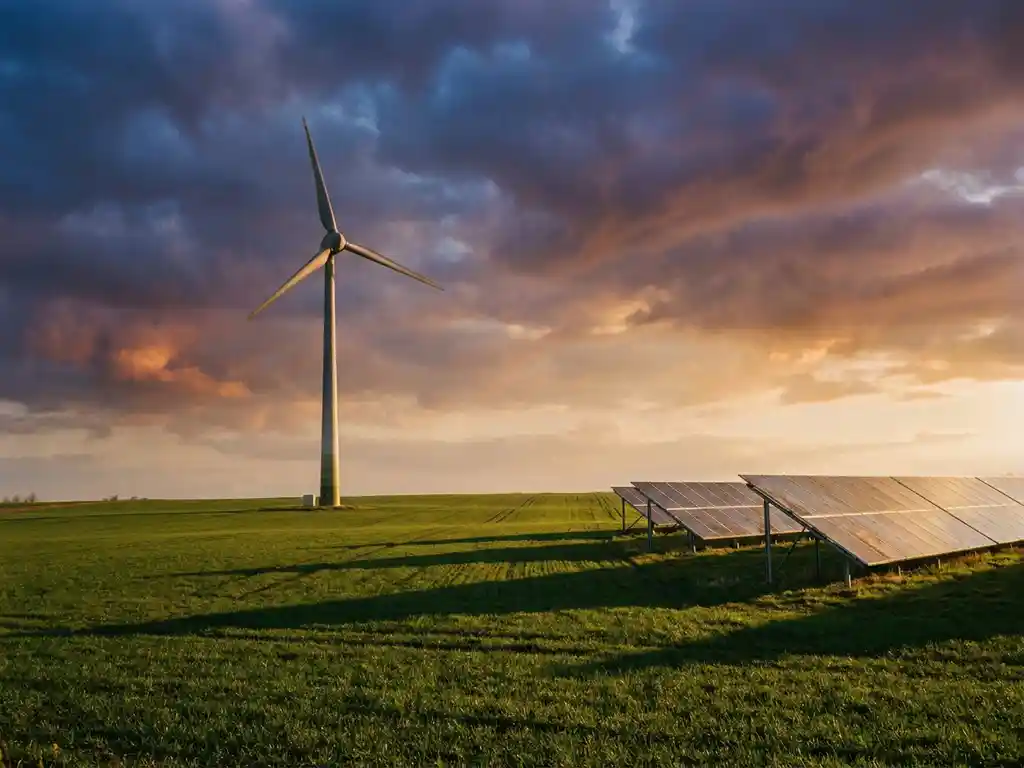
Solar and wind energy are both forms of renewable energy that convert natural resources into electricity without burning fossil fuels. Solar panels capture sunlight and turn it into power through photovoltaic cells, while wind turbines convert the kinetic energy of moving air into electricity. Both are clean, widely deployed, and central to the global energy transition — but they work differently, perform differently, and suit different applications.
Relying on a single renewable source leaves your energy strategy exposed
Solar and wind energy each have one fundamental weakness: they only produce power when conditions are right. Solar output drops at night and on overcast days. Wind generation falls when the air is calm. If your energy strategy leans too heavily on one source, you face output gaps that are hard to predict and harder to fill. The real cost is not just a higher electricity bill — it is operational vulnerability. For industrial users especially, energy reliability is not optional. The solution is not to abandon renewables, but to understand how solar and wind complement each other, and where neither is enough.
Electricity-focused thinking is holding back industrial decarbonisation
Most conversations about solar and wind energy focus on electricity generation — and that makes sense for households and offices. But for industrial operations, the challenge looks very different. Around two-thirds of industrial energy consumption goes toward heat, not electricity. Solar and wind can power machines and lighting, but they do not directly produce the high-temperature heat that factories, chemical plants, and food processors depend on. Treating renewables as a complete decarbonisation solution for industry misses that gap entirely. Understanding where solar and wind fall short is the first step toward finding solutions that actually work at industrial scale.
How does solar energy work compared to wind energy?
Solar energy works by converting sunlight into electricity using photovoltaic (PV) cells, which release electrons when exposed to light. Wind energy works by using turbine blades to capture the kinetic energy of moving air, spinning a generator to produce electricity. Both produce clean electricity, but through completely different physical processes and under different conditions.
Solar panels are typically installed on rooftops or in ground-mounted arrays. When photons from sunlight strike the silicon cells in a panel, they knock electrons loose, creating a flow of direct current (DC) electricity. An inverter then converts this to alternating current (AC) for use in buildings or the grid.
Wind turbines work on a different principle. The blades are shaped like aerofoils — similar to aircraft wings — so that moving air creates lift, causing the blades to rotate. This rotation drives a generator inside the turbine nacelle. Wind farms can be built onshore or offshore, with offshore installations generally benefiting from stronger, more consistent wind speeds.
The key operational difference is predictability. Solar generation follows a daily and seasonal rhythm tied to daylight hours. Wind generation is less predictable, varying with weather patterns. In practice, the two sources often complement each other: solar peaks during the day in summer, while wind can be stronger at night and during the winter months.
Which is more efficient: solar or wind energy?
Wind energy is generally more efficient than solar in terms of energy conversion. Modern wind turbines convert roughly 35 to 45 percent of the wind’s kinetic energy into electricity. Commercial solar panels typically convert 15 to 22 percent of sunlight into electricity, though premium panels can exceed this range. However, efficiency alone does not determine which technology is better suited to a given location or application.
Efficiency comparisons between solar and wind are useful, but they do not tell the whole story. A highly efficient wind turbine in a low-wind area will underperform a moderately efficient solar array in a sun-rich region. The capacity factor — how often a generator actually produces power relative to its maximum output — is often a more practical measure. Offshore wind farms tend to achieve high capacity factors, sometimes above 50 percent. Solar installations vary widely depending on geography and season.
For large-scale energy generation, wind tends to produce more electricity per unit of land area in suitable locations. Solar, on the other hand, is more modular and scalable — it can be deployed on existing rooftops without requiring dedicated land. The right choice depends on the specific site, local climate, grid infrastructure, and the energy needs being served.
What are the limitations of solar and wind energy for industry?
The main limitations of solar and wind energy for industrial use are intermittency, the inability to directly produce high-temperature heat, and infrastructure requirements. Industrial processes often demand continuous, reliable energy at specific temperatures and volumes — conditions that solar and wind cannot consistently guarantee without significant storage or backup systems.
Intermittency is the most widely discussed challenge. Industrial operations typically run around the clock, but solar panels produce nothing at night and wind turbines stop when the wind drops. Battery storage can bridge short gaps, but storing enough energy to power a large manufacturing facility through extended low-generation periods is expensive and technically complex.
The heat problem is less discussed but arguably more significant for industry. Solar and wind generate electricity, but many industrial processes need direct heat — often at temperatures above 500°C, sometimes above 1,000°C. Converting electricity to heat at that scale is possible through electric boilers or heat pumps, but the cost and grid capacity requirements can make full electrification impractical for many facilities.
Infrastructure is a third barrier. Connecting large renewable installations to industrial sites requires grid upgrades, permits, and long planning timelines. For companies with near-term decarbonisation targets, waiting years for grid infrastructure is not always a viable path. These limitations do not make solar and wind irrelevant to industry — they make it clear that renewable electricity alone is not sufficient for full industrial decarbonisation.
What are the alternatives to solar and wind for industrial heat?
The main alternatives to solar and wind for industrial heat include hydrogen combustion, biomass, electric boilers, and emerging technologies such as iron fuel. Each offers a different trade-off between emissions, cost, infrastructure requirements, and operational compatibility. The right choice depends on the industry, temperature requirements, and existing infrastructure.
Hydrogen combustion can produce high-temperature heat with low or zero direct carbon emissions when green hydrogen is used. However, green hydrogen remains expensive, and the infrastructure for storing and transporting it at industrial scale is still developing in many regions.
Biomass boilers are a more established option, but their sustainability credentials depend heavily on sourcing. They also produce particulate emissions and require significant fuel storage and logistics.
Electric boilers and heat pumps work well for lower-temperature applications, but they struggle to reach the extreme temperatures required by sectors such as specialty chemicals or pulp and paper. Grid capacity constraints add further complexity for large industrial users.
Iron fuel is one of the newer alternatives gaining traction. Iron powder burns at temperatures up to 2,000°C, producing no direct CO₂ emissions — only iron oxide, which can be regenerated back into iron fuel using hydrogen. This circular approach addresses both the heat intensity and the emissions challenge simultaneously. You can read more about how this technology works on the Iron Fuel Technology page.
How Iron Fuel Technology helps with industrial heat decarbonisation
For industrial companies that have looked at solar and wind and found them insufficient for their heat needs, we offer a different path. Our Iron Fuel Boiler delivers high-temperature, carbon-free heat that integrates with existing boiler infrastructure — no full overhaul required.
- Zero direct CO₂ emissions from combustion, with ultra-low NOₓ output
- Up to 95% energy efficiency, outperforming many conventional fossil fuel systems
- Drop-in compatibility with existing boilers, reducing disruption and upfront cost
- Long-term fuel supply agreements to ensure operational continuity
- Circular fuel cycle — iron oxide is regenerated back into iron fuel using hydrogen
Our technology has already been demonstrated at megawatt scale and has reached Technology Readiness Level 7. The first commercial contract has been signed. If you are evaluating decarbonisation options for industrial heat, explore our industrial heat solutions or get in touch with our team to discuss what is possible for your facility.
Related Articles
- How to complete EIA?
- What is an EIA number?
- What are the main types of renewable energy?
- How do countries transition to renewable energy?
- What is wind energy and how is it generated?
This content was generated with the help of AI and it may contain mistakes