

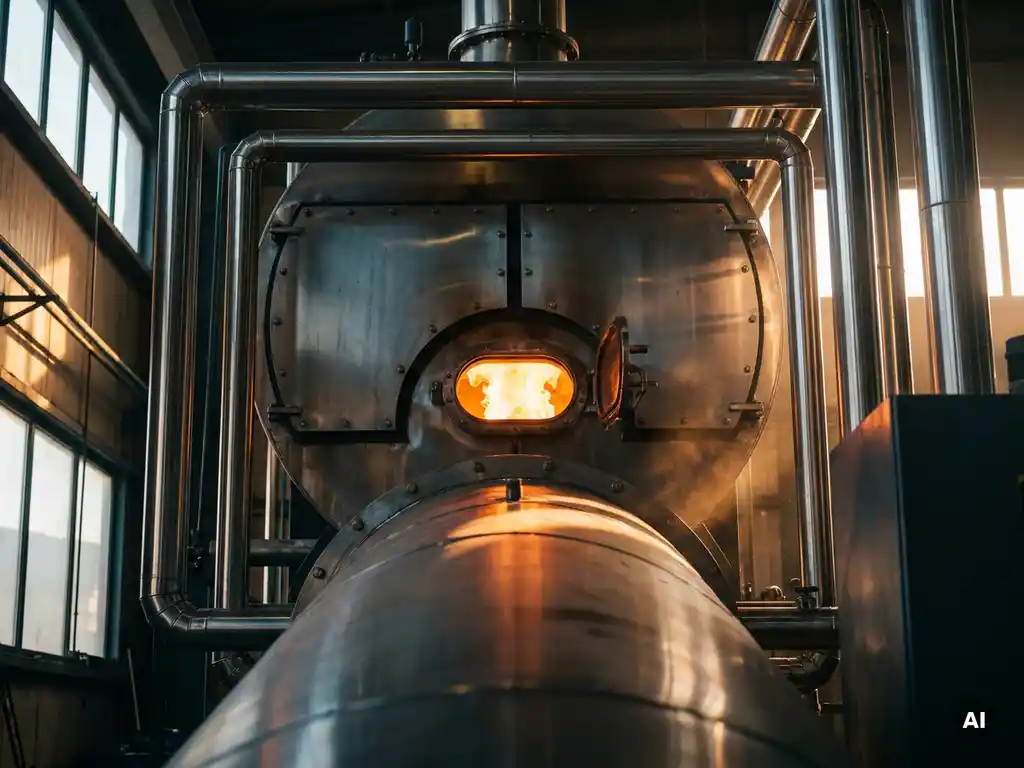
Several industries can switch to carbon-free heat generation right now, not in a decade. Food and beverage, specialty chemicals, and pulp and paper are among the sectors best positioned to make the transition today, because their heat demand profiles, existing boiler infrastructure, and regulatory pressures align well with emerging clean heat technologies. The sections below unpack which sectors lead the way, what makes them ready, and what still slows the rest down.
Which sectors produce the most heat-related CO₂ emissions?
The industrial sector is responsible for around 37% of total global energy consumption, and roughly two-thirds of that energy goes toward heat generation. Of all that industrial heat, approximately 80% is still produced by burning fossil fuels, making it one of the largest and most stubborn sources of CO₂ emissions worldwide.
The heaviest emitters are energy-intensive process industries. Cement, steel, and glass manufacturing operate at extremely high temperatures and consume enormous volumes of fuel. But high-volume heat users in food and beverage processing, pulp and paper production, and specialty chemicals are also significant contributors, and critically, they tend to operate at temperature ranges that are far more accessible to emerging clean heat technologies.
The reason heat emissions are so difficult to tackle is structural. Unlike electricity, heat cannot easily be transported or stored at scale, so each facility effectively needs its own heat generation system. That means decarbonizing industrial heat requires replacing or retrofitting thousands of individual boilers and furnaces across dozens of sectors, rather than switching a handful of large power plants.
What makes an industry ready to switch to carbon-free heat?
An industry is ready to switch to carbon-free heat when four conditions align: it operates at temperature ranges compatible with clean heat technologies, it has existing boiler infrastructure that can be complemented or retrofitted, it faces meaningful regulatory or commercial pressure to reduce emissions, and a viable clean heat solution exists at competitive cost.
Readiness is not just a technical question. Regulatory frameworks matter enormously. The EU Emissions Trading System (ETS) places a direct financial cost on carbon emissions, making the business case for clean heat stronger every year. At the same time, subsidy instruments such as the VEKI (Versnelde Klimaatinvesteringen Industrie) scheme in the Netherlands provide financial support for industrial companies investing in CO₂-reducing production technologies, specifically targeting measures with a payback period of more than five years without subsidy support. For sustainability managers building the internal business case for clean heat investment, these instruments can be decisive.
Operationally, industries that already run steam or hot water boilers are in the best position. They do not need to redesign their entire production process, only replace or supplement the heat source. That drop-in compatibility dramatically lowers the barrier to entry.
How does iron fuel compare to electrification and hydrogen for industrial heat?
Iron fuel, electrification, and hydrogen each offer a path to carbon-free industrial heat, but they differ significantly in temperature capability, infrastructure requirements, cost, and practical readiness. For many industrial users, iron fuel addresses gaps that electrification and hydrogen currently cannot fill.
Electrification
Electric heating technologies such as heat pumps and electric boilers are well-suited to lower-temperature applications, typically below 150°C. They are commercially available and relatively straightforward to deploy. However, they depend entirely on grid capacity and grid carbon intensity, and for high-temperature industrial processes, they become technically limited or prohibitively expensive. Grid connection upgrades can take years and cost millions.
Hydrogen
Hydrogen can reach the high temperatures that industrial processes demand, and it produces no direct CO₂ when burned. The challenge is infrastructure. Hydrogen requires dedicated pipelines or on-site storage, is costly to transport, and its safety requirements add complexity. Green hydrogen supply remains limited and expensive in most markets, making it a longer-term solution for many facilities.
Iron fuel
Iron fuel combusts at temperatures up to 2,000°C, covering the full range of industrial heat demand. It is transported as a dry powder in standard containers, requires no new pipeline infrastructure, and integrates with existing boiler setups. Our Iron Fuel Boiler achieves up to 95% energy efficiency and produces just 10 kg of CO₂ per MWhth of thermal energy, which comes exclusively from a pilot safety flame rather than the combustion process itself. RIFT claims this delivers the lowest NOx emissions of any fuel at under 5 mg/MJ, though this is based on our own measurements at demo scale (TRL7) rather than independently verified data across all operating conditions.
For industries where electrification is constrained by grid capacity and hydrogen is too costly or infrastructure-dependent, iron fuel technology offers a practical and deployable alternative today.
What temperature ranges can carbon-free heat technologies actually reach?
Carbon-free heat technologies span a wide range of temperatures, but not all of them reach the levels that industrial processes require. Understanding which technology covers which temperature band is essential for assessing whether a switch is actually feasible for a given sector.
- Heat pumps: typically deliver heat up to 80-150°C, suitable for space heating, hot water, and some food processing applications
- Electric boilers and resistance heating: can reach 200-400°C in many configurations, covering a broader range of process heat needs
- Green hydrogen combustion: capable of reaching temperatures above 1,000°C, making it suitable for high-temperature industrial processes in theory
- Iron fuel combustion: produces a flame of up to 2,000°C, covering the full spectrum of industrial heat demand from steam generation to high-temperature process heat
The practical implication is that electrification alone cannot decarbonize all industrial heat. A significant portion of industrial processes, particularly in chemicals, glass, ceramics, and paper drying, require temperatures that only combustion-based technologies can currently deliver at scale. This is precisely the gap that iron fuel and hydrogen are designed to fill, with iron fuel offering the additional advantage of not requiring new gas infrastructure.
Which industries are already switching to carbon-free heat generation?
Several industries are actively making the switch to carbon-free heat generation in 2026, driven by a combination of regulatory pressure, energy cost volatility, and the increasing commercial availability of clean heat solutions.
Food and beverage is one of the most active sectors. Many processes in this industry operate at steam temperatures that are well within the range of multiple clean heat technologies, and companies face growing pressure from both regulators and retail customers to reduce their Scope 1 emissions. The sector’s relatively standardized boiler setups also make technology integration more straightforward.
Pulp and paper is another early mover. The sector is highly energy-intensive and has a long history of investing in efficiency improvements. Companies in this space are increasingly evaluating clean heat alternatives as fossil fuel costs and carbon pricing make the status quo less attractive.
Specialty chemicals is the third sector where early adoption is visible. While chemical processes vary enormously in their temperature requirements, many facilities already operate sophisticated energy management systems and have the technical capability to evaluate and integrate new heat technologies.
A landmark moment came when Kingspan Unidek signed the world’s first commercial contract for the industrial use of Iron Fuel Technology, covering the delivery of an Iron Fuel Boiler and a long-term fuel supply agreement. This signals that the transition from pilot to commercial deployment is already underway, not just in planning documents but in signed contracts.
What barriers still prevent faster adoption of clean industrial heat?
Despite genuine momentum, several barriers continue to slow the adoption of carbon-free heat at the pace that climate targets require. Understanding these obstacles is the first step toward addressing them.
- Upfront investment cost: Clean heat technologies typically require significant capital expenditure. The cost difference compared to continuing with fossil fuel infrastructure remains a real obstacle, even when long-term operational savings are factored in. Subsidy mechanisms like VEKI exist precisely to bridge this gap, but not every company qualifies or has the capacity to navigate the application process.
- Technology uncertainty: Many industrial decision-makers are cautious about adopting technologies that have not yet been proven at full commercial scale. Most clean heat solutions, including iron fuel, are currently at demonstration or early commercial stage, which introduces perceived risk for buyers.
- Infrastructure readiness: Hydrogen supply chains remain underdeveloped in most regions. Grid capacity constraints limit electrification. Even iron fuel, which avoids many infrastructure challenges, requires a reliable supply chain for iron powder and hydrogen-based regeneration.
- Regulatory complexity: While frameworks like the EU ETS and energy efficiency directives create pressure to act, navigating subsidy schemes, permitting processes, and reporting obligations adds administrative burden, particularly for mid-sized companies without dedicated sustainability teams.
- Internal decision-making cycles: Sustainability managers often have to build the business case upward to boards and CFOs who are focused on operational continuity and capital allocation. Long approval cycles slow deployment even when the technology and the economics are sound.
The good news is that these barriers are not permanent. Regulatory support is growing, supply chains are maturing, and early commercial deployments are building the track record that cautious buyers need to move forward. The EU Innovation Fund, which contributed €30.7 million to RIFT’s funding package, is one example of public capital being deployed specifically to accelerate this transition.
How RIFT helps industries switch to carbon-free heat
We developed Iron Fuel Technology specifically to address the decarbonization challenge that electrification and hydrogen cannot fully solve for energy-intensive industries. Our industrial heat solutions are designed to be practical, not just technically impressive.
Here is what that means in practice for sustainability managers evaluating their options:
- Zero direct CO₂ during combustion: our Iron Fuel Boiler produces just 10 kg of CO₂ per MWhth, exclusively from a pilot safety flame, not from the combustion of iron fuel itself
- Up to 95% energy efficiency: outperforming many conventional fossil fuel systems currently in operation
- No new pipeline infrastructure required: iron fuel is transported as a dry powder in standard containers, making it compatible with existing site logistics
- Drop-in compatibility: the Iron Fuel Boiler is designed to complement existing boiler infrastructure, reducing the disruption and capital risk of a full system replacement
- Long-term fuel supply included: we provide both the boiler system and a reliable iron fuel supply agreement, so you are not left managing a new supply chain independently
- Backed by €113.8 million in funding: including an €83.1 million Series B and a €30.7 million EU Innovation Fund grant, giving industrial partners confidence in our ability to deliver at commercial scale
We are currently focused on food and beverage, specialty chemicals, and pulp and paper, the sectors where the case for clean industrial heat is clearest and where our technology fits best. If your organisation is evaluating how to decarbonize its heat generation and you want to understand whether iron fuel is the right fit, get in touch with our team to start the conversation.
Frequently Asked Questions
How long does it typically take to retrofit an existing boiler system to run on iron fuel?
The retrofit timeline varies depending on facility size and existing infrastructure, but because the Iron Fuel Boiler is designed for drop-in compatibility with existing boiler setups, installations are generally less disruptive than a full system replacement. For facilities already running steam or hot water boilers, integration can often be completed without redesigning core production processes. Working closely with the technology provider from the assessment phase onward helps compress timelines and avoid unexpected delays.
What happens to the iron powder after combustion — is the waste product manageable?
When iron fuel burns, it oxidizes into iron oxide (rust), which is a solid, non-toxic byproduct. This iron oxide can then be regenerated back into iron powder using renewable hydrogen, closing the fuel cycle without producing CO₂. The solid nature of both the fuel and the byproduct is actually one of iron fuel’s logistical advantages — it avoids the gas handling, venting, and leak-detection challenges associated with hydrogen, and the regeneration loop is designed to be part of the broader supply chain managed by the fuel provider.
How does carbon pricing under the EU ETS actually affect the financial case for switching to clean heat right now?
Under the EU Emissions Trading System, industrial operators must surrender carbon allowances for every tonne of CO₂ they emit, and allowance prices have been trending upward over time, adding a direct and growing cost to fossil fuel-based heat generation. As carbon prices rise, the operational cost gap between conventional and clean heat narrows — and in some scenarios, clean heat becomes the cheaper option over a multi-year horizon even before subsidies are applied. Sustainability managers building an internal business case should model carbon price trajectories alongside energy costs, since the ETS exposure alone can materially shift the payback calculation.
Our facility uses both high- and low-temperature heat in the same production process. Can iron fuel cover the full range, or do we need a hybrid approach?
Iron fuel combustion reaches flame temperatures of up to 2,000°C, which means it can technically serve the full spectrum of industrial heat demand within a single facility. However, a hybrid approach combining iron fuel for high-temperature process heat with heat pumps or electric boilers for lower-temperature needs (such as hot water or space heating) can be a cost-effective strategy, particularly where grid capacity is sufficient for the lower-temperature loads. The right configuration depends on your specific temperature profile, energy volumes, and site infrastructure — which is exactly the kind of assessment RIFT’s team works through with prospective customers.
What's the best first step for a sustainability manager who wants to evaluate iron fuel for their facility?
The most practical starting point is a heat demand audit — mapping your facility’s temperature requirements, annual heat consumption volumes, and existing boiler infrastructure. This gives you the data needed to assess technology fit, model the business case, and identify which subsidy instruments (such as VEKI in the Netherlands or equivalent national schemes) your investment may qualify for. From there, engaging directly with RIFT’s team allows you to move from a general evaluation to a site-specific feasibility assessment, which is the foundation for any board-level investment proposal.
Is iron fuel technology commercially available right now, or is it still in the pilot stage?
Iron fuel technology has progressed beyond the pilot stage and into early commercial deployment. The landmark contract signed with Kingspan Unidek — covering the delivery of an Iron Fuel Boiler and a long-term fuel supply agreement — marks the transition from demonstration to real commercial use. That said, it is important to be transparent: the technology is currently at TRL7 (demonstration scale), meaning it is proven and deployable but not yet operating across a wide base of commercial installations. Early adopters benefit from close collaboration with RIFT and from being part of a technology rollout backed by €113.8 million in funding, which provides meaningful assurance of delivery capability.
How does iron fuel perform in terms of safety compared to natural gas or hydrogen?
Iron powder is a solid, dry material that does not combust spontaneously under normal handling conditions and does not carry the explosion or leak risks associated with pressurized gas fuels like natural gas or hydrogen. It is transported in standard containers without the need for specialized pipelines or high-pressure storage systems. As with any combustible industrial material, proper handling protocols are required, and RIFT provides guidance on safe storage and operations as part of its commercial agreements. The solid-state nature of the fuel is one of the reasons iron fuel integrates more straightforwardly into existing industrial site logistics than gaseous alternatives.
Related Articles
- What are the four types of EIA?
- What is the cleanest energy to use?
- What can green energy be used for?
- What is the difference between nuclear energy and renewable energy?
- What are 20 examples of renewable resources?
This content was generated with the help of AI and it may contain mistakes