

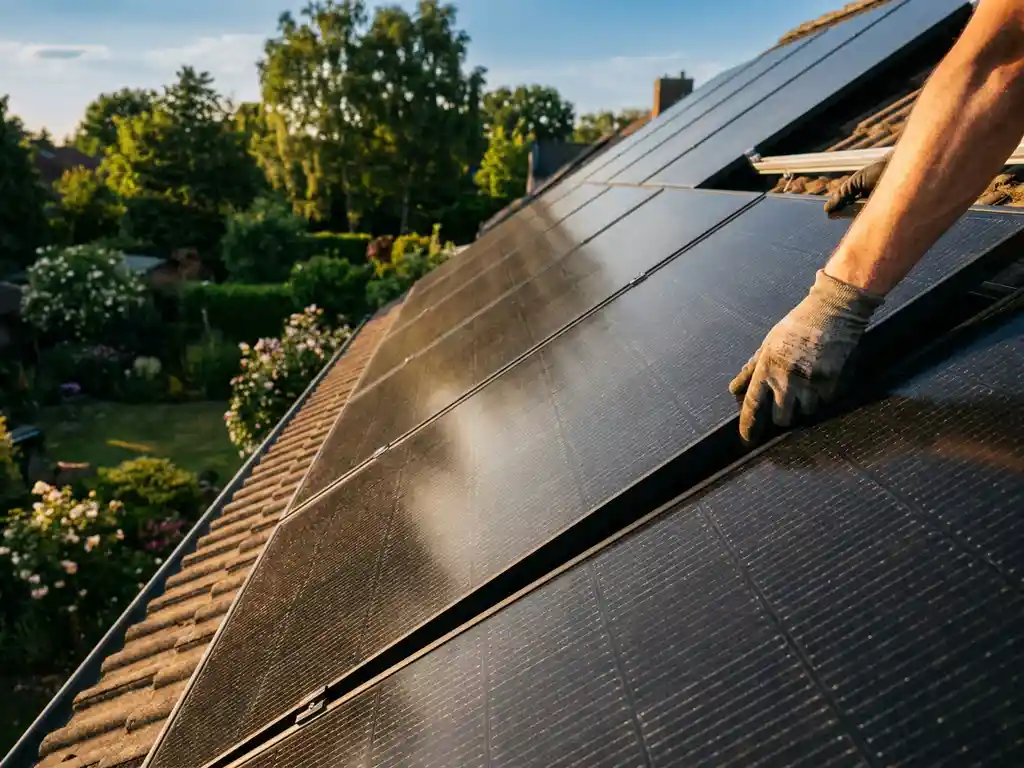
The payback period for solar panels typically ranges from 6 to 12 years for residential installations, depending on your location, energy usage, system size, and available incentives. After that point, the electricity your panels generate is essentially free. For commercial and industrial installations, payback periods can vary more widely, often stretching to 10 to 15 years, depending on scale and energy costs.
Waiting too long to act on renewable energy is costing you more than you realise
Every year you delay a renewable energy investment, you continue paying full price for fossil fuel energy while that energy becomes more expensive and more politically uncertain. For industrial operators in particular, the gap between current energy costs and the cost of decarbonised alternatives is real, but it narrows every year as clean technologies scale. The solution is not to wait for perfect economics. It is to understand the actual payback mechanics of each technology and make a decision based on your specific energy profile and operational context, not on general assumptions.
Choosing the wrong technology for your heat demand is holding back your decarbonisation progress
Solar panels are an excellent fit for electricity generation, but for industries that primarily need high-temperature heat, they address only part of the problem. Many sustainability managers spend time and budget evaluating solar as a universal solution, only to find that it does not cover their core energy demand. If your operations depend on process heat above 100°C, the payback calculation for solar looks very different from that of a facility that mainly needs electricity. Understanding which technology matches your actual energy demand is the first step towards a payback period that makes financial sense.
What factors affect how long solar panels take to pay back?
The payback period for solar panels depends on five core factors: how much electricity you currently pay for, how much sunlight your location receives, the size and quality of your system, the upfront cost after incentives, and how much of the generated electricity you actually use on-site versus export to the grid.
Location has an outsized effect. A solar installation in southern Spain or California will generate significantly more electricity per year than the same system installed in northern Germany or the UK. More generation means faster payback, all else being equal.
Your current electricity tariff matters just as much. If you pay a high rate per kilowatt-hour, every unit your panels produce is worth more in avoided costs. Businesses and homeowners in high-tariff markets typically see shorter payback periods than those in markets with subsidised or low-cost grid electricity.
The self-consumption rate is often overlooked. If you generate electricity during the day but your demand peaks in the evening, you may export a large share of your generation at a lower feed-in tariff than you pay to import. Systems paired with battery storage or aligned with daytime operational loads recover their costs faster.
How do you calculate the payback period for solar panels?
To calculate the payback period for solar panels, divide the total net cost of the system by the annual financial benefit it generates. The annual benefit combines electricity bill savings from self-consumed power and any income from exporting surplus electricity to the grid.
Here is the process in practical steps:
- Establish your total system cost after applying any available grants, subsidies, or tax incentives.
- Estimate your annual electricity generation based on your system size and your location’s solar irradiance data.
- Calculate the value of self-consumed electricity by multiplying the units you use directly by your current import tariff.
- Calculate the value of exported electricity by multiplying surplus units by your feed-in or export tariff.
- Add both values together to get your total annual financial benefit.
- Divide the net system cost by the total annual benefit to get your payback period in years.
For example, if your net system cost is €8,000 and your annual savings plus export income total €1,000, your payback period is 8 years. After that point, the system generates value at effectively zero marginal cost for the remainder of its 25- to 30-year lifespan.
Keep in mind that electricity prices tend to rise over time, which means your annual savings will likely increase as the years pass. A static calculation gives you a conservative baseline, but the real financial outcome is usually better.
What is a good payback period for solar panels?
A payback period of 6 to 9 years is generally considered good for residential solar. For commercial installations, 7 to 12 years is a reasonable benchmark. Anything under 6 years is excellent and typically reflects high electricity tariffs, strong sunlight, or generous incentive schemes.
Context matters when evaluating whether a payback period is acceptable. A homeowner who plans to stay in their property for 20 years has a very different risk profile from a business evaluating a 25-year asset against a 10-year lease. The question is not just how long the payback takes, but how it compares to the asset’s productive life and your own planning horizon.
For industrial operators, the threshold for “good” also depends on how the investment compares to alternatives. If the choice is between solar and continuing to pay rising fossil fuel prices, even a 12-year payback on a 30-year asset represents a strong return. The relevant comparison is not an abstract benchmark but the cost of doing nothing.
How does solar panel payback period compare to other clean energy investments?
Solar panels generally offer one of the shorter payback periods among renewable energy technologies for electricity generation, typically 6 to 12 years. Wind energy investments at industrial scale can have similar or shorter paybacks in the right locations. Technologies focused on industrial heat decarbonisation operate on different economics entirely, since they replace fuel costs rather than electricity costs.
The comparison becomes more meaningful when you match the technology to the energy type it replaces. Solar is well suited to electricity demand. For industries where the primary energy need is high-temperature process heat, the relevant comparison is between heat-specific technologies, not solar. Comparing solar payback to the payback of a heat decarbonisation solution is like comparing the cost of a car to the cost of a boat: both are modes of transport, but they solve different problems.
Battery storage, heat pumps, and industrial boiler upgrades each have their own payback profiles, often ranging from 5 to 15 years depending on scale and application. The key variable across all of them is how much of the current energy cost they displace and at what upfront investment. Technologies that address your largest energy cost centre will always produce the most compelling payback numbers.
For industrial operations where process heat dominates energy spend, Iron Fuel Technology represents a category of clean energy investment that solar simply cannot address. Understanding which part of your energy bill each technology targets is essential before comparing payback figures across different solutions.
What are the biggest mistakes that extend the payback period?
The most common mistakes that extend solar payback periods are oversizing the system relative to actual demand, underestimating the importance of self-consumption, ignoring ongoing maintenance costs, and failing to account for available incentives during the planning phase.
Oversizing is a frequent error, particularly for commercial buyers. A larger system costs more upfront, and if the excess generation is exported at a low feed-in tariff, the financial return per unit of capacity drops. Right-sizing a system to match actual consumption patterns produces a better payback than maximising installed capacity.
Here are the most common mistakes to avoid:
- Ignoring the self-consumption rate: A system that generates electricity when you are not using it exports at a lower rate than you pay to import, which stretches the payback period significantly.
- Skipping incentive research: Missing available grants, net metering schemes, or tax credits can add years to your payback unnecessarily.
- Using optimistic generation estimates: Relying on best-case solar irradiance figures rather than average or conservative data leads to disappointing real-world results.
- Underestimating degradation: Solar panels lose a small percentage of output each year. A 30-year payback calculation that ignores this will overstate long-term returns.
- Neglecting maintenance costs: Inverter replacements and panel cleaning are real costs that reduce net returns over the system’s life.
For industrial buyers evaluating any clean energy investment, the same principles apply. Accurate demand profiling, realistic performance assumptions, and thorough incentive mapping are the difference between a project that delivers on its business case and one that disappoints.
How RIFT helps with industrial clean energy investment
Solar panels solve the electricity side of the energy equation. But for industries that rely on high-temperature process heat, the bigger decarbonisation challenge often lies elsewhere. That is the problem we built Iron Fuel Technology to address.
Our Iron Fuel Boiler delivers:
- Zero direct CO₂ emissions from combustion, with only 10 kg CO₂ per MWh of thermal energy attributable to the pilot safety flame
- Up to 95% energy efficiency, outperforming many conventional fossil fuel boiler systems
- Ultra-low NOx emissions of under 5 mg/MJ, supporting regulatory compliance and air quality targets
- Drop-in compatibility with existing boiler infrastructure, reducing disruption and upfront transition costs
- Cost-competitive fuel pricing at €140 per tonne, with long-term supply agreements for planning certainty
If your operations depend on industrial heat and you are building the business case for decarbonisation, we can help you understand whether Iron Fuel Technology fits your energy profile and investment horizon. Explore our clean heat solutions or get in touch with our team to start the conversation.
Related Articles
- How can companies use renewable energy?
- Why do some countries rely more on renewable energy than others?
- How much of America's energy is clean?
- What is the biggest renewable resource?
- What are 5 renewable sources of energy?
This content was generated with the help of AI and it may contain mistakes