

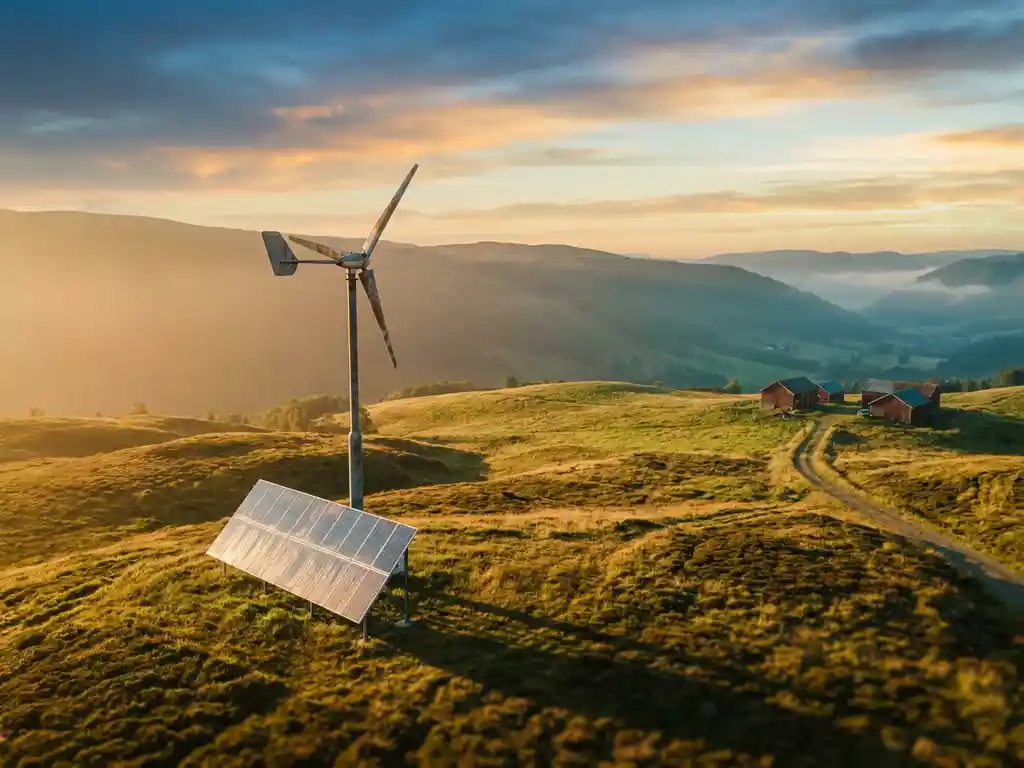
Some countries rely more on renewable energy than others because of a combination of natural geography, government policy, industrial structure, and investment history. Nations with abundant rivers, wind corridors, or sunlight have a clear physical advantage, but policy choices and economic incentives determine whether those resources are developed. Countries that committed early to clean energy infrastructure—and backed that commitment with regulation and funding—now generate a far greater share of their electricity and heat from renewable sources.
Fossil fuel dependency is slowing your decarbonisation progress more than you realise
For industrial operators, the problem is not just that fossil fuels produce emissions—it is that entire production systems have been built around them for decades. Boilers, burners, and heating systems are designed for gas or oil. When sustainability targets arrive, the infrastructure does not change overnight, and every year of delay compounds both the carbon liability and the cost of the eventual transition. The practical fix is not always a full system overhaul. Starting with technologies that integrate with existing infrastructure, rather than replacing it entirely, gives companies a viable path forward without halting production.
Treating all renewable energy as interchangeable is holding back industrial decarbonisation
Wind turbines and solar panels get most of the attention in the renewable energy conversation, but they produce electricity—and electricity alone cannot solve every decarbonisation challenge. Industrial heat, which accounts for roughly two-thirds of all industrial energy use, requires a different category of solution entirely. Companies that assume electrification will cover everything are often surprised to find that grid capacity, infrastructure costs, or process temperature requirements make it impractical. The shift in thinking required is simple but important: renewable energy is not one thing. Industrial heat needs its own dedicated solution, and that is where newer energy carriers are starting to fill the gap.
What does it mean for a country to ‘rely on’ renewable energy?
A country relies on renewable energy when a significant share of its total energy consumption—electricity, heat, and transport combined—comes from naturally replenishing sources such as wind, solar, hydropower, geothermal, and biomass. The percentage of renewable energy in a country’s electricity mix is the most commonly cited figure, but it does not capture the full picture of energy dependency.
Electricity is only one part of the story. Heat and transport together account for the majority of final energy demand in most countries, and these sectors remain far more dependent on fossil fuels than the electricity grid. A country might generate 80% of its electricity from renewables while still relying heavily on gas and oil for industrial processes and road transport.
This distinction matters because it shapes how countries measure and report progress. A country that counts only electricity in its renewable share will appear further along than one that includes industrial heat and transport. True energy independence from fossil fuels requires progress across all three sectors, not just the power grid.
Why do some countries generate more renewable energy than others?
Countries generate more renewable energy when they have the right combination of natural resources, political will, and long-term investment. Geography sets the ceiling—a country with strong winds, major rivers, or high solar irradiance has more to work with. But policy and finance determine how much of that potential is actually built.
Norway generates nearly all of its electricity from hydropower because its landscape is defined by mountains and rivers. Iceland runs on geothermal energy because it sits on volcanic terrain. Denmark has invested heavily in offshore wind because it has a long coastline and consistent wind conditions. These are not accidents—they are the result of matching available resources to deliberate infrastructure investment over many years.
Countries that industrialised early often built their energy systems around coal and gas, creating infrastructure that is expensive and slow to replace. Newer or smaller economies sometimes have an advantage here: they can build clean energy systems from the start rather than retrofitting existing ones.
Economic development also plays a role. Wealthier countries can absorb the upfront capital costs of renewable infrastructure more easily. Developing nations often face higher financing costs and competing priorities, even when the renewable resource potential is enormous—as is the case across much of Africa and South Asia.
How does government policy shape a country’s energy mix?
Government policy shapes a country’s energy mix by setting the rules, incentives, and mandates that determine what gets built, what gets subsidised, and what gets phased out. Without policy intervention, markets tend to favour the cheapest option in the short term, which has historically meant fossil fuels. Policy changes that calculus.
The most effective policy tools include carbon pricing mechanisms like the EU Emissions Trading System, which makes fossil fuel use progressively more expensive. Feed-in tariffs and contracts for difference give renewable energy developers guaranteed revenue, reducing the financial risk of building new capacity. Renewable portfolio standards require utilities to source a minimum share of energy from clean sources.
Regulatory certainty matters as much as the specific policy design. Investors and developers need confidence that the rules will not change before a project recoups its costs. Countries that have maintained consistent clean energy policy over decades—Germany, Denmark, the UK—have attracted far more investment than those with frequent policy reversals.
Industrial policy is equally important. Subsidies for research, grants for demonstration projects, and public procurement commitments help new technologies reach commercial scale. The EU Innovation Fund, for example, has supported the development of technologies that would struggle to attract purely private capital at an early stage.
What stops industries from switching to renewable energy sources?
Industries face four main barriers when switching to renewable energy: high upfront capital costs, infrastructure constraints, process compatibility requirements, and uncertainty about long-term fuel supply and pricing. These barriers interact with each other, making the transition feel riskier than continuing with fossil fuels, even when the long-term case is clear.
High-temperature industrial processes present a specific challenge. Many manufacturing sectors need heat above 500°C for their core operations—ceramics, chemicals, food processing, and pulp and paper. Electricity-based solutions struggle to reach these temperatures economically, and hydrogen infrastructure is not yet widely available at the scale and reliability that industrial operators require.
The cost gap between fossil fuels and decarbonised alternatives remains real, though it is narrowing. Carbon pricing helps close that gap, but it does so unevenly across geographies and sectors. Companies operating in regions without strong carbon pricing face a competitive disadvantage if they switch to more expensive clean energy while competitors do not.
Operational continuity is another factor that rarely gets enough attention. Industrial operators cannot simply shut down production to install new systems. Any technology that requires significant downtime or complete infrastructure replacement faces a much higher adoption barrier than one that can integrate with what is already in place.
Which countries are closest to running on 100% renewable energy?
Several countries already generate close to 100% of their electricity from renewable sources. Iceland, Norway, and Costa Rica consistently lead global rankings, each benefiting from specific geographic advantages. However, achieving 100% renewable energy across all sectors—including industrial heat and transport—remains out of reach for virtually every country.
Iceland is the clearest example of near-total renewable electricity generation, drawing on geothermal and hydropower that match its volcanic geology and glacial rivers. Norway achieves a similar result through hydropower. These are exceptional cases tied to unique natural conditions that most countries cannot replicate.
Denmark and Uruguay have made strong progress through policy-driven wind and solar investment rather than geographic luck. Denmark regularly generates more electricity from wind than it consumes, exporting the surplus to neighbouring grids. Uruguay shifted its electricity mix dramatically within a decade through sustained policy commitment and private investment.
The harder challenge for all of these countries is decarbonising heat and transport. Even Iceland, with its abundant geothermal resource, still uses fossil fuels in parts of its fishing fleet and industrial sector. The electricity grid is the easiest part of the energy system to decarbonise—the rest requires different technologies and approaches.
What new technologies are helping hard-to-decarbonise industries go green?
Several technologies are advancing to address industrial decarbonisation where electrification and conventional renewables fall short. These include green hydrogen combustion, advanced heat pumps, biomass and biogas systems, carbon capture, and emerging energy carriers such as iron fuel. Each addresses a different part of the hard-to-abate industrial heat problem.
Green hydrogen is the most discussed option, but it faces significant infrastructure and cost challenges. Producing, storing, and transporting hydrogen at industrial scale requires investment that most regions have not yet made. For many companies, hydrogen is a medium-term solution rather than something deployable today.
Heat pumps have improved considerably and can now reach temperatures that were previously impractical, but they still have limits for the highest-temperature industrial processes. Biomass and biogas offer a more immediate drop-in option for some sectors, though sustainability concerns around land use and supply-chain emissions apply depending on the source.
Iron fuel is one of the newer approaches gaining traction for high-temperature industrial heat. It works by burning iron powder to produce heat with no direct CO₂ emissions, then recovering the iron oxide by-product and regenerating it back into iron fuel using hydrogen—completing a circular cycle. You can read more about how Iron Fuel Technology works and why it is designed specifically for the industrial heat challenge that other technologies struggle to address.
What makes these emerging technologies relevant is not just their emissions profile, but their compatibility with existing industrial infrastructure. Technologies that require complete system replacement face slow adoption. Those that can complement or integrate with what is already installed have a much clearer path to real-world impact.
How RIFT helps industries transition to renewable heat
We built Iron Fuel Technology specifically for industries that electrification and hydrogen cannot yet reach. Our Iron Fuel Boiler delivers high-temperature, carbon-free heat that works alongside existing boiler infrastructure—no full system replacement required.
- Zero direct CO₂ emissions from combustion, with ultra-low NOₓ—making it one of the cleanest combustion-based heat sources available
- Up to 95% energy efficiency, outperforming most conventional fossil fuel boiler systems
- Drop-in compatibility with existing industrial setups, reducing disruption and capital risk
- Long-term fuel supply contracts that give operators the pricing certainty they need to plan ahead
- A circular fuel cycle—iron oxide produced during combustion is regenerated back into iron fuel using hydrogen, closing the loop
Our technology has already been demonstrated at megawatt industrial scale at Technology Readiness Level 7, with the first commercial contract signed and deployment underway. If you are evaluating clean heat solutions for your industrial operations and want to understand whether iron fuel is a fit for your sector, get in touch with our team and we will walk you through the specifics.
Related Articles
- How often does the EIA release reports?
- What are examples of clean energy?
- What is energy poverty and can renewables help solve it?
- How does renewable energy affect energy security?
- What are 9 renewable resources?
This content was generated with the help of AI and it may contain mistakes