

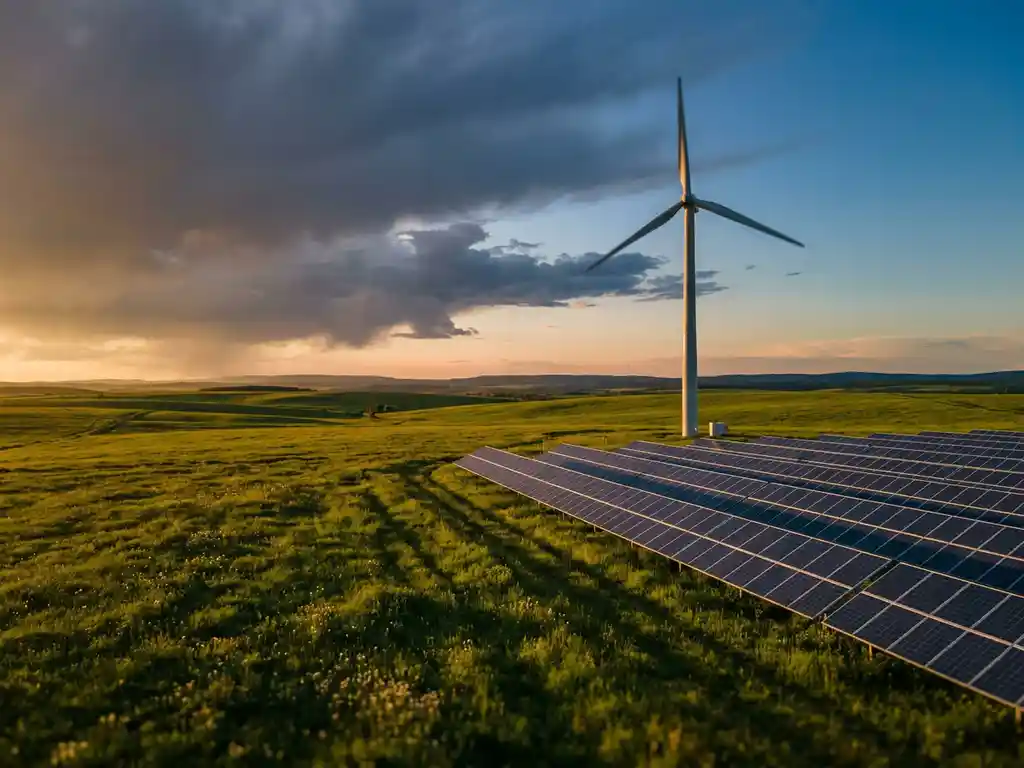
Renewable energy plays a central role in fighting climate change by replacing the fossil fuels that drive the majority of global carbon emissions. It powers homes, transport, and— increasingly—industry. But the transition is not happening evenly. While solar and wind have made strong progress in electricity generation, industrial heat remains one of the most stubborn sources of emissions on the planet, still overwhelmingly dependent on gas, coal, and oil.
Most emissions targets are failing because industrial heat is being ignored
When companies set net-zero targets, they often focus on electricity first—switching to renewable power, installing solar panels, buying green certificates. That is the easy part. The harder part, and often the bigger part of a company’s carbon footprint, is the heat used in production processes. In sectors like food processing, chemicals, and paper manufacturing, heat can account for the majority of direct emissions. If that heat still comes from a gas boiler, the net-zero target has a very large hole in it. The fix is not to wait for a perfect solution—it is to start evaluating the heat decarbonisation options available today, even if they are not yet mainstream.
Sticking with fossil fuel boilers is becoming a financial and regulatory liability
The EU Emissions Trading System is tightening, carbon prices are rising, and customer pressure on Scope 3 emissions is growing. Every year a company continues running fossil fuel boilers, it accumulates costs that go beyond the energy bill: compliance costs, reputational risk, and the increasing difficulty of securing long-term supply contracts on favourable terms. The practical step forward is to map your heat demand, understand what temperature ranges your processes require, and start comparing decarbonisation technologies against those specific requirements—not against a generic benchmark.
Why is industrial heat so hard to decarbonise?
Industrial heat is hard to decarbonise because many processes require very high temperatures that electricity and hydrogen struggle to deliver cost-effectively at scale. Unlike electricity generation, where renewable alternatives are now widely available and cost-competitive, industrial heat involves complex infrastructure, continuous operation requirements, and temperature demands that most clean technologies cannot yet meet reliably.
Around two-thirds of all industrial energy consumption goes toward heat generation. Of that, roughly 80% is still produced by burning fossil fuels. The challenge is not a lack of ambition—it is a genuine technical and economic gap. Many industrial processes require sustained temperatures above 1,000°C. Electric resistance heating can reach those temperatures in theory, but the electricity demand and grid infrastructure required make it impractical for most large-scale operations. Hydrogen combustion is promising, but dedicated hydrogen infrastructure is still limited in most regions, and costs remain high.
There is also the issue of capital continuity. Industrial boilers are long-lived assets. Companies cannot simply swap them out overnight without disrupting production. Any credible decarbonisation path for industrial heat needs to work with existing infrastructure, not require a complete rebuild from scratch.
What types of renewable energy can replace fossil fuels in industry?
Several renewable energy sources can replace fossil fuels in industrial settings, including green electricity, green hydrogen, biomass, and emerging solid energy carriers like iron fuel. Each suits different temperature ranges, infrastructure setups, and cost profiles. No single technology works for every industrial application, which is why sector-specific evaluation matters.
Here is a brief overview of the main options:
- Green electricity: Suitable for lower-temperature processes and electrification of mechanical systems. Limited by grid capacity and cost for high-temperature applications.
- Green hydrogen: Can replace natural gas in combustion processes and reach high temperatures. Constrained by infrastructure availability, storage complexity, and current production costs.
- Biomass: A combustion-based option that can integrate with existing boiler setups. Sustainability questions around feedstock sourcing and land use remain a concern.
- Iron fuel: A solid-state, circular energy carrier that burns without producing CO₂. It produces high-temperature heat and leaves behind iron oxide, which can be regenerated using hydrogen and reused.
The right choice depends on your process temperature requirements, your existing infrastructure, your access to energy sources, and your investment capacity. For many companies, a combination of technologies—rather than a single solution—will define the path forward.
How does iron fuel technology work as a clean energy carrier?
Iron fuel technology works by burning fine iron powder to generate high-temperature heat, producing zero direct CO₂ emissions. The only combustion by-product is iron oxide, which is then collected, transported to a production facility, and regenerated back into iron fuel using hydrogen—completing a closed, circular cycle.
The process follows four stages. Iron powder is stored and transported to industrial sites as a safe, solid-state energy carrier. It then combusts inside a boiler at temperatures up to 2,000°C, generating steam, hot water, or hot air for industrial processes. The iron oxide left behind is collected and sent for regeneration. Using low-carbon hydrogen, it is converted back into iron fuel, ready to be used again.
You can read more about the full process on the Iron Fuel Technology page.
What makes this approach practical for industry is that the Iron Fuel Boiler is designed to complement existing fossil fuel boilers rather than replace entire systems. It operates at up to 95% energy efficiency and produces only 10 kg of CO₂ per megawatt-hour of thermal energy—a figure attributable solely to the pilot safety flame, not the combustion itself. The technology has been demonstrated at megawatt industrial scale in Helmond, the Netherlands, at Technology Readiness Level 7, meaning it has moved well beyond the laboratory stage.
Which renewable energy solution is best for high-temperature industrial processes?
For high-temperature industrial processes, the best renewable energy solution depends on your specific temperature requirements, available infrastructure, and cost constraints. Iron fuel and green hydrogen are currently the strongest candidates for replacing fossil fuels in processes that require sustained heat above 500°C, where electrification becomes technically or economically difficult.
Green hydrogen can theoretically match the combustion temperatures of natural gas and is compatible with modified burner systems. However, access to hydrogen infrastructure and the cost of green hydrogen production remain significant barriers for most industrial operators today.
Iron fuel offers a different approach: it is a solid, storable energy carrier that can be handled and transported using existing logistics infrastructure. It burns at temperatures up to 2,000°C, making it suitable for demanding industrial heat applications. Because the Iron Fuel Boiler is designed to work alongside existing boiler systems, companies do not need to decommission their current setup to get started. That lowers both the technical and financial risk of the transition.
For processes in food and beverage, specialty chemicals, and pulp and paper—sectors where continuous, reliable heat supply is non-negotiable—this kind of drop-in compatibility is often the deciding factor.
How can industrial companies start reducing CO₂ emissions from heat today?
Industrial companies can start reducing CO₂ emissions from heat today by auditing their current heat demand, identifying which processes are most emission-intensive, and evaluating which decarbonisation technologies are compatible with their existing infrastructure. You do not need a complete overhaul to make meaningful progress.
A practical starting sequence looks like this:
- Map your heat demand: Understand how much heat your processes consume, at what temperatures, and which boilers or systems produce it.
- Identify your highest-emission sources: Focus first on the processes that burn the most fossil fuel. These offer the greatest CO₂ reduction potential per investment.
- Assess technology compatibility: Evaluate which clean heat technologies can integrate with your current setup without requiring full infrastructure replacement.
- Evaluate total cost of ownership: Look beyond upfront capital costs. Factor in fuel supply agreements, carbon compliance costs, and long-term price stability.
- Engage with suppliers early: Technologies like iron fuel are at the commercial deployment stage. Early engagement means you can shape the terms of supply agreements and deployment timelines.
The biggest mistake companies make is waiting for perfect conditions before acting. Carbon pricing will continue to rise, regulatory requirements will tighten, and the gap between early movers and late adopters will widen. Starting with a structured assessment now puts you in a much stronger position—both operationally and commercially.
Explore the range of industrial heat solutions available to understand what a transition could look like for your sector.
How RIFT helps industrial companies decarbonise their heat
We develop and deploy Iron Fuel Technology specifically for industrial companies that need high-temperature, carbon-free heat without rebuilding their entire infrastructure. Here is what working with us looks like in practice:
- Plug-and-play integration: Our Iron Fuel Boiler is designed to work alongside your existing fossil fuel boilers, so you can reduce emissions without halting production.
- Cost-competitive pricing: Iron fuel is priced to align with fossil fuel benchmarks, reducing the financial risk of switching.
- Long-term fuel supply: We offer supply agreements that give you certainty over fuel availability and pricing—essential for operational planning.
- Proven at scale: Our technology has been demonstrated at megawatt industrial scale and is already in commercial deployment, with the first contract signed with Kingspan Unidek.
- Near-zero emissions: Zero direct CO₂ from combustion and ultra-low NOₓ emissions, supporting your Scope 1 reduction targets.
If you are a sustainability manager building the business case for industrial heat decarbonisation, we are ready to talk through what Iron Fuel Technology could mean for your operations. Get in touch with our team to start the conversation.
Related Articles
- What is VEKI?
- How does solar energy work?
- What country has the least renewable energy?
- How much of America's energy is clean?
- What are 20 examples of renewable resources?
This content was generated with the help of AI and it may contain mistakes