

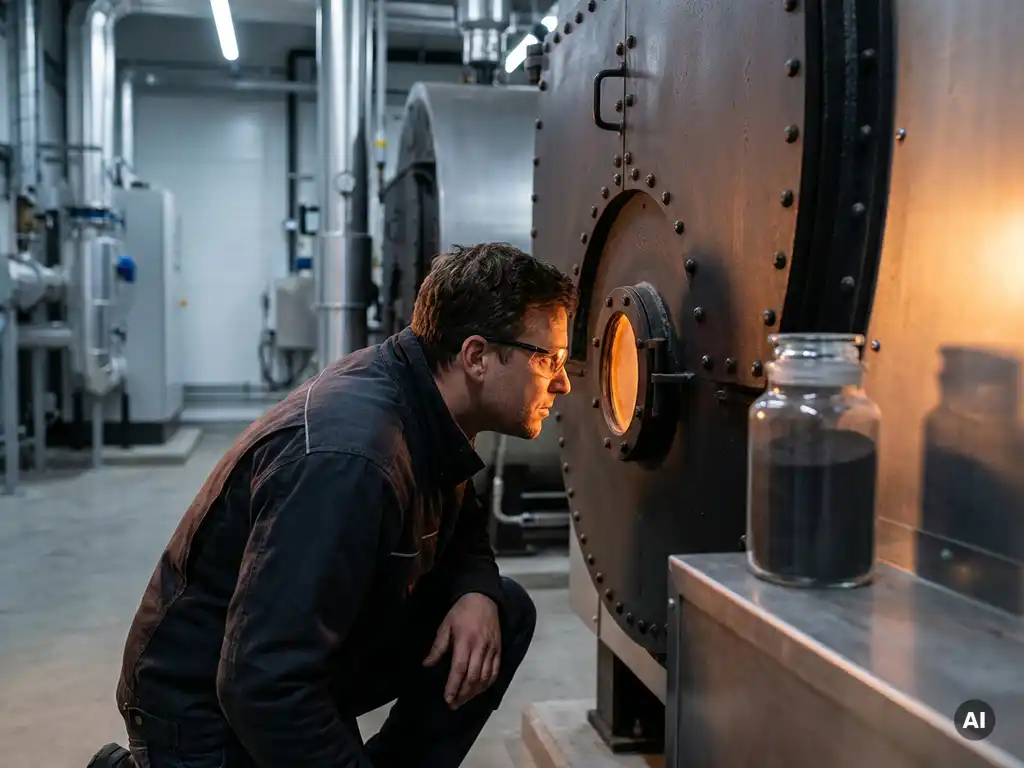
When evaluating clean heat technologies, sustainability managers should prioritize five core criteria: emissions performance, energy efficiency, infrastructure compatibility, fuel supply security, and total cost of ownership. These factors determine whether a technology can realistically replace fossil fuels in your operations without disrupting production or blowing your capital budget. The questions below unpack each of these priorities in practical detail.
What criteria matter most when comparing industrial heat technologies?
The most important criteria when comparing industrial heat technologies are emissions reduction potential, energy efficiency, integration complexity, cost competitiveness, and long-term supply reliability. No single factor is decisive on its own; the strongest business case emerges when a technology performs well across all five dimensions simultaneously.
Start with emissions performance, since this is the core driver behind the evaluation in the first place. Look beyond headline CO₂ figures and examine the full chain, from fuel production through to combustion. A technology that produces zero direct CO₂ during combustion but relies on carbon-intensive inputs upstream may not deliver the Scope 1 reductions your board-level targets require.
Energy efficiency matters more than many managers initially expect. A system that converts a higher share of fuel energy into usable heat reduces the volume of fuel you need to purchase, directly affecting your operating costs. Efficiency differences of even a few percentage points compound significantly over a full year of industrial operation.
Integration complexity is often underestimated. Technologies that require extensive retrofitting, new infrastructure, or changes to existing production processes carry hidden costs and operational risks. The smoother the integration, the faster you can realise emissions reductions without production downtime.
Finally, evaluate the total cost of ownership, not just upfront capital expenditure (CAPEX), but the ongoing operational expenditure (OPEX) over the asset’s lifetime. A technology with higher CAPEX can still be the right choice if its OPEX is lower and it avoids EU ETS carbon costs that would otherwise accumulate year after year.
How do clean heat technologies differ from full electrification and hydrogen?
Clean heat technologies differ from full electrification and hydrogen primarily in their infrastructure requirements, cost profiles, and suitability for high-temperature industrial processes. Electrification and hydrogen are viable in specific contexts, but for many energy-intensive industries, they face practical barriers that alternative clean heat solutions do not.
The challenge with full electrification
Electrification works well for low-to-medium-temperature heat, but struggles at the high temperatures that sectors like Specialty Chemicals, Food and Beverage, and Pulp and Paper require. Beyond temperature limitations, grid congestion is a growing obstacle across Europe. Many industrial sites simply cannot access the grid capacity needed to electrify large heat loads, and waiting for grid upgrades can mean delays of several years. Volatile energy prices add further uncertainty: locking your heat costs to electricity markets exposes your operations to significant price swings.
The challenge with hydrogen
Hydrogen offers genuine decarbonisation potential, but its commercial readiness for industrial heat remains constrained. Infrastructure for hydrogen transport and storage is still underdeveloped in most regions, and the cost of green hydrogen remains high relative to fossil fuels. For many companies, the timeline and investment required to build hydrogen-compatible infrastructure makes it an impractical near-term solution for replacing natural gas in existing boiler systems.
Alternative clean heat technologies, such as Iron Fuel Technology, address these gaps directly by offering grid-independent operation, high-temperature output, and compatibility with existing boiler infrastructure, without requiring new pipelines or grid connections.
What emissions metrics should sustainability managers actually measure?
Sustainability managers should measure three key emissions metrics when evaluating clean heat technologies: direct CO₂ emissions per unit of heat produced (kg CO₂/MWhth), full-chain CO₂ equivalent reductions (tCO₂eq per tonne of fuel), and nitrogen oxide (NOₓ) emissions. Tracking all three gives a complete picture of a technology’s environmental performance across both combustion and upstream production.
Direct CO₂ at the point of combustion is your primary Scope 1 metric and the most relevant figure for EU ETS compliance. Under the EU Emissions Trading System, you pay for every tonne of CO₂ your site emits directly, so reducing this number has an immediate and quantifiable financial benefit.
Full-chain CO₂ equivalent figures matter for accurate sustainability reporting and for meeting increasingly rigorous stakeholder expectations. A technology may appear clean at the point of use but carry significant upstream emissions depending on how its fuel is produced. Always ask suppliers for lifecycle emissions data, and check what assumptions underpin their figures, for example, whether CO₂ reduction claims assume the use of low-carbon hydrogen, which may not always be available or affordable in your region.
NOₓ emissions are often overlooked but are increasingly subject to regulatory scrutiny, particularly in the EU. They also affect local air quality, which can be relevant for your operating permits and community relations. When comparing technologies, ask for measured NOₓ data from real operating conditions, not just theoretical projections.
How does energy efficiency affect the business case for clean heat?
Energy efficiency directly affects the business case for clean heat by determining how much fuel you consume per unit of heat delivered, and therefore how much you spend on fuel over the system’s lifetime. A higher-efficiency system reduces OPEX, shortens payback periods, and makes the overall investment more competitive against fossil fuel alternatives.
Consider the practical difference: a system achieving up to 95% energy efficiency converts nearly all of its fuel input into usable heat. A less efficient system, even one running on a clean fuel, wastes a larger share of that input, increasing both fuel costs and the volume of fuel that needs to be produced, transported, and stored. At industrial scale, these inefficiencies add up quickly.
Efficiency also interacts with your EU ETS exposure. If your clean heat technology still produces some residual CO₂, even a small amount from a safety flame, for example, a higher-efficiency system means you produce less heat per unit of emission, keeping your carbon cost per MWh of useful heat as low as possible.
When building the internal business case, model energy efficiency as a lever on both sides of the ledger: it reduces your fuel bill and your carbon compliance costs simultaneously. This dual effect is particularly powerful when fossil fuel prices are volatile or when carbon prices are rising, both of which are realistic scenarios in the current European energy landscape.
When is a drop-in compatible technology the right choice?
A drop-in compatible technology is the right choice when your existing boiler infrastructure is still operational, when a full system replacement would cause unacceptable downtime or capital expenditure, or when you need to begin reducing emissions quickly without waiting for large-scale infrastructure projects to complete. Compatibility with existing setups is one of the most undervalued criteria in technology selection.
Drop-in compatibility means the new technology can integrate with your current heat generation setup, using existing pipes, heat exchangers, and control systems, rather than requiring a complete overhaul. This dramatically reduces both the upfront investment and the implementation timeline. For sustainability managers working under tight decarbonisation deadlines, this speed advantage can be the difference between meeting a 2030 target and missing it.
Drop-in solutions also reduce operational risk. Your team can work with familiar systems and processes, and you can phase in the new technology alongside existing equipment rather than committing to a full cutover. This is especially relevant for sectors where production continuity is critical, such as Food and Beverage or Specialty Chemicals, where unplanned downtime carries significant financial consequences.
That said, drop-in compatibility is not the right priority if your existing infrastructure is nearing end of life anyway, or if the technology’s performance limitations mean it cannot meet your temperature or capacity requirements. In those cases, a more comprehensive system replacement may deliver better long-term value despite higher upfront costs.
What should a long-term fuel supply agreement include?
A long-term fuel supply agreement for clean heat should include fixed or indexed pricing terms, guaranteed supply volumes, delivery logistics and storage responsibilities, quality specifications for the fuel, and clear provisions for what happens if supply is disrupted. Security of supply is as important as the technology itself: the best boiler system is worthless without a reliable fuel source.
The following elements are essential in any well-structured fuel supply agreement:
- Pricing structure: Agree on whether pricing is fixed, indexed to an energy benchmark, or subject to periodic renegotiation. Predictable fuel costs are a key advantage of clean heat technologies over fossil fuels, so locking in price stability should be a priority.
- Volume commitments: Define minimum and maximum delivery volumes aligned with your production schedule. This protects you against supply shortfalls during peak demand periods.
- Delivery and logistics: Clarify who is responsible for transport, storage, and handling at your site. Fuels that can be stored and transported in standard containers, without specialist infrastructure, significantly reduce logistical complexity.
- Fuel quality specifications: Specify the technical parameters the fuel must meet to ensure consistent boiler performance. Deviations in fuel quality can affect combustion efficiency and emissions output.
- Continuity and contingency provisions: Include terms that address supply interruptions, force majeure events, and minimum notice periods for changes to supply volumes or schedules.
- Duration and renewal terms: Long-term agreements provide planning certainty, but ensure you have flexibility to renegotiate if technology or market conditions change significantly.
A well-structured supply agreement transforms a clean heat technology from a one-off capital purchase into a managed energy service, giving your organisation the cost predictability and operational reliability that fossil fuel contracts have historically provided, but without the carbon liability.
How we help with the decarbonisation of industrial heat
We are RIFT, and we have built our entire business around solving the challenge this article addresses: delivering reliable, high-efficiency, carbon-free heat to energy-intensive industries that cannot wait for electrification or hydrogen infrastructure to catch up.
Our Iron Fuel Boiler system is designed specifically for sustainability managers who need a practical, near-term solution. Here is what that looks like in practice:
- Up to 95% energy efficiency – making our boiler system competitive with, and often superior to, conventional fossil fuel systems on operational cost
- Near-zero direct CO₂ emissions – just 10 kg of CO₂ per MWhth, stemming solely from a pilot safety flame, with zero CO₂ from the iron fuel combustion itself
- Ultra-low NOₓ emissions – RIFT claims the lowest NOₓ output of any fuel, at under 5 Mg/MJ, based on our demo-scale results at TRL7
- Drop-in compatible design – our boiler integrates with existing industrial setups, reducing retrofitting costs and implementation time
- Grid-independent operation – iron fuel is stored and transported in standard containers, so your heat supply is not exposed to grid congestion or volatile electricity prices
- Long-term fuel supply agreements – we supply iron fuel alongside the boiler, giving you the price predictability and continuity your operations require
Our technology is demonstrated at megawatt industrial scale (TRL7) in the Netherlands, and we have already signed the world’s first commercial contract for Iron Fuel Technology with Kingspan Unidek. We are currently focused on the Food and Beverage, Specialty Chemicals, and Pulp and Paper sectors, industries where we know the barriers to electrification and hydrogen are most acute.
If you are building the business case for decarbonising your industrial heat and want to understand whether Iron Fuel Technology is the right fit for your operations, we would be glad to talk. Get in touch with our team to start the conversation.
Frequently Asked Questions
How do I build an internal business case for switching to a clean heat technology?
Start by quantifying your current cost exposure across three dimensions: fuel spend, EU ETS carbon costs, and any regulatory risk tied to future carbon price increases. Then model the clean heat alternative against all three, using the technology’s efficiency rating, direct CO₂ output, and total cost of ownership over a 10–15 year asset lifetime. Presenting the case as a risk-reduction strategy, not just a sustainability initiative, tends to be more persuasive with finance and board-level stakeholders.
What are the most common mistakes companies make when evaluating clean heat technologies?
The most common mistake is evaluating technologies on upfront CAPEX alone, without accounting for OPEX, fuel costs, and avoided EU ETS charges over the asset’s lifetime. A second frequent error is taking headline emissions figures at face value without requesting full lifecycle or upstream emissions data from the supplier. Finally, many companies underestimate integration complexity and fail to account for the hidden costs of retrofitting, downtime, or retraining staff during implementation.
How do rising EU ETS carbon prices affect the payback period for clean heat investments?
As EU ETS carbon prices rise, the financial penalty for continuing to emit CO₂ increases year on year, which directly shortens the payback period for clean heat technologies that eliminate or significantly reduce those emissions. A technology that saves 10,000 tCO₂ per year becomes considerably more valuable when the carbon price moves from €60 to €100 per tonne. Building a sensitivity analysis into your business case that models payback at different carbon price scenarios, including the EU’s own projections, will give decision-makers a clearer picture of the investment’s long-term value.
Can clean heat technologies realistically meet high-temperature process requirements in sectors like Specialty Chemicals or Pulp and Paper?
This depends heavily on the specific technology. Electrification, for example, has well-documented limitations at the high temperatures these sectors typically require. Technologies like Iron Fuel combustion, however, are specifically designed to deliver high-temperature heat output compatible with existing boiler systems, making them a more practical fit for energy-intensive industrial processes. When evaluating any technology, always request data on maximum output temperature under real operating conditions, not just theoretical design specifications.
What questions should I ask a clean heat technology supplier before signing a contract?
Ask for independently verified performance data, including efficiency ratings, direct CO₂ output, and NOₓ emissions measured under real operating conditions rather than modelled projections. Request a full lifecycle emissions breakdown that covers upstream fuel production, not just point-of-combustion figures. You should also ask about the supplier’s current technology readiness level, existing commercial references, and the specific terms of their fuel supply agreement, including pricing structure, volume guarantees, and contingency provisions for supply disruptions.
How long does it typically take to implement a drop-in compatible clean heat solution?
Implementation timelines vary depending on site complexity, but drop-in compatible technologies are specifically designed to reduce this timeline by integrating with existing boiler infrastructure rather than requiring a full system replacement. In practice, this can mean the difference between a multi-year infrastructure project and a deployment measured in months. Your supplier should be able to provide a site-specific implementation roadmap after an initial technical assessment of your existing setup.
What happens to the fuel in Iron Fuel Technology after combustion — is there any waste to manage?
When iron fuel is combusted, it oxidises into iron oxide, which is a solid, non-toxic byproduct. This iron oxide can then be collected, transported back to a regeneration facility, and reduced back into iron fuel using renewable energy, making it part of a circular, zero-carbon fuel cycle. Unlike fossil fuel combustion, there are no CO₂ emissions from the iron combustion itself, and the solid byproduct is far simpler to handle and dispose of than gaseous or liquid waste streams.
Related Articles
- What are 20 examples of renewable resources?
- What is green hydrogen and how is it produced?
- What is the role of hydrogen in the energy transition?
- How does renewable energy impact electricity prices?
- What countries use the most renewables?
This content was generated with the help of AI and it may contain mistakes