

Renewable energy is reshaping the global power landscape at remarkable speed. But when you look at which countries are actually leading the charge, the picture is more nuanced than a simple ranking of solar panels and wind turbines. Understanding who uses the most renewables, and why, reveals a lot about geography, policy, and the real complexity of decarbonizing modern economies.
For sustainability managers in particular, these global comparisons carry practical weight. They show what is possible, where momentum is building, and where the hardest gaps remain. One of those gaps is industrial heat, which often gets left out of the renewable energy conversation entirely. This article works through the most commonly asked questions about renewable energy use by country, from definitions to the frontrunners, and into the trickier territory of industrial decarbonization.
What counts as renewable energy in global statistics?
Renewable energy in global statistics refers to energy generated from naturally replenishing sources that produce little or no greenhouse gas emissions during operation. The main categories counted are solar, wind, hydropower, geothermal, and biomass. In most international datasets, such as those published by the International Energy Agency, renewables are measured as a share of total primary energy supply or total electricity generation.
It is worth knowing that different datasets count renewables differently. Some include only electricity generation, while others cover total final energy consumption, which includes heating, cooling, and transport. This distinction matters because electricity is only one part of the energy system. A country can have a highly renewable electricity grid while still relying almost entirely on fossil fuels for industrial heat, which accounts for a significant portion of total energy demand.
Biomass and waste-to-energy are also counted as renewables in most frameworks, though their sustainability credentials are debated. Hydropower, meanwhile, is the largest single source of renewable electricity globally, yet it is often excluded from the public perception of what renewables look like. When comparing countries, always check which definition and scope the data are using.
Which countries generate the most energy from renewables?
In absolute terms, China, the United States, Brazil, Canada, and Germany generate the largest volumes of renewable energy. China leads by a wide margin due to its massive investments in solar, wind, and hydropower. In terms of the renewable share of total electricity, smaller nations with favorable geography, such as Iceland, Norway, and Costa Rica, consistently rank at or near the top.
Norway generates around 90% of its electricity from hydropower, making it one of the most renewable-intensive grids in the world. Iceland goes further still, with nearly all of its electricity and a large share of its heating coming from geothermal and hydropower. Brazil draws heavily on hydropower and sugarcane-based bioenergy, giving it one of the more renewable-heavy energy mixes among large economies.
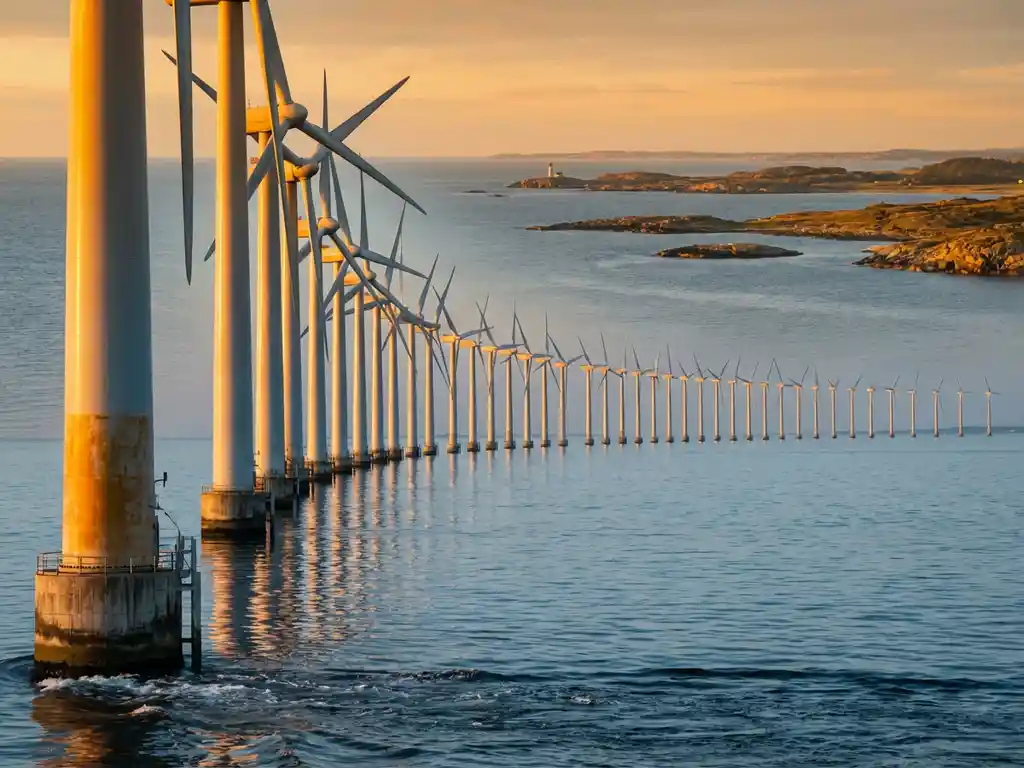
In Europe, Denmark stands out for wind energy, regularly generating more electricity from wind than its population consumes. Germany has made substantial progress through its Energiewende policy, though its large industrial base means its overall dependence on fossil fuels remains significant. Among emerging economies, countries like Kenya and Uruguay have made rapid strides in renewable electricity, driven by strong policy frameworks and favorable natural resources.
Why do some countries use more renewables than others?
The primary reasons some countries use more renewables than others are natural resource availability, government policy, energy infrastructure, and economic capacity. Countries with abundant rivers, geothermal activity, consistent wind, or high solar irradiance have a natural head start. But policy ambition and investment are often the deciding factors in how fully those advantages are developed.
Natural geography plays a foundational role
Norway’s hydropower dominance is a product of its mountainous terrain and high rainfall. Iceland sits on a volcanic hotspot, making geothermal energy cheap and abundant. These are not replicable advantages for most countries. For nations without these natural gifts, building a renewable energy base requires deliberate investment in wind, solar, and storage infrastructure.
Policy frameworks determine pace and scale
Countries with long-term, stable renewable energy policies tend to outperform those with inconsistent or short-term incentives. Feed-in tariffs, renewable portfolio standards, carbon pricing mechanisms like the EU Emissions Trading System, and public investment in grid infrastructure all accelerate the transition. Political continuity matters too. Frequent policy reversals slow private investment and delay project development.
Economic and infrastructure capacity shapes what is feasible
Wealthier nations can absorb the upfront capital costs of renewable infrastructure more easily, though costs have fallen dramatically for solar and wind in recent years. Grid modernization, storage capacity, and interconnection with neighboring countries also determine how much variable renewable energy a system can absorb reliably. These are not trivial challenges, particularly for industrialized nations with complex, high-demand energy systems.
What’s the difference between renewable electricity and renewable heat?
Renewable electricity is power generated from renewable sources and delivered through the electrical grid, while renewable heat refers to thermal energy produced from renewable sources for space heating, water heating, or industrial processes. The two are often conflated, but they address different parts of the energy system and face very different technical and economic challenges.
Most public discussion of renewables focuses on electricity because it is the most visible and measurable part of the transition. Solar panels and wind turbines generate electricity that feeds into grids. But heat accounts for roughly half of total global energy consumption, and the majority of that heat is still produced by burning fossil fuels directly. This is especially true in industry, where high-temperature processes require energy that electricity alone often cannot deliver cost-effectively.
Renewable heat sources include solar thermal collectors, heat pumps powered by renewable electricity, geothermal district heating, and biomass combustion. Each has its applications and limitations. For industrial processes requiring sustained temperatures above 500°C, the options narrow considerably. This is one of the most significant and underappreciated gaps in the global energy transition, and it is where much of the innovation in clean energy technology is now focused. You can learn more about how Iron Fuel Technology addresses high-temperature industrial heat as one emerging solution in this space.
How are industrial sectors decarbonizing heat in leading countries?
Industrial sectors in leading countries are decarbonizing heat through a combination of electrification, green hydrogen, biomass, and emerging clean fuel technologies. The approach varies significantly by industry, temperature requirements, and the infrastructure available in each country. No single solution works across all sectors, which is why industrial heat decarbonization remains one of the most complex challenges in the energy transition.
Electrification and heat pumps
For lower-temperature processes, industrial heat pumps powered by renewable electricity are gaining traction in countries like Denmark, Sweden, and the Netherlands. These work well for food processing, dairy, and some chemical applications where process temperatures remain below around 150°C. Above that threshold, the efficiency and cost picture becomes less favorable.
Green hydrogen and biomass
Germany, the Netherlands, and several Nordic countries are investing heavily in green hydrogen as a fuel for high-temperature industrial processes. However, hydrogen infrastructure is still being built out, and the cost of green hydrogen remains high in most markets. Biomass is widely used in countries like Finland and Sweden, particularly in the pulp and paper sector, though its sustainability depends heavily on sourcing and land-use practices.
Emerging clean fuel technologies
A growing number of companies and research institutions are developing new approaches to carbon-free industrial heat. These include solid-state energy carriers and circular fuel systems that can integrate with existing boiler infrastructure without requiring a complete overhaul. For sectors like food and beverage, specialty chemicals, and pulp and paper, where electrification and hydrogen face real barriers, these alternatives are attracting serious attention. Explore the range of clean heat solutions available for energy-intensive industries to see how these approaches compare in practice.
If you are evaluating decarbonization options for your industrial operations, the form below can help you find the most relevant path forward for your sector and situation.
Which countries are closest to 100% renewable energy?
The countries closest to 100% renewable energy are Iceland, Norway, Costa Rica, and Albania, all of which generate the vast majority of their electricity from renewable sources. Iceland and Norway regularly exceed 99% renewable electricity. However, achieving 100% renewable energy across total energy consumption, including heat, transport, and industry, remains out of reach for virtually every country.
The distinction between renewable electricity and total energy is critical here. Costa Rica has run its electricity grid on nearly 100% renewables for extended periods, a remarkable achievement driven by hydropower and geothermal energy. But transport and industry still depend on fossil fuels, meaning the total renewable energy share is considerably lower than the electricity figure suggests.
For larger, more industrialized nations, the challenge scales with complexity. Germany aims for 80% renewable electricity by 2030, but decarbonizing its industrial base, which includes heavy chemicals, steel, and automotive manufacturing, is a much longer and harder road. The countries genuinely approaching 100% across all energy uses are typically small, geographically favored, and less industrially intensive.
The lesson for policymakers and sustainability professionals is that electricity targets, while important, are not the whole story. The harder work of decarbonizing heat and heavy industry is where the next chapter of the renewable energy transition will be written.
How Iron Fuel Technology helps with industrial heat decarbonization
As the global conversation about renewables matures, the focus is shifting toward the hardest parts of the energy system to clean up. Industrial heat is at the top of that list. This is exactly the challenge we at RIFT are built to solve.
Our Iron Fuel Boiler delivers carbon-free, high-temperature heat using iron powder as a circular energy carrier. Here is what makes it a practical option for sustainability managers evaluating their decarbonization pathways:
- Zero direct CO₂ emissions during combustion, with ultra-low NOₓ output
- Up to 95% energy efficiency, outperforming many conventional fossil fuel boilers
- Drop-in compatibility with existing boiler infrastructure, minimizing disruption
- Long-term fuel supply agreements for reliable, predictable energy costs
- Circular fuel cycle, in which iron oxide produced during combustion is regenerated into iron fuel using low-carbon hydrogen
We are already working with industrial partners in the food and beverage, specialty chemicals, and pulp and paper sectors, and our first commercial contract has been signed. If you are building the business case for decarbonizing your industrial heat, we would be glad to talk through what Iron Fuel Technology could mean for your operations. Get in touch with our team to start the conversation.
Related Articles
- How do you balance emissions targets with operational continuity in manufacturing?
- How are specialty chemical companies approaching industrial heat decarbonization?
- What is the difference between electrification and alternative fuel use for heat?
- What is clean energy and is it the same as renewable energy?
- What country has the least renewable energy?
This content was generated with the help of AI and it may contain mistakes