

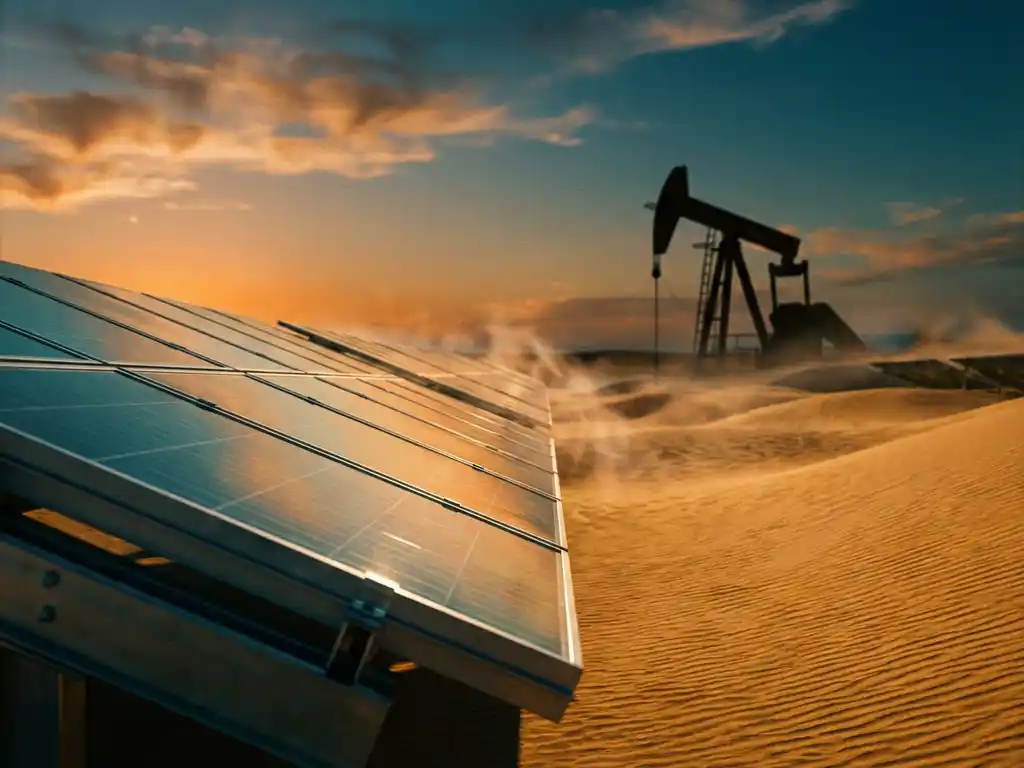
The world’s oil-rich nations are making headlines not just for what they pump out of the ground, but for what they’re building above it. Across the Gulf, Central Asia, and beyond, countries that built their wealth on fossil fuels are now pouring billions into renewable energy infrastructure—and the scale of ambition is genuinely remarkable. For industries watching the global energy transition unfold, understanding where this investment is going, and why, offers a useful window into the future of clean heat and sustainable production.
This shift matters beyond geopolitics. As oil-rich nations accelerate their clean energy buildout, they’re also shaping the technologies and supply chains that industrial companies will rely on for decades. From solar megaprojects to emerging fuel technologies, the transition is creating real opportunities for sectors that have long struggled to decarbonise—including energy-intensive industries where heat is the central challenge.
Which oil-rich country is investing most in clean energy?
Saudi Arabia is currently leading among oil-rich nations in absolute clean energy investment, with its NEOM megacity project and the national Vision 2030 programme committing hundreds of billions to solar, wind, and green hydrogen. The UAE is a close rival, having built one of the world’s largest solar farms and set a net-zero target for 2050. Both countries are investing at a scale that few others can match.
What makes these investments stand out is their ambition relative to their existing fossil fuel dependence. Saudi Arabia’s state energy company, Aramco, remains the world’s largest oil producer—yet the kingdom has committed to generating half of its electricity from renewables by 2030. The UAE, home to Abu Dhabi National Energy Company (TAQA) and major oil producer ADNOC, has simultaneously expanded fossil fuel output while building world-record solar capacity.
Norway deserves a mention here too. Though not a Gulf state, it is one of Europe’s largest oil and gas exporters and has invested heavily in offshore wind, green hydrogen, and carbon capture. Its sovereign wealth fund, the world’s largest, is increasingly channelling capital towards clean energy assets globally.
Why are oil-rich countries transitioning to clean energy?
Oil-rich countries are transitioning to clean energy for three interconnected reasons: economic diversification, long-term energy security, and growing international pressure to reduce carbon emissions. Nations that depend heavily on oil revenues face real risk as global demand for fossil fuels is expected to peak and gradually decline. Building a clean energy economy is, for many of them, a survival strategy as much as an environmental one.
Domestic energy demand is also a powerful driver. Countries like Saudi Arabia and the UAE consume enormous amounts of fossil fuels internally—for desalination, air conditioning, and industry. Every barrel burned at home is a barrel not exported. Switching to solar and other renewables for domestic power frees up more oil for export, which makes clean energy investment financially rational even before counting climate benefits.
International trade relationships add further pressure. As the European Union tightens its Carbon Border Adjustment Mechanism and major trading partners set stricter emissions standards, oil-producing nations that want to stay competitive in global markets need to demonstrate credible decarbonisation pathways. Clean energy investment is increasingly a prerequisite for doing business with the world’s largest economies.
What types of clean energy are oil nations building?
Oil-rich nations are building a diverse mix of clean energy infrastructure, with solar power leading the way, followed by wind energy, green hydrogen production, and nuclear power. The specific mix varies by geography and strategic priority, but the common thread is scale—these are not small pilot projects but national-level programmes designed to reshape entire energy systems.
Solar and wind
The Gulf’s abundant sunshine makes solar the natural starting point. The UAE’s Mohammed bin Rashid Al Maktoum Solar Park is one of the largest single-site solar projects in the world. Saudi Arabia’s NEOM project includes a planned wind and solar complex in the desert designed to power an entirely new city. These projects are driving down the cost of solar globally by creating massive demand for panels and installation expertise.
Green hydrogen
Green hydrogen—produced by using renewable electricity to split water—is a major strategic bet for several oil nations. Saudi Arabia’s NEOM green hydrogen plant, developed in partnership with international companies, is designed to produce hydrogen at industrial scale for export. The logic is straightforward: if the world moves away from oil, these countries want to become the exporters of the next dominant energy carrier instead.
Nuclear energy
The UAE became the first Arab country to operate a commercial nuclear power plant, with its Barakah facility now generating a meaningful share of national electricity. Saudi Arabia has also announced plans for nuclear development. For countries with high and growing electricity demand, nuclear offers reliable baseload power that solar and wind alone cannot yet provide.
How does industrial heat fit into the clean energy transition?
Industrial heat is one of the most overlooked and most difficult parts of the clean energy transition. It accounts for roughly two-thirds of all industrial energy consumption globally, and the vast majority of that heat is still generated by burning fossil fuels. Decarbonising industrial heat is essential to meeting climate targets, but it has received far less attention than electricity generation or transport.
The challenge is technical as well as economic. Many industrial processes require very high temperatures—far beyond what standard electric heating can efficiently deliver. Hydrogen combustion is one option, but it requires significant infrastructure investment and faces supply chain constraints in most regions. For many manufacturers, neither full electrification nor hydrogen is a realistic near-term solution.
This is why the clean energy transition cannot be considered complete without addressing industrial heat directly. As oil-rich nations build out renewable electricity and green hydrogen capacity, the question becomes how that clean energy reaches the factory floor—and in what form. New fuel technologies designed specifically for industrial heat applications are becoming an increasingly important part of the answer.
What is iron fuel and how does it decarbonise industrial heat?
Iron fuel is a clean energy carrier made from fine iron powder that burns at extremely high temperatures to produce industrial heat with zero direct CO₂ emissions. When iron powder combusts, it reacts with oxygen in the air to generate intense heat—up to 2,000°C—and the only by-product is iron oxide, commonly known as rust. That iron oxide is then regenerated back into iron fuel using low-carbon hydrogen, completing a fully circular cycle.
The process works like a rechargeable battery for industrial heat. Iron fuel goes in, heat comes out, rust is collected, and hydrogen converts it back into iron fuel ready for the next cycle. Because no carbon is involved at any stage of combustion, there are no direct CO₂ emissions from the boiler itself. The full chain, calculated using EU greenhouse gas methodology and including transport, delivers a CO₂ reduction of 0.55 tonnes of CO₂ equivalent per tonne of iron fuel produced.
How does an iron fuel boiler work in practice?
An iron fuel boiler burns iron powder with ambient air inside a purpose-built combustion chamber, generating steam, hot water, or hot air for industrial processes. The system achieves an energy efficiency of up to 95%, which compares favourably with many conventional fossil fuel boilers. Crucially, it is designed to integrate with existing boiler infrastructure, meaning industrial operators do not need to rebuild their entire heating setup to adopt it.
Iron fuel is also practical to handle. Unlike hydrogen, it is a solid material that can be stored and transported in standard containers without specialist infrastructure. This makes it significantly easier to deploy across a wide range of industrial sites, including those in locations where green hydrogen supply chains are not yet established. You can explore the full technical detail of how the technology works on our Iron Fuel Technology page.
Which industries benefit most from clean heat technologies?
The industries that benefit most from clean heat technologies are those with high and continuous heat demand that cannot easily switch to electric heating or hydrogen—particularly food and beverage, specialty chemicals, and pulp and paper. These sectors rely on steam and high-temperature heat around the clock, making them ideal candidates for drop-in clean heat solutions that work within existing infrastructure.
In food and beverage, heat is used for pasteurisation, sterilisation, drying, and cooking at scale. These processes require reliable, consistent heat delivery, and any interruption has direct consequences for product quality and safety. A clean heat solution that integrates with existing boilers without disrupting operations is far more attractive than one requiring a complete system overhaul.
Specialty chemicals and pulp and paper face similar dynamics. Both sectors operate energy-intensive processes that run continuously, and both face growing regulatory pressure to reduce Scope 1 emissions. For sustainability managers in these industries, the combination of zero direct CO₂ emissions, cost-competitive pricing, and infrastructure compatibility makes clean heat technologies a genuinely practical option rather than a distant aspiration.
Beyond these three sectors, ceramics, building materials, and food processing all share characteristics that make them strong candidates for iron fuel adoption as the technology scales. The common thread is high-temperature heat demand combined with the operational constraints that make full electrification impractical in the near term.
How RIFT helps industrial companies decarbonise their heat
We develop and deliver industrial iron fuel boilers—a practical, drop-in solution for companies that need to decarbonise their heat without disrupting operations or waiting for hydrogen infrastructure to catch up. Our technology has already been demonstrated at megawatt scale, and the first commercial contracts have been signed.
Here is what working with us looks like in practice:
- Plug-and-play integration — our iron fuel boiler works alongside your existing boiler setup, so adoption is seamless and disruption is minimal
- Zero direct CO₂ emissions — iron fuel combustion produces no carbon dioxide, helping you reduce Scope 1 emissions immediately
- Ultra-low NOₓ output — among the lowest of any combustion fuel, supporting air quality and regulatory compliance
- Cost-competitive pricing — iron fuel is priced to align with fossil fuel alternatives, protecting your margins while you decarbonise
- Long-term fuel supply agreements — we provide reliable, contracted fuel supply so your operations stay consistent
- Up to 95% energy efficiency — outperforming many traditional fossil fuel systems on efficiency as well as emissions
We focus on food and beverage, specialty chemicals, and pulp and paper—sectors where we understand the heat demands and the operational pressures sustainability managers face every day. You can see the full range of what we offer on our industrial clean heat solutions page.
If you are building the business case for decarbonising your industrial heat, we would be glad to talk through how iron fuel fits your specific setup. Get in touch with our team to start the conversation.
Related Articles
- What is the best clean energy?
- How does renewable energy affect local ecosystems?
- What is a solar battery and do you need one?
- What is wind energy and how is it generated?
- What is the biggest renewable resource?
This content was generated with the help of AI and it may contain mistakes