

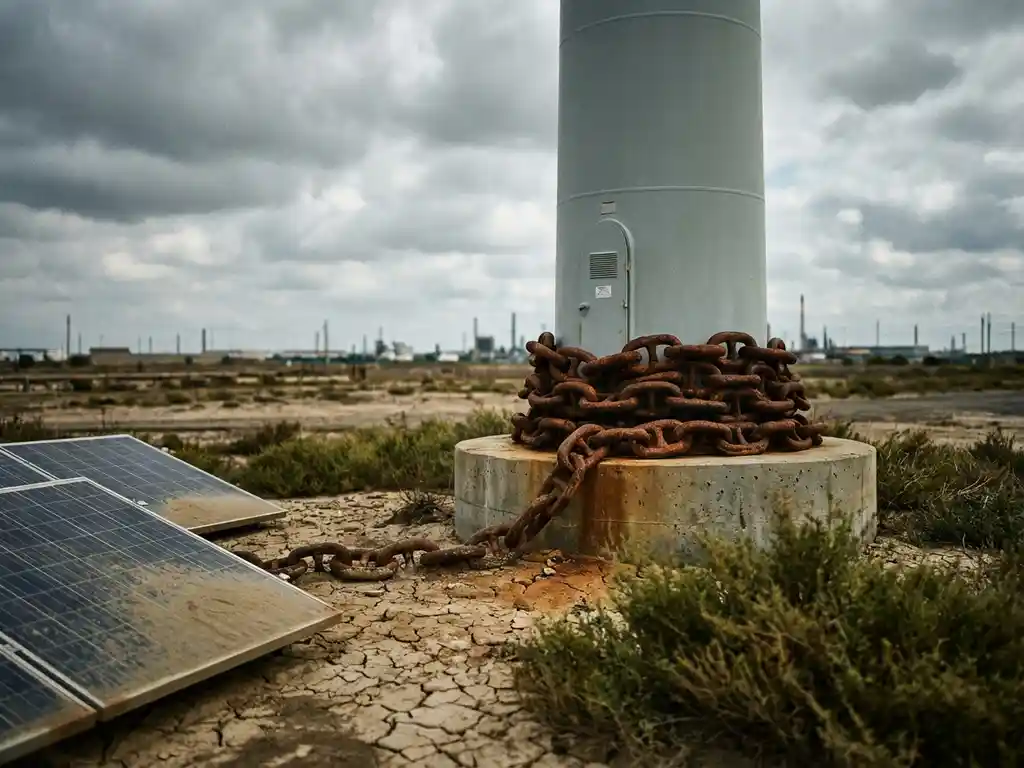
Switching to renewable energy sounds straightforward in theory. In practice, especially for industrial companies, it is anything but. While the energy transition is accelerating in many sectors, industrial heat remains one of the most stubborn challenges in global decarbonisation. The barriers are real, the stakes are high, and the solutions on offer do not always fit the problem.
This article walks through the key questions that sustainability managers, operations leaders, and energy decision-makers are asking right now. Whether you are evaluating your options for the first time or trying to make the business case internally, these answers are designed to give you clarity on where the industry stands and what is actually possible today.
Why is renewable energy so hard to adopt in industry?
Renewable energy is hard to adopt in industry because industrial processes require consistent, high-temperature heat that most clean energy technologies cannot yet deliver reliably, affordably, or at scale. Unlike electricity generation, industrial heat demands are continuous, intense, and deeply embedded in existing infrastructure that was built around fossil fuels.
The challenge is not a lack of ambition. Most large industrial companies have net-zero targets on paper. The gap is between those commitments and the practical reality of replacing a gas burner that has been running 24 hours a day, seven days a week, for decades. Swapping it out is not a weekend project.
There are also commercial pressures at play. Fossil fuels remain relatively cheap, and the cost difference between conventional energy and cleaner alternatives is still significant in many markets. For a company operating on tight margins, that gap matters enormously when building a business case for new technology.
What are the biggest barriers to industrial decarbonisation?
The biggest barriers to industrial decarbonisation are cost, infrastructure limitations, technology readiness, and regulatory uncertainty. These four factors interact in ways that make it genuinely difficult for industrial companies to commit to a clean energy transition, even when the will is there.
Here is a clearer breakdown of what sustainability managers are up against:
- High upfront capital costs for new clean energy systems, often without guaranteed returns
- Infrastructure gaps, particularly for hydrogen and grid electricity at industrial scale
- Operational continuity concerns, as downtime during transitions carries significant financial risk
- Regulatory uncertainty, which makes long-term investment planning difficult
- Limited supply chains for emerging clean fuels, making long-term fuel security hard to guarantee
Beyond the technical and financial barriers, there is also an internal challenge. Sustainability managers often need to build a business case across multiple departments, each with different priorities. Getting finance, operations, and procurement aligned behind a new energy technology is a project in itself.
Why don’t electrification and hydrogen work for every industry?
Electrification and hydrogen do not work for every industry because both technologies face significant infrastructure, cost, and technical limitations that make them impractical for many high-temperature industrial heat applications today. They are promising solutions in the right context, but that context does not apply universally.
The limits of electrification
Electric boilers and heat pumps work well for lower-temperature applications, but many industrial processes require heat above 500°C. At those temperatures, electrification becomes technically complex and extremely expensive. Grid connection upgrades alone can take years and cost millions, and in many industrial zones, the grid simply does not have the capacity to support large-scale electrification.
The limits of hydrogen
Hydrogen is a genuinely exciting clean energy carrier, but it comes with real-world constraints. It requires dedicated pipelines or complex storage systems, it is difficult and costly to transport safely, and the availability of green hydrogen at industrial scale remains limited in most regions. For companies that need a solution now rather than in ten years, hydrogen often falls short.
This is not to say these technologies have no future. They absolutely do. But for sectors like food and beverage, specialty chemicals, and pulp and paper, where heat demand is high and infrastructure investment is constrained, they are not always the right fit for the immediate challenge.
What clean energy alternatives exist for high-temperature industrial heat?
Clean energy alternatives for high-temperature industrial heat include biomass combustion, biogas, green hydrogen, and emerging solid-fuel technologies such as iron fuel. Each option has different trade-offs in terms of cost, emissions, infrastructure requirements, and scalability.
Biomass and biogas are more established, but both raise questions about sustainable sourcing, supply chain reliability, and the fact that combustion still produces emissions, even if they are considered lower-carbon. They are a step in the right direction, but not a zero-emission solution.
Green hydrogen offers genuine decarbonisation potential, but as discussed above, the infrastructure barriers are significant. That leaves a growing gap in the market for solutions that can deliver zero-emission, high-temperature heat without requiring companies to rebuild their entire energy infrastructure from scratch.
This is exactly the gap that Iron Fuel Technology was designed to address. By using iron powder as a circular, solid-state energy carrier, it offers a practical path to carbon-free industrial heat that works with existing boiler setups rather than against them.
How does iron fuel technology work as a renewable energy carrier?
Iron fuel technology works by burning fine iron powder to generate high-temperature heat, producing zero direct CO₂ emissions. The only by-product is iron oxide, which is then collected, transported to a production facility, and regenerated back into iron fuel using hydrogen, completing a fully closed, circular energy cycle.
Think of it like a rechargeable battery, but for industrial heat. The cycle works in four stages:
- Storage and transport: Iron powder is stored and transported as a safe, solid-state fuel to industrial boiler locations
- Combustion: The iron fuel burns with ambient air inside the boiler, generating a flame of up to 2,000°C to produce steam, hot water, or hot air
- Collection: The iron oxide by-product is collected from the boiler chamber and transported to a production facility
- Regeneration: The iron oxide is converted back into iron fuel using low-carbon hydrogen, ready to be used again
The system achieves an energy efficiency of up to 95%, and the only CO₂ output from the boiler comes from a small pilot safety flame, amounting to just 10 kg of CO₂ per megawatt-hour of thermal energy. That is a near-total elimination of combustion-related carbon emissions compared to conventional fossil fuel boilers.
One of the practical advantages of iron fuel is that it is a solid. Unlike hydrogen, it can be transported in standard containers without specialist infrastructure, making it far easier to integrate into existing supply chains. You can read more about how this works in practice on our industrial solutions page.
When will industrial companies be ready to switch to clean energy?
Many industrial companies are ready to start switching to clean energy now, provided the right technology is available at an acceptable cost and with a credible fuel supply guarantee. The question is less about readiness in principle and more about finding solutions that are commercially viable and operationally practical today.
The regulatory environment is accelerating this shift. Frameworks like the EU Emissions Trading System are making fossil fuels progressively more expensive, while board-level net-zero commitments are creating internal pressure to act. Waiting is no longer a neutral choice for most industrial companies.
Companies that move early tend to do so because they have found a technology that fits their existing setup without requiring a complete overhaul. The first commercial contract for Iron Fuel Technology was signed with Kingspan Unidek, making it the first company in the world to deploy this technology at industrial scale. That is a signal that the transition is not a future event. It is already happening.
If you are currently weighing up your options or trying to build the internal case for a switch, the form below can help point you in the right direction.
How RIFT helps industrial companies decarbonise their heat
We developed Iron Fuel Technology specifically to solve the barriers described in this article. Our Iron Fuel Boiler delivers zero direct CO₂ and high-temperature industrial heat without requiring companies to abandon their existing infrastructure or wait for hydrogen pipelines to arrive.
Here is what working with us looks like in practice:
- Our boiler integrates with your existing setup, minimising disruption to operations
- We offer long-term fuel supply agreements, giving you the security you need to plan ahead
- Our pricing is designed to be cost-competitive with fossil fuels, protecting your margins
- The system achieves up to 95% energy efficiency with ultra-low NOₓ and near-zero CO₂ emissions
- Iron fuel is safe, solid, and easy to transport, with no specialist infrastructure required
We have already demonstrated this technology at megawatt scale and signed our first commercial contracts. If you are exploring how to decarbonise your industrial heat in a way that is practical, affordable, and available today, we would love to talk. Get in touch with our team to find out how Iron Fuel Technology could work for your operation.
Related Articles
- What is green energy and how is it different from renewable energy?
- What is a smart grid and how does it support renewable energy?
- How does solar energy work?
- What country has the least renewable energy?
- What is the cleanest energy source?
This content was generated with the help of AI and it may contain mistakes