

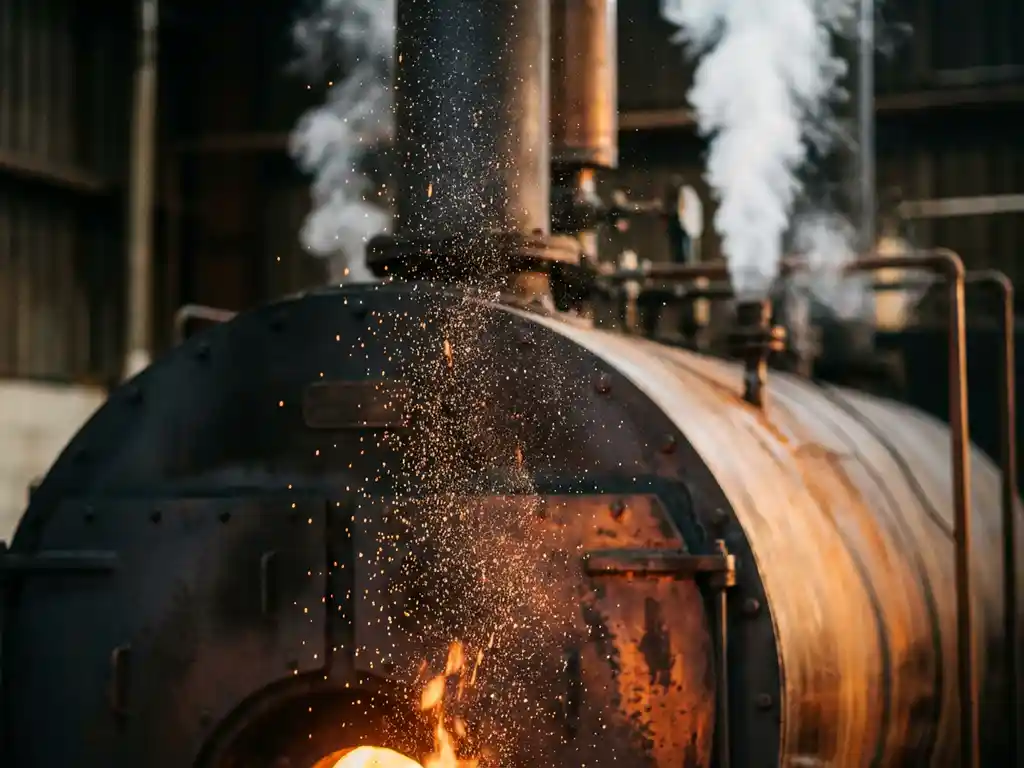
When people ask about the cleanest energy source, the conversation usually gravitates toward solar panels, wind turbines, or hydrogen. These are all valid answers for electricity generation—but for industries that need serious, high-temperature heat to run their operations, the picture looks quite different. The cleanest energy source for your factory floor may not be what you expect.
This article walks through the most common questions about renewable energy and clean heat, from foundational definitions to practical comparisons. Whether you’re evaluating options for your facility or building an internal business case, you’ll find direct, grounded answers here.
What makes an energy source ‘clean’ in the first place?
A clean energy source is one that produces little or no greenhouse gas emissions—particularly carbon dioxide—across its full lifecycle. This means looking beyond just the point of use and considering how the energy is produced, transported, stored, and ultimately consumed. The fewer emissions at every stage, the cleaner the energy source.
Cleanliness is rarely absolute. Even solar panels require energy-intensive manufacturing, and wind turbines need materials that carry an upstream carbon cost. What distinguishes truly clean energy sources is a combination of low lifecycle emissions, minimal local air pollution, and the ability to scale without compounding environmental harm.
For industrial applications specifically, there are two additional criteria that matter enormously:
- Temperature capability: Can the energy source deliver the high heat levels that industrial processes actually require?
- Circular potential: Can the energy carrier be reused or regenerated without generating new emissions?
These two factors often separate genuinely clean industrial energy solutions from those that are clean in theory but impractical at scale.
What are the cleanest energy sources available today?
The cleanest energy sources available today include solar, wind, hydropower, geothermal, nuclear, green hydrogen, and—an increasingly relevant option for industry—iron fuel. Each produces significantly fewer emissions than fossil fuels, though they differ considerably in their suitability for different applications.
For electricity generation, solar and wind are now mature, cost-competitive, and widely deployed. Hydropower and nuclear provide stable baseload power with very low operational emissions. These sources have transformed the electricity sector and continue to grow.
For industrial heat—a completely different challenge—the options narrow considerably. Green hydrogen can theoretically replace fossil fuels in combustion, but infrastructure and cost remain barriers. Electrification works for lower-temperature processes but struggles with the extreme heat demands of sectors like chemicals, paper, and food processing. This is where newer renewable energy carriers, including iron fuel, are beginning to fill a critical gap.
Which is cleaner: hydrogen, electric, or iron fuel for industrial heat?
For industrial heat specifically, iron fuel offers the cleanest operational profile of the three. It produces zero direct CO₂ during combustion, ultra-low NOₓ emissions, and no gaseous byproducts—only iron oxide, which is collected and regenerated. Hydrogen combustion is also carbon-free but produces NOₓ, and electrification is only as clean as the grid it draws from.
Hydrogen for industrial heat
Green hydrogen is a compelling clean energy option, but it comes with real-world constraints. It requires significant infrastructure investment—new pipelines, storage systems, and safety protocols—and its production costs remain high. Hydrogen also produces nitrogen oxide emissions during combustion, which adds a further layer of complexity for facilities with strict air quality requirements.
Electric boilers and heat pumps
Electrification is clean when powered by renewable electricity, but it has a ceiling. Most industrial processes require temperatures above what heat pumps can efficiently deliver, and electric resistance heating at very high temperatures becomes energy-intensive and expensive. Grid capacity constraints add further uncertainty for large industrial consumers.
Iron fuel combustion
Iron fuel combustion is carbon-free at the point of use. The only CO₂ output from an Iron Fuel Boiler comes from a small pilot safety flame, resulting in just 10 kg of CO₂ per megawatt-hour of thermal energy—an almost complete elimination of combustion-related carbon. The full technology chain, using low-carbon hydrogen for regeneration and applying EU GHG methodology, delivers a CO₂ reduction of 0.55 tonnes of CO₂ equivalent per tonne of iron fuel produced. You can learn more about how this works on our Iron Fuel Technology page.
Why is industrial heat so hard to decarbonise with conventional clean energy?
Industrial heat is hard to decarbonise because it demands extremely high temperatures—often above 1,000°C—sustained over long periods, at high volumes, and at a competitive cost. Most conventional clean energy options are either too expensive, too infrastructure-dependent, or physically incapable of reaching the temperatures that industrial processes require.
Around two-thirds of all industrial energy consumption goes toward heat generation, and approximately 80% of that heat is still produced by burning fossil fuels. The reason is straightforward: fossil fuels are energy-dense, easy to store and transport, and capable of producing the intense, reliable heat that industries like food processing, specialty chemicals, and pulp and paper depend on daily.
Electrification and hydrogen are the two most commonly cited alternatives, but both face structural barriers. Electrification requires grid upgrades that can take years to complete and struggles with very high-temperature applications. Hydrogen demands new infrastructure that most industrial sites simply do not have. For many sustainability managers, neither option offers a realistic near-term pathway—which is precisely why the search for a practical, drop-in clean heat solution has become so urgent.
If you’re currently weighing your options for industrial decarbonisation, the form below can help you find the right starting point for your facility.
How does iron fuel technology produce heat with zero CO₂ emissions?
Iron fuel technology produces heat with zero direct CO₂ emissions because iron itself contains no carbon. When iron powder combusts with ambient air inside a boiler, it generates a flame reaching up to 2,000°C and releases high-temperature heat—but the only solid byproduct is iron oxide, commonly known as rust. There is no carbon in the reaction, so no CO₂ is produced.
The process follows a closed-loop cycle that works in four stages:
- Storage and transport: Iron powder is stored safely as a solid-state energy carrier and transported to industrial facilities in standard containers—no special pressurised infrastructure required.
- Combustion: The iron fuel burns inside the boiler, producing steam, hot water, or hot air at industrial temperatures, with zero direct CO₂ and ultra-low NOₓ emissions.
- Collection: The resulting iron oxide is collected directly from the boiler chamber and transported back to a production facility.
- Regeneration: The iron oxide is converted back into iron fuel using low-carbon hydrogen, completing the circular cycle and making the material ready for reuse.
This rechargeable-battery principle is what makes iron fuel genuinely circular. The Iron Fuel Boiler achieves up to 95% energy efficiency, and the production system converts hydrogen to iron fuel at 86% efficiency—strong performance figures for an industrial decarbonisation technology at this stage of development.
What’s the best clean energy option for your industrial operations?
The best clean energy option for your industrial operations depends on your temperature requirements, existing infrastructure, budget, and timeline. For operations requiring high-temperature heat where electrification is impractical and hydrogen infrastructure is unavailable, iron fuel is increasingly the most viable carbon-free alternative—offering a drop-in solution that integrates with existing boiler setups without major disruption.
There is no single answer that fits every facility, but there are clear criteria to evaluate. Ask yourself whether your process requires temperatures above what electric heat pumps can deliver. Consider whether your site has—or can realistically access—a hydrogen supply in the near term. Factor in not just fuel costs but the total cost of transition, including infrastructure investment and operational downtime.
For sectors like food and beverage, specialty chemicals, and pulp and paper, the combination of high heat demand and limited infrastructure access makes a fuel-based clean energy solution the most pragmatic path. Explore the range of clean heat solutions for industrial operations to understand which approach fits your context best.
How RIFT helps you decarbonise industrial heat
We developed Iron Fuel Technology specifically to solve the problem this article has been exploring: delivering clean, high-temperature heat to industries where electrification and hydrogen simply are not ready. Here is what working with us looks like in practice:
- Drop-in compatibility: Our Iron Fuel Boiler integrates with your existing boiler infrastructure—no major overhaul required.
- Zero direct CO₂: Iron fuel combustion produces no carbon dioxide, with ultra-low NOₓ emissions as well.
- Cost-competitive pricing: Our fuel pricing is designed to align with fossil fuel costs, protecting your margins during the transition.
- Long-term fuel supply: We back every boiler installation with a reliable, contracted fuel supply so you are never left exposed.
- Proven at scale: Our technology is demonstrated at Technology Readiness Level 7, with the first commercial contract already signed and initial market deployment underway.
If you are ready to explore what iron fuel could mean for your facility’s decarbonisation roadmap, get in touch with our team and let’s start the conversation.