

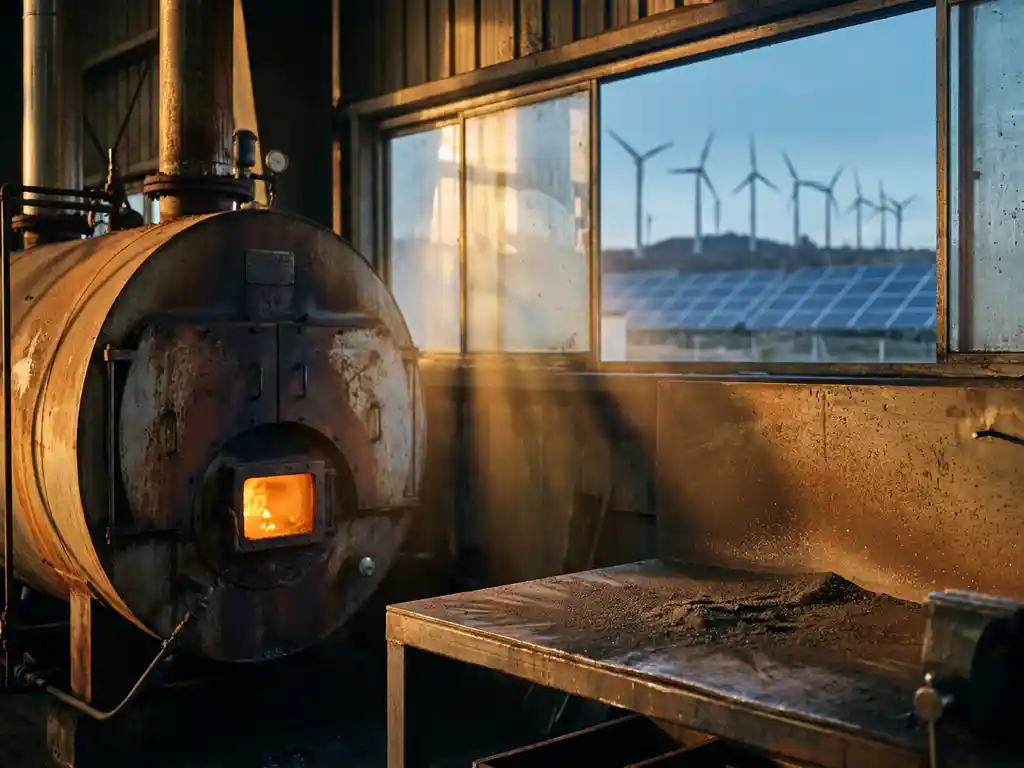
Renewable energy generally pushes electricity prices down over time, but the relationship is not straightforward. In the short term, adding more solar and wind capacity to the grid creates price volatility—prices can drop sharply when generation peaks, then spike when it falls. For industrial companies, this means that while the long-term cost trajectory of electricity is improving, day-to-day energy budgeting has become more complex, not less.
Volatile electricity prices are eroding your operational cost certainty
When renewable generation floods the grid at midday, wholesale electricity prices can fall close to zero or even go negative. A few hours later, when the sun sets and the wind drops, prices can jump significantly. Industrial facilities that run continuous processes cannot simply pause operations to chase cheap electricity windows. The result is that energy costs become harder to forecast, and procurement teams are forced into increasingly complex hedging strategies just to maintain budget stability. The fix is not to avoid renewables—it is to understand that electricity price exposure is a separate problem from energy source selection and to plan your energy strategy accordingly.
Locking in fossil fuel alternatives too early is holding back your decarbonisation progress
Many sustainability managers are waiting for electricity prices to stabilise before committing to electrification as a decarbonisation path for industrial heat. That wait is costly in two ways: emissions targets keep ticking, and the window for meeting regulatory milestones narrows. At the same time, full electrification of high-temperature industrial heat is genuinely constrained by grid capacity and infrastructure timelines in many regions. A more productive approach is to evaluate a broader set of clean energy carriers alongside electricity, rather than treating electrification as the only viable route and stalling while waiting for conditions to improve.
How does renewable energy affect electricity prices?
Renewable energy lowers the marginal cost of electricity when generation is high because wind and solar have near-zero fuel costs. This suppresses wholesale prices during peak generation periods. Over the long term, large-scale renewable deployment reduces average electricity costs. However, it also introduces more price volatility, as output depends on weather conditions rather than dispatchable fuel supply.
The mechanism behind this is known as the merit-order effect. Grid operators dispatch the cheapest available generation first. Because renewables have almost no running costs, they push higher-cost fossil fuel plants further down the queue, reducing the clearing price for electricity. When renewable output is high, this effect is pronounced. When it is low, fossil plants set the price again, and costs rise.
For industrial energy buyers, this creates a two-speed reality. Average costs may be trending downward over years, but within any given day or season, price swings can be significant. Companies that consume large amounts of electricity for continuous processes feel this volatility directly in their energy bills.
Why do electricity prices still fluctuate with more renewables on the grid?
Electricity prices fluctuate even with high renewable penetration because solar and wind output is intermittent. When generation drops—at night, during low-wind periods, or in winter—the grid still needs dispatchable power from gas or other sources, which carry higher marginal costs. Grid storage and interconnection are not yet sufficient to fully smooth these gaps.
The core issue is a mismatch between when renewables generate and when industrial demand peaks. A factory running three shifts does not have the luxury of reducing consumption when wind output drops. This means industrial buyers often face the highest prices precisely when they need power most.
Grid infrastructure investment is gradually addressing this through better interconnectors, demand response programmes, and growing battery storage capacity. But these solutions are being deployed over decades, not years. In the near term, price volatility remains a structural feature of grids with high renewable penetration, not a temporary glitch.
What is the difference between wholesale and retail electricity prices?
Wholesale electricity prices are what generators charge when selling power to the grid—these move in real time based on supply and demand. Retail electricity prices are what end users actually pay and include grid infrastructure costs, taxes, levies, and supplier margins on top of the wholesale price. Retail prices are far less volatile but much higher than wholesale prices.
For large industrial consumers, the distinction matters in practice. Some large buyers can access wholesale or near-wholesale pricing through power purchase agreements or direct market participation, which gives them more exposure to the lower costs renewables create. Smaller industrial operations typically pay retail tariffs, where the savings from cheap wholesale electricity are partially absorbed by fixed charges.
This is why two companies in the same sector can have very different energy cost experiences even on the same grid. The structure of your energy contract, not just the fuel mix on the grid, determines how much of the renewable price benefit actually reaches your energy bill.
Do renewable energy investments lower long-term electricity costs?
Yes, renewable energy investments do lower long-term electricity costs, but the reduction is gradual and uneven. As more solar and wind capacity comes online, the average cost of generation falls. The levelised cost of solar and wind has dropped dramatically over the past decade and continues to decline. Over a 10- to 20-year horizon, this trend consistently points towards lower average electricity prices.
The caveat is that electricity costs for industrial users are not purely a function of generation costs. Grid upgrades needed to handle more distributed and variable renewable generation add costs. Balancing mechanisms, backup capacity requirements, and system services all have a price, and these are typically passed through to consumers via network charges.
For sustainability managers building a business case, this means that projections of future electricity costs need to account for both the downward pressure on generation costs and the upward pressure on network and system costs. Assuming a simple linear price decline based on renewable expansion alone will likely produce overly optimistic forecasts.
What are the limits of renewables in decarbonising industrial heat costs?
Renewables face real limits in decarbonising industrial heat, particularly for high-temperature processes. Electrification works well for low- and medium-temperature heat, but many industrial processes require temperatures above 500°C, where electric solutions are either technically constrained or prohibitively expensive. Grid capacity constraints add further barriers for energy-intensive sites in areas with limited infrastructure.
Beyond the technical ceiling, there is a cost gap. Even as electricity prices trend downward, the total cost of switching a large industrial boiler system to electric heating—including equipment replacement, grid connection upgrades, and potential production disruption—is substantial. For many companies in food and beverage, specialty chemicals, or pulp and paper, the payback period on full electrification stretches well beyond near-term decarbonisation targets.
This is not an argument against renewables. It is a recognition that electricity alone cannot decarbonise all industrial heat within the timelines that regulatory pressure and net-zero commitments require. A complementary set of clean energy carriers is needed to cover the segments where electrification is not yet viable.
What alternative clean energy carriers can stabilise industrial energy costs?
Alternative clean energy carriers for industrial heat include green hydrogen, biomass, and emerging solid-state energy carriers such as iron fuel. Each addresses a different combination of temperature requirements, infrastructure constraints, and cost profiles. The most suitable option depends on the specific process, site conditions, and the maturity of supply chains in your region.
Green hydrogen is promising for high-temperature applications but faces infrastructure and cost challenges that limit near-term deployment for many industrial sites. Biomass is established in some sectors but raises sustainability questions around land use and supply chain emissions. Solid-state carriers like iron powder offer a different set of advantages: they are safe to store and transport, do not require new pipeline infrastructure, and can be integrated with existing boiler systems rather than replacing them entirely.
The key consideration for industrial operators is not finding the single best alternative to fossil fuels, but identifying which combination of technologies fits their specific heat-demand profile, infrastructure realities, and investment timeline. A technology that works for a paper mill may not be the right fit for a food-processing plant, even if both are trying to solve the same decarbonisation problem. You can explore how different approaches compare on our industrial heat decarbonisation solutions page.
How Iron Fuel Technology helps stabilise industrial energy costs
We developed Iron Fuel Technology specifically to address the gap that renewable electricity cannot fill: high-temperature industrial heat that needs to be decarbonised now, without waiting for grid upgrades or hydrogen infrastructure to catch up.
- Drop-in compatibility: Our Iron Fuel Boiler integrates with existing boiler infrastructure, so there is no need to replace your entire heating system or disrupt production.
- Price stability: Iron fuel is delivered at a fixed price of €140 per tonne under long-term supply agreements, giving you predictable energy costs rather than exposure to electricity market volatility.
- Near-zero emissions: Combustion produces zero direct CO₂ and ultra-low NOₓ emissions, with only a small pilot safety flame accounting for 10 kg CO₂ per MWh of thermal energy—a fraction of fossil fuel equivalents.
- High efficiency: The system achieves up to 95% energy efficiency, meaning you get strong thermal output relative to fuel input.
If you are a sustainability manager evaluating how to decarbonise industrial heat without betting everything on electricity or waiting years for hydrogen infrastructure, we would be glad to talk through what Iron Fuel Technology could look like for your site. Get in touch with our team to start the conversation, or learn more about how the technology works.
Related Articles
- What is EIA?
- What are the six sources of clean energy?
- Is nuclear energy considered renewable?
- How much of America's energy is clean?
- What are 10 renewable resources?
This content was generated with the help of AI and it may contain mistakes