

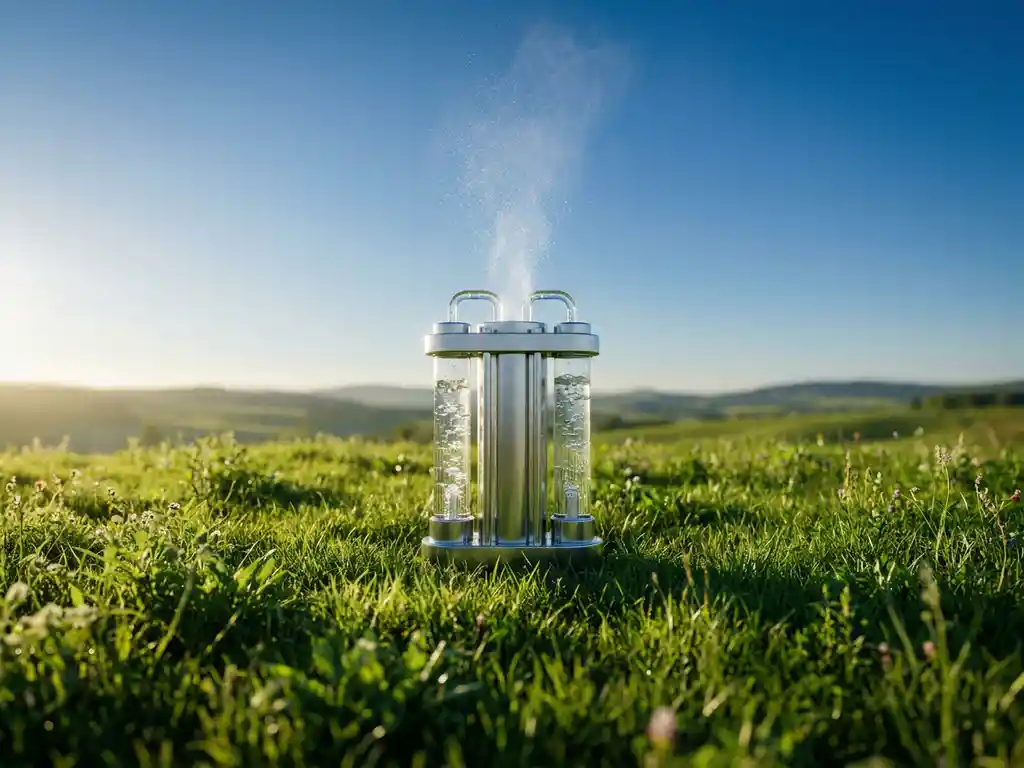
Green hydrogen is hydrogen produced using renewable electricity to split water into hydrogen and oxygen through a process called electrolysis. Because no fossil fuels are involved in its production, it generates no carbon dioxide emissions. It is widely seen as one of the most promising clean energy carriers for sectors that cannot easily electrify, including heavy industry, long-distance transport, and high-temperature heat production.
Fossil fuel dependence in industry is costing companies their decarbonization timelines
Industrial heat accounts for roughly two-thirds of all energy consumed by industry, and the vast majority of that heat still comes from burning fossil fuels. For sustainability managers working toward net-zero targets, this creates a concrete problem: every year without a credible heat-decarbonization pathway is another year of Scope 1 emissions accumulating, regulatory exposure growing, and board-level commitments slipping further out of reach. The solution is not to wait for a single perfect answer, but to understand which clean energy carriers are actually viable for your specific industrial context and to start building the business case now.
Betting on one decarbonization technology without understanding the full picture is holding back real progress
Many industrial companies have placed early bets on full electrification or direct hydrogen combustion, only to discover that infrastructure constraints or cost barriers make those routes impractical at their sites. Green hydrogen sits at the centre of several of these conversations, yet it is frequently misunderstood—either oversold as a universal fix or dismissed too quickly. Understanding what green hydrogen actually is, how it is produced, and where it genuinely fits in the industrial energy mix is the foundation for making smarter technology choices and avoiding costly dead ends.
What is green hydrogen and why does it matter for decarbonization?
Green hydrogen is hydrogen produced through electrolysis powered by renewable electricity sources such as wind or solar. Water is split into hydrogen and oxygen using an electric current. Because the electricity input comes from renewables, the process generates no carbon dioxide. This makes green hydrogen a genuinely clean energy carrier, unlike hydrogen produced from fossil fuels.
It matters for decarbonization because hydrogen can carry and store energy in ways that electricity cannot. It can be transported, stored in large quantities, and used as a feedstock or fuel in industrial processes that require very high temperatures or chemical inputs. For sectors like steel, chemicals, and glass, where electrification is technically difficult or prohibitively expensive, green hydrogen offers a pathway that does not require abandoning the underlying process chemistry.
Beyond direct use, green hydrogen also plays a supporting role in other clean energy technologies. For example, in iron fuel production, hydrogen is the key input that regenerates iron oxide into usable iron fuel, completing the circular energy cycle. Understanding green hydrogen is therefore relevant not just on its own terms, but also as a building block for a broader set of industrial decarbonization solutions.
How is green hydrogen produced?
Green hydrogen is produced through water electrolysis powered by renewable electricity. An electrolyser passes an electric current through water, splitting it into hydrogen gas and oxygen. The hydrogen is captured, compressed, and either used directly or stored for later use. The process itself emits no carbon dioxide when the electricity source is genuinely renewable.
There are several electrolyser technologies currently in use or under development. The most established is alkaline electrolysis, which has been used industrially for decades and is relatively cost-effective at scale. Proton exchange membrane (PEM) electrolysis is more compact and responsive to variable power inputs, making it well suited to pairing with intermittent renewable sources like wind and solar. Solid oxide electrolysis operates at high temperatures and can achieve higher efficiency, but it is still maturing commercially.
The production process in numbered steps looks like this:
- Renewable electricity is generated from wind, solar, or hydropower sources.
- The electricity powers an electrolyser unit that splits water molecules.
- Hydrogen gas is separated and captured at the cathode.
- The hydrogen is compressed and either piped, stored in tanks, or converted into a carrier material for transport.
- At the point of use, hydrogen is fed into industrial processes, fuel cells, or production systems as a clean energy input.
The cost and carbon intensity of the final product depend heavily on two factors: the source of electricity and the efficiency of the electrolyser. When renewable electricity is cheap and abundant, green hydrogen becomes increasingly competitive. When it is scarce or expensive, costs rise significantly, which is one of the central challenges the industry is working to address.
What is the difference between green, grey, and blue hydrogen?
The key distinction is the production method and the resulting carbon emissions. Grey hydrogen is produced from natural gas through steam methane reforming and releases significant CO2. Blue hydrogen uses the same process but captures and stores the CO2 underground. Green hydrogen uses renewable electricity and water, producing no CO2 at all.
Today, the vast majority of hydrogen produced globally is grey. It is cheap and widely available, but it carries a substantial carbon footprint. Blue hydrogen is sometimes presented as a transitional solution, but its climate credentials depend entirely on how effectively carbon capture operates, and that performance varies considerably in practice.
Green hydrogen is the only form that can genuinely claim zero lifecycle emissions when the electricity input is fully renewable. This distinction matters enormously for regulatory compliance, carbon accounting, and subsidy eligibility. The EU, for instance, has specific definitions for what qualifies as renewable hydrogen under its regulatory framework, and these definitions directly affect which projects qualify for funding and which do not.
What are the main challenges holding back green hydrogen?
The biggest challenges are cost, infrastructure, and the availability of renewable electricity. Green hydrogen is currently more expensive to produce than fossil-fuel-derived hydrogen. Global electrolyser capacity is still limited. And transporting hydrogen at scale requires either pipelines that do not yet exist in most regions or energy-intensive compression and liquefaction.
On the cost side, the economics of green hydrogen are improving as renewable electricity prices fall and electrolyser manufacturing scales up. However, for many industrial applications today, the price gap with fossil fuels remains significant, and that gap directly affects the business case for switching.
Infrastructure is a slower problem to solve. Hydrogen is a small molecule that requires specialised storage and transport equipment. Building out the pipelines, storage facilities, and distribution networks needed to supply hydrogen at industrial scale takes years and substantial capital investment. Many industrial sites simply cannot access green hydrogen reliably today, regardless of their willingness to pay.
There is also the question of renewable electricity supply. Producing green hydrogen at meaningful scale requires large amounts of clean electricity. In regions where renewable generation capacity is constrained, producing green hydrogen competes directly with other clean electricity demands, raising questions about the best use of available renewable power.
Where can green hydrogen realistically be used in industry?
Green hydrogen is most viable in industrial applications where electrification is impractical and where hydrogen can serve as a direct feedstock or fuel. This includes steel production, ammonia and fertiliser manufacturing, chemical refining, and use as a reducing agent in metal processing. It is also a key input in clean energy production systems that use hydrogen to regenerate fuel carriers.
In high-temperature industrial heat, green hydrogen can be burned directly in some processes, but this requires significant infrastructure adaptation. A more practical near-term application is using green hydrogen as a production input for other clean energy carriers. In iron fuel production, for example, hydrogen is used to convert iron oxide back into iron fuel powder. RIFT’s production system in Arnhem consumes 46.1 kilograms of hydrogen per tonne of iron fuel produced, achieving an 86% hydrogen-to-iron-fuel energy efficiency. This makes green hydrogen a critical upstream input for the Iron Fuel Technology chain.
The sectors most likely to adopt green hydrogen in the near term are those with existing hydrogen use, such as chemicals and refining, where the switch from grey to green hydrogen is a feedstock substitution rather than a process redesign. For sectors that do not currently use hydrogen at all, the pathway is longer and the infrastructure requirements are more substantial.
How does green hydrogen compare to other clean energy alternatives?
Green hydrogen offers high energy density and flexibility but comes with higher costs and infrastructure requirements than alternatives like direct electrification or solid clean energy carriers. Electrification is simpler and more efficient where it is feasible, but many high-temperature industrial processes cannot be electrified in practice. Each alternative has a different fit depending on the application.
Compared to direct electrification, green hydrogen involves energy conversion losses at multiple stages: electricity to hydrogen, then hydrogen back to heat or mechanical energy. These conversion steps reduce overall system efficiency. Where electrification is technically possible, it is generally more efficient and increasingly cost-competitive.
Compared to biomass or other renewable fuels, green hydrogen has the advantage of producing no CO2 during combustion, but it requires specialised handling and faces supply chain constraints. Biomass has a more established supply chain in some regions but raises land-use and sustainability questions of its own.
One important comparison is with solid clean energy carriers like iron fuel. Iron fuel uses green hydrogen as an upstream input to regenerate the fuel, but once produced, it is a solid powder that is safe to store and transport using conventional logistics. This avoids many of the infrastructure challenges associated with hydrogen distribution. The two technologies are therefore complementary rather than competing: green hydrogen enables iron fuel production, and iron fuel provides a practical way to deliver the energy value of green hydrogen to industrial heat applications.
- Electrification: Most efficient where feasible, but limited by grid capacity and process temperature requirements
- Direct hydrogen combustion: Zero CO2, but requires new infrastructure and faces storage and transport challenges
- Biomass: Established supply chains, but land-use concerns and variable sustainability credentials
- Iron fuel: Uses green hydrogen as an input, delivering it as a safe solid carrier with conventional logistics
How RIFT helps bridge the gap between green hydrogen and industrial heat
We use green hydrogen as the key input to regenerate iron oxide into iron fuel, creating a circular energy system that delivers the climate benefits of green hydrogen without the infrastructure barriers of distributing it directly to industrial sites.
Here is what that means in practice:
- Green or low-carbon hydrogen is used in our production system to convert iron oxide into iron fuel powder
- The iron fuel is transported to industrial sites using conventional logistics, with no specialised hydrogen infrastructure needed
- The Iron Fuel Boiler burns the iron fuel to produce high-temperature heat with zero direct CO2 and ultra-low NOx emissions
- After combustion, iron oxide is collected and returned to the production facility to be regenerated, completing the circular cycle
- Using low-carbon hydrogen as the feedstock, the full chain delivers a CO2 reduction of 0.55 tonnes per tonne of iron fuel produced
If you are evaluating how green hydrogen fits into your industrial decarbonization strategy and want to understand whether iron fuel could work for your site, get in touch with our team to start the conversation.
Related Articles
- Can industrial boilers be decarbonized without replacing existing infrastructure?
- What should sustainability managers prioritize when evaluating clean heat technologies?
- What is the difference between iron fuel and hydrogen for industrial heat?
- What is clean energy and is it the same as renewable energy?
- What are the 7 types of renewable energy?
This content was generated with the help of AI and it may contain mistakes