

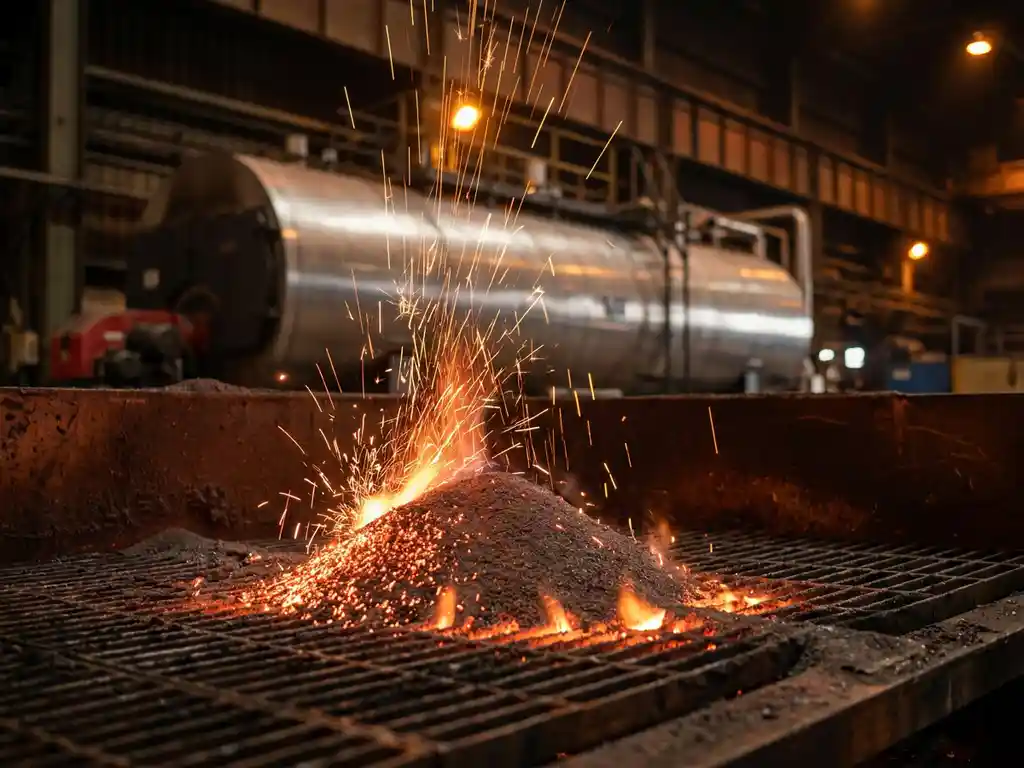
The best clean energy depends on what you need it for. For generating electricity, solar and wind are hard to beat. But for producing high-temperature industrial heat, the answer looks very different. Technologies like iron fuel, green hydrogen, and biomass each serve specific industrial needs, and the “best” option always comes down to your process, your infrastructure, and your emissions targets. This article walks through the most important questions sustainability managers are asking about clean energy today.
What are the main types of clean energy available today?
Clean energy today spans a wide range of technologies, each suited to different applications. The most widely deployed include solar photovoltaic, wind power, hydropower, geothermal energy, biomass, green hydrogen, and emerging options like iron fuel. While solar and wind dominate the electricity sector, industrial heat requires different solutions entirely.
Here is a quick overview of the main clean energy types and what they are primarily used for:
- Solar PV and wind: Best suited for electricity generation; not directly applicable to high-temperature heat
- Green hydrogen: Versatile but expensive to produce, store, and transport safely
- Biomass: Can produce heat, but sustainability and supply chain concerns apply
- Geothermal: Reliable and location-independent for low-to-medium-temperature heat
- Iron fuel: A circular, carbon-free energy carrier purpose-built for industrial high-temperature heat
- Nuclear: Produces large-scale, consistent energy with zero direct CO₂, but deployment is slow and capital-intensive
No single clean energy source does everything well. The right choice depends heavily on the temperature requirements of your process, your existing infrastructure, and the logistics of fuel supply in your region.
What’s the difference between clean energy and renewable energy?
Clean energy refers to any energy source that produces little or no harmful emissions during use. Renewable energy refers specifically to sources that are naturally replenished, such as solar, wind, and hydro. All renewable energy is generally considered clean, but not all clean energy is renewable. Nuclear power, for example, is clean but not renewable.
This distinction matters for industrial sustainability managers because regulatory frameworks and corporate reporting standards treat these categories differently. The EU Emissions Trading System, for instance, focuses on direct CO₂ emissions rather than whether a fuel source is technically renewable. A technology that burns cleanly with zero direct carbon output, even if it uses a non-renewable input in its production cycle, can still qualify as a clean energy solution under many frameworks.
Iron fuel is a good example of this nuance. Iron itself is not a renewable resource in the traditional sense, but the fuel cycle is fully circular: iron powder burns to produce heat and iron oxide, and that iron oxide is regenerated using hydrogen. The result is a closed loop with no CO₂ emissions from combustion, which is what matters most for Scope 1 reduction targets. You can read more about how this cycle works on our iron fuel technology page.
Which clean energy source produces the most heat?
Among clean energy sources, iron fuel and green hydrogen are capable of producing the highest combustion temperatures, making them the most relevant for industrial high-temperature heat. Iron fuel combustion can reach flame temperatures of up to 2,000°C, which is comparable to or higher than many fossil fuel processes, making it one of the most heat-intensive clean energy options available today.
Green hydrogen also burns at very high temperatures, but it comes with significant practical challenges: it requires pressurised storage, dedicated infrastructure, and substantial upfront investment. Biomass and geothermal, while useful for lower-temperature applications, typically cannot match the heat intensity required by sectors like specialty chemicals or pulp and paper.
For industries that depend on steam, hot water, or direct flame at high temperatures, the ability to reach and sustain those temperatures without CO₂ emissions is the defining factor. That is why iron fuel is attracting serious attention from energy-intensive industries looking for a practical step away from fossil fuels without compromising process performance.
Why is clean energy harder to use for industrial heat than for electricity?
Industrial heat is harder to decarbonise than electricity because most clean energy technologies were designed to generate electrons, not thermal energy. Electricity can be transmitted across grids and converted at the point of use, but heat is difficult to transport and must often be generated on-site at the exact temperature a process requires. This makes a direct swap from fossil fuels to clean alternatives far more complex.
Several specific barriers make the transition difficult:
- Temperature requirements: Many industrial processes need heat above 500°C, which electrification cannot efficiently deliver at scale
- Infrastructure constraints: Hydrogen requires new pipelines, storage, and safety systems that most industrial sites do not have
- Intermittency: Solar and wind cannot reliably supply the continuous, on-demand heat that production lines require
- Cost gap: Decarbonised heat carriers are still more expensive than natural gas in most markets
- Process integration: Replacing a gas burner is not plug-and-play; it often requires engineering changes across the whole system
This is why industrial heat remains one of the most stubborn challenges in the energy transition. It accounts for roughly two-thirds of total industrial energy consumption, and the vast majority of that heat is still generated by fossil fuels. Closing that gap requires clean energy solutions that are specifically engineered for heat production, not adapted from electricity-first technologies.
How do you choose the best clean energy for your industry?
Choosing the best clean energy for your industry starts with matching the technology to your process requirements. The key factors are the temperature your process needs, the scale of heat demand, your existing infrastructure, fuel supply reliability, and total cost of ownership. No single clean energy source is the right answer for every industrial context.
A practical evaluation should work through the following questions:
- What temperature range does your process require? Low-temperature processes have more options than high-temperature ones
- Is electrification feasible given your grid connection and capacity? For many industrial sites, the answer is no at the scale needed
- Does your site have access to a hydrogen supply, or would you need to build that infrastructure from scratch?
- How important is drop-in compatibility with your existing boiler setup? A technology that integrates without a full overhaul saves time and capital
- What does your regulatory environment look like? ETS exposure and carbon pricing affect the economics of each option differently
The best clean energy is ultimately the one that delivers the heat your process needs, at a cost you can justify, with the emissions reduction your targets demand. For many industrial companies, that means looking beyond the most-discussed technologies and evaluating purpose-built alternatives. Our industrial clean heat solutions page gives an overview of how iron fuel fits into this decision framework.
What is the cleanest energy with no CO₂ emissions?
The cleanest energy sources in terms of direct CO₂ emissions are those that produce zero carbon output at the point of use. These include solar, wind, hydropower, nuclear, green hydrogen, and iron fuel. Each of these produces no direct CO₂ during operation, though their full lifecycle emissions vary depending on how they are produced and transported.
For industrial heat specifically, the most relevant zero-direct-CO₂ options are green hydrogen and iron fuel. Both combust or react without releasing carbon. The key difference lies in practicality: hydrogen requires specialised infrastructure and carries safety considerations around storage and transport. Iron fuel, by contrast, is transported in standard containers, is safe to handle, and integrates with existing boiler setups without requiring a complete infrastructure overhaul.
It is worth noting that “cleanest” in a lifecycle sense depends on how the energy carrier is produced. Green hydrogen made from renewable electricity is genuinely low-carbon end-to-end. Iron fuel regenerated using green hydrogen achieves the same result, completing a fully circular cycle with no net CO₂. The cleanest energy, in practice, is the one that eliminates emissions across the entire chain, not just at the point of combustion.
How RIFT helps industries find their best clean energy answer
We built RIFT specifically to solve the problem this article keeps returning to: high-temperature industrial heat is one of the hardest parts of the energy transition, and most clean energy technologies were not designed for it. Our Iron Fuel Boiler gives energy-intensive industries a practical, carbon-free alternative to fossil fuel-fired heat, without requiring a complete overhaul of existing infrastructure.
Here is what makes our approach concrete and commercially viable:
- Zero direct CO₂ emissions: Iron fuel combusts cleanly, producing only heat and iron oxide, with no carbon released in the process
- High-temperature output: Our boiler produces flame temperatures up to 2,000°C, suitable for steam, hot water, and hot air applications
- Up to 95% energy efficiency: Outperforming many traditional fossil fuel systems on efficiency, not just emissions
- Drop-in compatible: Designed to complement existing boiler infrastructure, reducing the capital and time cost of switching
- Reliable fuel supply: Iron fuel is safe to transport in standard containers and backed by a long-term supply agreement
- Proven at commercial scale: The first Iron Fuel Boiler is already contracted with Kingspan Unidek, making us the first company in the world to deploy this technology industrially
We are focused on Food and Beverage, Specialty Chemicals, and Pulp and Paper, but the underlying challenge is the same across energy-intensive industries: decarbonise heat without disrupting production. If you want to understand whether iron fuel is the right answer for your site, we would be glad to have that conversation. Get in touch with our team and let us look at your specific situation together.
Frequently Asked Questions
How does iron fuel compare to green hydrogen in terms of total cost of ownership?
While both iron fuel and green hydrogen offer zero direct CO₂ emissions, iron fuel generally has a lower total cost of ownership for most industrial sites. Green hydrogen requires significant upfront investment in pressurised storage, dedicated pipelines, and safety systems, whereas iron fuel can be transported in standard containers and integrated with existing boiler infrastructure. For sites without existing hydrogen infrastructure, the capital cost difference alone can make iron fuel the more commercially viable starting point.
Can I transition to clean industrial heat in phases, or does it have to be an all-or-nothing switch?
A phased transition is not only possible but often the most practical approach for energy-intensive industries. Many companies start by decarbonising a portion of their heat load, for example one production line or one boiler, before scaling across the site. Technologies like the Iron Fuel Boiler are designed with drop-in compatibility in mind, which means they can complement existing fossil fuel systems during a transition period rather than requiring a full overnight replacement.
How does iron fuel combustion affect Scope 1 emissions reporting under frameworks like the EU ETS?
Because iron fuel combustion produces no CO₂, it results in zero direct Scope 1 emissions from the combustion process itself, which is exactly what frameworks like the EU Emissions Trading System measure and price. This means switching to iron fuel can directly reduce your ETS carbon cost exposure. It is worth working with your sustainability or compliance team to ensure your emissions reporting methodology is updated to reflect the fuel switch, as most current reporting templates default to fossil fuel assumptions.
What industries or processes are NOT a good fit for iron fuel right now?
Iron fuel is purpose-built for high-temperature industrial heat applications such as steam generation, hot air, and hot water production, so processes that primarily require electricity rather than thermal energy would not benefit directly from it. Additionally, processes with very low heat demand or highly distributed, small-scale heat needs may not yet justify the infrastructure investment. For those cases, other clean energy options such as heat pumps or electrification may be more appropriate, and a thorough site assessment is always the right first step.
What are the most common mistakes companies make when evaluating clean energy options for industrial heat?
The most common mistake is defaulting to the most publicly visible technologies, such as solar or wind, without accounting for whether they can actually meet the temperature and reliability requirements of the process. Another frequent error is underestimating infrastructure costs: a technology that looks cheap on a per-unit energy basis can become expensive once storage, safety systems, and grid upgrades are factored in. A robust evaluation should always start with your process requirements and work backwards to the technology, not the other way around.
How long does it typically take to implement an iron fuel-based heat solution at an industrial site?
Implementation timelines vary depending on site complexity, existing infrastructure, and regulatory permitting requirements, but iron fuel’s drop-in compatibility with existing boiler setups significantly reduces the engineering and installation time compared to more disruptive alternatives like hydrogen. Because it does not require new pipelines or pressure storage systems, many of the longest lead-time elements of a conventional fuel switch are eliminated. The best way to get an accurate timeline for your specific situation is to engage directly with the RIFT team for a site assessment.
Will clean industrial heat technologies like iron fuel become more cost-competitive as they scale?
Yes, and this is already happening. Like most emerging energy technologies, iron fuel and green hydrogen are both on cost reduction trajectories as production scales, supply chains mature, and deployment experience accumulates. Carbon pricing mechanisms like the EU ETS also continue to increase the relative cost of fossil fuel-based heat, narrowing the gap further. Companies that begin their transition now are also better positioned to lock in early supply agreements and avoid the higher compliance costs that will come as carbon prices rise.
Related Articles
- How do NOx emissions from industrial boilers affect regulatory compliance?
- What is the primary purpose of the EIA?
- Why is it important for companies to go green?
- What are the biggest challenges of switching to renewable energy?
- What is the difference between solar and wind energy?
This content was generated with the help of AI and it may contain mistakes