

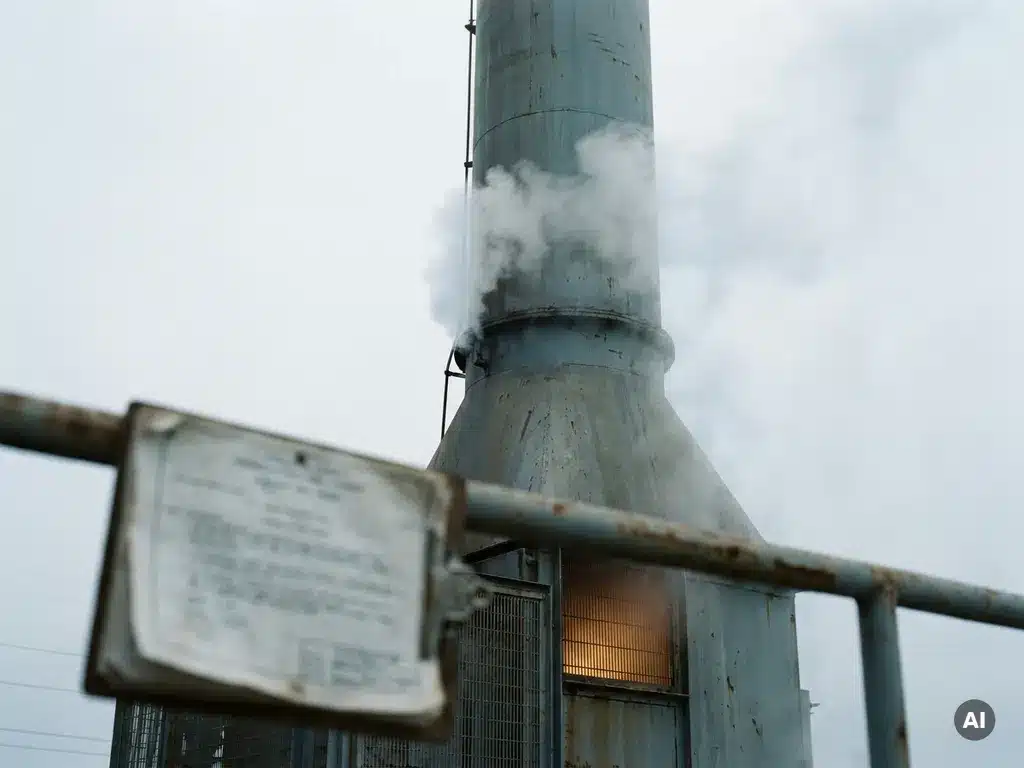
NOx emissions from industrial boilers affect regulatory compliance by triggering permit conditions, emissions limits set under national and EU legislation, and potential financial penalties when those thresholds are exceeded. For sustainability managers in energy-intensive industries, staying on the right side of nitrogen oxide rules is not simply a legal formality; it directly shapes operational freedom, capital planning, and long-term competitiveness. This article walks through the key questions: what the limits are, how penalties work, which sectors face the toughest scrutiny, and what technologies can genuinely help.
What are the legal NOx emission limits for industrial boilers?
Legal NOx emission limits for industrial boilers in Europe are primarily set by the Industrial Emissions Directive (IED) and its associated Best Available Techniques Reference Documents (BREFs). For large combustion plants, NOx limits typically range from 100 to 300 mg/Nm³ depending on fuel type, boiler size, and the age of the installation. Smaller boilers and specific sectors may fall under different national thresholds.
The IED requires that industrial operators obtain permits that incorporate emission limit values (ELVs) derived from Best Available Techniques (BAT). These BAT-associated emission levels are periodically reviewed and tightened, meaning limits that were acceptable five years ago may no longer satisfy current permit conditions today. In 2026, operators across the EU are navigating a tightening regulatory environment as updated BREFs continue to roll out.
Beyond the IED, the National Emission Ceilings (NEC) Directive places binding caps on total NOx emissions at a member state level, which in turn drives national regulators to impose stricter facility-level requirements. In practice, this means the legal limit your boiler must meet depends on a combination of EU-level reference documents, your national transposition of those rules, and the specific conditions written into your operating permit.
How do NOx emissions trigger compliance penalties?
NOx emissions trigger compliance penalties when measured concentrations at a facility exceed the emission limit values specified in the operating permit. Penalties can include financial fines, mandatory corrective action plans, temporary suspension of operations, or, in serious cases, permit revocation. The severity depends on the jurisdiction, the scale of the breach, and whether the exceedance was isolated or persistent.
Enforcement typically follows a structured path. Continuous Emissions Monitoring Systems (CEMS) or periodic stack measurements provide the data regulators rely on. If results breach permit thresholds, the operator must notify the competent authority, often within a defined timeframe, and submit a plan for remediation. Failure to self-report can escalate penalties significantly.
Beyond direct fines, there are indirect compliance costs worth taking seriously:
- Increased monitoring obligations – regulators may require more frequent reporting after a breach
- Permit renegotiation – a history of exceedances can make future permit renewals more restrictive
- Reputational exposure – enforcement actions are increasingly public, affecting relationships with customers and investors
- EU ETS interaction – while the EU Emissions Trading System primarily targets CO₂, broader regulatory scrutiny often intensifies across all emissions categories simultaneously
For sustainability managers, the practical takeaway is that NOx compliance is not a one-time checkbox. It requires continuous operational vigilance and a clear understanding of where your facility sits relative to its permit thresholds at any given moment.
Which industrial sectors face the strictest NOx rules?
The industrial sectors facing the strictest NOx regulation are those operating large combustion installations or processes with high thermal input, particularly pulp and paper, specialty chemicals, and food and beverage, alongside cement, glass, and steel production. These sectors fall squarely within the scope of the IED and are subject to the most detailed BAT conclusions.
Pulp and paper facilities, for example, often run high-capacity boilers on biomass or fossil fuels, making them a priority target for NOx controls under the Large Combustion Plant BREF. Specialty chemicals plants frequently operate multiple combustion units across a single site, compounding their aggregate NOx exposure. Food and beverage manufacturers, while individually smaller in thermal capacity, are increasingly brought into scope as regulators lower the thresholds that trigger permitting requirements.
Sector-specific BAT conclusions set the reference point for what regulators consider achievable. If your sector’s BAT conclusions have recently been updated, as has been the case across several industries in recent years, your existing permit conditions may be due for revision at the next renewal cycle. That is the moment when theoretical compliance can quickly become actual non-compliance if the underlying combustion technology has not kept pace.
How does NOx regulation interact with broader decarbonisation targets?
NOx regulation and decarbonisation targets interact because both are increasingly embedded in the same regulatory and policy frameworks. The EU’s Fit for 55 package, the Industrial Emissions Directive revision, and national climate commitments do not treat air quality and carbon reduction as separate agendas; they are converging, and industrial operators are expected to address both simultaneously.
This convergence creates a compliance planning challenge. A boiler upgrade that reduces CO₂ emissions by switching to biomass, for instance, may simultaneously increase NOx output if combustion temperatures are not carefully managed. Conversely, technologies that eliminate carbon emissions at source often have fundamentally different combustion chemistry that changes the NOx picture entirely.
The EU ETS adds a financial dimension to this interaction. As carbon prices rise, the cost of operating fossil fuel boilers increases, creating a business case for switching to lower-carbon alternatives. But if those alternatives come with their own NOx compliance burden, the total regulatory cost of the transition needs to be modelled carefully. Sustainability managers who plan decarbonisation investments without factoring in air quality regulation risk solving one compliance problem while creating another.
Security of supply is a related pressure point. Industrial facilities dependent on natural gas face both carbon compliance costs and volatile energy prices, making the case for alternative heat sources stronger on multiple dimensions at once. Evaluating industrial heat solutions through a combined lens of carbon, NOx, and energy security gives a more complete picture of long-term regulatory risk.
What technologies reduce NOx emissions from industrial boilers?
The main technologies that reduce NOx emissions from industrial boilers fall into two categories: combustion modifications that prevent NOx from forming in the first place, and post-combustion treatments that remove NOx from flue gases after they are produced. The most effective approach depends on the fuel type, boiler design, and the emission level required by the permit.
Common combustion modification approaches include:
- Low-NOx burners – redesigned burner geometry that reduces peak flame temperature and limits oxygen availability in the hottest combustion zone, cutting thermal NOx formation
- Flue gas recirculation (FGR) – returning a portion of exhaust gas to the combustion chamber to dilute oxygen concentration and lower flame temperature
- Air staging and fuel staging – introducing combustion air or fuel in multiple stages to control temperature profiles and reduce NOx peaks
- Selective Catalytic Reduction (SCR) – a post-combustion system that injects a reagent (typically ammonia or urea) and passes flue gas over a catalyst to convert NOx to nitrogen and water
- Selective Non-Catalytic Reduction (SNCR) – a simpler, lower-cost post-combustion approach that works at higher temperatures without a catalyst, though with lower NOx reduction efficiency than SCR
Beyond these established methods, the choice of fuel itself has a decisive impact. Combustion chemistry determines how much NOx can form. Fuels that burn at lower peak temperatures or that do not produce nitrogen-containing combustion intermediates can achieve structurally lower NOx output than fossil fuels, regardless of what add-on controls are fitted. This is where Iron Fuel Technology stands out: RIFT’s Iron Fuel Boiler achieves NOx emissions of less than 5 mg/MJ, which RIFT states is the lowest of any fuel, a performance advantage that is structural rather than dependent on retrofit controls.
When should a company review its boiler NOx compliance strategy?
A company should review its boiler NOx compliance strategy whenever a significant regulatory, operational, or financial trigger occurs. Waiting for a permit breach before reassessing is a reactive approach that carries real legal and financial risk. Proactive reviews are more effective and typically less costly to act on.
Key triggers for a compliance strategy review include:
- Permit renewal – this is the moment regulators apply updated BAT conclusions, often resulting in tighter ELVs
- Updated sector BREF documents – when new BAT reference documents are published for your sector, review whether your current technology still meets the associated emission levels
- Planned capacity expansion – increasing thermal input can change which regulatory thresholds apply to your facility
- Fuel switching – changing from one fuel type to another alters combustion chemistry and NOx output in ways that must be reassessed against permit conditions
- Changes in enforcement posture – national regulators periodically increase inspection frequency or introduce new reporting requirements
Beyond these event-driven triggers, it is good practice to review NOx compliance strategy as part of any broader decarbonisation planning exercise. If your organisation has a net-zero commitment or is building a Scope 1 reduction roadmap, the boiler fleet is a natural starting point, and the interaction between carbon targets, NOx rules, and CAPEX planning needs to be addressed together rather than in isolation.
How Iron Fuel Technology helps with NOx compliance and industrial decarbonisation
We at RIFT developed Iron Fuel Technology precisely for industrial operators who need to address both carbon and air quality compliance without compromising on heat output or operational reliability. For sustainability managers navigating tightening NOx limits alongside Scope 1 reduction targets, our Iron Fuel Boiler offers a solution that tackles both challenges at once.
Here is what makes it relevant to your compliance strategy:
- Ultra-low NOx emissions – RIFT’s Iron Fuel Boiler achieves NOx emissions of less than 5 mg/MJ, which we state is the lowest of any fuel, giving facilities significant headroom against current and future regulatory thresholds
- Near-zero direct CO₂ – iron fuel combustion itself produces no CO₂; the only carbon output is 10 kg CO₂/MWhth from the pilot safety flame, making it compatible with Scope 1 reduction commitments
- Up to 95% energy efficiency – the system is designed to match or outperform the thermal performance of existing fossil fuel boilers
- Grid-independent operation – unlike electrification, iron fuel does not depend on grid capacity or infrastructure upgrades, making it viable even where grid congestion is a barrier
- Drop-in compatibility – the Iron Fuel Boiler is designed to complement existing boiler infrastructure, reducing the capital disruption of switching
- Demonstrated at TRL7 – the technology has been validated at megawatt-industrial scale, not just in a laboratory
If your organisation is approaching a permit renewal, planning a fuel switch, or building a decarbonisation roadmap that needs to account for NOx alongside CO₂, we would welcome the conversation. Get in touch with our team to explore whether Iron Fuel Technology is the right fit for your facility.
Frequently Asked Questions
How do I know if my boiler is approaching its NOx permit threshold before a breach occurs?
The most reliable way is to install or optimise a Continuous Emissions Monitoring System (CEMS) that provides real-time NOx readings against your permit emission limit values, ideally with automated alerts set below the actual threshold to give you response time. If CEMS is not yet in place, periodic stack testing combined with process data trending (fuel consumption, load profiles, combustion temperatures) can give early warning signals. Many sustainability managers also commission an independent compliance gap assessment ahead of permit renewals to identify drift before regulators do.
What are the most common mistakes companies make when trying to reduce NOx emissions from their boilers?
One of the most frequent mistakes is retrofitting a single control technology, such as a low-NOx burner, without reassessing the full combustion system, which can result in underperformance or even increased emissions under certain load conditions. Another common error is treating NOx reduction in isolation from fuel type and boiler operating patterns; a technology that works well at full load may not achieve permit compliance during start-up, low-load, or fuel-switching cycles. Finally, companies often overlook the interaction between NOx controls and other emissions parameters, such as CO or particulates, where reducing one can inadvertently increase another.
Can switching to biomass or other 'greener' fuels make our NOx compliance situation worse?
Yes, it can, and this is a risk that is frequently underestimated in decarbonisation planning. Biomass combustion, particularly at high temperatures or with nitrogen-rich feedstocks, can produce fuel NOx in addition to thermal NOx, sometimes resulting in higher total NOx output than the fossil fuel it replaces. The key is to evaluate any fuel switch through a combined emissions lens before committing capital, modelling the expected NOx profile under your specific boiler design and operating conditions, and confirming that your permit conditions cover the new fuel type.
How long does it typically take to implement NOx reduction measures, and how should we plan around permit timelines?
Implementation timelines vary significantly: low-NOx burner replacements can often be completed within a planned maintenance shutdown of days to weeks, while post-combustion systems like SCR require months of engineering, procurement, and installation, and may need permit variation approval before commissioning. The critical planning principle is to begin the technology assessment and procurement process well before the permit renewal date, not after receiving updated emission limit values from the regulator. Working backwards from your next permit renewal, a lead time of 18 to 36 months for more complex retrofits is a realistic planning assumption.
Are smaller industrial boilers exempt from NOx regulation, or is this only a concern for large combustion plants?
Smaller boilers are not automatically exempt, and the regulatory net is widening. While the IED’s Large Combustion Plant provisions apply above specific thermal input thresholds (generally 50 MWth), national regulations and the Medium Combustion Plant (MCP) Directive cover installations from 1 MWth upward, with NOx emission limits and registration or permitting requirements that have been progressively tightening since 2018. If your facility operates multiple smaller boilers, their aggregate emissions and cumulative thermal input may also attract regulatory scrutiny at the site level.
What should a NOx compliance review actually include, and who should be involved in conducting it?
A thorough NOx compliance review should cover four core areas: a current permit audit (confirming what your ELVs actually are and when they were last updated), an emissions performance assessment (comparing recent monitoring data against those limits with adequate margin analysis), a technology gap analysis (evaluating whether current combustion controls are sufficient for anticipated future limits), and a regulatory horizon scan (identifying upcoming BREF updates or national rule changes relevant to your sector). The review typically involves your environmental compliance team, a combustion engineering specialist, and ideally a regulatory affairs consultant familiar with your national competent authority’s enforcement posture.
How do NOx compliance costs factor into the business case for investing in new boiler technology?
NOx compliance costs should be modelled across four dimensions in any capital investment appraisal: direct costs (monitoring, reporting, and any fines or remediation), indirect costs (management time, permit renegotiation complexity, and reputational risk), opportunity costs (operational restrictions or production curtailments triggered by exceedances), and avoided future costs (the capital expenditure on retrofit controls that a structurally low-NOx technology would make unnecessary). When these are aggregated over a 10 to 15 year asset life and set against the capital cost of a new system, the compliance cost avoidance case often materially strengthens the investment return, particularly as regulatory thresholds continue to tighten.
Related Articles
- How can manufacturers reduce upfront investment when switching to clean heat?
- How can companies use renewable energy?
- What is the role of hydrogen in the energy transition?
- How does renewable energy affect local ecosystems?
- What is renewable energy?
This content was generated with the help of AI and it may contain mistakes