

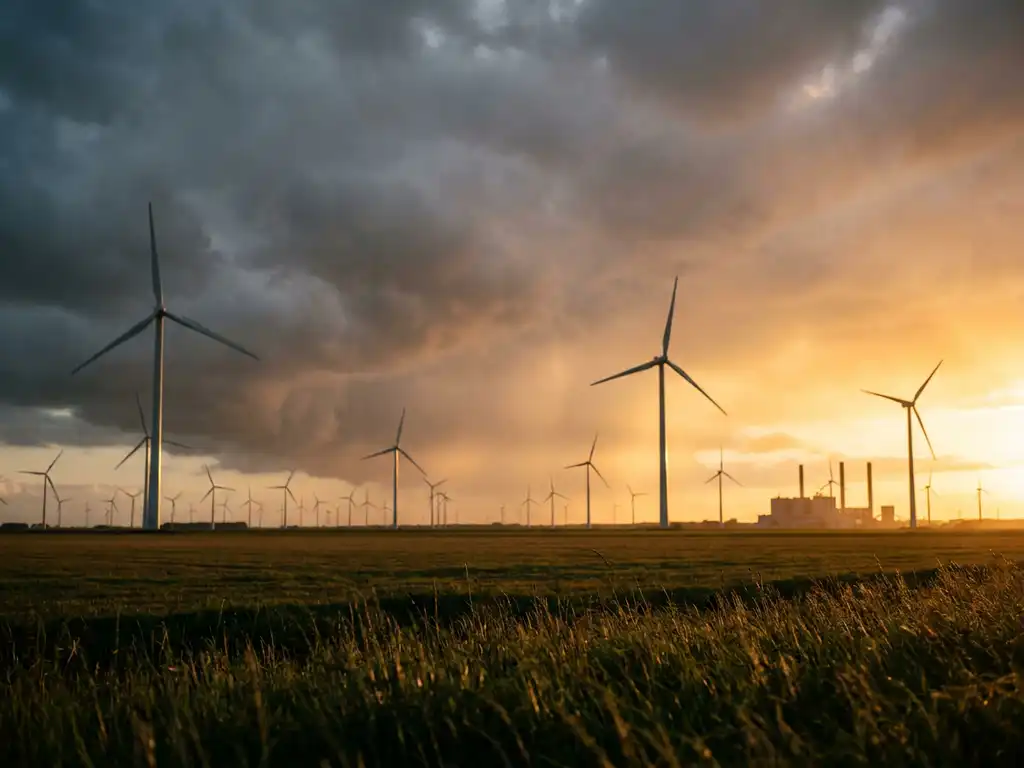
Transitioning to 100% renewable energy in an industrial setting typically takes between 10 and 30 years, depending on the size of the operation, the technologies available, and how deeply fossil fuels are embedded in existing processes. For most industrial companies, the shift happens in phases rather than all at once. Electricity and low-temperature heat are often decarbonised first, while high-temperature industrial heat remains the hardest—and final—piece of the puzzle.
Waiting for a perfect solution is quietly extending your fossil fuel dependency
Many sustainability managers are caught in a holding pattern, waiting for a single technology that ticks every box before committing to any transition at all. The problem is that this wait has a real cost. Every year of delay locks in Scope 1 emissions, increases exposure to carbon pricing under frameworks such as the EU Emissions Trading System, and pushes net-zero commitments further out of reach. The fix is not to find the perfect solution, but to start with what is commercially ready today—even if it covers only part of your heat demand—and build from there.
High-temperature industrial heat is the part of the transition most companies underestimate
Decarbonising electricity is relatively straightforward compared with industrial heat. Yet heat accounts for roughly two-thirds of industrial energy consumption, and around 80% of that heat is still generated by fossil fuels. Most transition roadmaps focus on what is easiest first, which means high-temperature process heat often gets pushed to the back of the plan. By the time companies turn their attention to it, timelines are compressed and options feel limited. Acknowledging this gap early—and actively evaluating heat-specific technologies now—is what separates companies that hit their targets from those that miss them.
What does transitioning to 100% renewable energy actually mean for industry?
For industrial companies, transitioning to 100% renewable energy means replacing every fossil fuel input across electricity, heating, and process energy with low-carbon alternatives. This includes not just switching power sources, but rethinking how heat is generated, stored, and delivered at the temperatures and volumes that industrial processes require.
Electricity is usually the starting point because renewable electricity is widely available and grid connections are already in place. But electricity alone cannot do everything. Many industrial processes need high-temperature heat, sometimes above 1,000°C, which electric systems struggle to deliver cost-effectively at scale.
A full renewable energy transition for industry therefore involves multiple technologies working in parallel: renewable electricity for power and low-temperature heat, green hydrogen or biomass for some medium-temperature applications, and emerging technologies such as iron fuel for high-temperature combustion. The goal is not to find one solution, but to build a portfolio that covers all energy demands without fossil fuels.
How long does a full industrial energy transition typically take?
A full industrial energy transition typically takes 15 to 25 years for large manufacturing operations, though smaller facilities with simpler energy profiles can move faster. The timeline depends on the complexity of existing infrastructure, the availability of suitable renewable technologies, and the pace of internal decision-making and capital allocation.
Early phases, such as switching to renewable electricity contracts or improving energy efficiency, can happen within a few years. Mid-phase transitions, such as installing heat pumps for low-temperature processes or integrating on-site renewable generation, often take five to ten years when you factor in planning, procurement, and commissioning.
The final phase—replacing fossil-fuel-fired boilers and furnaces that generate high-temperature industrial heat—is where timelines stretch. This is partly because fewer commercial options exist, and partly because these systems are deeply integrated into production lines. Replacing them requires careful planning to avoid disrupting operations. Companies that start evaluating alternatives now are in a significantly better position than those that wait until regulatory pressure forces the decision.
What slows down the transition to renewable industrial heat?
The main barriers to transitioning to renewable industrial heat are high upfront costs, infrastructure constraints, limited commercial availability of high-temperature solutions, and uncertainty about long-term fuel supply. Together, these factors create a risk profile that makes many companies hesitate, even when the intent to decarbonise is genuine.
Capital investment is one of the most cited obstacles. Replacing a fossil fuel boiler system requires significant upfront expenditure, and the return on investment is harder to model when energy prices fluctuate and carbon pricing mechanisms are still evolving in many markets.
Infrastructure is another constraint. Green hydrogen, for example, requires new pipelines or on-site production capacity. Full electrification of high-temperature processes demands grid upgrades that can take years to negotiate and build. These dependencies mean that even a willing company can be held back by factors outside its direct control.
Finally, there is the question of commercial readiness. Not every renewable heat technology that works in a laboratory is available at industrial scale today. Sustainability managers need solutions that are proven, reliable, and backed by long-term supply agreements—not just promising pilots.
Which renewable heat technologies are ready for industry today?
Several renewable heat technologies are commercially available for industrial use today. Heat pumps work well for low- to medium-temperature applications. Biomass boilers are established in sectors such as pulp and paper. Green hydrogen burners are emerging for higher temperatures. Iron fuel combustion is a newer option that delivers high-temperature heat with zero direct CO₂ emissions and is now at the commercial deployment stage.
The right technology depends heavily on the temperature range your processes require. Below 150°C, industrial heat pumps are often the most cost-effective choice. Between 150°C and 500°C, options narrow, and a combination of technologies is usually needed. Above 500°C, very few renewable options can match the output of fossil fuel combustion, which is why this segment has been the slowest to decarbonise.
Technology readiness matters as much as technical capability. A solution that works at pilot scale but lacks a commercial supply chain is not a viable choice for a production facility that cannot afford downtime. When evaluating options, look for technologies that have been demonstrated at industrial scale, have defined fuel supply agreements, and can integrate with your existing boiler infrastructure without requiring a complete rebuild.
How can a company start its renewable heat transition without disrupting operations?
A company can start its renewable heat transition without disrupting operations by taking a phased approach: begin with energy audits and efficiency improvements, then introduce renewable heat sources that complement existing systems before replacing them. Drop-in compatible technologies that work alongside fossil fuel boilers are especially useful in the early stages.
A practical starting sequence looks like this:
- Conduct a detailed energy audit to map heat demand by temperature, volume, and process criticality.
- Identify which parts of your heat demand can be addressed with currently available renewable technologies.
- Pilot a complementary renewable heat source on a non-critical process or during off-peak periods.
- Use pilot results to build the internal business case and refine cost projections.
- Scale the proven solution across more of your heat demand, progressively reducing fossil fuel dependency.
- Plan the full replacement of fossil fuel boilers as part of a longer capital investment cycle.
The key principle is to avoid all-or-nothing thinking. Technologies that can run alongside your existing infrastructure reduce the risk of transition significantly. They allow your team to build operational experience with a new fuel or system while maintaining production continuity. This also gives you real performance data to support further investment decisions.
How Iron Fuel Technology helps with the renewable energy transition
For industrial companies that need high-temperature heat but cannot wait for hydrogen infrastructure or afford full electrification, we offer a practical path forward. Our Iron Fuel Technology is designed to fit into your existing setup rather than replace it entirely.
- Drop-in compatible: The Iron Fuel Boiler integrates with existing boiler infrastructure, so you can start decarbonising without rebuilding your entire heat system.
- Zero direct CO₂: Iron fuel combustion produces no carbon dioxide. The only CO₂ output comes from the pilot safety flame, at just 10 kg per MWh of heat produced.
- High efficiency: Our boiler system achieves up to 95% energy efficiency, comparable to or better than many fossil fuel systems in operation today.
- Circular and secure: Iron fuel works like a rechargeable battery. Iron powder burns to produce heat, the resulting iron oxide is collected and regenerated using hydrogen, and the cycle repeats. You get a circular energy carrier with a predictable, long-term supply.
- Commercially ready: We have already signed the first commercial contract worldwide for industrial Iron Fuel Technology, giving you confidence that this is not a future promise but a present reality.
If you are a sustainability manager evaluating renewable heat solutions for your facility, we are ready to talk through what a transition could look like for your specific situation. Get in touch with our team to start the conversation.
Related Articles
- What is VEKI?
- What is green energy and how is it different from renewable energy?
- What is the difference between solar and wind energy?
- How do I switch to renewable energy at home?
- What are 5 renewable sources of energy?
This content was generated with the help of AI and it may contain mistakes