

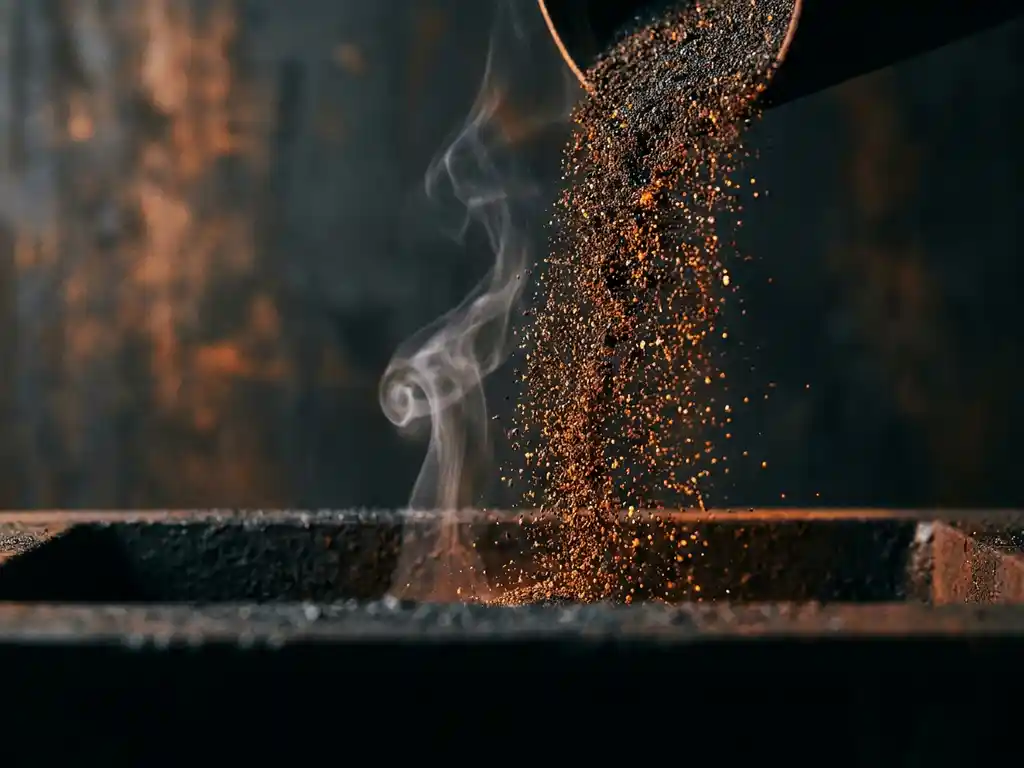
Fossil fuels will be replaced by a mix of renewable energy sources, including solar, wind, hydrogen, biomass, and emerging technologies such as iron fuel. No single alternative covers every application, which is why the transition is sector-specific and gradual. For industrial heat in particular—where temperatures are high and processes are continuous—replacement is more complex than simply swapping out a fuel. The shift is already underway, but the timeline depends heavily on technology readiness, infrastructure, and cost.
Sticking with fossil fuels is becoming more expensive than switching
The cost of sticking with fossil fuels is rising on multiple fronts. Carbon pricing under the EU Emissions Trading System adds a direct financial penalty to every tonne of CO₂ emitted. At the same time, customers, investors, and regulators are asking tougher questions about emissions. For sustainability managers, the risk is no longer just environmental. Delayed action means higher compliance costs, stranded assets, and growing pressure from boards with net-zero commitments. The solution is not to wait for a perfect answer, but to start evaluating what is technically feasible now—sector by sector, process by process.
Waiting for one universal clean energy solution is slowing your decarbonization
There is no single drop-in replacement for fossil fuels that works across all industries and temperature ranges. Companies that hold out for a universal answer tend to delay decisions that could already be made today. A more productive approach is to match the right technology to the right process. For low-temperature applications, electrification often works well. For high-temperature industrial heat, options such as hydrogen, biomass, and iron fuel each have specific strengths and constraints. Mapping your heat demand against available technologies is the most direct path to a realistic decarbonization plan.
Why are fossil fuels still so hard to replace in industry?
Fossil fuels are hard to replace in industry because they deliver reliable, high-temperature heat at scale, at relatively low cost, and through infrastructure that already exists. Most industrial processes were designed around them. Replacing them requires not just a different fuel, but often different equipment, different supply chains, and different operational expertise.
Industrial heat is one of the most emissions-intensive and least-discussed parts of the energy transition. Industry accounts for roughly 37% of total global energy consumption, and about two-thirds of that is used for heat. Most of that heat is still generated by burning fossil fuels. The challenge is not awareness; it is that most clean alternatives either cannot reach the temperatures required, are too expensive to deploy at scale, or depend on infrastructure that is not yet in place.
Electrification works well for lower-temperature processes, but becomes technically and economically difficult above certain thresholds. Hydrogen can theoretically replace gas in burners, but it requires new pipelines, storage systems, and safety protocols. Biomass is constrained by supply and sustainability considerations. For many industrial operators, none of these options offers a straightforward swap. That gap is exactly where newer technologies are being developed to fill it.
What are the main alternatives to fossil fuels for industrial heat?
The main alternatives to fossil fuels for industrial heat are electrification, green hydrogen, biomass, and emerging solid-state energy carriers such as iron fuel. Each covers different temperature ranges and operational contexts. No single option replaces fossil fuels across all applications, which is why most industrial decarbonization strategies combine more than one approach.
Here is a practical overview of each option:
- Electrification: Works well for low- to medium-temperature applications. Heat pumps and electric resistance heating are commercially mature, but high-temperature applications above roughly 400°C become increasingly difficult and expensive to electrify.
- Green hydrogen: Can reach the high temperatures industry needs and can be used in existing burner infrastructure with modifications. The main barriers are cost, hydrogen availability, and the need for new transport and storage infrastructure.
- Biomass: A more established option that can deliver high-temperature heat. Concerns about long-term fuel supply, land use, and sustainability certification limit how widely it can scale.
- Iron fuel: An emerging technology that burns iron powder to produce high-temperature heat with zero direct CO₂ emissions. The iron oxide by-product is regenerated using hydrogen, making it a circular energy carrier. It is compatible with existing boiler infrastructure and does not require a gas grid.
The right choice depends on the process’s temperature requirements, the available infrastructure, the regional cost of energy, and how quickly a company needs to act on its emissions targets.
What’s the difference between hydrogen and iron fuel as energy carriers?
The key difference is their physical state and infrastructure requirements. Hydrogen is a gas that needs pressurized storage, dedicated pipelines, and specialized handling. Iron fuel is a solid powder that can be stored and transported using conventional logistics. Both can deliver high-temperature industrial heat without direct CO₂ emissions, but they suit different operational contexts.
Hydrogen has received significant investment and policy support, and it works well in applications where a gas grid already exists or where a site can justify the infrastructure investment. However, hydrogen is difficult to store safely in large volumes, and building out the supply chain from scratch is costly and time-consuming for many industrial operators.
Iron fuel behaves more like a conventional solid fuel in terms of handling and storage. It is not explosive, does not require pressurization, and can be transported by road or rail using existing logistics. When burned, it produces a flame of up to 2,000°C and leaves behind iron oxide, which is then collected and sent to a production facility, where it is converted back into iron fuel using low-carbon hydrogen. This circular process means the material is reused rather than consumed, which is a meaningful difference from hydrogen combustion, where the fuel is simply used up.
For industries without access to a hydrogen grid, iron fuel offers a path to high-temperature decarbonization that does not depend on new pipeline infrastructure. For industries that already have gas connections and are exploring hydrogen blending, hydrogen may be a more direct route. The two technologies are not necessarily in competition; they address overlapping but distinct segments of the industrial heat market.
Which industries are hardest to decarbonize with existing clean energy options?
The hardest industries to decarbonize are those that need continuous, high-temperature heat and cannot easily interrupt their processes. This includes sectors such as cement, steel, glass, ceramics, pulp and paper, specialty chemicals, and food and beverage processing. These industries share a common problem: their energy demand is intense, their processes are sensitive, and the clean alternatives available today either cannot match the required temperatures or are too costly to deploy at the scale needed.
Food and beverage manufacturers, for example, rely on steam and hot water for drying, sterilization, and cooking processes. Switching to electricity is technically possible for some steps, but not all, and the economics are often unfavorable at industrial scale. Specialty chemicals producers face similar constraints, with processes that require precise temperature control and an uninterrupted heat supply.
Pulp and paper is another sector where heat demand is both high and continuous. Biomass is already used in some mills, but not all sites have access to a reliable biomass supply, and the sustainability of that supply is under increasing scrutiny.
What these sectors have in common is that they need a solution that works within their existing infrastructure, delivers consistent heat at the right temperature, and does not require a complete overhaul of their operations. That constraint is what makes technologies such as iron fuel particularly relevant for this group. You can read more about how iron fuel applies to specific industrial sectors and where it fits within existing operations.
How does iron fuel technology work as a fossil fuel replacement?
Iron fuel technology replaces fossil fuels by burning iron powder instead of gas or oil to generate high-temperature heat. The combustion produces no direct CO₂ emissions. The only by-product is iron oxide, which is collected and converted back into iron fuel using low-carbon hydrogen, completing a closed cycle. The Iron Fuel Boiler integrates with existing boiler infrastructure, making it a practical drop-in option for industrial operators.
The process works in four stages:
- Storage and transport: Iron powder is stored as a solid and transported to industrial sites using standard logistics. No pressurized containers or special pipelines are required.
- Combustion: The iron powder burns inside the boiler, generating a flame of up to 2,000°C. This heat is used to produce steam, hot water, or hot air for industrial processes. The boiler achieves up to 95% energy efficiency.
- Collection of iron oxide: After combustion, iron oxide is collected from the boiler chamber. It is safe to handle and store.
- Regeneration: The iron oxide is transported to a production facility where it is converted back into iron fuel using low-carbon hydrogen. The material is then ready to be used again.
The CO₂ output from the boiler system is very low. The only source of carbon emissions is a small pilot safety flame, resulting in around 10 kg of CO₂ per megawatt-hour of thermal energy. That compares with roughly 200 kg or more per megawatt-hour for a natural gas boiler. The technology has been demonstrated at industrial megawatt scale in Helmond, the Netherlands, at Technology Readiness Level 7, which means it has moved well beyond the laboratory and into real-world operating conditions. You can explore the full technical detail on the Iron Fuel Technology page.
If you are evaluating whether iron fuel could work for your industrial heat processes, the form below is a good starting point. It takes less than a minute to complete and helps our team understand your situation before reaching out.
When will fossil fuels be fully replaced in industrial processes?
A full replacement of fossil fuels in industrial processes is unlikely before 2050, and even that timeline depends on significant acceleration in technology deployment, policy support, and infrastructure investment. The transition is already underway in some sectors, but the pace varies widely by industry, geography, and the availability of commercially viable alternatives.
The 2050 horizon matters because it aligns with the net-zero targets set by the EU and many national governments. For industrial heat specifically, this means the next decade is critical. Companies that begin their transition now—by piloting clean-heat technologies, building supplier relationships, and developing internal expertise—will be better positioned than those that wait for the market to fully mature.
Several factors will determine how quickly fossil fuels are replaced in any given industry. Carbon pricing will continue to rise, making fossil fuels progressively more expensive to use. Clean-technology costs are falling as production scales up. Regulatory pressure is increasing, with more sectors being brought into carbon trading schemes. Customer expectations are also shifting, with procurement teams at major brands increasingly requiring emissions data from their supply chains.
The realistic picture is a gradual, sector-by-sector transition rather than a hard cutoff. Some industries will move faster, driven by favorable economics or regulatory exposure. Others will take longer, particularly where the technical barriers are highest. What is clear is that the direction is set, and the companies that treat decarbonization as a planning challenge rather than a future problem will have more options available when it counts.
How RIFT helps industrial companies move beyond fossil fuels
We developed Iron Fuel Technology specifically to address the decarbonization challenge that electrification and hydrogen cannot always solve. For industrial operators that need high-temperature heat, a reliable fuel supply, and a solution that works with existing infrastructure, our Iron Fuel Boiler offers a practical path forward.
Here is what working with us looks like in practice:
- Drop-in compatibility: The Iron Fuel Boiler is designed to complement existing fossil fuel boilers, so you do not need to replace your entire setup to get started.
- Zero direct CO₂ emissions: Iron fuel combustion produces no direct carbon emissions, with only minimal CO₂ from a pilot safety flame.
- Long-term fuel supply: We provide iron fuel under long-term supply agreements, giving you cost predictability and supply security.
- Commercially proven: We have signed the first commercial contract for industrial Iron Fuel Technology worldwide, with delivery and fuel supply already underway.
- Financially backed at scale: With €113.8 million in funding secured, including EU Innovation Fund support, we are built to scale with our customers.
If you are evaluating renewable energy options for your industrial heat processes and want to understand whether iron fuel fits your situation, get in touch with our team to start the conversation.
Related Articles
- What does the Department of Energy do?
- What is the role of hydrogen in the energy transition?
- What is tidal energy and how does it work?
- Which renewable energy source is the cheapest?
- What is the biggest renewable resource?
This content was generated with the help of AI and it may contain mistakes