

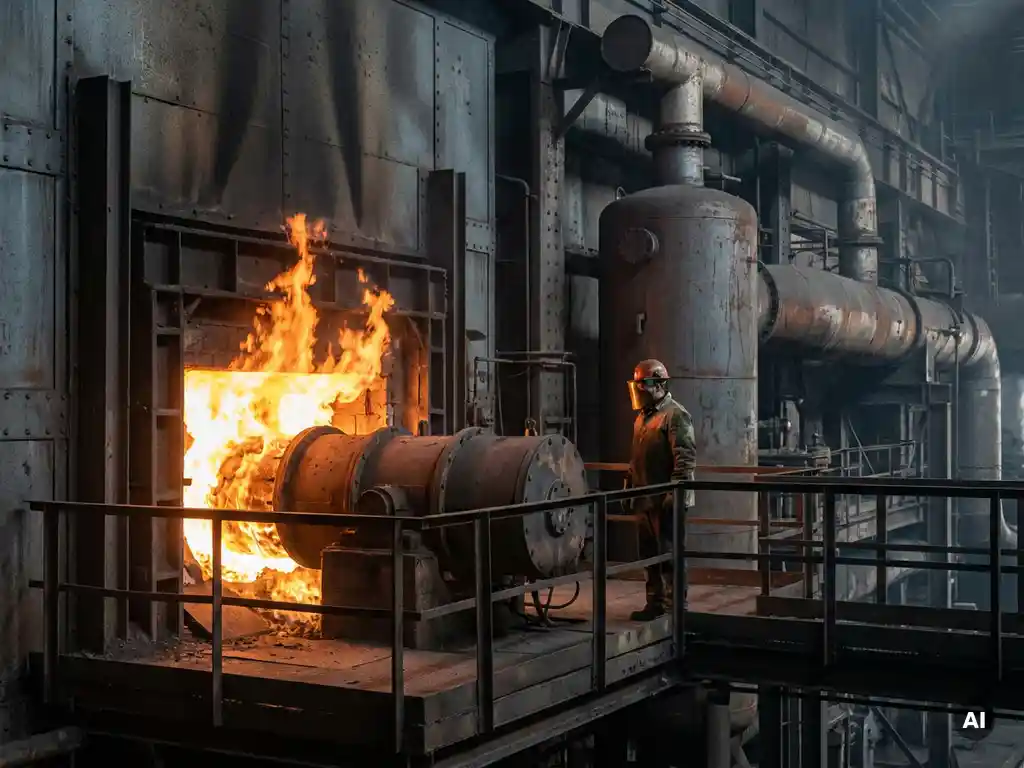
Replacing natural gas in industrial processes is genuinely difficult because natural gas delivers something that most alternatives currently cannot: reliable, high-temperature heat at scale, on demand, and at a relatively low cost. For industries like food and beverage, specialty chemicals, and pulp and paper, heat is not a peripheral concern – it is the core of production. The barriers are technical, financial, and infrastructural all at once. Below, we unpack the most common questions sustainability managers are asking as they try to find a path forward.
What makes industrial heat so hard to decarbonize?
Industrial heat is hard to decarbonize because it requires very high temperatures, continuous supply, and large volumes of energy – conditions that most clean alternatives struggle to meet reliably and affordably. Unlike office buildings or passenger vehicles, industrial processes often need heat above 500°C, sometimes above 1,000°C, and they cannot simply pause when renewable energy is unavailable.
Two thirds of all industrial energy consumption goes toward heat generation, and roughly 80% of that heat is still produced by burning fossil fuels. The reason is straightforward: natural gas is energy-dense, easy to transport, and capable of delivering the temperatures that industrial processes demand. Replacing it requires a solution that matches all three of those properties simultaneously – and that combination is rare.
There is also a structural challenge. Industrial facilities are built around existing fuel infrastructure. Boilers, burners, and heat exchangers have been engineered over decades with natural gas in mind. Even when a cleaner alternative exists in principle, adapting or replacing that infrastructure takes time, capital, and operational confidence that the new technology will perform reliably at scale.
Why can’t most factories just switch to electric heating?
Most factories cannot simply switch to electric heating because of grid congestion, high capital expenditure, and the inability of electrical systems to reliably deliver the high temperatures that many industrial processes require. Electrification is a viable path for some lower-temperature applications, but for energy-intensive industries, the barriers are often prohibitive.
Grid congestion is one of the most immediate obstacles in 2026. Across much of Europe, industrial sites are being told by grid operators that new high-capacity connections will take years – sometimes a decade or more – to arrange. A factory that needs to decarbonize now cannot wait that long.
Beyond infrastructure, the economics are challenging. Switching to electric heating typically requires significant CAPEX investment in new equipment, while volatile energy prices make the long-term OPEX picture unpredictable. Electricity prices in industrial markets can swing dramatically, which makes it difficult to build a stable business case for full electrification.
Finally, there is the question of temperature. Industrial electric heating technologies like resistance heaters or heat pumps work well up to certain thresholds, but many chemical and manufacturing processes require sustained temperatures that electrical systems struggle to deliver efficiently at scale. For these applications, electrification is not yet a straightforward replacement.
Why isn’t hydrogen a straightforward replacement for natural gas in industry?
Hydrogen is not a straightforward replacement for natural gas in industry because it requires entirely new infrastructure, carries significant safety considerations, and is currently expensive to produce at the volumes industrial heat demands. While hydrogen holds genuine long-term promise, most industrial facilities cannot transition quickly or cheaply enough for it to be a near-term solution.
The infrastructure gap is the most immediate barrier. Natural gas travels through an existing network of pipelines that has been built and refined over many decades. Hydrogen, by contrast, requires different materials, different storage conditions, and different handling protocols. Retrofitting or rebuilding that infrastructure is a major undertaking – and in many regions, a dedicated hydrogen distribution network for industrial users simply does not yet exist.
Cost is the other critical factor. Green hydrogen – produced using renewable electricity – is still significantly more expensive than natural gas on an energy-equivalent basis. For industrial companies already operating on thin margins, the CAPEX of new hydrogen-ready equipment combined with the OPEX of hydrogen fuel supply makes the business case difficult to close. Security of supply is also uncertain: the hydrogen market is still maturing, and long-term fuel supply agreements at industrial scale are not yet widely available.
What role do regulations like the EU ETS play in pushing industries to act?
The EU Emissions Trading System (EU ETS) creates a direct financial incentive for industrial companies to reduce their CO₂ emissions by putting a price on carbon. As carbon prices rise, burning natural gas becomes progressively more expensive, which changes the economics of decarbonization in favor of cleaner alternatives.
The EU ETS works by requiring industrial emitters to purchase allowances for every tonne of CO₂ they release. When carbon prices are low, companies can absorb the cost and continue operating as normal. But as the price of carbon allowances increases – and the trajectory under current EU policy is upward – the financial case for switching away from fossil fuels strengthens considerably.
Beyond the ETS, the revised Energy Efficiency Directive extends mandatory energy audit obligations to all companies consuming energy above a certain threshold, including SMEs. Large industrial energy consumers are now also required to implement energy management systems. These regulatory layers compound the pressure: it is not just about carbon costs, but about demonstrating compliance, transparency, and a credible decarbonization roadmap to regulators, investors, and customers alike.
For sustainability managers, this regulatory environment is both a challenge and an opportunity. The companies that identify scalable, commercially viable alternatives to natural gas earliest will be better positioned to manage compliance costs and protect the long-term value of their operations.
What alternative fuels can replace natural gas in industrial boilers?
Several alternative fuels are being explored as replacements for natural gas in industrial boilers, each with different trade-offs in terms of temperature capability, infrastructure requirements, carbon intensity, and cost. The most commonly discussed options include:
- Green hydrogen: Zero direct emissions when burned, but requires new infrastructure, carries high costs, and faces supply chain immaturity at industrial scale.
- Biomass and biogas: Can be integrated into existing boiler systems relatively easily, but sustainability concerns around feedstock availability and land use limit scalability, and emissions reductions depend heavily on sourcing.
- Synthetic fuels (e-fuels): Chemically similar to natural gas and compatible with existing infrastructure, but currently very expensive and energy-intensive to produce.
- Electrification via heat pumps or resistance heating: Effective for lower-temperature processes, but constrained by grid congestion and temperature limitations for high-heat applications.
- Iron fuel: A circular, carbon-free energy carrier that burns at up to 2,000°C and produces zero direct CO₂ emissions. Iron fuel can be transported in standard containers without new pipeline infrastructure, making it a practical option for industries where electrification and hydrogen are not viable.
No single alternative is the right fit for every industrial context. The optimal choice depends on the specific temperature requirements of the process, the existing infrastructure, the available budget for CAPEX and OPEX, and the timeline for decarbonization. What is clear is that the era of natural gas as the unquestioned default for industrial heat is coming to an end – the question is which combination of alternatives will fill the gap.
How close is iron fuel technology to being a commercial reality?
Iron Fuel Technology is already at Technology Readiness Level 7 (TRL 7), meaning it has been demonstrated at megawatt-industrial scale under real operating conditions. The first commercial contract for industrial use of Iron Fuel Technology has been signed, making it one of the furthest-advanced emerging clean heat technologies available today.
RIFT’s Iron Fuel Boiler demonstration facility in Helmond, the Netherlands, operates at up to 95% energy efficiency and produces just 10 kg of CO₂ per MWhth – a figure that stems solely from a pilot safety flame, not from the iron fuel combustion itself. RIFT claims its boiler achieves the lowest NOx emissions of any fuel, at under 5 mg/MJ. These are demo-scale results at TRL 7, and as with any technology at this stage, performance characteristics will continue to be validated through commercial deployment.
The first commercial contract – with Kingspan Unidek – includes both the delivery of an Iron Fuel Boiler and a long-term iron fuel supply agreement, demonstrating that the technology is moving from demonstration into real industrial use. Backed by €113.8 million in funding, including an €83.1 million Series B and a €30.7 million EU Innovation Fund grant, the path from pilot to commercial scale is actively being built.
How RIFT helps industries move beyond natural gas
For sustainability managers who have run the numbers on electrification and hydrogen and found that neither fits their timeline, budget, or infrastructure, we offer a third path. RIFT’s Iron Fuel Boiler is designed to deliver high-temperature industrial heat without direct CO₂ emissions – and without requiring a complete overhaul of existing boiler infrastructure.
Here is what makes our Iron Fuel Technology relevant for industrial companies looking to replace natural gas:
- Grid-independent operation: Iron fuel is stored and transported as a solid powder in standard containers, with no dependency on electricity grid capacity or hydrogen pipeline infrastructure.
- High-temperature capability: The Iron Fuel Boiler produces flames of up to 2,000°C, making it suitable for demanding industrial heat applications.
- Near-zero direct emissions: Combustion produces only iron oxide – no CO₂, no NOx beyond the ultra-low levels associated with the pilot safety flame.
- Drop-in compatibility: The system is designed to integrate alongside existing fossil fuel boilers, reducing the disruption and capital risk of transition.
- Long-term fuel supply security: We offer long-term iron fuel supply agreements, giving industrial operators the cost predictability and security of supply that volatile energy markets cannot.
Decarbonizing industrial heat does not have to mean choosing between an unaffordable option and an unavailable one. If you want to explore whether Iron Fuel Technology is the right fit for your operations, get in touch with our team and let’s start the conversation.
Frequently Asked Questions
How do I know which decarbonization technology is the right fit for my industrial facility?
The best starting point is a detailed energy audit that maps your process temperatures, heat demand profiles, existing infrastructure, and decarbonization timeline. From there, you can evaluate alternatives against those specific constraints — for example, if your process requires sustained heat above 500°C and you face grid connection delays, electrification may not be viable, whereas a technology like iron fuel or biogas integration could be a more practical near-term fit. Engaging directly with technology providers who offer site-specific assessments — rather than generic proposals — will give you the most actionable picture.
What are the biggest mistakes sustainability managers make when building a business case for industrial heat decarbonization?
One of the most common mistakes is underestimating the full cost of grid upgrades and infrastructure adaptation when evaluating electrification — the headline equipment cost rarely tells the whole story. Another frequent error is treating hydrogen as a near-term solution without accounting for the current lack of local distribution infrastructure and the immaturity of long-term supply agreements at industrial scale. Building a business case that accounts for total cost of transition (CAPEX, OPEX, downtime, and compliance risk) rather than just fuel cost comparison will produce a far more realistic and defensible result.
How does the EU ETS carbon price trajectory affect the payback period for switching away from natural gas?
As carbon allowance prices rise, the effective cost of burning natural gas increases year over year, which directly shortens the payback period for cleaner alternatives that carry higher upfront costs. Modeling your business case with a carbon price sensitivity range — rather than today’s price alone — will show how quickly the economics can shift in favor of decarbonized heat. Many industrial operators who delayed investment decisions based on current carbon prices have found themselves exposed as prices climbed faster than anticipated, so building in regulatory upside is a prudent approach.
Can iron fuel technology be integrated alongside existing natural gas boilers, or does it require a full replacement?
Iron Fuel Technology is designed for drop-in compatibility, meaning it can be integrated alongside existing fossil fuel boiler infrastructure rather than requiring a complete replacement from day one. This significantly reduces the capital risk and operational disruption of transition, allowing facilities to phase in iron fuel capacity while maintaining continuity of heat supply. It also gives operators the opportunity to validate performance under their specific process conditions before committing to a full-scale switchover.
What happens to the iron oxide produced after iron fuel combustion — is there a waste disposal challenge?
Iron oxide — the only solid byproduct of iron fuel combustion — is not a waste product but a recyclable material that forms the basis of iron fuel’s circular energy model. The iron oxide is collected and regenerated back into iron fuel powder using renewable electricity, closing the loop and making the system genuinely carbon-free over its full lifecycle. This circularity is one of the key advantages of iron fuel over alternatives like biomass, where feedstock sustainability and residue management can be ongoing operational concerns.
How should we approach securing long-term fuel supply agreements as we transition away from natural gas?
Supply security is one of the most underappreciated risks in industrial decarbonization — switching to a cleaner fuel that lacks reliable, long-term supply availability simply trades one vulnerability for another. When evaluating alternatives, prioritize technologies and providers that can offer structured, long-term supply agreements with clear pricing mechanisms, not just spot-market access. This is particularly relevant for emerging fuels like green hydrogen, where the market is still maturing, versus options like iron fuel where supply agreements are already being structured as part of commercial contracts.
Is iron fuel technology suitable for small and medium-sized industrial operations, or is it only viable at very large scale?
While Iron Fuel Technology is currently at TRL 7 and moving into its first commercial deployments, the modular nature of the system means it is not exclusively reserved for the largest industrial sites. The key qualifying factors are process temperature requirements, heat demand volume, and the feasibility of solid fuel logistics at your site — not simply company size. The best way to assess suitability for a specific operation is to engage directly with RIFT’s team for a site-specific evaluation, particularly as commercial deployment scales up and more reference cases become available.
Related Articles
- Can industrial boilers be decarbonized without replacing existing infrastructure?
- Will EU ETS carbon prices keep rising and what does that mean for industry?
- How do you build a business case for decarbonizing industrial heat in 2026?
- What is the aim of green energy?
- Is renewable energy reliable enough for everyday use?
This content was generated with the help of AI and it may contain mistakes