

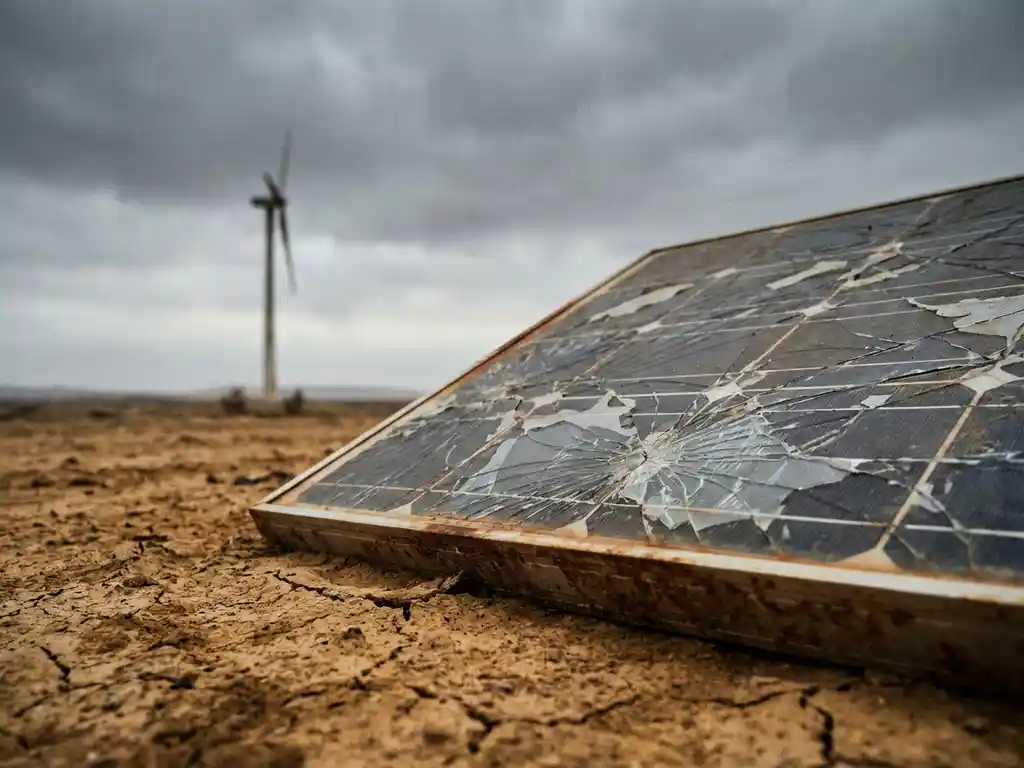
Renewable energy has never been more important, yet the companies trying to scale it are running into walls at every turn. From funding gaps to infrastructure mismatches, the path from promising technology to widespread deployment is far harder than most people expect. If you work in sustainability or industrial operations, you have probably felt this tension firsthand: the urgency to act is real, but so are the obstacles standing in the way.
This article answers the questions that sustainability managers and energy professionals are genuinely asking right now. Whether you are trying to understand why decarbonisation is stalling, comparing technology options, or looking for a practical first step, each section gives you a direct, honest answer grounded in how industrial energy actually works.
Why are so many renewable energy companies struggling to scale?
Most renewable energy companies struggle to scale because the gap between a working pilot and a commercially viable product is enormous. Funding, regulatory approval, supply chain development, and customer adoption all have to happen in parallel, and a delay in any one of them can stall the entire effort. The technology often works; the system around it is where things break down.
Several forces converge to make this especially difficult right now. Capital markets have grown more cautious after years of high interest rates, which makes large infrastructure investments harder to finance. Meanwhile, the industrial customers that renewable energy companies need to win over are risk-averse by nature. Committing to a new energy technology means changing operational processes, retraining staff, and potentially disrupting production. For a factory running 24 hours a day, that is a serious ask.
There is also a structural mismatch between how renewable energy companies grow and how industrial procurement works. Energy companies need to sign customers to justify production capacity. Customers want proven supply before they commit. Breaking that deadlock requires either a very patient investor or a very compelling first-mover case. Most companies never find either in time.
Finally, regulatory frameworks have not kept pace with innovation. Permitting processes, grid connection rules, and emissions accounting standards were designed for a fossil fuel world. Fitting a genuinely new technology into those structures takes years, not months.
What are the biggest barriers to adopting renewable energy in industry?
The biggest barriers to industrial renewable energy adoption are upfront cost, infrastructure incompatibility, and uncertainty about long-term fuel supply. Together, these three factors explain why many industrial companies acknowledge the need to decarbonise but delay committing to a specific solution.
Cost and capital allocation
Renewable energy technologies typically require higher upfront capital than simply continuing to run existing fossil fuel equipment. For a sustainability manager, this creates a difficult internal conversation. The carbon benefit is real, but the payback period can be long, and competing investment priorities are always present. When fossil fuels remain cheaper on a day-to-day basis, the financial case for switching requires either a carbon price signal, a regulatory deadline, or a technology that genuinely closes the cost gap.
Infrastructure and compatibility
Many industrial sites have spent decades building infrastructure around natural gas or coal. Switching to a completely different energy carrier often means replacing not just the boiler, but also pipelines, storage systems, safety equipment, and control systems. The more disruptive the transition, the less likely a risk-averse operations team is to approve it. Technologies that integrate with existing setups rather than replacing them entirely have a meaningful advantage here.
Supply chain reliability
Industrial production cannot afford fuel shortages. Before a factory switches its energy source, it needs confidence that supply will be consistent, affordable, and available for years to come. For newer renewable fuels, that supply chain is still being built, which creates a genuine chicken-and-egg problem for early adopters.
Why is decarbonising industrial heat harder than other sectors?
Industrial heat is harder to decarbonise than power generation or transport because it requires very high temperatures, operates continuously, and is deeply embedded in production processes that cannot easily be redesigned. Roughly two-thirds of all industrial energy consumption goes to heat, and around 80% of that heat is still generated by fossil fuels.
The electricity grid has been a relatively straightforward target for renewables because wind and solar generate electricity directly, and the infrastructure to distribute it already exists. Transport is following a similar path with batteries and electric motors. But heat is different. Many industrial processes need temperatures above 500°C, sometimes above 1,000°C. Electric alternatives struggle at those temperatures, and the energy density required makes full electrification impractical for many sites.
There is also a temporal challenge. Industrial boilers and furnaces are long-lived assets. A company that installed a gas boiler ten years ago may not replace it for another twenty. Decarbonising heat therefore means either retrofitting existing equipment or finding a fuel that works within it, rather than waiting for natural replacement cycles that may not align with 2030 or 2050 targets.
The diversity of industrial heat demand adds further complexity. Food processing, chemicals, paper manufacturing, ceramics, and steel all have different temperature requirements, process constraints, and regulatory environments. There is no single solution that works everywhere, which means the market for industrial heat decarbonisation is fragmented and harder to address at scale. You can read more about how different industrial sectors approach this challenge on our industrial decarbonisation solutions page.
What’s the difference between hydrogen, electrification, and alternative fuel technologies?
Hydrogen, electrification, and alternative fuels like iron fuel each take a fundamentally different approach to replacing fossil heat. The right choice depends on the temperature required, the existing infrastructure, the available energy supply, and the operation’s cost tolerance.
Here is how the three approaches compare:
- Electrification converts electricity directly into heat using resistance heating, heat pumps, or electric arc furnaces. It works well at lower temperatures and is increasingly cost-effective where renewable electricity is cheap and grid capacity is available. At very high temperatures or in locations with limited grid infrastructure, it becomes expensive or impractical.
- Hydrogen combustion replaces natural gas with hydrogen in existing burner systems. It produces no CO₂ at the point of combustion, but it requires a reliable supply of low-carbon hydrogen, which is still scarce and expensive in most regions. Hydrogen also presents storage and transport challenges due to its low energy density and flammability.
- Alternative solid fuels such as iron fuel use a physical energy carrier that burns at high temperatures without producing CO₂. Iron powder, for example, combusts to produce heat up to 2,000°C and leaves behind iron oxide, which can be regenerated using hydrogen and reused. This approach combines the energy density of a solid fuel with the carbon-free profile of a renewable energy source.
None of these technologies is universally superior. Electrification suits lower-temperature, grid-connected operations. Hydrogen suits sites that already have gas infrastructure and access to green hydrogen supply. Solid alternative fuels suit high-temperature, hard-to-abate processes where neither electricity nor hydrogen is yet viable. For a deeper look at how these technologies compare in practice, our Iron Fuel Technology overview explains the mechanics in plain terms.
How can industrial companies start decarbonising heat without a full infrastructure overhaul?
Industrial companies can begin decarbonising heat by adopting technologies that integrate with their existing boiler infrastructure rather than replacing it entirely. This approach reduces upfront cost, limits operational disruption, and allows companies to demonstrate progress against emissions targets while longer-term transitions are planned.
A practical starting point involves the following steps:
- Audit your heat demand. Understand which processes require which temperatures, and which boilers are responsible for which share of your Scope 1 emissions. This tells you where decarbonisation has the highest impact and where the lowest-risk entry points are.
- Identify compatible technologies. Look for solutions that can operate alongside existing fossil fuel boilers rather than replacing them outright. Hybrid configurations allow you to decarbonise a portion of your heat demand immediately while maintaining operational continuity.
- Evaluate total cost of ownership, not just capital cost. A technology with a higher upfront price may offer lower lifetime costs through fuel savings, carbon credit eligibility, or avoided compliance costs under emissions trading schemes.
- Secure long-term fuel supply agreements. For any alternative fuel, the reliability of supply is as important as the technology itself. Prioritise suppliers that offer contractual fuel supply alongside the equipment.
- Start with a single site or process. A contained pilot at one facility generates operational data, builds internal confidence, and creates a replicable model for broader rollout without betting the entire operation on an unproven transition.
The companies making the most progress on industrial heat decarbonisation are not necessarily the ones with the most ambitious plans. They are the ones that found a credible first step and executed it well.
What mistakes do companies make when evaluating clean energy technologies?
The most common mistake companies make when evaluating clean energy technologies is comparing them to fossil fuels on upfront cost alone, without accounting for carbon pricing, regulatory risk, or the long-term cost trajectory of fossil fuels. This framing almost always makes the status quo look more attractive than it actually is.
Other frequent errors include evaluating technology readiness in isolation from supply chain maturity. A technology can be technically proven at pilot scale but still be years away from reliable commercial supply. Companies that adopt too early without a committed supply partner can find themselves with equipment and no fuel, or with fuel priced far above initial projections.
There is also a tendency to over-index on the best-case scenario for emerging technologies. Efficiency figures, cost projections, and emissions reductions quoted in early-stage materials are often based on optimal conditions. A rigorous evaluation should ask what performance looks like under real operating conditions, including partial load, seasonal variation, and supply disruptions.
Finally, many companies underestimate the importance of internal alignment. A sustainability manager may identify the right technology, but without buy-in from operations, procurement, and finance, the evaluation process stalls. Building the internal business case early, with clear data on emissions impact, cost comparison, and risk mitigation, is as important as the technical evaluation itself.
How Iron Fuel Technology helps industrial companies decarbonise heat
We built Iron Fuel Technology specifically to address the barriers that make industrial heat decarbonisation so difficult in practice. Our Iron Fuel Boiler is designed to work alongside existing infrastructure, not replace it, so companies can start reducing emissions without a full operational overhaul.
Here is what makes our approach different:
- Zero direct CO₂ emissions from combustion, with only iron oxide as a byproduct
- Up to 95% energy efficiency, outperforming many conventional fossil fuel systems
- High-temperature heat up to 2,000°C, suitable for demanding industrial processes
- Plug-and-play integration with existing boiler setups, minimising disruption
- Long-term fuel supply agreements that give operations teams the reliability they need
- Cost-competitive pricing aligned with fossil fuel benchmarks to protect your margins
We have already signed the first commercial contract for industrial iron fuel deployment with Kingspan Unidek, and we are backed by over €113 million in funding to scale from pilot to commercial reality. If you are ready to explore what a practical, drop-in decarbonisation solution could look like for your site, get in touch with our team, and we will help you build the case.
Related Articles
- What decarbonization options exist for pulp and paper heat processes?
- What does the Department of Energy do?
- What is EIA?
- How often does the EIA release reports?
- Why is renewable energy important?
This content was generated with the help of AI and it may contain mistakes