

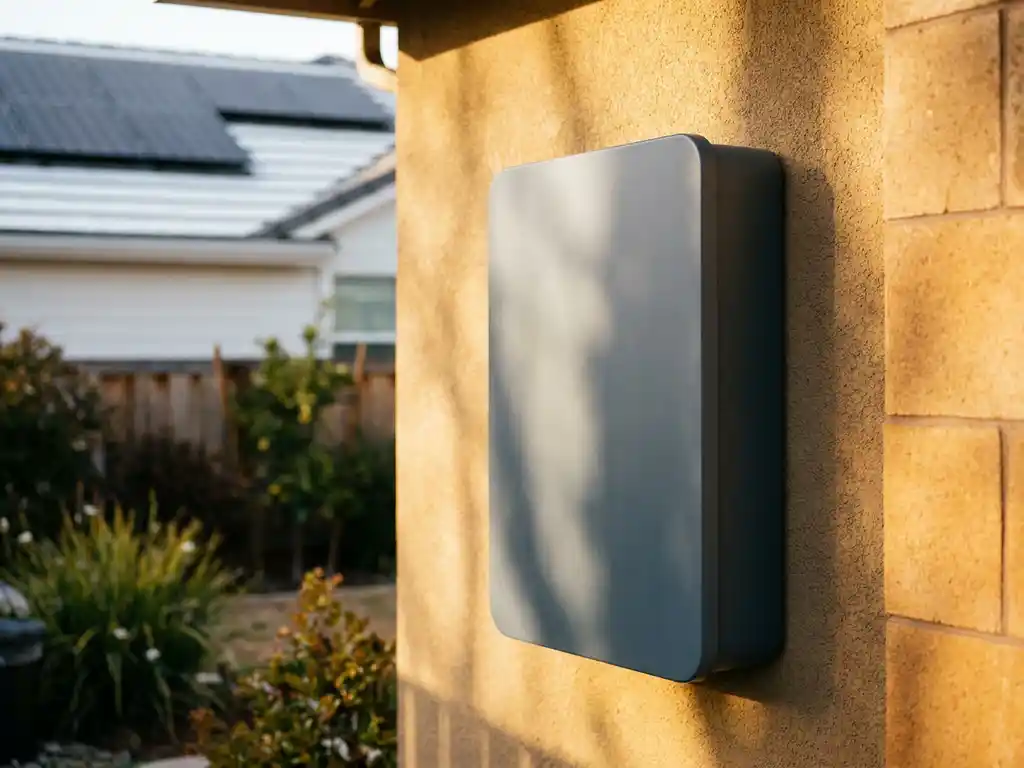
A solar battery stores excess electricity generated by your solar panels so you can use it later, typically in the evening or during a power outage. It works alongside your solar system, charging during the day when your panels produce more energy than your home needs and discharging when the sun goes down or demand spikes. Whether you need one depends on your energy usage patterns, local grid tariffs, and how much energy independence you want.
Your solar panels are producing energy you never get to use
Without a battery, any electricity your panels generate beyond your immediate needs is exported to the grid, often at a rate far below what you pay to import it later. In many markets, that gap between export and import tariffs has widened significantly, meaning households effectively give away cheap solar energy and buy expensive grid electricity at night. The fix is straightforward in principle: store what you generate. A battery lets you shift that surplus production to the hours when you actually need it, which is where the real financial and practical value lies.
Relying on the grid for backup is riskier than most solar owners expect
A standard solar installation without battery storage shuts down automatically during a grid outage, even if the sun is shining. This is a safety requirement, not a design flaw, but it means your panels offer no protection when the power goes out. For households in areas with unreliable supply or those running sensitive equipment, this is a meaningful vulnerability. Adding a battery with backup capability changes that. During an outage, a battery-enabled system can island your home and keep essential circuits running, turning your solar investment into a genuine resilience tool rather than just a bill-reduction measure.
What is a solar battery and how does it work?
A solar battery is an energy storage device that connects to your solar panel system and stores surplus electricity for later use. It charges automatically when your panels produce more power than your home consumes and discharges that stored energy when solar generation drops or demand rises. Most residential solar batteries use lithium-ion chemistry and are managed by a built-in inverter or battery management system.
The basic cycle works like this: your panels generate DC electricity, which is converted to AC for home use. Any excess that would otherwise be exported to the grid is redirected to charge the battery instead. When the sun sets or clouds reduce output, the battery discharges and powers your home without drawing from the grid.
Most modern systems are smart enough to manage this automatically, using software to predict your usage patterns, local weather, and grid tariff schedules. Some systems can even pre-charge from the grid overnight at low rates and discharge during expensive peak periods, adding another layer of savings beyond solar self-consumption.
What types of solar batteries are available?
The main types of solar batteries are lithium-ion, lead-acid, and flow batteries. Lithium-ion dominates the residential market because of its high energy density, long cycle life, and relatively compact size. Lead-acid is an older technology—cheaper upfront but heavier and shorter-lived. Flow batteries are emerging for larger commercial applications but remain rare in home installations.
Within lithium-ion, there are two main chemistries worth knowing:
- Lithium iron phosphate (LFP): Safer, longer cycle life, and more thermally stable. Increasingly the preferred choice for home storage systems.
- Nickel manganese cobalt (NMC): Higher energy density in a smaller footprint, but slightly less durable over time and more sensitive to heat.
Beyond chemistry, batteries differ by whether they are AC-coupled or DC-coupled to your solar system. DC-coupled systems are more efficient because electricity goes directly from the panels to the battery without an extra conversion step. AC-coupled systems are easier to retrofit onto an existing solar installation. If you are adding storage to panels that are already installed, AC-coupled is usually the simpler path.
Do you really need a solar battery with solar panels?
No, solar panels work without a battery. But whether you should add one depends on how much of your electricity use happens outside daylight hours, your local export tariff, and whether you want backup power capability. If most of your consumption is during the day and your grid pays a fair rate for exported energy, the financial case for a battery is weaker.
The strongest case for adding a battery exists when:
- You use most of your electricity in the morning and evening, not during peak solar hours
- Your utility pays low rates for exported solar energy
- You want protection against grid outages
- Your electricity tariff includes expensive peak-hour pricing
If you work from home, have an electric vehicle, or run energy-intensive appliances in the evening, a battery can meaningfully increase how much of your own solar energy you actually consume. Self-consumption rates for solar-only systems typically sit between 20% and 40%. Adding a battery can push that to 60% or higher, depending on system sizing and usage habits.
How much does a solar battery cost to install?
A residential solar battery system typically costs between £2,500 and £10,000 installed, depending on capacity, brand, and whether it is being added to an existing solar system or installed alongside new panels. Larger-capacity batteries and premium brands sit at the higher end. Installation complexity also affects the final price.
Battery capacity is measured in kilowatt-hours (kWh). A typical home might use between 8 and 15 kWh per day, but you rarely need to store a full day’s worth of energy. Most residential batteries range from 5 kWh to 15 kWh, and many households find that a single 10 kWh unit adequately covers their evening and overnight needs.
Prices have fallen substantially over the past decade and continue to decline as manufacturing scales up. Government incentives and VAT reductions in some markets can reduce the net cost further. Getting multiple quotes and checking whether your installer is certified by a recognised body is the most reliable way to understand the true cost for your specific setup.
How long does a solar battery last?
Most residential solar batteries are rated to last between 10 and 15 years, or a specified number of charge cycles, whichever comes first. Lithium iron phosphate batteries tend to have longer cycle lives than NMC alternatives. Manufacturers typically guarantee that the battery will retain at least 70% of its original capacity at the end of the warranty period.
Real-world lifespan depends on how the battery is used. Frequent deep discharges, consistently high operating temperatures, and charging to 100% capacity every day all accelerate degradation. Most battery management systems protect against these conditions automatically, limiting charge and discharge rates to extend usable life.
A well-maintained lithium-ion battery in a temperate climate, cycled once daily, can reasonably be expected to reach or exceed its warranty period in good condition. If your solar system itself has a 25-year lifespan, you should budget for at least one battery replacement over the life of the installation.
Is a solar battery worth the investment?
A solar battery is worth the investment if your self-consumption savings and avoided grid costs outweigh the upfront price over the battery’s lifespan. For many households, payback periods currently range from 7 to 12 years, which fits within the battery’s warranty life. The value improves as grid electricity prices rise and battery costs continue to fall.
The financial case is strongest when grid electricity is expensive, export tariffs are low, and your household has high evening energy demand. It weakens when export rates are generous, your daytime consumption is already high, or you have a smaller solar array that generates limited surplus.
Beyond finances, there is non-monetary value in energy independence and backup capability that some households weigh heavily, particularly in areas with frequent outages or where running critical equipment without interruption matters. That value is real but personal, and only you can decide how much it is worth to your household.
How RIFT helps industries move beyond fossil fuels for heat
While solar batteries address energy storage for households, the challenge of decarbonising energy at an industrial scale requires a different kind of solution. That is exactly what we at RIFT have built. Our Iron Fuel Technology offers a circular, carbon-free energy carrier for industries that need high-temperature heat and cannot rely on electrification or hydrogen alone.
Here is what makes our approach practical for industrial operators:
- Drop-in compatibility: Our Iron Fuel Boiler integrates with existing boiler infrastructure, so there is no need to rebuild from scratch.
- Zero direct CO₂ emissions: Iron fuel combustion produces only iron oxide as a by-product, with no carbon released during the process.
- Up to 95% energy efficiency: The system outperforms many conventional fossil fuel boilers on energy utilisation.
- Reliable fuel supply: We offer long-term supply contracts, so your operations are not exposed to fuel uncertainty.
- Cost-competitive pricing: Our industrial heat solutions are designed to align with fossil fuel pricing, making the transition financially viable.
If you are a sustainability manager looking to reduce Scope 1 emissions from heat-intensive processes without disrupting operations, we would welcome the conversation. Answer a few quick questions below and we will connect you with the right person on our team.
Get in touch with our team to explore what Iron Fuel Technology could mean for your facility.
Related Articles
- What are the benefits of green energy projects?
- Why is it important for companies to go green?
- What exactly is clean energy?
- What is energy independence and how do renewables enable it?
- What are 9 renewable resources?
This content was generated with the help of AI and it may contain mistakes