

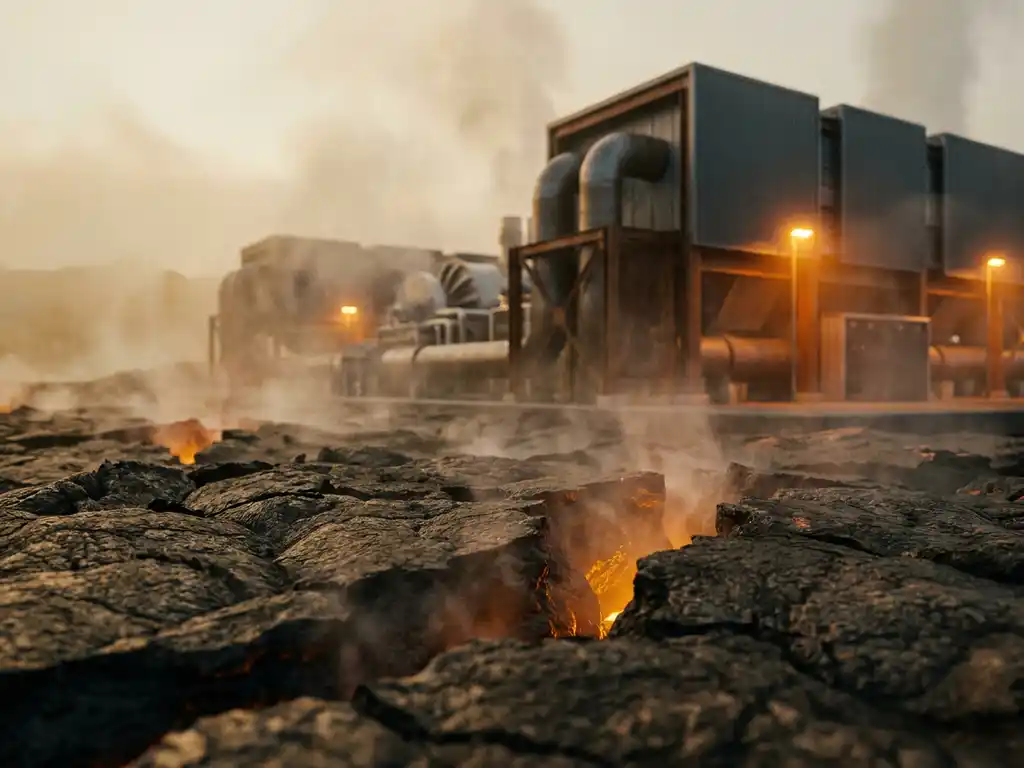
Geothermal energy is heat stored beneath the Earth’s surface, generated by the natural decay of radioactive materials and residual heat from the planet’s formation. It is used for electricity generation, direct heating of buildings and industrial processes, agricultural applications, and district heating networks. Unlike solar or wind energy, geothermal energy is available continuously, making it a reliable renewable energy source that does not depend on weather conditions.
Most renewable energy sources still leave industrial heat unsolved
Solar panels power offices. Wind turbines feed electricity into the grid. But when a factory needs a continuous supply of high-temperature heat to run its processes, most renewable energy sources fall short. Industrial heat accounts for roughly two-thirds of all industrial energy consumption, and the vast majority of it is still generated by burning fossil fuels. The problem is not a lack of ambition—it is a lack of practical options. Electrification is expensive and constrained by infrastructure. Hydrogen faces storage and distribution challenges. Geothermal works well in specific locations but cannot be deployed everywhere. The fix starts with understanding which heat technologies actually work at scale, and what their real limitations are.
Relying on a single renewable source is slowing down your decarbonisation plan
Sustainability managers who anchor their decarbonisation strategy around one technology often find themselves stuck when that technology hits a wall—whether that is grid capacity limits, geographic constraints, or cost thresholds that make the business case impossible to close. Geothermal energy is a strong option under the right conditions, but it is not universally available or scalable for every industrial site. Building a resilient strategy means understanding the full range of renewable heat technologies available today, including newer options like iron fuel, so you can choose the right combination for your specific operations and emissions targets.
What is geothermal energy and how does it work?
Geothermal energy is thermal energy extracted from heat stored within the Earth. It works by accessing naturally occurring heat from underground reservoirs of hot water or steam, which are brought to the surface through wells and used directly for heating or to drive turbines that generate electricity. The heat source is essentially inexhaustible on human timescales.
The Earth’s interior remains extremely hot due to two primary processes: the slow radioactive decay of minerals deep within the mantle and crust, and the residual heat left over from the planet’s formation billions of years ago. This heat conducts outward toward the surface continuously, and in certain geological zones, it concentrates close enough to the surface to be practically accessible.
Geothermal systems are typically classified by temperature. High-temperature resources, found near tectonic plate boundaries and volcanic regions, produce steam that can generate electricity directly. Medium- and low-temperature resources are more widespread and are commonly used for direct heating applications such as space heating, greenhouse warming, and some industrial processes.
What are the main uses of geothermal energy?
Geothermal energy is used for electricity generation, direct space heating, district heating networks, agricultural heating, industrial process heat, and heat pump systems for buildings. Its applications range from large-scale power plants to small residential systems, depending on the temperature and depth of the available resource.
The most common uses include:
- Electricity generation: High-temperature steam drives turbines at geothermal power plants, producing baseload renewable electricity.
- District heating: Hot water from geothermal wells is piped directly into residential and commercial heating networks, as seen widely in Iceland and parts of Scandinavia.
- Agricultural applications: Greenhouses, fish farms, and soil-warming systems use geothermal heat to extend growing seasons and reduce heating costs.
- Industrial process heat: Lower-temperature geothermal sources can supply heat for food drying, timber drying, and other processes that do not require extreme temperatures.
- Ground-source heat pumps: Even in areas without high-temperature resources, shallow ground temperatures are stable enough to support heat pump systems for building heating and cooling.
The suitability of each application depends heavily on the local geology. Countries like Iceland, New Zealand, Kenya, and the Philippines have particularly strong geothermal resources and have built significant energy infrastructure around them. In other regions, the resource is more limited or requires deeper, more expensive drilling to access.
How is geothermal energy used to generate electricity?
Geothermal electricity generation works by extracting steam or hot water from underground reservoirs and using it to spin a turbine connected to a generator. There are three main plant types: dry steam plants, flash steam plants, and binary cycle plants. The choice depends on the temperature and pressure of the geothermal resource.
The process follows these main steps:
- Wells are drilled into geothermal reservoirs, sometimes reaching depths of several kilometres.
- Steam or hot water rises to the surface through production wells.
- In flash steam plants, high-pressure hot water is released into lower-pressure tanks, causing it to flash into steam.
- The steam drives a turbine, which spins a generator to produce electricity.
- Spent steam condenses back into water and is reinjected into the reservoir to maintain pressure and sustainability.
Binary cycle plants handle lower-temperature resources differently. The geothermal water heats a secondary fluid with a lower boiling point, which then vaporises and drives the turbine. This approach expands the range of locations where geothermal electricity generation is viable.
One of the key advantages of geothermal power plants is their capacity factor. Unlike solar and wind, they operate continuously and are not affected by weather, making them a dependable source of baseload renewable energy for national grids.
Can geothermal energy be used for industrial heating?
Geothermal energy can supply industrial process heat, but its usefulness is limited by temperature. Most accessible geothermal resources deliver heat in the range of 50 to 150 degrees Celsius, which suits lower-temperature industrial processes. High-temperature industrial applications above 200 degrees Celsius are generally beyond what geothermal can reliably provide without deep, costly drilling.
Industries that have successfully integrated geothermal heat include food processing, paper drying, chemical processing at moderate temperatures, and desalination. In these cases, geothermal acts as a cost-effective baseload heat source that reduces dependence on fossil fuel boilers for the relevant temperature range.
Geographic constraints are another significant factor. Industrial facilities are not always located near viable geothermal resources, and transporting geothermal heat over long distances is not practical. This means that for many industrial operators, geothermal is simply not an available option, regardless of its technical merits.
For processes requiring temperatures above 200 degrees Celsius—which account for a large share of industrial heat demand in sectors like specialty chemicals, food and beverage sterilisation, and pulp and paper—alternative zero-carbon heat technologies are needed. This is the gap that newer approaches to industrial heat decarbonisation are designed to fill.
What are the advantages and disadvantages of geothermal energy?
Geothermal energy’s main advantages are its reliability, low operating emissions, and small land footprint. Its main disadvantages are geographic limitations, high upfront drilling costs, and temperature constraints that restrict its use in high-heat industrial applications. Whether it is the right choice depends on location and the specific heat or power requirement.
Advantages:
- Continuous availability regardless of weather or time of day
- Very low greenhouse gas emissions during operation
- Long operational lifespan once infrastructure is in place
- Small surface footprint compared to solar or wind farms of equivalent output
- Can provide both electricity and direct heat from the same resource
Disadvantages:
- Viable resources are concentrated in specific geological zones
- High upfront capital costs for drilling and plant construction
- Risk of resource depletion if reservoirs are not managed carefully
- Temperature ceiling limits applicability for high-temperature industrial processes
- Some sites release trace amounts of hydrogen sulphide and other gases
For energy planners and sustainability managers evaluating renewable heat options, geothermal is strongest where the geology supports it and where process temperatures are moderate. Where those conditions are not met, other technologies need to carry the load.
How does geothermal energy compare to other renewable heat sources?
Compared to solar thermal, biomass, and emerging options like iron fuel, geothermal energy stands out for its consistency but falls behind in geographic flexibility and maximum temperature output. Each renewable heat source has a different profile of strengths, and the best choice depends on the industrial process, location, and decarbonisation target.
Solar thermal energy is widely available but intermittent, making it unsuitable as a standalone heat source for continuous industrial operations. It works well for low-temperature pre-heating and is increasingly cost-competitive, but it cannot deliver heat on demand around the clock without thermal storage.
Biomass can reach higher temperatures and is geographically flexible, but it comes with supply chain complexity, land use concerns, and ongoing debate about its true carbon neutrality over different time horizons. For industries with strict emissions reporting requirements, these uncertainties can complicate the business case.
Geothermal is highly reliable where available, but as discussed, it is constrained by both location and temperature range. It is an excellent fit for district heating and moderate-temperature industrial processes in geologically active regions.
Newer approaches are emerging to address the gaps these established technologies leave open. For high-temperature industrial processes where geothermal, solar, and biomass fall short, clean heat solutions that can operate independently of geography and deliver consistent output are increasingly relevant for serious decarbonisation strategies.
How Iron Fuel Technology helps with industrial heat decarbonisation
While geothermal energy is a valuable part of the renewable energy mix, it cannot meet every industrial site’s needs or every temperature requirement. We developed Iron Fuel Technology specifically to address the gap that other renewable heat sources leave open: high-temperature industrial heat, available anywhere, without carbon emissions.
Here is what makes it a practical option for industrial operators:
- Zero direct CO₂ emissions during combustion—iron powder burns cleanly, leaving only iron oxide as a by-product
- High-temperature heat up to 2,000 degrees Celsius, covering the full range of industrial process heat requirements
- Up to 95% energy efficiency, outperforming many conventional fossil fuel boiler systems
- Drop-in compatibility with existing boiler infrastructure, reducing the need for costly overhauls
- Circular fuel cycle—iron oxide is regenerated back into iron fuel using hydrogen, closing the loop
- Location-independent—iron powder can be stored and transported, unlike geothermal or solar heat
If you are evaluating renewable heat options for your industrial operations and want to understand whether Iron Fuel Technology fits your decarbonisation roadmap, get in touch with our team to discuss your specific situation.
Related Articles
- How often does the EIA release reports?
- How can companies use renewable energy?
- What is net zero and how does renewable energy help achieve it?
- What is the difference between onshore and offshore wind energy?
- Which renewable energy source is the cheapest?
This content was generated with the help of AI and it may contain mistakes