

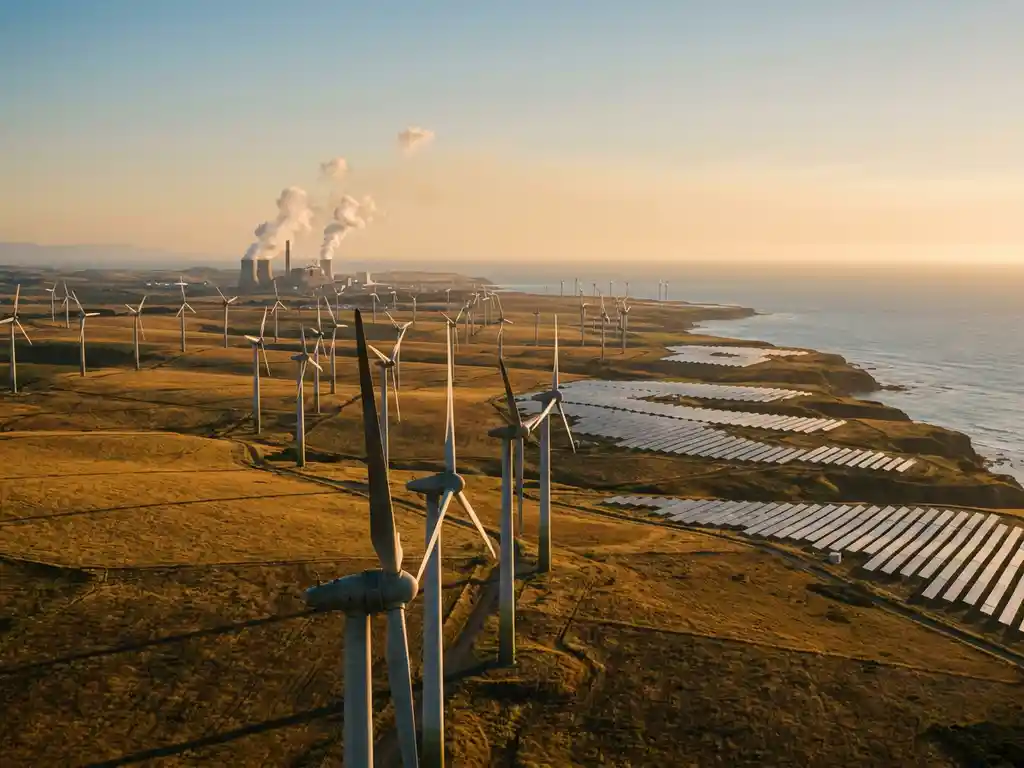
Countries transition to renewable energy by gradually replacing fossil fuels with clean energy sources such as wind, solar, hydropower, and emerging technologies like iron fuel. This shift involves updating energy infrastructure, reforming policy frameworks, and rethinking how industries generate heat and power. The pace and approach vary widely between countries, shaped by geography, economic capacity, and political will. But the direction is consistent: away from carbon and toward cleaner alternatives.
Sticking with fossil fuels is costing countries more than just emissions
The economic case for sticking with fossil fuels is weakening fast. Price volatility in global energy markets means that countries dependent on imported gas or coal face unpredictable energy costs that ripple through industrial production, food prices, and household bills. Beyond the financial exposure, there is growing regulatory pressure: carbon pricing mechanisms and emissions trading systems are making fossil-fuel-based energy progressively more expensive to operate. Countries that delay their transition are not just accumulating emissions — they are accumulating risk. The fix is not perfection; it is momentum. Starting with the sectors where clean alternatives already exist and are cost-competitive is a practical first step that pays off over time.
Moving too slowly on industrial decarbonization is holding back the entire energy transition
Most discussions about renewable energy focus on electricity. But industry — particularly the heat required to manufacture goods — represents a massive blind spot. Industrial heat accounts for roughly two-thirds of all industrial energy use, and the vast majority of that heat still comes from burning fossil fuels. When countries set renewable energy targets without addressing industrial heat, they leave their largest-emitting sector largely untouched. The consequence is a transition that looks good on paper but falls short in practice. Addressing this gap requires clean heat technologies that can integrate with existing industrial infrastructure, rather than demanding a complete overhaul of production facilities.
What does transitioning to renewable energy actually mean?
Transitioning to renewable energy means systematically replacing fossil fuels — coal, oil, and natural gas — with energy sources that produce little or no carbon emissions. This includes generating electricity from wind and solar, producing heat from clean fuels, and redesigning energy systems so they can function without burning carbon. It is a structural shift, not a single policy decision.
In practice, the transition happens across multiple sectors simultaneously. The power grid moves toward wind, solar, and hydropower. Transport shifts to electric vehicles and cleaner fuels. Industry works to replace fossil-fuel boilers and furnaces with low-carbon alternatives. Each sector faces its own technical and economic challenges, which is why transitions are rarely linear or uniform.
The term also implies a circular rethinking of energy systems. Rather than extracting and burning finite resources, renewable energy systems aim to work within natural cycles — capturing sunlight and wind, or using circular energy carriers that can be regenerated after use.
Why is transitioning to renewable energy so difficult for industry?
The industrial energy transition is difficult because most industrial processes require high-temperature heat that electricity and hydrogen cannot always deliver cost-effectively at scale. Factories, chemical plants, and paper mills were built around fossil fuel combustion. Replacing that infrastructure is expensive, technically complex, and operationally risky for companies that cannot afford production downtime.
Beyond the technical barriers, there is a financial gap. Clean energy alternatives often carry higher upfront costs than the fossil fuel systems they replace. For sustainability managers working within tight capital budgets, the business case for switching needs to be clear and credible — not just in terms of emissions, but in terms of operational continuity and return on investment.
Infrastructure constraints add another layer of difficulty. Green hydrogen, for example, requires pipelines, storage systems, and production capacity that simply do not yet exist at scale in most regions. Full electrification of high-temperature industrial processes is technically possible in some cases, but grid capacity and electricity pricing make it impractical for many operators today. This is precisely why drop-in solutions — technologies that work with existing boiler infrastructure rather than replacing it entirely — are gaining serious attention.
How do countries typically phase out fossil fuels?
Countries phase out fossil fuels through a combination of regulatory pressure, financial incentives, and technology deployment. The typical approach involves setting emissions reduction targets, introducing carbon pricing to make fossil fuels progressively more expensive, and funding the development and adoption of cleaner alternatives. No single country follows exactly the same path, but the structural steps are broadly similar.
A common sequence looks like this:
- Set binding targets — governments establish legally binding emissions reduction goals, often aligned with international frameworks such as the Paris Agreement or the EU Green Deal.
- Introduce carbon pricing — emissions trading systems or carbon taxes raise the cost of fossil fuel use, making clean alternatives financially competitive over time.
- Reform energy subsidies — fossil fuel subsidies are reduced or redirected toward clean energy investment and innovation funds.
- Invest in infrastructure — grids are upgraded to handle variable renewable electricity, and new supply chains for clean fuels are developed.
- Support technology deployment — grants, low-interest loans, and public procurement help scale emerging clean energy technologies from demonstration to commercial reality.
- Phase out coal and gas plants — coal is typically the first target, followed by gas, with timelines negotiated based on energy security needs and the economic impact on affected regions.
The speed of this process depends heavily on political continuity and public support. Countries with strong cross-party consensus on climate policy tend to move faster and more consistently than those where energy policy shifts with each election cycle.
What are the main renewable energy sources used in the transition?
The main renewable energy sources driving the global transition are solar photovoltaic, wind power, hydropower, and biomass. Together, these four sources account for the vast majority of clean energy generation worldwide. Emerging technologies — including green hydrogen and circular solid fuels like iron fuel — are beginning to play a growing role, particularly for industrial heat applications.
Here is a brief overview of each major source:
- Solar PV: Converts sunlight directly into electricity. Costs have dropped dramatically over the past decade, making solar the fastest-growing energy source globally. Best suited for electricity generation, not direct heat.
- Wind power: Onshore and offshore wind turbines generate electricity at increasingly competitive costs. Offshore wind in particular is expanding rapidly in Europe and Asia.
- Hydropower: The largest existing source of renewable electricity globally. Reliable and dispatchable, but geographically constrained and increasingly affected by changing rainfall patterns.
- Biomass: Organic material burned or converted to produce heat and electricity. Widely used in industrial settings, though its sustainability depends heavily on sourcing and land use.
- Green hydrogen: Produced by splitting water using renewable electricity. A promising energy carrier for hard-to-decarbonize sectors, but still expensive and infrastructure-limited at scale.
- Iron fuel: A circular, solid-state energy carrier that burns without CO₂ and is regenerated from iron oxide using hydrogen. Particularly relevant for industrial heat applications where other alternatives face barriers.
No single source covers every need. A complete energy transition requires a portfolio of technologies matched to specific end uses — electricity, transport, and industrial heat each have different requirements that call for different solutions.
How long does an energy transition take?
A full energy transition typically takes several decades. Historical energy transitions — from wood to coal, from coal to oil — each took 50 to 70 years to play out at a global scale. The current transition to renewables is being driven faster by policy pressure and falling technology costs, but even optimistic scenarios place a largely decarbonized global energy system in the 2050 timeframe.
The pace varies significantly by sector. Electricity generation is moving faster than most projections anticipated, driven by rapid cost reductions in solar and wind. Transport is following, with electric vehicles now mainstream in many markets. Industrial decarbonization is moving more slowly, largely because of the technical and financial barriers discussed earlier.
For individual companies and industrial operators, the relevant timeline is shorter. Regulatory requirements, carbon pricing, and customer expectations are creating pressure to act within the next five to fifteen years — well before a full global transition is complete. This means companies cannot wait for perfect solutions to arrive at scale; they need to evaluate and adopt credible technologies that are commercially available now or in the near term.
What role does industrial heat play in the energy transition?
Industrial heat is one of the most important and least-discussed parts of the energy transition. It accounts for roughly two-thirds of all industrial energy consumption, and the majority of that heat is still produced by burning fossil fuels. Decarbonizing industrial heat is essential for reaching net-zero targets — and it is significantly harder than decarbonizing electricity.
The challenge is temperature. Many industrial processes require heat above 500°C — for drying, sterilizing, melting, or chemical reactions. Electric heating at these temperatures is expensive and technically demanding. Hydrogen combustion is promising but requires new infrastructure and carries safety and cost considerations. Biomass works in some contexts but faces sustainability constraints.
This is why technologies that can deliver high-temperature, carbon-free heat using existing boiler infrastructure are attracting serious investment and attention. Iron Fuel Technology is one such approach: iron powder burns at temperatures up to 2,000°C, produces no direct CO₂, and the resulting iron oxide can be regenerated and reused in a closed cycle. It is designed to work alongside existing fossil fuel boilers, not replace them overnight — which makes it a practical option for industries that cannot afford operational disruption.
Industrial heat decarbonization will not happen through a single technology. It will require a combination of electrification where feasible, hydrogen where infrastructure allows, and solid fuel alternatives where neither option is yet viable. Getting this mix right — and moving fast enough to meet 2050 targets — is one of the central challenges of the energy transition.
How RIFT helps with the renewable energy transition in industry
We built Iron Fuel Technology specifically to address the part of the energy transition that most clean energy solutions overlook: high-temperature industrial heat. Our Iron Fuel Boiler delivers carbon-free heat at up to 95% energy efficiency, integrates with existing boiler infrastructure, and is backed by a long-term fuel supply agreement — so operators do not have to manage the supply chain themselves.
- Zero direct CO₂ emissions from combustion, with ultra-low NOₓ output
- Drop-in compatible with existing industrial boilers — no complete infrastructure overhaul required
- Circular fuel cycle — iron oxide is regenerated back into iron fuel using low-carbon hydrogen
- Demonstrated at industrial scale at Technology Readiness Level 7, with the first commercial contract already signed
- Cost-competitive pricing designed to align with fossil fuel benchmarks, protecting your operating margins
If you are responsible for decarbonizing industrial heat and need a solution that works within your current setup, explore our industrial heat solutions to see how iron fuel fits your sector. Ready to take the next step? Get in touch with our team, and we will help you assess what is possible for your operations.
Related Articles
- What is the importance of green energy?
- How does renewable energy affect the environment?
- What are the benefits of renewable energy?
- How does renewable energy affect energy security?
- What is geothermal energy used for?
This content was generated with the help of AI and it may contain mistakes