

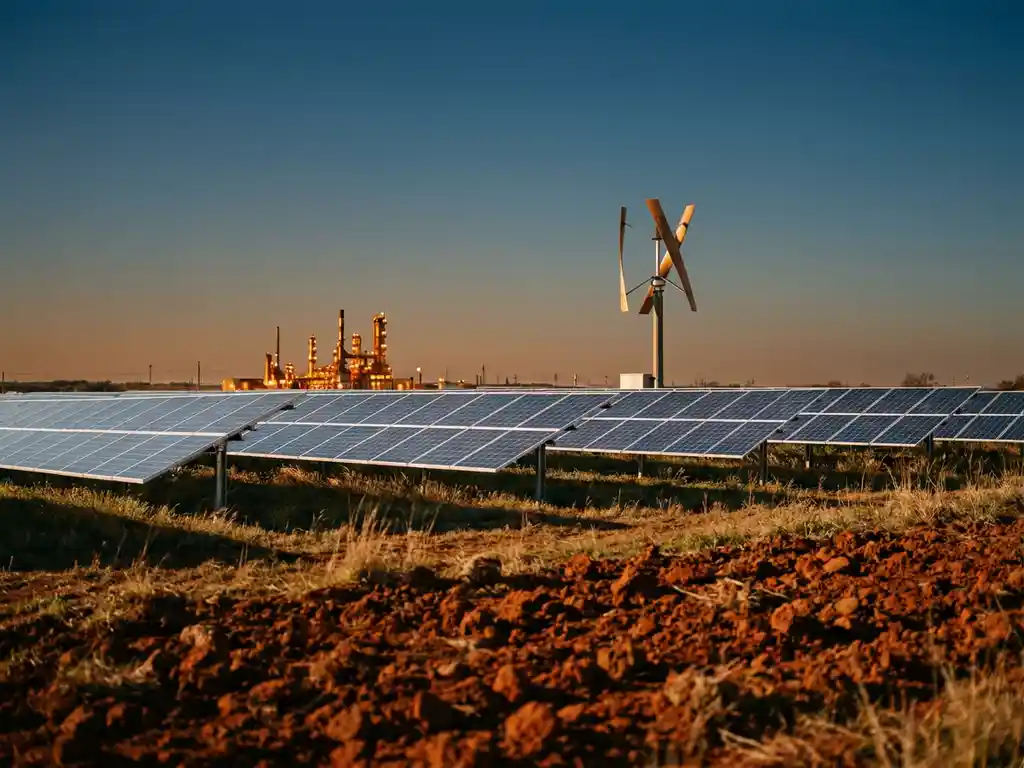
Energy independence means that a country, region, or company can meet its energy needs without relying on imported fossil fuels or volatile external supply chains. For industrial operations, it means having reliable access to energy sources that are not subject to geopolitical disruption, price spikes, or supply shortages. Renewable energy enables this by generating power and heat from domestic, inexhaustible sources—reducing exposure to the fossil fuel markets that have historically driven energy insecurity.
Fossil fuel dependence is leaving industrial companies exposed to risks they cannot control
When your heat supply depends on natural gas or oil, you are not just buying energy—you are buying into every price shock, supply disruption, and geopolitical crisis that affects global fossil fuel markets. For energy-intensive industries like food processing, chemicals, and pulp and paper, that exposure translates directly into margin pressure and operational risk. The fix is not simply switching suppliers; it is restructuring your energy inputs around sources that are not subject to the same volatility—which is exactly what renewable energy carriers make possible.
Waiting for a perfect decarbonization solution is slowing down your Scope 1 progress
Many sustainability managers know they need to act on industrial heat emissions but are waiting for a technology that fits perfectly—the right cost, the right infrastructure match, the right regulatory certainty. That wait has a real cost: every year of continued fossil fuel combustion adds to your Scope 1 emissions total, increases your EU ETS exposure, and pushes your net-zero commitments further out of reach. A more productive approach is to assess what is commercially available now, at what scale, and what partial progress looks like—rather than holding out for a complete solution that may be years away.
What is energy independence and why does it matter for industry?
Energy independence for industry means securing heat and power from sources that are not controlled by external fossil fuel markets. It matters because industrial energy costs are a major operational variable—and when that variable is tied to global oil and gas prices, companies lose control over their cost base, emissions profile, and long-term planning.
For sectors like food and beverage, specialty chemicals, and pulp and paper, heat is not optional. These industries run continuous, high-temperature processes that cannot simply be switched off when energy prices spike. When that heat comes from natural gas, every geopolitical event, every supply disruption, and every carbon-pricing adjustment feeds directly into operating costs.
Energy independence changes that equation. By sourcing heat from renewable or circular energy carriers, industrial companies can stabilize their energy costs, reduce Scope 1 emissions, and meet the expectations of regulators, customers, and investors—all at the same time.
How do renewables contribute to energy independence?
Renewable energy contributes to energy independence by replacing imported fossil fuels with energy sources that are domestically available, predictable in supply, and not subject to commodity-market volatility. Instead of buying fuel from global markets, companies generate or procure energy from sources like solar, wind, or circular fuel carriers that can be produced regionally.
The contribution goes beyond fuel substitution. Renewables also shift the structure of energy costs. Fossil fuel prices fluctuate based on factors entirely outside a company’s control. Renewable energy systems, by contrast, tend to have higher upfront costs but more stable and predictable operating costs over time—which supports better long-term financial planning.
For industrial heat specifically, the picture is more complex. Electricity from solar and wind is increasingly cost-competitive, but converting it to high-temperature heat for industrial processes adds layers of cost and infrastructure. This is why circular energy carriers—technologies that store renewable energy in a physical medium that can be transported and combusted—are gaining attention as a practical bridge for hard-to-electrify industries.
What are the biggest barriers to energy independence for industrial companies?
The biggest barriers to energy independence for industrial companies are upfront investment costs, infrastructure constraints, and the technology readiness of renewable heat solutions. Most industrial sites were built around fossil fuel systems, and replacing or supplementing those systems requires capital, planning, and often regulatory approval, which slows adoption.
Beyond capital, there are practical constraints that vary by sector and site:
- Grid limitations: Full electrification of high-temperature heat requires grid connections that many industrial sites do not have and cannot quickly obtain.
- Hydrogen infrastructure: Direct hydrogen combustion is promising but depends on pipeline access or on-site storage that is not yet widely available.
- Technology maturity: Some renewable heat technologies are still in early commercial stages, which makes procurement decisions difficult for companies that need proven performance guarantees.
- Cost gap: Even where renewable heat is technically feasible, the price difference compared to fossil fuels remains a significant obstacle—particularly where carbon pricing has not yet closed that gap.
These barriers are real, but they are not equally severe for every technology or every site. The most practical path forward for most companies is to identify which barriers apply to their specific situation and select technologies that work within those constraints rather than requiring them to disappear first.
What’s the difference between energy independence and energy security?
Energy independence means not relying on external sources for energy supply. Energy security means having reliable, affordable, and sufficient access to energy—regardless of where it comes from. The two concepts overlap but are not the same: a country or company can have energy security while still importing energy, provided those imports are stable and diversified.
For industrial companies, the distinction matters in practical terms. Full energy independence—generating or producing all your own energy inputs—is rarely achievable or even desirable at the company level. What most industrial operators are actually pursuing is energy security: reducing dependence on any single supplier or fuel type, diversifying their energy inputs, and building resilience against supply disruptions.
Renewable energy contributes to both goals simultaneously. It reduces dependence on fossil fuel imports (moving toward independence) while also improving supply resilience through diversification (improving security). Technologies that use domestically producible energy carriers—particularly those that can be stored and transported without complex infrastructure—add an additional layer of supply security that purely grid-dependent solutions cannot always provide.
Which renewable energy options work best for high-temperature industrial heat?
For high-temperature industrial heat above 500°C, the most viable renewable options are green hydrogen combustion, biomass, and emerging circular fuel carriers like iron fuel. Electrification through heat pumps works well at lower temperatures but becomes inefficient and costly at the high end of the industrial heat spectrum.
Each option comes with trade-offs:
- Green hydrogen: Capable of reaching the temperatures industrial processes require, but depends on pipeline infrastructure or on-site storage, and costs remain high in most markets.
- Biomass: Commercially mature and capable of high-temperature heat, but raises sustainability questions around feedstock sourcing and land use, and produces CO₂ emissions during combustion.
- Electric arc and resistance heating: Suitable for specific industrial applications but requires significant electrical infrastructure upgrades and is not cost-effective for all processes.
- Iron fuel: A circular, solid-state energy carrier that combusts at up to 2,000°C with zero direct CO₂ emissions. Iron oxide—the only combustion by-product—is regenerated back into iron fuel using hydrogen, completing a closed material cycle. You can learn more about how this works on our Iron Fuel Technology page.
The right choice depends on a company’s existing infrastructure, the temperature requirements of its processes, access to grid capacity or hydrogen supply, and the timeline for decarbonization commitments. For many sites, a combination of technologies—with one serving as a primary heat source and another as backup—is the most practical and resilient approach.
How can industrial companies start moving toward energy independence?
Industrial companies can start moving toward energy independence by auditing their current energy inputs, identifying which processes are most exposed to fossil fuel price and supply risk, and then evaluating which renewable heat technologies are compatible with their existing infrastructure. The goal is not to replace everything at once—it is to make targeted, high-impact changes that build momentum.
A structured starting point looks like this: map your heat demand by temperature range, identify where fossil fuel dependence is greatest, and assess which technologies can serve those needs without requiring a complete infrastructure overhaul. Technologies designed to integrate with existing boiler systems reduce both capital risk and operational disruption—making them a practical entry point for companies that cannot afford extended downtime.
Regulatory context also matters. EU Emissions Trading System costs are rising, and companies with high Scope 1 emissions from industrial heat are increasingly exposed. Acting ahead of regulatory tightening—rather than in response to it—gives companies more time to select, test, and scale the right solutions without being forced into rushed decisions.
Explore the industrial heat solutions available today to understand what a realistic transition could look like for your site and sector.
How Iron Fuel Technology helps industrial companies achieve energy independence
We developed Iron Fuel Technology specifically for industries where electrification and hydrogen are not yet viable at scale. Our Iron Fuel Boiler delivers high-temperature heat with zero direct CO₂ emissions and integrates with existing boiler infrastructure—so you do not need to rebuild your plant to start decarbonizing.
- Zero direct CO₂ emissions from iron fuel combustion, with a near-complete elimination of combustion-related carbon output
- Up to 95% energy efficiency, outperforming many conventional fossil fuel systems
- Circular fuel supply—iron oxide produced during combustion is regenerated back into iron fuel using hydrogen, closing the material loop
- Drop-in compatible—designed to complement existing fossil fuel boilers without major infrastructure changes
- Long-term fuel supply contracts, providing the supply security that energy independence requires
If you are evaluating renewable heat options for your industrial site, we would be glad to discuss what Iron Fuel Technology could mean for your operations. Get in touch with our team to start the conversation.
Related Articles
- What does the Department of Energy do?
- What is the difference between nuclear energy and renewable energy?
- What is green hydrogen and how is it produced?
- What is the payback period for solar panels?
- What is the environmental impact of large-scale solar farms?
This content was generated with the help of AI and it may contain mistakes