

Clean energy is genuinely cleaner than fossil fuels, but no energy source is entirely free of environmental impact. The honest answer is that “clean” is a spectrum, not a binary label. Most clean energy technologies produce little or no carbon emissions during operation, yet their full environmental footprint depends on how they are manufactured, fueled, and managed across their entire lifecycle. The sections below unpack the most common questions around what clean energy really means, where the gaps are, and what truly zero-emission heat production looks like in practice.
What makes an energy source truly “clean”?
An energy source is truly clean when it produces no harmful emissions during operation and causes minimal environmental damage across its entire lifecycle. In practice, this means evaluating not just what comes out of a smokestack or exhaust, but what goes into manufacturing the technology, how the fuel is produced, and what happens at end of life.
The most widely used measure is carbon intensity: how many grams of CO₂ equivalent are emitted per unit of energy generated. But carbon is not the only factor. Truly clean energy should also minimise:
- NOₓ and particulate emissions that affect air quality
- Water consumption and contamination
- Land use and habitat disruption
- Waste generated during production or decommissioning
No energy source scores a perfect zero on every dimension. What separates genuinely clean technologies from greenwashed ones is transparency about where emissions and impacts actually occur, and a commitment to reducing them across the full chain.
What are lifecycle emissions and why do they matter?
Lifecycle emissions are the total greenhouse gases released at every stage of an energy system’s life, from raw material extraction and manufacturing through to operation, maintenance, and eventual disposal. They matter because focusing only on operational emissions can create a misleading picture of how clean an energy source really is.
A solar panel, for example, produces no emissions while generating electricity. But manufacturing the panel requires energy, often from fossil-fuel-heavy grids, and the silicon purification process is energy intensive. Wind turbines require large amounts of steel and concrete. Even battery systems carry a significant manufacturing carbon cost.
Lifecycle analysis (LCA) is the methodology used to calculate these full-chain emissions. It allows a fair, apples-to-apples comparison between energy technologies. When lifecycle emissions are included, renewables still come out far ahead of fossil fuels, but the gap between different clean technologies narrows considerably. For industrial decision-makers, understanding lifecycle emissions is essential for making credible decarbonisation claims and avoiding regulatory scrutiny under frameworks like the EU Emissions Trading System.
Which clean energy sources have the lowest carbon footprint?
On a lifecycle basis, wind power consistently ranks among the lowest-carbon energy sources available, followed closely by nuclear, hydropower, and solar. All of these technologies emit a small fraction of the carbon that coal or natural gas produces per unit of energy, even when manufacturing and infrastructure are included.
Here is a rough ranking of common energy sources by lifecycle carbon intensity, from lowest to highest:
- Onshore wind — among the lowest lifecycle emissions of any energy source
- Nuclear — very low lifecycle carbon, despite long construction timelines
- Hydropower — low carbon in most cases, though land use and methane from reservoirs vary
- Solar PV — low carbon, with ongoing improvements in panel manufacturing
- Green hydrogen — low when produced from renewable electricity, but energy-intensive to produce
- Natural gas — significantly higher, and often underestimated due to methane leakage
- Coal — the highest lifecycle carbon intensity of any mainstream energy source
For industrial heat specifically, the picture becomes more complex. Many of these low-carbon sources generate electricity well, but converting electricity into high-temperature heat is inefficient and costly. That is where dedicated clean heat technologies become relevant.
Is hydrogen really a zero-emission fuel?
Hydrogen is only a zero-emission fuel when it is produced using renewable electricity, a category known as green hydrogen. The vast majority of hydrogen produced today still comes from natural gas through a process called steam methane reforming, which releases significant CO₂. The colour coding of hydrogen (grey, blue, green) reflects how it is made, not what it does when burned.
Even green hydrogen carries important caveats. Producing it requires large amounts of renewable electricity, and the process of electrolysis is inherently inefficient. Transporting and storing hydrogen is also technically demanding and expensive: it must be compressed, liquefied, or chemically bonded to a carrier molecule, each of which adds energy cost and infrastructure complexity.
For industrial applications, hydrogen faces additional hurdles. Many industrial sites lack the pipeline infrastructure to receive hydrogen at scale, and the upfront investment to retrofit or replace existing equipment can be prohibitive. This does not make hydrogen irrelevant, but it does mean that framing it as a straightforward zero-emission solution oversimplifies the reality for most industrial operators today.
How clean is clean energy for high-temperature industrial heat?
High-temperature industrial heat is one of the hardest sectors to decarbonise, and most existing clean energy technologies struggle to address it effectively. Electricity-based solutions like resistance heating or heat pumps work well at lower temperatures but become increasingly inefficient and costly above 200 to 300°C. Many industrial processes in food and beverage, chemicals, and paper production require temperatures well above that threshold.
This creates a genuine gap. Wind and solar generate clean electricity, but electricity is not always the right energy vector for high-temperature heat. Hydrogen can theoretically reach the required temperatures, but infrastructure and cost barriers limit its near-term viability at most industrial sites. Biomass is an option in some regions, but land use, supply chain sustainability, and combustion emissions complicate its clean energy credentials.
The result is that a large share of industrial heat globally is still produced by burning fossil fuels, not because operators lack the will to change, but because the practical alternatives have not yet been available at the right cost, scale, and compatibility with existing equipment. Closing this gap is one of the defining clean energy challenges of the coming decade.
What does “zero direct CO₂” actually mean in practice?
“Zero direct CO₂” means that no carbon dioxide is released at the point of combustion or energy conversion. It refers specifically to operational emissions, not to the full lifecycle of the fuel or technology. Understanding this distinction is important for sustainability managers building credible decarbonisation cases, because regulators and auditors increasingly scrutinise the full chain, not just what happens on site.
A fuel can be zero direct CO₂ and still carry upstream emissions. Green hydrogen, for example, releases only water when burned, but the electricity used to produce it may not be fully renewable. Biomass releases CO₂ when burned, but proponents argue this is offset by the carbon absorbed during plant growth, which is why it is sometimes classified as carbon-neutral rather than zero-carbon.
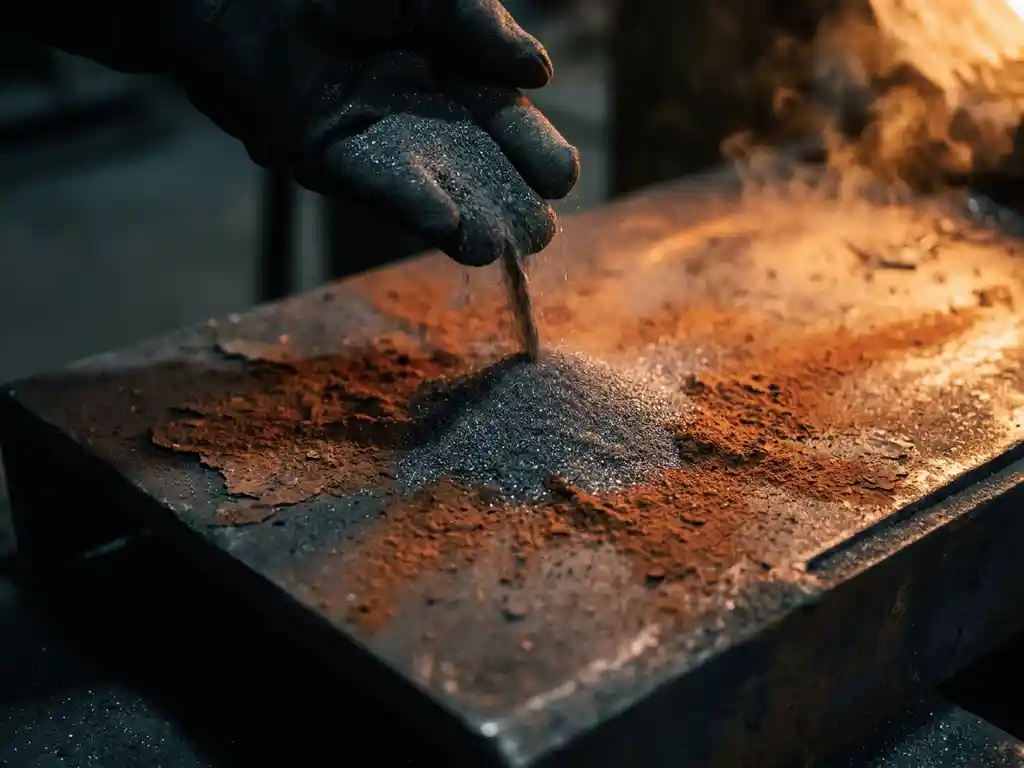
For a zero direct CO₂ claim to be genuinely robust, it should be accompanied by transparency about the fuel’s production pathway. The most credible clean energy systems are those where both operational and upstream emissions are minimised, and where the fuel cycle is designed to be circular from the outset, so that the same material can be used, recovered, and reused without generating new carbon at any stage. Iron Fuel Technology is built on exactly this principle: iron burns without releasing CO₂, and the resulting iron oxide is regenerated using hydrogen, completing a closed loop with no carbon in the cycle at all.
How RIFT helps decarbonise industrial heat
We developed Iron Fuel Technology precisely to address the gap that most clean energy solutions leave open: affordable, practical, high-temperature heat with zero direct CO₂ emissions. Our Iron Fuel Boiler burns fine iron powder to produce a flame of up to 2,000°C, generating steam, hot water, or hot air for energy-intensive industrial processes without releasing any carbon dioxide.
Here is what makes our approach different in practice:
- Circular fuel cycle: Iron burns to iron oxide, which is regenerated using hydrogen and reused, creating a fully closed loop with no carbon at any stage
- Drop-in compatibility: Our boiler is designed to integrate with existing industrial infrastructure, so you do not need to overhaul your entire setup
- Up to 95% energy efficiency: Our system outperforms many conventional fossil fuel boilers on efficiency, not just emissions
- Long-term fuel supply: We provide iron fuel under a reliable supply agreement, giving you cost and operational certainty alongside decarbonisation
- Proven at commercial scale: The first commercial contract for Iron Fuel Technology has already been signed with Kingspan Unidek, making it a real-world solution, not just a pilot
If you are a sustainability manager evaluating clean heat solutions for your site, we would welcome the conversation. Get in touch with our team to explore what Iron Fuel Technology could mean for your decarbonisation roadmap.
Frequently Asked Questions
How does Iron Fuel Technology compare to hydrogen on cost and infrastructure requirements?
Iron fuel has a significant practical advantage over hydrogen in that it is a solid, stable material that can be stored and transported using conventional logistics infrastructure — no high-pressure pipelines, cryogenic tanks, or specialist handling equipment required. Hydrogen requires substantial upfront investment to retrofit industrial sites for safe storage and delivery, whereas Iron Fuel Technology is designed to integrate with existing boiler infrastructure. For most industrial operators, this makes iron fuel a lower-barrier entry point to zero direct CO₂ heat today, while hydrogen infrastructure matures.
What industries or processes are the best fit for Iron Fuel Technology?
Iron Fuel Technology is particularly well suited to energy-intensive industries that require continuous, high-temperature process heat — including food and beverage, chemicals, paper and board, and building materials manufacturing. Any process that currently relies on a gas-fired boiler to produce steam, hot water, or hot air above 200°C is a strong candidate. If your site has significant heat demand and faces pressure to decarbonise under regulatory or corporate sustainability targets, it is worth assessing compatibility with your existing setup.
What happens to the iron oxide after combustion — is it genuinely recovered and reused?
Yes, the circular fuel cycle is central to how Iron Fuel Technology achieves zero carbon at every stage, not just at the point of combustion. After iron powder burns and becomes iron oxide, it is collected and regenerated back into iron fuel using green hydrogen. This closed loop means no new carbon is introduced at any point in the cycle, and the same iron material can be reused repeatedly. It is this circularity — not just the absence of combustion CO₂ — that makes the system genuinely clean across its full lifecycle.
How should sustainability managers account for Iron Fuel Technology in their carbon reporting and decarbonisation roadmaps?
Because Iron Fuel Technology produces zero direct CO₂ at the point of combustion, it eliminates Scope 1 emissions from industrial heat — typically one of the hardest categories to address. For carbon reporting under frameworks like GHG Protocol or CDP, this is a meaningful and auditable reduction. Sustainability managers should also factor in the upstream emissions profile of the hydrogen used in the regeneration stage, and work with their RIFT supply agreement to obtain the fuel provenance data needed to support credible Scope 3 reporting and any regulatory disclosures under schemes like the EU ETS.
Is Iron Fuel Technology commercially available now, or is it still in a pilot phase?
Iron Fuel Technology has moved beyond the pilot phase. The first commercial contract has already been signed with Kingspan Unidek, confirming that the technology is operational at real-world industrial scale — not just in a laboratory or demonstration setting. This is an important distinction for industrial operators who need proven, bankable solutions rather than emerging technologies that carry deployment risk. If you are evaluating options for a near-term decarbonisation project, RIFT can provide commercial references and performance data from live deployments.
What are the most common mistakes companies make when evaluating clean heat solutions?
The most frequent mistake is evaluating solutions on operational emissions alone, without accounting for lifecycle carbon, infrastructure costs, or compatibility with existing equipment. A technology that looks zero-emission on paper may carry significant upstream carbon or require a complete overhaul of site infrastructure that makes it impractical in the near term. A second common error is treating all clean energy sources as interchangeable — electricity-based solutions, hydrogen, biomass, and iron fuel each have different temperature ranges, cost profiles, and infrastructure requirements, so the right fit depends heavily on your specific process and site conditions.
How do I get started with assessing whether Iron Fuel Technology is right for my site?
The best starting point is a conversation with the RIFT team, who can carry out an initial site compatibility assessment based on your current heat demand, temperature requirements, and existing boiler infrastructure. You do not need to have a fully developed decarbonisation strategy in place — many operators begin with a focused feasibility review of one or two high-priority processes. You can reach the team directly through the RIFT contact page, and they can advise on typical timelines, integration requirements, and what a fuel supply agreement would look like for your operation.
Related Articles
- Will EU ETS carbon prices keep rising and what does that mean for industry?
- Who uses the EIA report?
- How long do solar panels last?
- What is net metering and how does it benefit solar users?
- How does hydropower generate electricity?
This content was generated with the help of AI and it may contain mistakes