

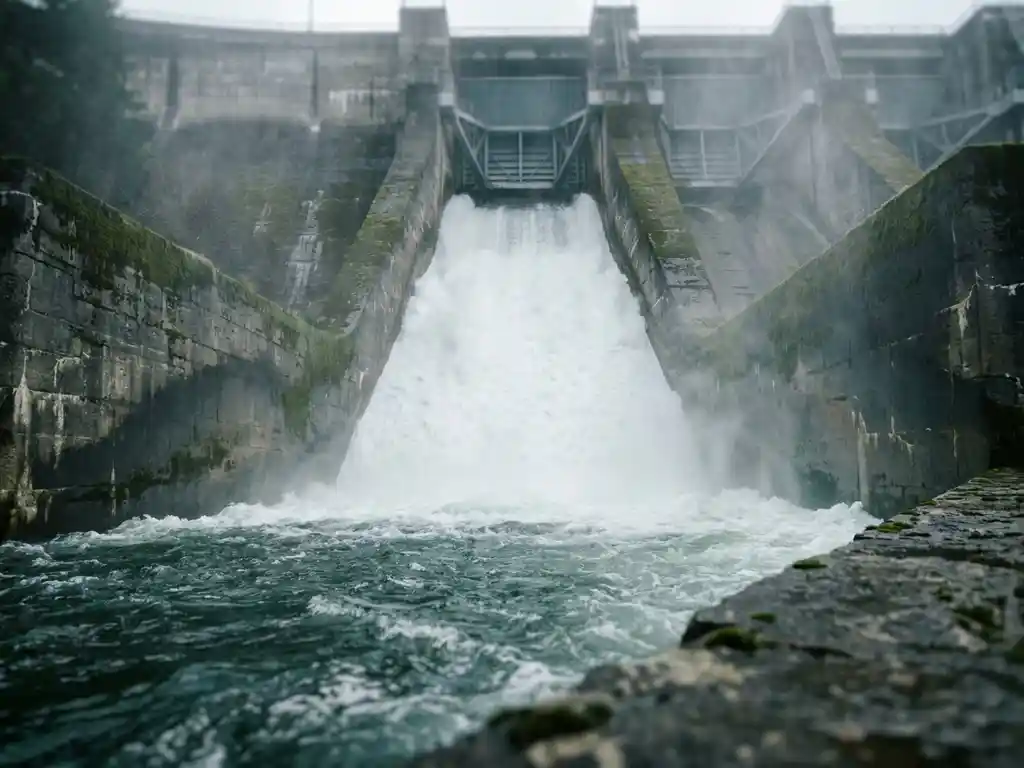
Hydropower generates electricity by converting the kinetic and potential energy of flowing or falling water into mechanical energy through a turbine, which then drives a generator to produce electrical current. It is one of the oldest and most widely used sources of renewable energy, supplying a significant share of the world’s electricity. Water’s natural movement through rivers and reservoirs makes it a reliable and controllable power source.
Relying on rainfall alone leaves your energy supply exposed
Hydropower is often treated as a guaranteed baseline, but its output is directly tied to water availability, which varies with seasons, drought cycles, and changing precipitation patterns. When river levels drop or reservoir storage runs low, generation capacity falls with them. That variability creates real risk for grid operators and energy planners who count on hydropower as a stable anchor. The solution is not to abandon hydropower, but to pair it with complementary renewable sources that can fill the gaps when water is scarce, building a more resilient energy mix overall.
Treating all renewable energy sources as interchangeable holds back smarter energy planning
Each renewable energy technology has a distinct generation profile, infrastructure requirements, and cost structure. Grouping them together as simply “green power” obscures the practical differences that matter when you are actually planning supply. Hydropower, for example, is dispatchable in a way that solar and wind are not, meaning operators can control when it generates. Understanding those distinctions allows energy planners and sustainability managers to choose the right mix for their specific needs, rather than defaulting to whichever option is most familiar or most readily available locally.
What is hydropower, and how does it work?
Hydropower is electricity generated from the energy of moving water. Water held at a height carries potential energy. When released, it flows downward, gaining speed and kinetic energy. That moving water passes through a turbine, spinning it. The turbine drives a generator, which converts mechanical rotation into electrical current that feeds into the grid.
The process relies on a simple physical principle: water always flows from higher elevation to lower elevation, and that movement can be captured and put to work. The greater the height difference, known as head, and the greater the volume of water flowing through, the more electricity the system can produce.
Most large hydropower installations use a dam to create a reservoir, storing water and controlling its release. Operators can increase or decrease electricity output by adjusting how much water flows through the turbines at any given time. This controllability is one of hydropower’s most valuable traits as a renewable energy source in a modern grid.
What are the main components of a hydroelectric power plant?
A hydroelectric power plant consists of several core components that work together to capture water’s energy and convert it into electricity. These include the dam or intake structure, the penstock, the turbine, the generator, and the transformer that steps up voltage for transmission.
- Dam or weir: Creates the reservoir and controls water flow, establishing the elevation difference needed to generate power.
- Intake and gates: Regulate the volume of water entering the system, allowing operators to manage output.
- Penstock: A large pipe or tunnel that channels water from the reservoir down to the turbines at high pressure.
- Turbine: The rotating machine that converts the force of moving water into mechanical energy.
- Generator: Coupled directly to the turbine shaft, it converts mechanical rotation into electrical energy.
- Transformer and transmission lines: Step up the voltage and carry electricity to homes, businesses, and industry.
Smaller run-of-river plants may omit a large reservoir, instead diverting a portion of a river’s natural flow directly through the turbine system. The core components remain the same, but the scale and water storage capacity differ significantly.
How does a hydropower turbine generate electricity?
A hydropower turbine generates electricity by using the force of water to spin a rotor. As water pushes against the turbine blades, the rotor turns. That rotating shaft is connected to a generator, where a magnetic field interacts with copper coils to produce alternating current. The faster and more forcefully the water moves, the more electricity is produced.
The design of the turbine depends on the conditions at the site. High-head sites, where water falls from a great height, typically use Pelton wheels, which work by directing high-speed water jets at cup-shaped buckets on the wheel’s rim. Medium-head sites often use Francis turbines, which are enclosed and guide water in a spiral path through the rotor. Low-head, high-flow sites generally use Kaplan turbines, which resemble propellers and are well suited to slower-moving, larger volumes of water.
The generator connected to the turbine operates on the same electromagnetic principle as any other generator. What makes hydropower distinctive is the consistency of the driving force. Unlike wind or solar, where the energy input fluctuates constantly, water flow through a controlled system can be kept steady, producing stable, predictable electrical output.
What are the different types of hydropower systems?
Hydropower systems fall into three main categories: impoundment, run-of-river, and pumped storage. Each suits different geographic conditions, energy needs, and grid roles. The right type depends on water availability, terrain, and whether the priority is baseload generation, peak power, or storage.
- Impoundment hydropower: The most common type. A dam holds back a large reservoir, and water is released in controlled amounts through turbines. This setup allows flexible generation and long-term water storage.
- Run-of-river hydropower: Uses the natural flow of a river without significant storage. Generation follows the river’s flow rate, making output more variable but requiring minimal disruption to the waterway.
- Pumped storage hydropower: Functions as a large-scale energy storage system. During periods of low electricity demand, surplus power pumps water from a lower reservoir to an upper one. When demand rises, that water is released back down through turbines to generate electricity on demand.
Pumped storage is particularly valuable in modern grids that integrate large amounts of variable renewable energy from wind and solar. It acts as a buffer, absorbing excess generation and releasing it when needed, helping to balance supply and demand across the grid.
How does hydropower compare to other renewable energy sources?
Hydropower differs from solar and wind primarily in its controllability. Solar and wind generate electricity only when the sun shines or the wind blows. Hydropower with reservoir storage can generate on demand, making it a dispatchable resource. It also tends to have a longer operational lifespan and higher capacity factors than most other renewables.
Solar and wind have lower upfront costs per unit of capacity and can be deployed almost anywhere, whereas hydropower requires specific geographic conditions: rivers, elevation changes, and sufficient water flow. This limits where new large-scale hydropower can be built.
In terms of emissions, all three produce electricity with very low life-cycle carbon emissions compared to fossil fuels. Hydropower does carry some methane risk from decomposing organic matter in tropical reservoirs, but this is site-specific and generally modest at well-managed facilities in temperate climates.
For grid operators, hydropower’s dispatchability makes it a natural partner for variable renewables. When solar output drops in the evening or wind speeds fall, reservoir-based hydropower can ramp up quickly to cover the shortfall—a flexibility that batteries and other storage technologies are only beginning to match at scale.
That said, even a well-balanced electricity grid leaves one major decarbonization challenge largely unaddressed: industrial heat. If you are a sustainability manager navigating that gap, the form below can help connect you with the right information and the right people.
What are the limitations and environmental impacts of hydropower?
Hydropower’s main limitations are geographic dependence, high upfront construction costs, and environmental disruption to river ecosystems. Large dams alter water temperature, sediment flow, and fish migration routes. Reservoirs can displace communities and flood land. These impacts make siting and permitting new large hydropower projects increasingly difficult in many regions.
Climate change adds another layer of uncertainty. Hydropower output depends on rainfall and snowmelt, both of which are shifting as temperatures rise. Regions that have historically relied on glacial meltwater or predictable seasonal rain may see their hydropower capacity decline over the coming decades.
Run-of-river systems have a smaller environmental footprint than large impoundment dams, but they still alter natural flow patterns and can affect aquatic habitats. Fish ladders and bypass channels help mitigate migration barriers, though their effectiveness varies by species and site design.
Despite these challenges, existing hydropower infrastructure represents an enormous asset. Most of the world’s large hydropower capacity was built decades ago and continues to generate reliable, low-emission electricity. The focus in many regions is now on optimizing existing plants, adding pumped-storage capability, and developing smaller run-of-river projects rather than building new large dams.
How Iron Fuel Technology helps with industrial energy decarbonization
Hydropower addresses electricity generation, but industrial heat is a separate and equally urgent challenge. Most industrial processes require high-temperature heat that electricity from any renewable source, including hydropower, struggles to deliver cost-effectively through electrification alone.
This is where we come in. At RIFT, we developed Iron Fuel Technology to fill exactly that gap: a circular, carbon-free energy carrier that produces high-temperature heat for industrial processes without CO₂ emissions from combustion.
- Our Iron Fuel Boiler achieves up to 95% energy efficiency and integrates with existing boiler infrastructure, requiring no complete overhaul.
- Iron fuel combustion produces zero direct CO₂, with total system emissions of just 10 kg CO₂ per MWh of thermal energy, attributable only to the pilot safety flame.
- The technology operates on a closed cycle: iron powder burns to produce heat, leaving iron oxide, which is then regenerated into iron fuel using hydrogen.
- We supply iron fuel under long-term contracts, giving industrial operators predictable costs and a reliable supply.
If you are a sustainability manager looking for a practical, high-efficiency route to decarbonizing your heat processes, we would like to talk. Get in touch with our team to explore what Iron Fuel Technology can do for your operations, or learn more about the technology behind it.
Related Articles
- What is the difference between onshore and offshore wind energy?
- What is energy poverty and can renewables help solve it?
- How recyclable are solar panels and wind turbines?
- What is the carbon footprint of manufacturing solar panels?
- What country has the least renewable energy?
This content was generated with the help of AI and it may contain mistakes