

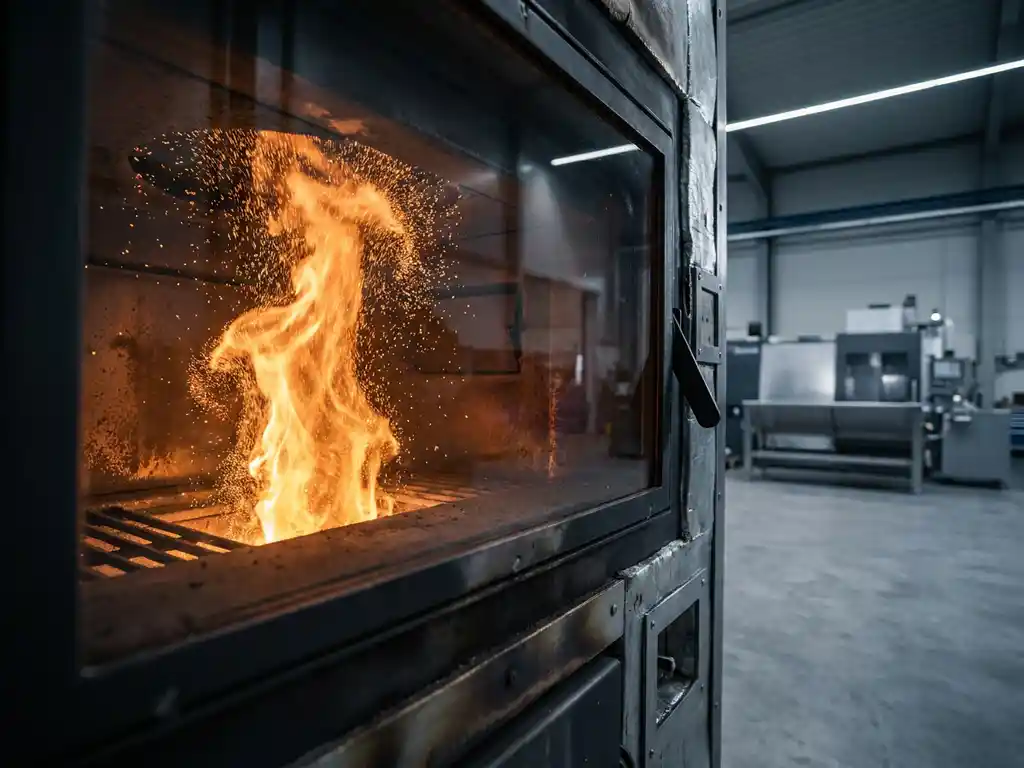
Green energy projects deliver real, measurable benefits: they reduce carbon emissions, lower long-term energy costs, improve regulatory compliance, and future-proof industrial operations against rising fossil fuel prices and tightening climate legislation. For industrial companies in particular, switching to cleaner energy sources is no longer just an environmental choice; it is a strategic business decision. Below, we answer the most common questions about green energy projects and what they mean for energy-intensive industries.
How do green energy projects reduce industrial carbon emissions?
Green energy projects reduce industrial carbon emissions by replacing fossil fuel combustion with clean energy sources that produce little or no direct CO₂. In industrial settings, this means substituting gas-fired or coal-fired heat generation with technologies powered by renewable electricity, hydrogen, or circular fuel carriers like iron fuel, all of which eliminate or drastically cut Scope 1 emissions at the point of production.
Industrial heat is one of the largest contributors to global carbon emissions. Two-thirds of all industrial energy consumption goes toward heat generation, and around 80% of that heat is still produced by burning fossil fuels. Green energy projects target this gap directly by introducing low-carbon or zero-carbon alternatives into the production process.
The impact compounds over time. As more facilities transition away from fossil-fired boilers and furnaces, the cumulative reduction in emissions across entire sectors becomes significant. For sustainability managers with Scope 1 reduction targets, green energy projects are often the most direct path to measurable progress, faster than supply chain interventions and more controllable than Scope 3 initiatives.
What types of green energy projects are used in industrial heating?
The most common types of green energy projects used in industrial heating include electrification, hydrogen combustion, biomass boilers, heat pumps, and emerging circular fuel technologies such as iron fuel. Each approach suits different temperature ranges, infrastructure conditions, and investment profiles, so the right solution depends heavily on the specific industrial context.
Here is a quick overview of the main options available to industrial companies today:
- Electrification: Uses electric resistance or induction heating. Works well for low-to-medium temperatures but becomes costly or impractical at very high temperatures.
- Green hydrogen: Burns cleanly with no CO₂, but requires significant infrastructure investment and faces supply chain and storage challenges.
- Biomass boilers: Replace fossil fuels with organic material. Emissions reductions depend on sourcing and lifecycle accounting.
- Heat pumps: Highly efficient for lower-temperature processes but not suitable for high-temperature industrial heat demands.
- Iron fuel technology: Burns iron powder to produce high-temperature heat with zero direct CO₂. The iron oxide byproduct is regenerated using hydrogen, completing a fully circular fuel cycle. Learn more about how iron fuel works.
No single technology suits every facility. Many industrial companies are finding that a combination of approaches, or a drop-in replacement that works alongside existing equipment, offers the most practical path forward.
What are the financial benefits of investing in green energy projects?
Investing in green energy projects can reduce long-term energy costs, protect against fossil fuel price volatility, improve access to green financing, and increase asset value. While upfront investment is often significant, the financial case for clean energy in industry has strengthened considerably as fossil fuel prices have become less predictable and carbon pricing mechanisms have expanded.
The financial benefits break down into several categories:
- Reduced exposure to fossil fuel price swings: Companies that lock in clean energy supply agreements insulate themselves from the unpredictable cost of gas and oil.
- Lower carbon compliance costs: Under frameworks like the EU Emissions Trading System (ETS), every tonne of CO₂ has a price. Reducing emissions directly reduces that financial burden.
- Access to green financing and grants: Investors and lenders increasingly favour companies with credible decarbonisation plans. EU funding mechanisms, such as the EU Innovation Fund, actively support clean energy transitions.
- Improved operational efficiency: Many modern clean energy systems outperform ageing fossil fuel infrastructure on efficiency, reducing waste and total energy spend.
- Stronger market positioning: Customers and procurement teams across sectors are increasingly requiring suppliers to demonstrate sustainability credentials, making clean energy a competitive differentiator.
The financial case is not without complexity. High upfront costs and uncertainty around long-term energy prices can make investment decisions difficult. But for companies with a clear decarbonisation mandate and the right technology partner, the return on investment becomes much easier to model.
How do green energy projects support regulatory compliance?
Green energy projects support regulatory compliance by directly reducing the Scope 1 emissions that are subject to carbon pricing, reporting obligations, and sector-specific climate legislation. As regulatory pressure intensifies across Europe and beyond, companies that have already invested in clean energy are better positioned to meet current and future requirements without costly last-minute adjustments.
Key regulatory frameworks driving this urgency include the EU Emissions Trading System, the Corporate Sustainability Reporting Directive (CSRD), and national net-zero legislation that sets binding targets for industrial emitters. For companies in energy-intensive sectors, failing to reduce emissions is increasingly a financial and reputational liability, not just an environmental concern.
Green energy projects offer a proactive compliance strategy. Rather than purchasing carbon offsets or paying ETS penalties, companies that switch to low-carbon heat generation reduce their actual emissions, which is what regulators and investors increasingly demand. Building a credible, evidence-based decarbonisation roadmap also strengthens a company’s position when engaging with auditors, lenders, and sustainability rating agencies.
What’s the difference between green energy projects and full electrification?
The key difference is that green energy projects encompass a broad range of clean energy solutions, including hydrogen, biomass, and circular fuels like iron fuel, while full electrification refers specifically to replacing thermal processes with electrically powered alternatives. Electrification is one type of green energy project, but it is not always the most practical or cost-effective option for industrial heat.
Full electrification works well in certain contexts, particularly for lower-temperature processes or facilities with strong grid access and affordable renewable electricity. But for high-temperature industrial applications, think processes requiring heat above 500°C, electrification faces real barriers: grid capacity constraints, the high cost of electrical infrastructure upgrades, and the physical limitations of electric heating at extreme temperatures.
Green energy projects that use combustion-based clean fuels, such as hydrogen or iron fuel, can reach the same high temperatures as fossil fuel systems without the infrastructure bottlenecks. They also tend to integrate more naturally with existing boiler setups, reducing the need for a complete overhaul of production equipment. For many industrial companies, this makes non-electrification green energy projects a faster and more cost-effective route to decarbonisation. Explore the available clean heat solutions to understand which approach fits your facility.
Which industries benefit most from green energy projects?
The industries that benefit most from green energy projects are those with high, continuous heat demands and significant Scope 1 emissions from fossil fuel combustion. Food and beverage, specialty chemicals, and pulp and paper are among the sectors where the transition to clean industrial heat has the greatest impact, both in terms of emissions reduction and long-term cost savings.
These sectors share a common challenge: they rely on large volumes of high-temperature heat to run their core production processes, and conventional alternatives like full electrification are often too costly or technically constrained to deploy at scale. Green energy projects that deliver clean, high-temperature heat without requiring a complete infrastructure rebuild are therefore especially valuable.
Other industries with strong potential to benefit include:
- Ceramics and glass manufacturing: Extremely high process temperatures make electrification difficult and clean combustion fuels a natural fit.
- Pharmaceuticals: Strict process conditions and sustainability reporting requirements make clean heat a compliance and reputational priority.
- Textile production: Steam-intensive processes create a strong case for cleaner boiler alternatives.
- Metal processing: High-temperature furnaces represent a significant decarbonisation opportunity for green fuel technologies.
How RIFT helps with industrial decarbonisation through green energy
We developed the Iron Fuel Boiler specifically to address the gap that electrification and hydrogen cannot always fill: reliable, high-temperature, zero-direct-CO₂ heat for energy-intensive industries. Here is what our solution offers in practice:
- Zero direct CO₂ emissions: Iron fuel combusts with ambient air to produce heat with no carbon dioxide output at the point of use.
- Up to 95% energy efficiency: Our boiler system outperforms many conventional fossil fuel systems on efficiency, reducing total energy waste.
- Drop-in compatibility: The Iron Fuel Boiler is designed to work alongside existing industrial boiler infrastructure, no complete overhaul required.
- Circular fuel cycle: After combustion, iron oxide is regenerated using hydrogen, creating a fully closed-loop, reusable fuel system.
- Long-term fuel supply: We provide not just the boiler, but a reliable, long-term iron fuel supply agreement, so you are not dependent on volatile commodity markets.
- Proven commercial deployment: Our first commercial contract with Kingspan Unidek marks the world’s first industrial-scale deployment of Iron Fuel Technology.
If you are evaluating green energy projects for your facility and want to understand whether iron fuel is the right fit, we would love to talk. Get in touch with our team to start the conversation, or learn more about who we are and the mission driving our work.
Frequently Asked Questions
How long does it typically take to implement a green energy project in an industrial facility?
Implementation timelines vary depending on the technology chosen and the complexity of existing infrastructure, but most industrial green energy projects take anywhere from 6 to 24 months from initial assessment to full commissioning. Drop-in solutions like the Iron Fuel Boiler tend to have shorter deployment timelines because they integrate with existing boiler setups rather than requiring a complete infrastructure overhaul. Starting with a detailed feasibility study and technology audit early in the process is the best way to get a realistic project timeline for your specific facility.
What if our facility requires very high process temperatures — are green energy options still viable?
Yes, and this is actually one of the most important distinctions to understand when evaluating green energy projects. Technologies like combustion-based clean fuels — including hydrogen and iron fuel — can reach the same extreme temperatures as conventional fossil fuel systems, making them viable for processes well above 500°C where electrification typically falls short. If your facility operates kilns, furnaces, or high-temperature boilers, combustion-based green energy solutions are likely a more practical fit than electrification alone. Discussing your specific temperature and throughput requirements with a technology provider is the best first step.
How do we build a business case for green energy investment when upfront costs are high?
A strong business case should account for the full financial picture, not just capital expenditure — including avoided carbon compliance costs under mechanisms like the EU ETS, reduced exposure to fossil fuel price volatility, and potential access to green financing or innovation grants. Modelling scenarios over a 10–15 year horizon typically reveals a far more compelling return than a short-term cost comparison alone. Working with a technology partner who can provide detailed cost modelling and help identify applicable funding mechanisms, such as the EU Innovation Fund, significantly strengthens the investment case internally.
Can green energy technologies be implemented in phases, or does a full transition need to happen all at once?
Phased implementation is not only possible but often the most practical approach for industrial companies with complex operations or capital constraints. Many facilities start by decarbonising one production line or boiler unit, gather performance data, and then scale the solution across the site. This approach reduces financial risk, allows operational teams to build familiarity with the new technology, and demonstrates measurable emissions reductions early — which can support further investment approval and green financing applications.
What common mistakes should industrial companies avoid when evaluating green energy projects?
One of the most common mistakes is treating all green energy technologies as interchangeable without accounting for site-specific constraints such as grid capacity, process temperature requirements, available space, and existing infrastructure. Another frequent pitfall is focusing solely on upfront capital costs while underestimating the long-term savings from reduced carbon compliance costs and energy price stability. Companies also often underestimate the importance of securing a reliable, long-term fuel supply agreement alongside the technology itself — the energy source and the equipment need to be evaluated as a complete system.
How do green energy projects affect a company's sustainability reporting and ESG credentials?
Switching to verified low-carbon or zero-direct-CO₂ heat generation directly reduces the Scope 1 emissions a company must report under frameworks like the CSRD, GRI, or CDP, strengthening both the accuracy and credibility of sustainability disclosures. This matters increasingly to investors, lenders, and large enterprise customers who scrutinise supply chain emissions as part of their own reporting obligations. A documented, evidence-based decarbonisation roadmap supported by real operational data — rather than offsets — is what sustainability rating agencies and auditors are increasingly looking for.
Is iron fuel technology mature enough for large-scale industrial deployment, or is it still experimental?
Iron fuel technology has moved beyond the experimental phase. RIFT’s Iron Fuel Boiler has reached commercial deployment, with the world’s first industrial-scale contract signed with Kingspan Unidek, demonstrating that the technology is ready for real production environments. The core combustion and regeneration principles are well-understood, and ongoing commercial projects are generating the operational performance data that supports broader adoption. For companies evaluating the technology, this means you are not taking a bet on unproven science — you are considering a solution with a live commercial reference case.
Related Articles
- How do you build a business case for decarbonizing industrial heat in 2026?
- Is nuclear energy considered renewable?
- What is the role of hydrogen in the energy transition?
- Is it worth investing in renewable energy for your home?
- Why is renewable energy important?
This content was generated with the help of AI and it may contain mistakes