

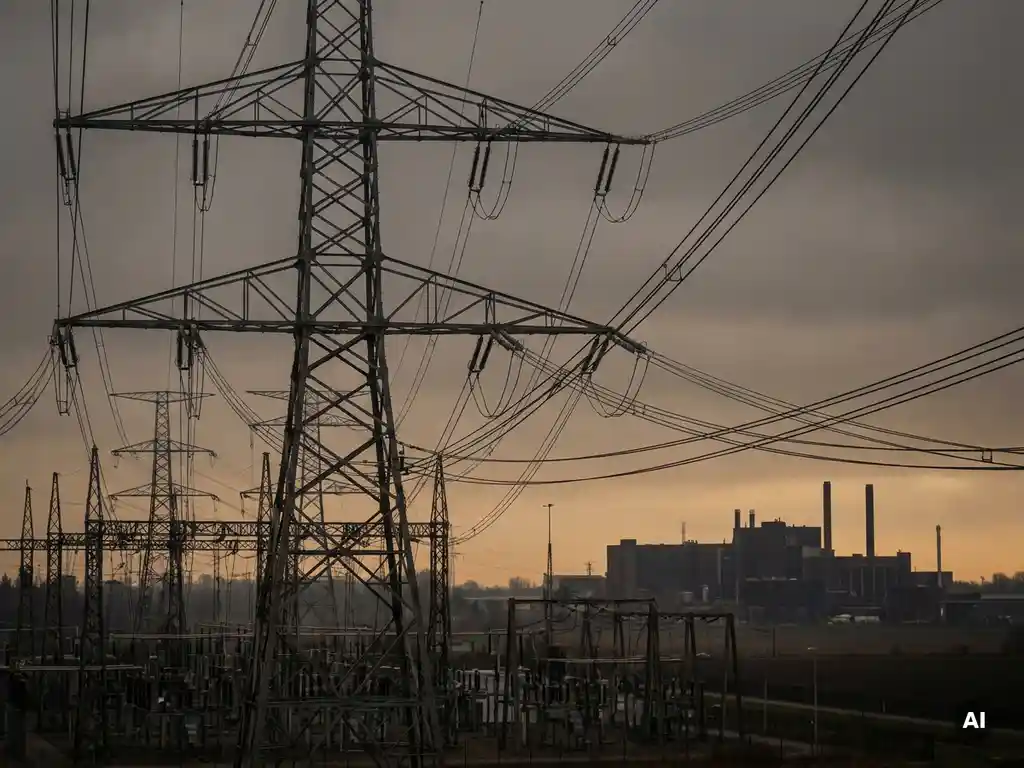
Grid congestion occurs when the electricity grid cannot handle the total demand placed on it, meaning companies that want to connect new capacity or draw more power simply cannot get access, or face long waiting times and high costs to do so. This is not a temporary glitch. In countries like the Netherlands, grid congestion has become a structural barrier, with waiting lists for new industrial connections stretching years into the future. The questions below unpack how this happens, who it affects most, and what it means for companies trying to decarbonise their operations.
How does grid congestion actually happen?
Grid congestion happens when the total demand for electricity transmission or distribution exceeds the physical capacity of the network infrastructure in a given area. When more companies, households, and renewable energy producers all try to use the same cables and substations simultaneously, the system becomes overloaded, and grid operators are forced to refuse or delay new connections until capacity is freed up or new infrastructure is built.
Several forces have converged to make this problem worse in recent years. The rapid expansion of solar and wind energy has added large volumes of intermittent power to the grid, requiring more sophisticated balancing. At the same time, industrial electrification, driven by decarbonisation targets and the phase-out of natural gas, has increased electricity demand dramatically. Substations and high-voltage cables that were designed decades ago for a different energy mix are now struggling to keep up.
The result is a mismatch between ambition and infrastructure. Grid operators in the Netherlands and across Europe are investing heavily in upgrades, but grid expansion is slow: permitting, planning, and construction timelines typically run to five to ten years. Meanwhile, the demand keeps growing.
Which industries are hit hardest by grid congestion?
Energy-intensive industries are hit hardest by grid congestion, particularly those that rely on large amounts of continuous heat or power for their production processes. Sectors such as Food and Beverage, Specialty Chemicals, and Pulp and Paper are among the most exposed, because their processes run around the clock and require reliable, high-volume energy supply that cannot easily be interrupted or shifted.
These industries face a compounding challenge. They have strong pressure to decarbonise, from regulators, customers, and their own sustainability commitments, but the most obvious route, electrification, is blocked by congested grids. A food processing plant that wants to replace its gas-fired boiler with electric heating may find it simply cannot get a grid connection of sufficient capacity, or that the waiting time makes the project commercially unviable.
Manufacturing sites in industrial zones are often particularly vulnerable, because multiple large consumers cluster in the same grid area, competing for the same limited capacity. This means that even companies that were well connected historically may find that new expansion plans are delayed or refused as the local grid fills up.
Why can’t industrial companies just wait for the grid to be upgraded?
Industrial companies cannot simply wait for grid upgrades because the timelines involved are incompatible with their decarbonisation obligations and business planning cycles. Grid infrastructure projects, from permitting to construction, routinely take five to ten years to complete. But EU ETS carbon costs are rising now, sustainability targets have fixed deadlines, and customers and investors are applying pressure today.
The financial stakes make waiting even less viable. Under the EU Emissions Trading System, companies pay for every tonne of CO₂ they emit. As the carbon price rises, the cost of continuing to run fossil fuel-fired heat generation compounds year after year. Waiting for a grid connection does not pause those costs, it simply means paying them for longer while competitors who found alternative solutions move ahead.
There is also a regulatory dimension. The revised EU Energy Efficiency Directive extends mandatory energy audit obligations and energy management system requirements to a broader range of industrial energy consumers, including many that were previously exempt. Companies that delay action risk falling behind on compliance as well as on emissions targets.
Beyond regulation, there is a straightforward business risk. Companies that tie their entire decarbonisation strategy to grid availability are effectively handing control of their sustainability roadmap to an external infrastructure timeline they cannot influence. That is a fragile position to be in when board-level net-zero commitments and customer contracts are on the line.
What are the alternatives to electrification when the grid is congested?
When the electricity grid is congested, industrial companies have several alternatives to full electrification for decarbonising their heat supply. The main options include green hydrogen combustion, biomass or biogas, and emerging fuel technologies such as iron fuel. Each has a different profile in terms of infrastructure requirements, cost, emissions performance, and practical compatibility with existing industrial setups.
Here is a brief overview of the main alternatives:
- Green hydrogen: Can replace natural gas in combustion processes, but requires significant infrastructure investment for storage and transport. Supply chains are still developing, and costs remain high in many regions.
- Biomass and biogas: Established technologies, but face sustainability scrutiny, feedstock availability limits, and emissions profiles that vary widely depending on the source material.
- On-site renewable generation: Solar or wind combined with battery storage can reduce grid dependency, but cannot reliably supply the continuous, high-temperature heat that most industrial processes require.
- Iron fuel: A circular, carbon-free energy carrier that uses iron powder as a fuel. It burns to produce high-temperature heat with near-zero direct CO₂ emissions, and the resulting iron oxide is regenerated back into iron fuel using hydrogen, completing a closed loop. Crucially, it is entirely independent of the electricity grid.
The right alternative depends on a company’s specific process temperatures, existing boiler infrastructure, site constraints, and budget. For companies where electrification is blocked by grid congestion and hydrogen infrastructure is not yet available, Iron Fuel Technology offers a grid-independent route to decarbonising industrial heat that works with existing boiler setups rather than requiring a complete overhaul.
How does grid congestion affect a company’s decarbonisation timeline?
Grid congestion can delay a company’s decarbonisation timeline by years, because it blocks access to the electrification that many sustainability roadmaps assume as their primary lever. If a planned electric boiler or heat pump cannot be connected to the grid, the fossil fuel-fired alternative stays in operation, and Scope 1 emissions continue accumulating against targets that are not moving.
The knock-on effects go beyond a simple delay. Consider what a stalled decarbonisation timeline actually means in practice:
- Rising carbon costs: Every year of delayed action under the EU ETS means paying carbon prices on emissions that were supposed to have been eliminated. As the carbon price trajectory rises, the financial cost of delay compounds.
- Missed regulatory milestones: Companies with net-zero commitments tied to specific years, whether driven by internal targets, investor expectations, or customer contracts, face credibility and compliance risks if they cannot demonstrate progress.
- Competitive disadvantage: Companies that find grid-independent decarbonisation solutions can move ahead while competitors wait. In sectors like Food and Beverage or Specialty Chemicals, where customer sustainability requirements are tightening, being behind on emissions reduction is increasingly a commercial risk.
- Stranded asset risk: Fossil fuel boilers that were expected to be replaced in a few years may end up running for a decade longer than planned, creating uncertainty around asset valuation and capital planning.
- Funding and subsidy windows: Programmes like the VEKI subsidy scheme in the Netherlands and the EU Innovation Fund have application windows and eligibility criteria. Companies that delay may miss funding opportunities that could have materially reduced the CAPEX of their transition.
The core issue is that grid congestion turns a technology and investment question into an infrastructure dependency, and infrastructure timelines are largely outside a company’s control. That is why many sustainability managers are actively exploring alternatives that do not require a grid connection upgrade to get started.
How We Help Industrial Companies Decarbonise Without Relying on the Grid
At RIFT, we developed Iron Fuel Technology precisely for situations like this. Our Iron Fuel Boiler delivers high-temperature industrial heat with near-zero direct CO₂ emissions, and it operates completely independently of the electricity grid. That means grid congestion does not have to be a blocker for your decarbonisation roadmap.
Here is what makes our Iron Fuel Boiler a practical solution for energy-intensive industries facing grid constraints:
- Grid-independent operation: Iron fuel is transported and stored like a conventional solid fuel, no new grid connection required.
- Up to 95% energy efficiency: Our boiler system achieves up to 95% energy efficiency, outperforming many fossil fuel alternatives.
- Near-zero direct CO₂ emissions: The only CO₂ output stems from a pilot safety flame, resulting in just 10 kg of CO₂ per MWhth, a fraction of natural gas combustion.
- Drop-in compatible: Our boiler is designed to integrate with existing industrial infrastructure, reducing the complexity and cost of the transition.
- Long-term fuel supply included: We provide both the boiler system and a long-term iron fuel supply agreement, giving you cost and supply security from day one.
- Commercially proven: We signed the world’s first commercial Iron Fuel Technology contract with Kingspan Unidek, a real deployment, not a pilot promise.
If grid congestion is putting your decarbonisation targets at risk, we would be glad to explore what Iron Fuel Technology could mean for your operations. Get in touch with our team to start the conversation.
Frequently Asked Questions
How do I know if my site is actually affected by grid congestion, and where do I start?
The clearest sign is receiving a refusal or multi-year waiting notification from your grid operator when applying for a new or upgraded connection. In the Netherlands, you can check the congestion maps published by grid operators such as Liander, Stedin, and Enexis, which show which areas are currently overloaded. If your site sits in a congested zone, the practical first step is to audit your current energy demand profile and explore grid-independent decarbonisation alternatives in parallel, rather than placing your entire roadmap on hold while waiting for infrastructure relief.
Can demand flexibility or energy storage help my company work around grid congestion?
Demand flexibility and on-site battery storage can help reduce peak grid demand, which may improve your standing with the grid operator and lower connection costs in some cases. However, for energy-intensive industrial processes that require continuous, high-temperature heat around the clock, these measures typically cannot bridge the gap on their own. They are useful complementary tools but are rarely sufficient as a standalone decarbonisation strategy when your core process heat requirement exceeds what the local grid can supply.
What is the biggest mistake companies make when grid congestion blocks their electrification plans?
The most common mistake is treating grid congestion as a temporary pause and simply delaying the entire decarbonisation project until a connection becomes available. This approach leaves companies accumulating EU ETS carbon costs, missing subsidy windows, and falling behind competitors who have already pivoted to grid-independent solutions. A more resilient approach is to decouple your decarbonisation roadmap from grid dependency as early as possible, identifying which parts of your energy transition genuinely require electrification and which can be addressed through alternative fuel technologies in the meantime.
How does iron fuel compare to green hydrogen as a grid-independent decarbonisation option for industrial heat?
Both iron fuel and green hydrogen can deliver high-temperature industrial heat without relying on a grid connection, but they differ significantly in infrastructure maturity and practical complexity. Green hydrogen requires purpose-built storage, specialised pipework, and safety systems, and supply chains in many regions are still developing, making project timelines and costs uncertain. Iron fuel, by contrast, behaves more like a conventional solid fuel in terms of transport and storage logistics, and integrates with existing boiler infrastructure, which reduces both the capital investment and the implementation risk for industrial sites that need to move quickly.
Are there subsidies or funding programmes available for companies investing in grid-independent decarbonisation technologies?
Yes, several funding mechanisms are relevant for industrial companies exploring alternatives to electrification. In the Netherlands, the VEKI (Versnelde Klimaatinvesteringen Industrie) scheme supports energy efficiency and decarbonisation investments, and the SDE++ programme covers renewable heat production. At the EU level, the Innovation Fund and various national co-financing programmes can support deployment of low-carbon industrial technologies. Eligibility criteria and application windows vary, so it is worth engaging with a subsidy advisor early in your project planning to avoid missing funding rounds that could materially reduce your transition CAPEX.
How long does it typically take to implement a grid-independent heat solution compared to waiting for a grid upgrade?
Implementation timelines for grid-independent solutions such as an Iron Fuel Boiler are typically measured in months rather than years, particularly when the technology is designed to integrate with existing boiler infrastructure. Grid upgrades, by contrast, routinely take five to ten years from permitting through to energisation. For companies with decarbonisation targets in the 2025–2030 window, this difference is decisive: a grid-independent solution can deliver real emissions reductions and cost certainty within a planning horizon that actually aligns with regulatory and commercial deadlines.
What should a sustainability manager present to the board to make the case for a grid-independent decarbonisation investment?
The strongest board-level case combines three elements: the financial cost of inaction (cumulative EU ETS carbon costs over the waiting period), the regulatory and reputational risk of missing net-zero milestones, and a concrete alternative with a defined CAPEX, timeline, and emissions outcome. Quantifying the carbon price exposure year by year is particularly powerful, as it reframes the decision from a capital expenditure question into a risk management question. Pairing this with reference to a commercially proven deployment, such as the world’s first Iron Fuel Technology contract with Kingspan Unidek, helps address board-level concerns about technology maturity.
Related Articles
- How do you build a business case for decarbonizing industrial heat in 2026?
- What decarbonization options exist for pulp and paper heat processes?
- How does iron fuel eliminate CO₂ from industrial boilers?
- What does the EIA report stand for?
- What is the difference between onshore and offshore wind energy?
This content was generated with the help of AI and it may contain mistakes