

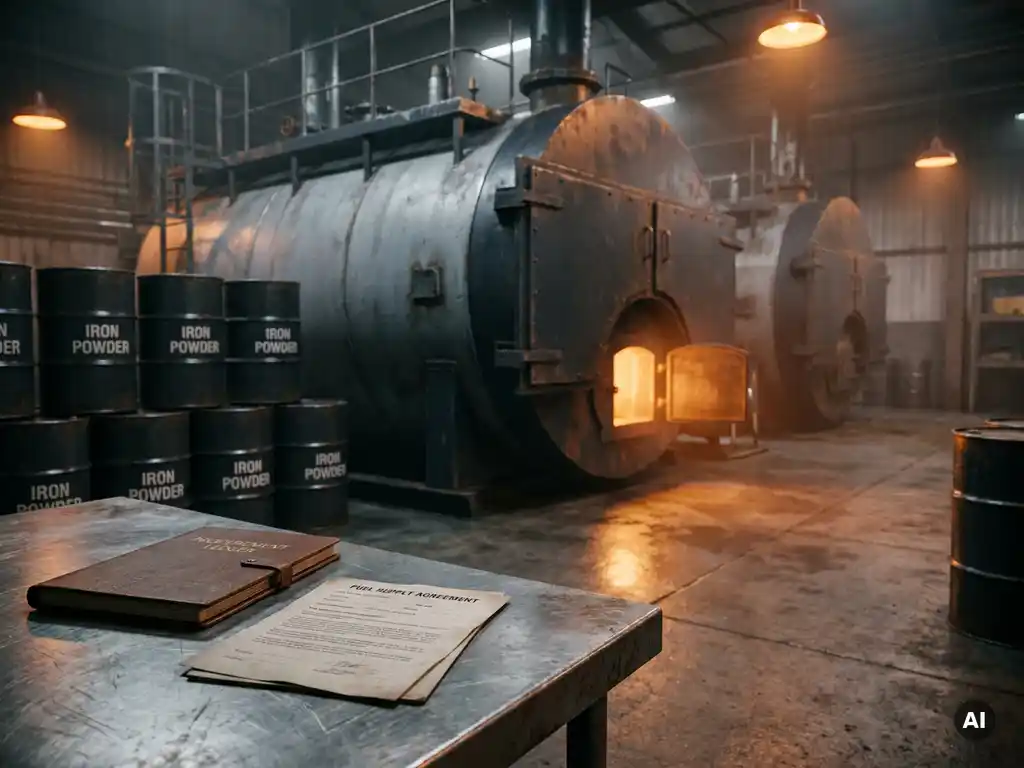
CAPEX (capital expenditure) and OPEX (operational expenditure) represent two fundamentally different ways of paying for energy infrastructure. CAPEX is the upfront investment to own an asset outright, while OPEX covers recurring costs to operate it, or to purchase energy as a service. For industrial companies evaluating clean energy transitions, understanding this split is not just an accounting exercise: it directly determines cash flow, risk exposure, and the speed at which decarbonization becomes financially viable.
The right balance depends on your company’s financial position, time horizon, and the specific technology you are adopting. The questions below unpack the most important dimensions of this decision for sustainability managers navigating the shift away from fossil fuels.
How does the CAPEX vs. OPEX split affect industrial energy budgets?
The CAPEX vs. OPEX split determines where costs appear in your budget, how they are taxed, and how they affect your balance sheet. A high-CAPEX approach concentrates spending upfront and creates a depreciable asset, while a high-OPEX approach spreads costs over time as operating expenses, preserving capital but reducing long-term ownership and control.
For industrial energy budgets, this distinction has real consequences. A company that owns its heat generation infrastructure outright carries the full investment risk but also captures the full value of the asset over its lifetime. A company that pays for heat as a service, through a long-term supply agreement or fuel contract, trades that ownership for predictability and lower initial outlay.
In practice, most industrial energy transitions involve both. The boiler system is a CAPEX item. The fuel supply is an OPEX item. Structuring these two elements well is what makes a clean energy project financially sustainable rather than just technically impressive. Sustainability managers should model both streams separately before committing to a technology pathway, because the CAPEX-to-OPEX ratio will shape every budget conversation for the life of the asset.
Why does the CAPEX/OPEX balance matter when switching from fossil fuels?
Switching from fossil fuels changes the cost structure of industrial heat production fundamentally. Fossil fuel systems typically carry low CAPEX and high, volatile OPEX: you pay relatively little for the boiler and a great deal for the fuel over time. Clean energy alternatives often invert this: higher upfront investment, but more predictable and potentially lower long-term operating costs.
This inversion is why the CAPEX/OPEX balance matters so much during the transition. Companies accustomed to expensing fuel costs as OPEX suddenly face a capital conversation that requires board approval, financing arrangements, and a multi-year payback analysis. At the same time, volatile energy prices and the EU Emissions Trading System (EU ETS) are steadily increasing the true cost of staying with fossil fuels, costs that show up in OPEX but are often underweighted in investment decisions.
Grid congestion adds another layer of complexity. For companies that might otherwise consider electrification, the inability to access sufficient grid capacity means the CAPEX investment in grid upgrades or on-site power infrastructure becomes prohibitive. Technologies that operate independently of the electricity grid, delivering reliable industrial heat without grid dependency, offer a different CAPEX/OPEX profile that sidesteps this bottleneck entirely. Security of supply becomes a financial argument, not just an operational one.
What is total cost of ownership and how does it compare to CAPEX alone?
Total cost of ownership (TCO) is the complete financial picture of an energy asset across its full operational life, including initial investment, fuel costs, maintenance, efficiency losses over time, and end-of-life considerations. CAPEX alone captures only the purchase price: TCO is the number that actually determines whether an investment creates or destroys value.
For industrial heat systems, the gap between CAPEX and TCO can be enormous. A natural gas boiler may have a lower purchase price than a clean alternative, but when you factor in fuel costs over 20 years, rising EU ETS carbon prices, and the regulatory risk of stranded assets, the TCO comparison often reverses. Conversely, a higher-CAPEX clean energy system with stable, long-term fuel pricing and high energy efficiency can deliver a significantly lower TCO.
Key components to include in any TCO analysis for industrial heat:
- Upfront system investment — the purchase and installation cost of the boiler or heat generation system
- Fuel costs — priced over the expected asset life, with realistic assumptions about price trajectories
- Energy efficiency — a system achieving up to 95% energy efficiency converts more input energy into usable heat, reducing fuel spend per unit of output
- Maintenance and operational costs — annual service, staffing, and unplanned repair costs
- Carbon costs — EU ETS allowances or equivalent regulatory costs on emissions
- Stranded asset risk — the probability that regulatory or market shifts will devalue the asset before end of life
Sustainability managers who present only CAPEX to their finance teams often face rejection. Presenting TCO alongside CAPEX reframes the conversation from “this costs more” to “this costs less over the horizon that matters.”
How do CAPEX and OPEX trade-offs differ across clean energy technologies?
Different clean energy technologies carry very different CAPEX/OPEX profiles, and the right choice for your facility depends on matching those profiles to your operational and financial circumstances. Electrification, hydrogen, and iron fuel technology each sit at different points on the spectrum.
Electrification
Full electrification of industrial heat typically involves significant CAPEX for new electrical infrastructure, process modifications, and, in many cases, grid connection upgrades. Where grid congestion is a barrier, the effective CAPEX can become prohibitive. OPEX is then tied to electricity prices, which remain volatile and subject to grid tariff changes. For high-temperature industrial processes, electrification also faces technical limitations that add further cost.
Hydrogen
Hydrogen as a replacement for natural gas requires either retrofitting existing burners or installing new hydrogen-compatible systems, a moderate-to-high CAPEX depending on the application. OPEX is dominated by hydrogen fuel cost, which remains high and supply-constrained in most European markets. Infrastructure for hydrogen delivery and storage adds further capital requirements, and the decarbonization of industrial heat via hydrogen depends heavily on the availability of low-carbon hydrogen at scale.
Iron Fuel Technology
Iron Fuel Technology presents a distinct profile. The boiler system investment is a CAPEX item, while iron fuel itself, priced at 140 €/tonne, forms the OPEX fuel cost. Because iron fuel works in a circular cycle, burning to produce heat and regenerating from the resulting iron oxide, the fuel supply is predictable and not subject to the same commodity volatility as natural gas or hydrogen. The technology is also designed to integrate with existing industrial boiler setups, which can reduce the CAPEX associated with process modifications compared to more disruptive alternatives.
When should an industrial company prioritise lower CAPEX over lower OPEX?
An industrial company should prioritise lower CAPEX when capital is constrained, when the investment horizon is uncertain, or when the technology is still maturing and locking in a large upfront commitment carries meaningful risk. Lower CAPEX preserves financial flexibility and reduces the consequences of getting the technology choice wrong.
Several conditions point towards prioritising lower initial investment:
- Short or uncertain operational horizon — if your facility’s future is unclear over the next decade, a lower-CAPEX approach limits stranded asset exposure
- Leased premises — asset recovery from a leased property is operationally complex, and the economics of removing installed systems can destroy a significant share of asset value
- High cost of capital — when borrowing costs are elevated, the financial advantage of owning an asset diminishes; the hurdle rate for ownership rises with the cost of debt
- Regulatory uncertainty — in sectors where subsidy frameworks or carbon pricing mechanisms are still evolving, lower upfront commitment reduces policy risk
- Low load factor — systems that run at low utilisation rates generate less value per euro of CAPEX invested; the case for ownership weakens as utilisation falls
That said, prioritising lower CAPEX is not always the right move. For companies with stable, long-term operations, strong balance sheets, and clear decarbonization mandates, particularly under EU ETS pressure, the higher total cost of a low-CAPEX, high-OPEX structure may outweigh the short-term financial comfort it provides.
What financing structures help manage CAPEX in clean energy projects?
Several financing structures exist to help industrial companies manage the upfront capital burden of clean energy investments without sacrificing the long-term benefits of ownership or decarbonization progress. The right structure depends on your company’s tax position, balance sheet capacity, and appetite for operational responsibility.
Common approaches include:
- Project finance and green loans — debt secured against the project’s future cash flows rather than the company’s general balance sheet, reducing the impact on corporate leverage ratios
- EU Innovation Fund grants — non-repayable public funding for breakthrough clean energy technologies, which can meaningfully offset CAPEX for qualifying projects
- VEKI (Subsidieregeling Verduurzaming Industrie) — a Dutch subsidy instrument specifically designed to support industrial decarbonization investments, helping reduce the effective CAPEX for eligible companies
- Long-term fuel supply agreements — by separating the boiler investment from the fuel cost and locking in predictable OPEX pricing, companies can make the CAPEX case more straightforward to finance
- Leasing and asset financing — spreading the boiler investment over time through structured lease arrangements, converting CAPEX into a recurring OPEX-like obligation while retaining operational control
The combination of grant funding and long-term supply agreements is particularly relevant for industrial heat decarbonization. When a significant portion of the CAPEX is offset by public funding and the fuel cost is contractually fixed, the financial model becomes considerably more attractive to both internal finance teams and external lenders.
How Iron Fuel Technology helps you navigate the CAPEX vs. OPEX decision
For sustainability managers evaluating the decarbonization of industrial heat, the CAPEX vs. OPEX question is not abstract: it determines whether a project gets approved or shelved. Our Iron Fuel Boiler system is designed with this financial reality in mind, offering a structure that makes the business case as clear as possible:
- Defined CAPEX — the Iron Fuel Boiler system investment is set at 0.5 M€/MWth, giving finance teams a concrete figure to model against alternatives
- Predictable OPEX — iron fuel is priced at 140 €/tonne, providing stable fuel cost visibility that fossil fuel contracts simply cannot match given commodity price volatility
- Up to 95% energy efficiency — high thermal efficiency means more usable heat per euro of fuel spend, improving the OPEX economics over the asset’s lifetime
- Near-zero direct CO₂ emissions — with only 10 kg of CO₂ per MWhth (from a pilot safety flame), the technology dramatically reduces EU ETS carbon cost exposure
- Integration with existing infrastructure — the boiler is designed to complement existing setups, reducing the additional CAPEX typically required for process modifications
- Grant eligibility — projects using Iron Fuel Technology may qualify for instruments such as VEKI and the EU Innovation Fund, reducing effective CAPEX
We work with sustainability managers in the Food & Beverage, Specialty Chemicals, and Pulp & Paper sectors to build the financial case for clean heat, from technology briefings through to investment modelling. If you are ready to explore how Iron Fuel Technology fits your decarbonization roadmap and budget structure, get in touch with our team.
Frequently Asked Questions
How do we build a compelling internal business case for a clean energy CAPEX investment?
The most effective approach is to present a side-by-side comparison of TCO rather than upfront cost alone, factoring in rising EU ETS carbon prices, fuel price volatility, and stranded asset risk on your existing fossil fuel infrastructure. Pair this with a sensitivity analysis that stress-tests key assumptions — fuel price trajectories, carbon allowance costs, and discount rates — so your finance team can see how the investment holds up under different scenarios. Securing even partial grant funding (e.g., VEKI or the EU Innovation Fund) before the internal approval meeting can also shift the conversation significantly, as it lowers the effective CAPEX the company needs to commit.
What are the most common mistakes companies make when evaluating CAPEX vs. OPEX for energy projects?
The most frequent mistake is comparing technologies on purchase price alone, without accounting for fuel costs, maintenance, efficiency degradation, and carbon costs over the full asset life. A second common error is underestimating the hidden CAPEX in seemingly low-CAPEX solutions — for example, electrification projects that require costly grid upgrades or hydrogen projects that require new storage and delivery infrastructure. Finally, many companies fail to model regulatory risk: assets that appear financially sound today can become stranded if carbon pricing mechanisms tighten faster than anticipated.
How should we handle the CAPEX vs. OPEX decision if our facility operates on a leased site?
On a leased site, the calculus shifts firmly toward minimising CAPEX and maximising operational flexibility, since recovering the value of installed assets at lease end is operationally complex and often destroys a significant portion of the asset’s residual value. In this context, leasing or asset financing arrangements that convert boiler CAPEX into a recurring, OPEX-like obligation are worth exploring, as they align cost recovery with the lease term. It is also worth negotiating lease terms upfront to include provisions for clean energy infrastructure, which can make a moderate CAPEX investment more defensible.
How does EU ETS carbon pricing affect the long-term OPEX comparison between fossil fuels and clean alternatives?
EU ETS carbon allowance prices directly inflate the OPEX of any fossil fuel-based system, and this effect compounds over time as free allowances are phased out and carbon prices trend upward. For a natural gas boiler, every tonne of CO₂ emitted carries an increasing cost that must be modelled into the OPEX stream — costs that clean alternatives with near-zero direct emissions largely avoid. Companies that underweight EU ETS trajectory in their OPEX modelling consistently underestimate the true cost of staying with fossil fuels, which distorts the CAPEX vs. OPEX comparison in favour of the status quo.
At what scale or heat output does a clean energy CAPEX investment typically start to make financial sense for an industrial facility?
There is no universal threshold, but in practice, the financial case for clean energy CAPEX strengthens significantly at higher load factors and longer operational horizons — facilities running continuous or near-continuous heat demand get the most value per euro of CAPEX invested. For industrial heat specifically, sites consuming several MWth on a consistent basis tend to reach payback periods that satisfy internal hurdle rates, especially when grant funding offsets a portion of upfront costs. A detailed TCO model calibrated to your specific heat demand profile, fuel consumption, and carbon cost exposure is the most reliable way to identify your facility’s breakeven point.
Can a phased investment approach help manage CAPEX risk during a clean energy transition?
Yes — a phased approach is one of the most practical ways to manage CAPEX risk, particularly when technology maturity or regulatory frameworks are still evolving. Starting with a pilot or partial deployment allows your team to validate performance data, refine TCO assumptions, and build internal confidence before committing to full-scale investment. It also creates a natural checkpoint to reassess financing conditions, grant availability, and carbon pricing developments before the next phase of CAPEX is committed.
How do long-term fuel supply agreements affect the financing of a clean energy boiler investment?
Long-term fuel supply agreements with fixed or indexed pricing serve a dual purpose in project financing: they reduce OPEX uncertainty, which makes the project’s cash flow profile more predictable, and they provide lenders and internal finance teams with the visibility needed to underwrite the CAPEX with greater confidence. For technologies like Iron Fuel Technology, where fuel is priced transparently and operates in a circular cycle outside commodity markets, a supply agreement effectively de-risks the OPEX side of the model — making the overall investment significantly easier to finance through green loans or project finance structures.
Related Articles
- How do volatile energy prices affect the business case for clean heat?
- How do industrial companies reduce Scope 1 emissions from heat generation?
- What industries can switch to carbon-free heat generation now?
- How does renewable energy create jobs?
- Is it worth investing in renewable energy for your home?
This content was generated with the help of AI and it may contain mistakes