

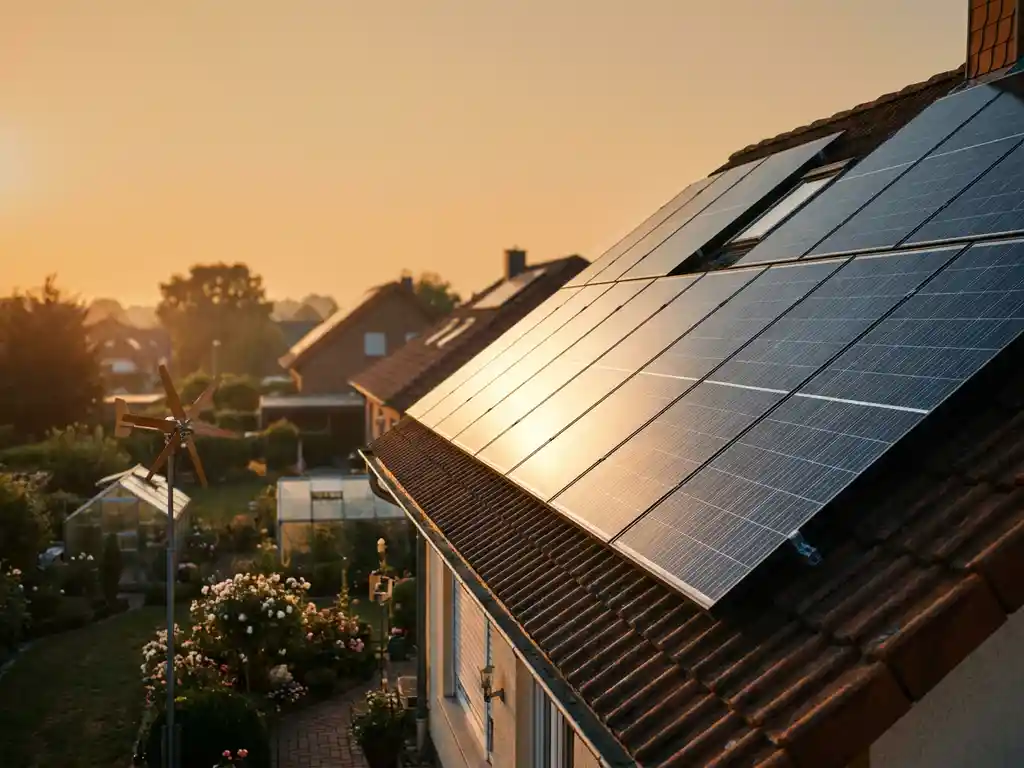
For industrial companies, investing in renewable energy means replacing fossil fuel-based heat and power with low-carbon alternatives that can meet the same operational demands. It is not just about solar panels or wind turbines. For energy-intensive industries, the real question is how to decarbonise the high-temperature heat that drives production—and that challenge is far more complex than it sounds.
Sticking with fossil fuels is quietly increasing your regulatory and financial exposure
Industrial heat accounts for roughly two-thirds of all energy used in industry, and around 80% of that heat still comes from burning fossil fuels. As the EU Emissions Trading System tightens and carbon prices rise, every tonne of CO₂ from your boilers costs more than it did last year. That exposure compounds over time. Sustainability managers who delay the transition are not just missing an emissions target—they are locking in cost structures that become harder to justify to boards, customers, and regulators. The practical next step is to start evaluating the economics of alternative heat technologies now, before carbon costs and compliance pressure force a rushed decision.
Waiting for the “perfect” clean energy solution is slowing down your decarbonisation progress
Many industrial operators are stuck in a holding pattern, waiting for hydrogen infrastructure to mature or for electrification costs to fall. Meanwhile, emissions targets do not pause. The cost of inaction is real: delayed Scope 1 reductions, continued fossil fuel dependency, and a growing gap between your net-zero commitments and your actual operations. A more productive approach is to assess what is available and deployable today—technologies that integrate with existing infrastructure and deliver measurable emissions reductions without requiring a complete overhaul of your facility.
What does investing in renewable energy mean for industrial companies?
For industrial companies, investing in renewable energy means adopting low-carbon energy carriers and systems that replace fossil fuels in heat-intensive production processes. It covers a range of technologies—from electrification and hydrogen to newer solutions like iron fuel—each suited to different operational contexts, temperature requirements, and infrastructure realities.
Unlike commercial or residential renewable energy, which is largely about electricity generation, industrial renewable energy is primarily about heat. High-temperature processes in sectors such as food and beverage, specialty chemicals, and pulp and paper require consistent, reliable heat that often exceeds what current electrification can deliver cost-effectively.
Investing in this space means evaluating not just the technology itself, but the full picture: capital costs, fuel supply reliability, integration with existing equipment, and long-term carbon-reduction potential. The goal is not simply to install something green—it is to maintain or improve operational performance while cutting Scope 1 emissions.
Why is decarbonising industrial heat so difficult?
Decarbonising industrial heat is difficult because most clean energy alternatives struggle to match the temperature, reliability, and cost profile of fossil fuels at industrial scale. High-temperature processes often require heat above 500°C, and the infrastructure to deliver that cleanly—whether through green hydrogen or electrification—is either immature, expensive, or unavailable in many locations.
Electrification works well for low-temperature applications, but it becomes increasingly costly and technically complex as temperature requirements rise. Grid-capacity constraints add another barrier, particularly for large manufacturing sites with high and variable energy demand.
Hydrogen is promising in theory, but the supply chain for green or low-carbon hydrogen is still developing. Many industrial sites are not connected to hydrogen infrastructure, and retrofitting for hydrogen combustion involves significant capital investment and safety considerations.
Beyond the technical barriers, there is a financial one. Fossil fuels remain relatively cheap, and the cost difference between conventional energy and clean alternatives is still a real obstacle for many companies—especially those operating on tight margins in competitive markets.
What are the main clean energy alternatives to fossil fuels for industrial heat?
The main clean energy alternatives for industrial heat are electrification, green hydrogen, biomass, and emerging solid-state energy carriers such as iron fuel. Each has different strengths depending on the required temperature range, available infrastructure, and the specific industrial process involved.
- Electrification: Suitable for lower-temperature processes and increasingly viable with heat pumps. Grid dependency and high upfront costs limit its application in high-temperature settings.
- Green hydrogen: Can reach very high temperatures and produce no direct CO₂ when burned. The main barriers are supply chain immaturity, storage complexity, and cost.
- Biomass: A more established option, but its sustainability credentials depend heavily on sourcing, and it still produces CO₂ during combustion.
- Iron fuel: A circular, solid-state energy carrier that burns to produce high-temperature heat with zero direct CO₂ emissions. Iron oxide—the only combustion by-product—is regenerated using hydrogen and reused, completing a closed cycle.
No single solution fits every industrial context. The right choice depends on your existing infrastructure, the temperature your processes require, your access to clean energy inputs, and the timeline you are working toward. Many companies will end up using a combination of these technologies rather than a single replacement for fossil fuels.
You can explore the full range of clean heat solutions for industrial processes to understand which approach fits your operational profile.
How does iron fuel technology work as an industrial energy carrier?
Iron fuel technology works by burning fine iron powder to produce high-temperature heat, then collecting the iron oxide by-product and regenerating it back into iron fuel using hydrogen. The process is circular: iron burns, produces heat and rust, and the rust is converted back to iron powder for reuse—with zero direct CO₂ emissions at the point of combustion.
The combustion process generates a flame of up to 2,000°C, making it suitable for demanding industrial heat applications. The Iron Fuel Boiler achieves an energy efficiency of up to 95% and produces only 10 kg of CO₂ per megawatt-hour of thermal energy—a figure attributable solely to the pilot safety flame, not the iron combustion itself. NOx emissions are below 5 mg/MJ, which is among the lowest of any fuel.
The four stages of the technology work as follows:
- Storage and transport: Iron powder is stored and transported as a safe, solid-state fuel to boiler locations.
- Combustion: Iron fuel burns in the boiler, generating heat for steam, hot water, or hot air production.
- Collection: Iron oxide—the combustion by-product—is collected from the boiler and transported to a production facility.
- Regeneration: Iron oxide is converted back into iron fuel using low-carbon hydrogen, completing the closed cycle.
The boiler system is designed to integrate with existing industrial infrastructure, which means companies do not need to replace their entire heating setup to start using iron fuel. It functions as a complement to existing fossil fuel boilers, allowing for a phased transition rather than a complete overhaul.
To understand the full technical picture, the Iron Fuel Technology overview covers the science and system design in more detail.
Which industries benefit most from switching to iron fuel?
Industries that rely on high-temperature heat for continuous production processes benefit most from switching to iron fuel. This includes food and beverage manufacturing, specialty chemicals, and pulp and paper—sectors where heat is central to operations, fossil fuel dependency is high, and full electrification is often not a practical near-term option.
In food and beverage production, steam is used throughout the process—from cooking and sterilisation to drying and cleaning. These applications require reliable, consistent heat at temperatures that iron fuel can match directly, without changing the end process.
Specialty chemicals manufacturing often involves precise, high-temperature reactions where the energy source must be controllable and consistent. The ability to integrate iron fuel alongside existing boiler systems makes the transition less disruptive than switching to a fundamentally different energy infrastructure.
Pulp and paper is one of the most energy-intensive industries in Europe, with large boiler systems running continuously. The scale of heat demand in this sector makes the economics of iron fuel particularly relevant, especially as carbon costs on fossil fuel consumption continue to rise.
Is investing in renewable industrial heat technology financially viable?
Investing in renewable industrial heat technology is financially viable for many companies, particularly when the full cost picture is considered—including carbon pricing, energy price volatility, and the long-term cost of regulatory non-compliance. The upfront capital requirement is real, but it needs to be weighed against the ongoing cost of fossil fuel dependency.
For iron fuel specifically, the capital investment for a boiler system is around €0.5 million per megawatt thermal. Iron fuel is priced at €140 per tonne, and annual operations and maintenance costs run at approximately 2.5% of total system investment. These figures give sustainability managers and finance teams a clear set of inputs for building a business case.
Cost competitiveness is a genuine consideration. The gap between fossil fuels and cleaner alternatives has historically been a barrier. Technologies designed with cost parity in mind—and priced to align with fossil fuel benchmarks—change that calculation meaningfully.
Beyond the direct financials, there is growing value in early adoption. Companies that begin the transition now are better positioned to meet tightening regulatory requirements, protect relationships with customers who have their own supply chain sustainability commitments, and avoid stranded-asset risk as fossil fuel infrastructure faces increasing scrutiny.
The financial case is strongest when renewable heat technology integrates with existing infrastructure rather than replacing it entirely. A phased approach—starting with a complementary system alongside existing boilers—reduces upfront exposure while delivering measurable emissions reductions from day one.
How RIFT helps with industrial heat decarbonisation
We develop and deploy Iron Fuel Technology as a practical, high-efficiency solution for companies that need to cut Scope 1 emissions from industrial heat without disrupting operations. Here is what that means in practice:
- Drop-in compatible: Our Iron Fuel Boiler integrates with existing boiler infrastructure—no full facility overhaul required.
- Zero direct CO₂: Iron fuel combustion produces no carbon dioxide, with only iron oxide as a by-product.
- Up to 95% energy efficiency: High thermal performance that competes directly with conventional fossil fuel systems.
- Long-term fuel supply: We offer supply agreements that give industrial operators the certainty they need to plan ahead.
- Cost-competitive pricing: Iron fuel is priced to align with fossil fuel economics, reducing the financial barrier to switching.
We are already working with industrial partners and have signed the first commercial contract worldwide for Iron Fuel Technology. If you are evaluating options for decarbonising your heat processes, we would be glad to talk through what is possible for your site. Get in touch with our team to start the conversation.
Related Articles
- What are examples of clean energy?
- What is Europe's approach to the energy transition?
- What industries are most affected by the shift to renewable energy?
- Which country is closest to net zero?
- What are 20 examples of renewable resources?
This content was generated with the help of AI and it may contain mistakes