

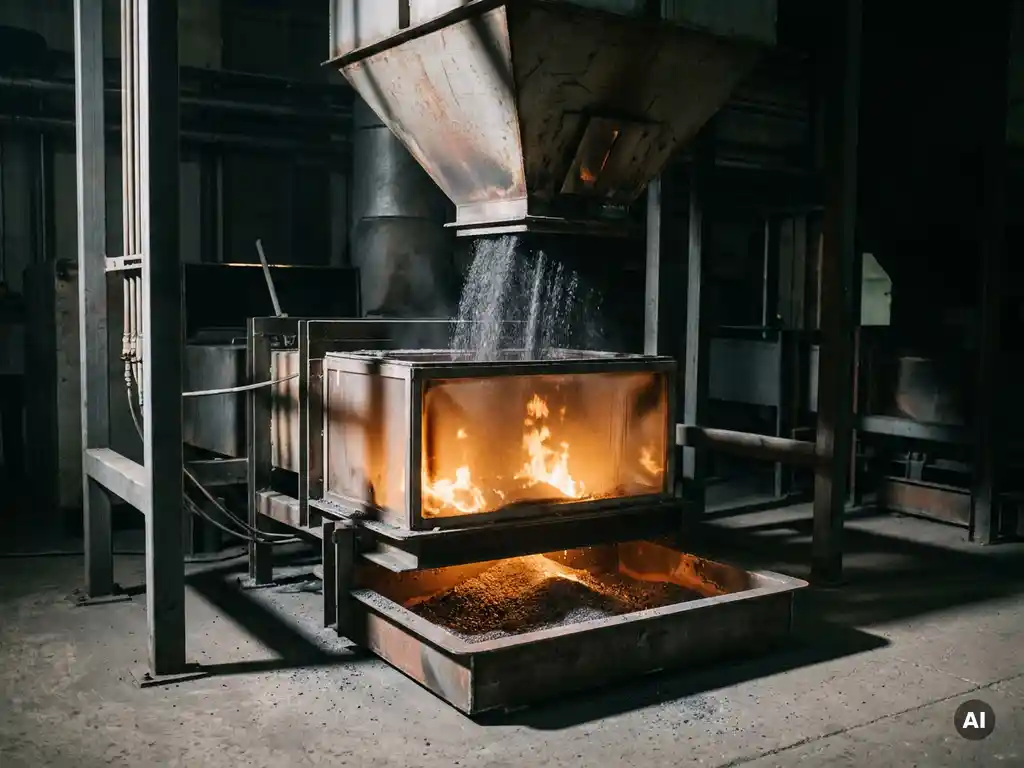
A circular energy carrier is a fuel that can be used, regenerated, and reused repeatedly without being consumed or producing carbon dioxide emissions. Unlike fossil fuels, which are burned once and release CO₂ permanently into the atmosphere, a circular energy carrier completes a closed loop: it releases energy, leaves behind a recoverable byproduct, and is then restored to its original state using renewable inputs. Iron fuel is the clearest example of this principle in action, and it is already being deployed in real industrial settings.
For sustainability managers in energy-intensive industries, this distinction matters enormously. Circular energy carriers offer a path to deep decarbonization of industrial heat without abandoning the reliability and energy density that fossil fuels have long provided. The sections below walk through exactly how this works, from the chemistry of combustion to the industries best positioned to benefit.
How does a circular energy carrier differ from a fossil fuel?
A circular energy carrier differs from a fossil fuel in one fundamental way: it does not release CO₂ when it burns, and its combustion byproduct can be fully recovered and converted back into usable fuel. Fossil fuels are a one-way process. Carbon stored underground over millions of years is released as CO₂ in a single combustion event, with no way to reverse or recapture it at scale.
A circular energy carrier, by contrast, operates like a rechargeable battery. Energy is stored in the carrier’s chemical bonds, released as heat during combustion, and the resulting byproduct is then “recharged” using a renewable energy source. No carbon enters or exits the cycle, which means no Scope 1 CO₂ emissions from the heat generation process itself.
This also has practical implications for energy security and cost stability. Fossil fuels are subject to volatile energy prices driven by geopolitical events and supply constraints. A circular carrier sourced and regenerated domestically reduces exposure to those price swings, which is increasingly relevant as the EU ETS places a rising carbon price on fossil fuel combustion.
What makes iron fuel a circular energy carrier?
Iron fuel is a circular energy carrier because it completes a fully closed material loop: iron powder burns to produce heat, leaves behind iron oxide, and that iron oxide is converted back into iron powder using hydrogen. No carbon is involved at any stage, and the iron itself is never lost or consumed permanently.
The cycle works as follows:
- Iron powder burns in the Iron Fuel Boiler, releasing high-temperature heat for industrial processes.
- Iron oxide remains as the only solid combustion byproduct, collected after the burn.
- Iron oxide is regenerated at an Iron Fuel Production facility, where low-carbon hydrogen reduces it back to metallic iron powder.
- Iron powder is transported back to the industrial site in standard containers, ready to be burned again.
This is what makes iron fuel genuinely circular rather than just low-carbon. The EU’s target of having 24% of materials circular by 2030, supported by the forthcoming Circular Economy Act, reflects exactly this kind of thinking: using and reusing materials efficiently rather than extracting and discarding them. Iron fuel fits that framework precisely.
One important nuance: the full-chain CO₂ reduction of the system depends on the carbon intensity of the hydrogen used in regeneration. Using low-carbon hydrogen as defined by EU greenhouse gas methodology, the full cycle delivers a reduction of 0.55 tonnes of CO₂ equivalent per tonne of iron fuel. The production process itself emits zero CO₂ and zero NOₓ.
How does iron fuel actually burn to produce industrial heat?
Iron fuel burns by reacting fine iron powder with oxygen in ambient air, producing a high-temperature flame that can reach up to 2,000°C. This combustion generates heat that can be converted into steam, hot water, or hot air for industrial processes. The only solid output is iron oxide; no CO₂ is released during combustion itself.
The Iron Fuel Boiler is the system that makes this possible at industrial scale. It is purpose-engineered to handle iron powder combustion safely and efficiently, and it integrates with existing industrial infrastructure without requiring a complete overhaul of current boiler setups. This makes it a practical option for companies that need to decarbonize heat without halting operations or making prohibitive capital investments all at once.
The boiler achieves up to 95% energy efficiency, which compares favourably with many conventional fossil fuel systems. The only CO₂ output from the boiler comes from a pilot safety flame, resulting in just 10 kg of CO₂ per megawatt-hour of thermal energy. RIFT also claims that the Iron Fuel Boiler achieves the lowest NOₓ emissions of any fuel, at under 5 mg/MJ, though this is RIFT’s own claim based on demo-scale results at Technology Readiness Level 7, rather than an independently verified external benchmark.
These performance figures come from a working demonstration facility in Helmond, the Netherlands, operating at megawatt-industrial scale. That real-world validation is what separates iron fuel from theoretical decarbonization concepts.
How is spent iron oxide converted back into iron fuel?
Spent iron oxide is converted back into iron fuel through a process called reduction, where hydrogen strips the oxygen from the iron oxide molecules, restoring them to metallic iron powder. This takes place at a dedicated Iron Fuel Production facility, and the process emits zero CO₂ and zero NOₓ.
The production system operates at 86% energy efficiency, meaning the vast majority of the hydrogen’s energy input is preserved in the regenerated iron powder. The iron fuel is then transported back to industrial customers in standard shipping containers: no cryogenic storage, no high-pressure pipelines, and no specialized logistics infrastructure required. This is a meaningful practical advantage over hydrogen, which demands significant investment in transport and storage infrastructure.
The regenerated iron powder is priced at 140 euros per tonne, and the production system investment runs at approximately 2.7 million euros per tonne per hour of capacity at a scale of 186,000 tonnes per year. These are demo-scale figures from TRL 7 operations, and commercial scaling may affect them, but they provide a concrete baseline for financial planning.
The regeneration step is where the quality of the hydrogen input matters most. Using low-carbon hydrogen, as defined by EU greenhouse gas methodology, is what enables the full system to deliver its claimed CO₂ reduction. The circularity of the process depends directly on keeping that input clean.
Which industries can use circular energy carriers for heat?
Circular energy carriers like iron fuel are best suited to industries that require high-temperature process heat, operate large boiler systems, and face barriers to electrification or hydrogen adoption. The most immediately relevant sectors are food and beverage, specialty chemicals, and pulp and paper.
These industries share several characteristics that make iron fuel a strong fit:
- High and continuous heat demand: They rely on steam or hot process fluids at temperatures that are difficult or expensive to achieve with electric systems.
- Grid constraints: Grid congestion is a growing problem across Europe. Full electrification of industrial heat would require significant grid upgrades that are neither fast nor guaranteed, making grid-independent solutions like iron fuel particularly attractive.
- Infrastructure compatibility: Iron fuel boilers are designed to complement existing fossil fuel boilers, reducing the capital disruption of switching.
- Regulatory pressure: Companies in these sectors face rising costs under the EU ETS and internal net-zero commitments that require credible Scope 1 emission reductions, not just offsets.
Beyond these initial target sectors, any energy-intensive industrial process that currently uses natural gas or other fossil fuels for heat generation is a candidate for iron fuel. The decarbonization of industrial heat is one of the most pressing challenges in reaching climate targets, and circular energy carriers address it directly.
How does a circular energy carrier compare to hydrogen or electrification?
Compared to hydrogen and electrification, a circular energy carrier like iron fuel offers a distinct combination of high energy density, infrastructure compatibility, and independence from the electricity grid. Each approach has genuine strengths, but they serve different operational contexts.
Iron fuel versus hydrogen
Hydrogen can decarbonize industrial heat, but it requires new pipelines, high-pressure or cryogenic storage, and significant upfront infrastructure investment. It is also subject to volatile supply dynamics and safety requirements that complicate integration into existing sites. Iron fuel, by contrast, is transported in standard containers at ambient conditions, uses existing logistics networks, and does not require grid connection for heat delivery. The replacement of natural gas with iron fuel is therefore more operationally straightforward for many sites.
Iron fuel versus electrification
Electrification is effective for low-temperature heat but becomes increasingly costly and technically complex at the high temperatures required by many industrial processes. It also depends entirely on grid availability and capacity, a real constraint given the growing problem of grid congestion across European industrial regions. Iron fuel delivers high-temperature heat without any grid dependency, making it a practical solution where electrification stalls. The CAPEX versus OPEX trade-off also differs: the Iron Fuel Boiler system investment is 0.5 million euros per megawatt thermal, with ongoing fuel costs at a predictable rate, rather than the large and uncertain grid infrastructure costs that full electrification can entail.
None of these technologies is universally superior. The right choice depends on a site’s temperature requirements, existing infrastructure, grid access, and decarbonization timeline. But for companies where electrification and hydrogen face real barriers, iron fuel offers a credible, commercially ready alternative that supports security of supply and delivers measurable Scope 1 reductions.
How RIFT helps with decarbonizing industrial heat
We develop and deliver industrial Iron Fuel Boilers that replace fossil fuel-fired heat generation with a fully circular, carbon-free alternative. Our approach is designed to be practical for sustainability managers who need results without disrupting operations or betting everything on infrastructure that may not arrive on time.
Here is what working with us looks like in practice:
- Drop-in compatibility: Our Iron Fuel Boiler is designed to integrate with existing industrial boiler setups, so you do not need to rebuild your entire heat system from scratch.
- Zero direct CO₂ during combustion: The boiler produces just 10 kg of CO₂ per MWhth, solely from a pilot safety flame, with up to 95% energy efficiency.
- No grid dependency: Iron fuel combustion is entirely independent of the electricity grid, removing exposure to grid congestion and volatile electricity prices.
- Long-term fuel supply: We provide iron fuel under long-term supply agreements, giving you cost predictability and security of supply.
- Proven at scale: Our technology is demonstrated at TRL 7 in the Netherlands, and the first commercial contract has already been signed with Kingspan Unidek.
Our Iron Fuel Technology is backed by €113.8 million in funding, including an EU Innovation Fund grant, which means we have the resources to scale from pilot to commercial reality. If you are evaluating how to decarbonize your industrial heat processes, we would welcome the conversation. Get in touch with our team to explore what Iron Fuel Technology could mean for your operations.
Frequently Asked Questions
How long does it take to transition from a fossil fuel boiler to an Iron Fuel Boiler?
The timeline depends on your site’s existing infrastructure, but because the Iron Fuel Boiler is designed for drop-in compatibility with conventional boiler setups, the transition is significantly faster than switching to electrification or hydrogen, which often require extensive grid or pipeline upgrades. A phased approach is also possible, running iron fuel alongside existing fossil fuel systems while gradually shifting heat generation, which minimizes operational disruption. Engaging with RIFT early in the planning process will give you the most accurate project timeline based on your specific site conditions.
What happens to the iron oxide between collection and regeneration — how is it stored and transported?
Iron oxide is a chemically stable, non-hazardous solid that can be stored and transported at ambient temperature and pressure using standard industrial containers — no cryogenic equipment, pressure vessels, or specialist handling is required. This makes the logistics of the spent byproduct straightforward and cost-effective compared to the handling demands of liquid or gaseous fuels. The iron oxide is then shipped to an Iron Fuel Production facility for hydrogen-based reduction back into iron powder, completing the closed material loop.
What are the biggest risks or uncertainties to be aware of before committing to iron fuel?
The most important factor to assess is the carbon intensity of the hydrogen used in the regeneration step, since the full-chain CO₂ reduction of the system depends directly on using low-carbon hydrogen as defined by EU greenhouse gas methodology. Additionally, the cost and performance figures currently available are based on TRL 7 demo-scale operations, so commercial scaling may affect pricing and efficiency metrics — these should be factored into long-term financial modelling. On the infrastructure side, companies should also evaluate their site’s logistics setup to confirm compatibility with containerised iron powder delivery and oxide collection.
How does iron fuel fit into Scope 1 emissions reporting, and will it be recognised under EU regulatory frameworks?
Because iron fuel combustion produces no CO₂ at the point of use (only 10 kg of CO₂ per MWhth from a pilot safety flame), it directly reduces a facility’s Scope 1 emissions, which are the category most scrutinised under the EU Emissions Trading System and internal net-zero commitments. The system’s full-chain CO₂ reduction methodology aligns with EU greenhouse gas accounting standards, particularly when low-carbon hydrogen is used in regeneration. Sustainability managers should work with their carbon accounting teams to document the full lifecycle emissions profile, as regulators and auditors will increasingly look beyond combustion-point figures to full supply chain carbon intensity.
Is iron fuel suitable for sites that need heat at varying temperatures and load levels, or is it best for constant baseload demand?
Iron fuel is well-suited to continuous, high-demand industrial heat applications, which is where it delivers the strongest economic and operational case. That said, the Iron Fuel Boiler system can be configured alongside existing boiler infrastructure to handle load variability, using iron fuel for baseload heat and retaining backup capacity for peak or fluctuating demand during transition periods. Sites with highly intermittent or low-temperature heat needs should discuss their specific load profile with RIFT to determine the optimal system configuration.
What does the iron fuel supply chain look like in practice, and how resilient is it to disruption?
Iron fuel is supplied under long-term agreements, with iron powder delivered in standard shipping containers and spent iron oxide collected and returned for regeneration — a logistics model that uses existing road and freight infrastructure rather than dedicated pipelines or specialist networks. Because iron powder is stable and non-pressurised, it is far less vulnerable to the supply chain disruptions that affect gaseous fuels dependent on pipeline availability or cryogenic transport. Domestic sourcing and regeneration within the EU also reduces geopolitical exposure, a growing concern for energy-intensive industries following recent fossil fuel supply volatility.
How should sustainability managers build the internal business case for iron fuel adoption?
The strongest internal business case typically combines three elements: the rising cost of carbon under the EU ETS (which makes inaction increasingly expensive), the grid congestion risk that makes full electrification uncertain within short decarbonization timelines, and the capital efficiency of integrating iron fuel into existing boiler infrastructure rather than rebuilding heat systems from scratch. Using RIFT’s published figures — 0.5 million euros per MWth for the boiler system and 140 euros per tonne of iron fuel — alongside your site’s current fossil fuel costs and carbon liability, you can build a credible total cost of ownership comparison. Bringing in your finance, operations, and sustainability teams early ensures the business case addresses both the decarbonization mandate and the operational continuity requirements that will matter most to decision-makers.
Related Articles
- How does VEKI support the business case for clean industrial heat investments?
- What does EIA stand for?
- How often does the EIA release reports?
- What exactly is clean energy?
- What countries use the most renewables?
This content was generated with the help of AI and it may contain mistakes