

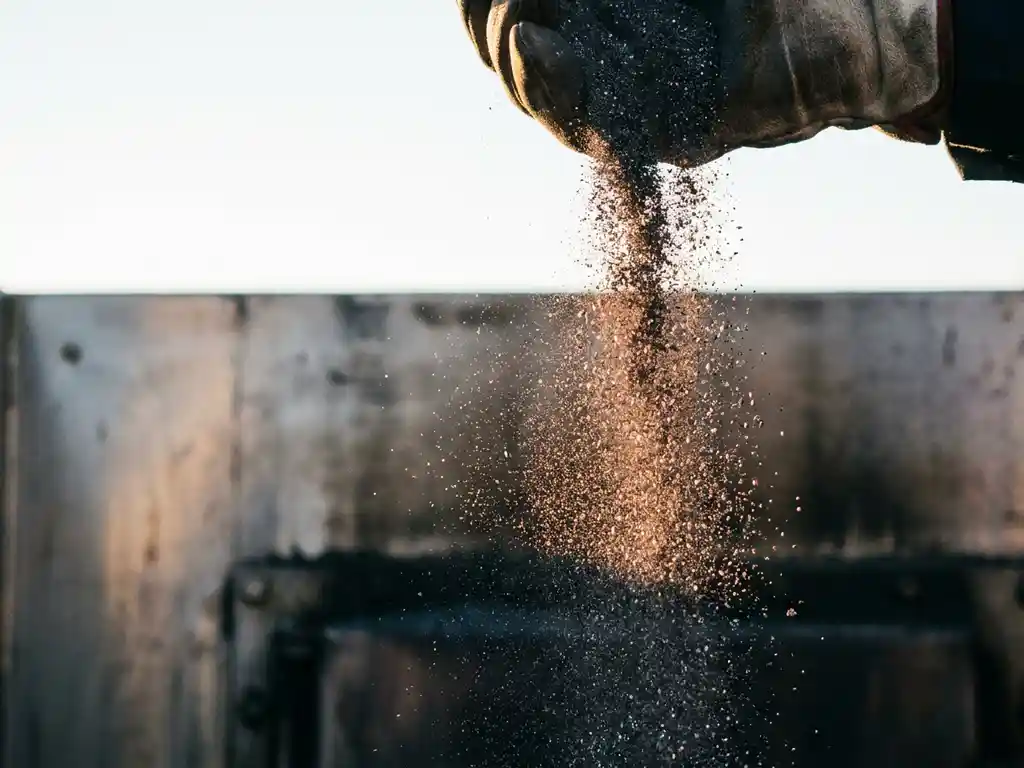
Clean energy is energy generated with little to no greenhouse gas emissions or harmful pollutants during production or use. It stands in contrast to fossil fuels, which release carbon dioxide and other emissions when burned. The term covers a wide range of technologies and fuels, from solar panels and wind turbines to hydrogen and, increasingly, innovative carriers like iron fuel. The sections below unpack the most common questions people have about clean energy, including why it is harder to apply to industrial heat than most people assume.
What counts as clean energy — and what doesn’t?
Clean energy is any energy source that produces no or negligible harmful emissions during use. This includes solar, wind, hydropower, geothermal, nuclear, and emerging technologies such as green hydrogen and iron fuel. Fossil fuels — coal, oil, and natural gas — do not qualify, because burning them releases CO₂ and other pollutants that drive climate change and air quality problems.
The boundary is not always sharp. Natural gas is sometimes called a “cleaner” fuel because it emits less CO₂ than coal, but it still emits significant amounts and is therefore not considered clean. Similarly, biomass can be low-carbon when managed responsibly, but it is not always emission-free at the point of combustion. The defining question is straightforward: does using this energy source release harmful emissions into the atmosphere? If the answer is yes, it does not qualify as clean.
How does clean energy actually produce power or heat?
Clean energy sources produce power or heat by converting naturally occurring forces or chemical reactions into usable energy, without combusting carbon-based fuels. Solar panels convert sunlight into electricity through the photovoltaic effect. Wind turbines capture kinetic energy from moving air. Hydropower uses the force of flowing water. Each method taps into a physical process rather than releasing stored carbon.
For heat specifically, the mechanisms vary. Electric heat pumps transfer thermal energy from the environment into a building or industrial process. Green hydrogen can be combusted or used in fuel cells to generate high-temperature heat. Emerging approaches, like iron fuel combustion, burn iron powder with ambient air to produce a flame reaching up to 2,000°C, generating industrial-grade heat with zero direct CO₂ emissions. The common thread across all of these is that the energy conversion step itself does not produce carbon emissions.
What are the main sources of clean energy available today?
The main sources of clean energy available today span both electricity generation and heat production. Each has different strengths depending on the application and geography.
- Solar: Converts sunlight into electricity via photovoltaic panels or into heat via solar thermal collectors. Widely deployed and rapidly falling in cost.
- Wind: Onshore and offshore turbines generate electricity from wind. One of the fastest-growing clean electricity sources globally.
- Hydropower: Uses flowing or falling water to generate electricity. A mature, reliable source, though constrained by geography.
- Geothermal: Draws heat from the Earth’s interior. Highly consistent but limited to regions with suitable geological conditions.
- Nuclear: Produces electricity through fission with no direct CO₂ emissions. Reliable and energy-dense, though it involves long build times and specific waste management requirements.
- Green hydrogen: Hydrogen produced using renewable electricity. Versatile but currently expensive and dependent on electrolyser infrastructure.
- Iron fuel: Iron powder used as a circular, carbon-free energy carrier for industrial heat. Burns cleanly and regenerates from iron oxide using hydrogen, completing a closed loop.
No single source is a universal solution. The right choice depends on the application, location, existing infrastructure, and the temperature of heat required.
What’s the difference between clean energy and renewable energy?
Renewable energy refers to energy from sources that naturally replenish over time, such as sunlight, wind, and water. Clean energy refers to energy that produces no significant harmful emissions. The two concepts overlap substantially but are not identical. Understanding the distinction matters when evaluating real-world solutions.
Nuclear energy is a clear example of the gap. It is widely considered clean because it produces no direct CO₂ emissions during operation, but uranium is a finite resource, so nuclear is not renewable in the traditional sense. Conversely, some forms of biomass are technically renewable because plant matter regrows, yet burning biomass does release CO₂ at the point of combustion, which means it may not qualify as fully clean depending on how the life-cycle emissions are calculated.
Iron fuel sits in an interesting position: the iron itself is one of the most abundant elements on Earth, and the fuel cycle is fully circular — iron oxide is regenerated back into iron powder using hydrogen, meaning nothing is consumed and nothing is wasted. This makes it both clean and effectively circular, even if it does not fit neatly into the traditional “renewable” category.
Why is clean energy harder to apply to industrial heat than to electricity?
Applying clean energy to industrial heat is harder than decarbonising electricity because industrial processes often require very high temperatures that electricity and most renewable sources struggle to deliver efficiently and cost-effectively. Electricity generation can be decarbonised by switching the source — from coal to wind, for example — without changing how the end user receives power. Industrial heat is different: it requires a fuel or heat source that can physically reach temperatures of several hundred to over a thousand degrees Celsius.
Several specific challenges make this transition difficult:
- Temperature requirements: Many industrial processes need heat above 500°C. Heat pumps, which work well for low-temperature applications, cannot reach these levels without significant efficiency losses.
- Infrastructure constraints: Electrification at industrial scale requires substantial grid upgrades. Hydrogen requires pipelines, storage, and handling systems that most industrial sites do not currently have.
- Cost gap: Fossil fuels remain cheaper per unit of heat delivered in many markets. Clean alternatives often carry a cost premium that makes the business case difficult to justify without carbon pricing or incentives.
- Continuity of operations: Industrial plants cannot easily pause production for major infrastructure overhauls. Solutions that integrate with existing boiler systems are far more practical than those requiring complete replacement.
This is precisely why sectors like food and beverage, specialty chemicals, and pulp and paper have been slow to decarbonise their heat. The gap between ambition and viable technology has been real, not just a matter of willingness.
What role does clean energy play in reducing industrial CO₂ emissions?
Clean energy is central to reducing industrial CO₂ emissions because heat generation is one of the largest sources of those emissions. Industry accounts for a significant share of global energy consumption, and the majority of that energy is used for heat, most of which is still produced by burning fossil fuels. Switching to clean energy sources for heat generation is therefore one of the highest-impact actions an industrial company can take to cut its Scope 1 emissions.
The challenge is that progress has been uneven. Electricity grids in many countries have decarbonised meaningfully over the past decade, but industrial heat has lagged behind. The clean heat solutions available today are starting to close that gap, offering pathways that do not require companies to abandon their existing infrastructure entirely.
For sustainability managers, this matters because heat-related emissions are often the largest and most difficult component of a company’s carbon footprint. Addressing them directly, through proven and commercially viable clean energy technologies, is increasingly both a regulatory requirement and a competitive necessity.
How RIFT helps companies decarbonise industrial heat
We developed Iron Fuel Technology specifically to solve the problem that has held industrial decarbonisation back: the absence of a practical, high-temperature, carbon-free alternative to fossil fuels for process heat. Our Iron Fuel Boiler delivers exactly that, without asking companies to rebuild their operations from scratch.
Here is what makes our approach concrete and commercially ready:
- Zero direct CO₂ emissions: Iron powder burns cleanly, producing only iron oxide as a byproduct. No carbon enters the atmosphere at the point of combustion.
- Up to 95% energy efficiency: Our boiler system outperforms many traditional fossil fuel systems on efficiency, making the switch financially as well as environmentally compelling.
- Drop-in compatibility: The Iron Fuel Boiler is designed to complement existing boiler infrastructure, so companies do not need to halt operations or undertake complete facility overhauls.
- Circular fuel cycle: Iron oxide is regenerated back into iron powder using hydrogen, completing a fully closed loop. The fuel is effectively reused indefinitely.
- Safe and practical logistics: Unlike hydrogen, iron powder is stable, abundant, and transportable in standard containers, making supply chain management straightforward.
We signed the world’s first commercial contract for industrial Iron Fuel Technology with Kingspan Unidek, and we are actively scaling toward broader deployment across the food and beverage, specialty chemicals, and pulp and paper sectors. If you are evaluating clean heat options for your facility, we would be glad to explore what Iron Fuel Technology could mean for your operations. Get in touch with our team to start the conversation.
Frequently Asked Questions
How do I know which clean energy source is the right fit for my industrial facility?
The right clean energy source depends on four key factors: the temperature your process requires, your existing infrastructure, your geographic location, and your budget constraints. A useful starting point is to map your heat demand by temperature band — processes below 150°C may be well served by heat pumps, while those above 500°C need high-temperature solutions like green hydrogen or iron fuel. Consulting with a technology provider who specialises in industrial heat decarbonisation can help you match your specific operational profile to the most practical and cost-effective option.
What are the most common mistakes companies make when trying to decarbonise their industrial heat?
One of the most frequent mistakes is treating industrial heat decarbonisation the same way as electricity decarbonisation — assuming that switching to a cleaner energy source is straightforward. In practice, many companies underestimate the temperature requirements of their processes and invest in solutions like heat pumps that cannot reach the necessary levels. Another common pitfall is delaying action while waiting for a single “perfect” technology, when a phased approach using currently available solutions could already be delivering measurable emission reductions and cost savings.
Is clean energy for industrial heat financially viable without government subsidies or carbon pricing?
Viability without subsidies varies significantly by technology, region, and sector, but the gap is narrowing. High-efficiency clean heat systems — particularly those that integrate with existing boiler infrastructure — can offset their cost premium through energy efficiency gains and reduced exposure to volatile fossil fuel prices. That said, carbon pricing mechanisms and regulatory requirements are increasingly part of the business landscape in many markets, which means factoring in future carbon costs is now a prudent part of any investment case, not just an optimistic assumption.
What does 'Scope 1 emissions' mean, and why does industrial heat matter so much for reducing them?
Scope 1 emissions are the direct greenhouse gas emissions produced by a company’s own operations — for example, from burning natural gas in an on-site boiler. Because most industrial heat is still generated by combusting fossil fuels directly on-site, heat generation is typically the single largest contributor to a manufacturer’s Scope 1 footprint. Decarbonising industrial heat therefore has a more immediate and measurable impact on a company’s reported emissions than many other sustainability initiatives, making it a priority for companies under regulatory scrutiny or with net-zero commitments.
How does iron fuel compare to green hydrogen as a clean heat solution for industry?
Both iron fuel and green hydrogen can deliver high-temperature, carbon-free heat, but they differ significantly in practical terms. Green hydrogen requires dedicated pipelines or high-pressure storage, specialised handling procedures, and substantial on-site infrastructure investment. Iron powder, by contrast, is stable at ambient conditions, non-explosive, and transportable in standard containers — making it far easier to integrate into existing logistics and supply chains. Iron fuel also completes a fully circular loop, with iron oxide regenerated back into iron powder, whereas hydrogen supply chains still depend on the availability and cost of renewable electricity for electrolysis.
How long does it typically take to transition an industrial facility to a clean heat solution?
Transition timelines vary widely depending on the scale of the facility, the technology chosen, and how much existing infrastructure can be retained. Solutions designed for drop-in compatibility — such as the Iron Fuel Boiler, which is built to complement existing boiler systems — can significantly reduce both downtime and implementation time compared to full facility overhauls. A realistic planning horizon for most industrial sites ranges from several months for smaller, modular integrations to a few years for larger or more complex operations, making it important to begin the assessment and planning process well ahead of regulatory deadlines or carbon reduction targets.
Are there sectors or process types where clean industrial heat is not yet technically feasible?
While clean heat solutions are advancing rapidly, some highly specialised, ultra-high-temperature processes — such as certain steelmaking or glass manufacturing applications requiring sustained temperatures above 1,500°C — remain technically and commercially challenging to decarbonise at scale today. However, technologies like iron fuel combustion, which can produce flames reaching up to 2,000°C, are actively pushing the boundary of what is achievable. For most sectors in the food and beverage, specialty chemicals, and pulp and paper industries, practical and commercially ready clean heat options already exist and are being deployed.
Related Articles
- How do NOx emissions from industrial boilers affect regulatory compliance?
- What is green energy and how is it different from renewable energy?
- What is the energy transition and why does it matter?
- What state has the most clean energy?
- What countries use the most renewables?
This content was generated with the help of AI and it may contain mistakes