

Food and beverage manufacturers have several clean heat options available today, including electrification, biomass, hydrogen combustion, and emerging technologies like iron fuel. Each option carries different trade-offs in terms of cost, infrastructure requirements, and emissions performance. The right choice depends on your process temperatures, existing boiler setup, and decarbonisation timeline, and this article walks through each key question to help you evaluate them.
Why is decarbonising heat so difficult for food and beverage manufacturers?
Decarbonising heat is difficult for food and beverage manufacturers because the sector relies heavily on continuous, high-temperature heat that is currently generated almost entirely by fossil fuels, and most available clean alternatives either cannot match those temperatures, require costly infrastructure upgrades, or face grid and supply constraints that make rapid transition impractical.
Industrial heat accounts for roughly two-thirds of total industrial energy consumption, and approximately 80% of that heat is still produced by burning natural gas, coal, or oil. For food and beverage producers specifically, heat is not a peripheral requirement, it is central to pasteurisation, sterilisation, drying, cooking, and cleaning. Interrupting or compromising that heat supply is simply not an option.
Several structural barriers make the transition harder than it looks on paper:
- Grid congestion: Many industrial sites face overloaded electricity grids, making full electrification physically impossible or subject to multi-year waiting times for connection upgrades.
- Volatile energy prices: Uncertainty around long-term energy costs makes it difficult to build a reliable business case for capital-intensive clean heat investments.
- High upfront CAPEX: Replacing or retrofitting boiler infrastructure requires significant capital, and the cost difference between fossil fuels and cleaner alternatives remains a real obstacle.
- Regulatory pressure without clear pathways: The EU Emissions Trading System (EU ETS) is increasing the cost of carbon, but many manufacturers have not yet identified a technically and financially viable alternative to natural gas.
The result is a sector that faces urgent pressure to decarbonise but lacks straightforward, drop-in solutions, which is precisely why understanding the full landscape of clean heat technologies matters so much.
What clean heat technologies are available to industrial manufacturers today?
Industrial manufacturers today can choose from several clean heat technologies: electric boilers and heat pumps, biomass combustion, green hydrogen, and iron fuel. Each is at a different stage of commercial maturity, and each suits different process requirements, site conditions, and budget profiles.
Electrification and heat pumps
Electric boilers and industrial heat pumps are well-established technologies and can eliminate direct CO₂ emissions at the point of use. Heat pumps are particularly efficient at lower temperature ranges, making them suitable for some food and beverage processes. However, they depend entirely on grid availability, and grid congestion is an increasingly serious barrier for many industrial sites across Europe. High and volatile electricity prices also affect the long-term economics of this route.
Biomass combustion
Biomass boilers replace fossil fuels with organic material, wood pellets, agricultural residues, or similar feedstocks. They can produce high-temperature heat and work with existing boiler configurations. The challenge is that biomass sustainability is contested, supply chains can be unreliable at scale, and combustion still produces particulate emissions and, in some cases, significant CO₂ depending on the feedstock and methodology used.
Green hydrogen
Hydrogen combustion produces no direct CO₂ and can reach the high flame temperatures that industrial processes require. However, hydrogen is expensive to produce at scale, difficult to store and transport safely, and requires significant modifications to existing burner and piping infrastructure. For most food and beverage manufacturers in 2026, green hydrogen remains a future option rather than an immediately deployable one.
Iron fuel
Iron fuel is a newer entrant, fine iron powder that burns with ambient air to produce high-temperature heat with near-zero direct CO₂ emissions. After combustion, the resulting iron oxide is regenerated back into iron fuel using hydrogen, creating a fully circular fuel cycle. Unlike hydrogen, iron fuel is solid, safe to handle, and transportable in standard containers. We at RIFT have demonstrated this technology at megawatt-industrial scale, reaching Technology Readiness Level 7 (TRL7), and have signed the world’s first commercial contract for its industrial deployment.
How does iron fuel technology produce heat without CO₂ emissions?
Iron fuel technology produces heat without CO₂ emissions because iron powder, not a carbon-based fuel, is what combusts. When iron burns with ambient air, the chemical reaction releases high-temperature heat but produces iron oxide rather than carbon dioxide. There is no carbon in the fuel chain, so there is no CO₂ generated during combustion.
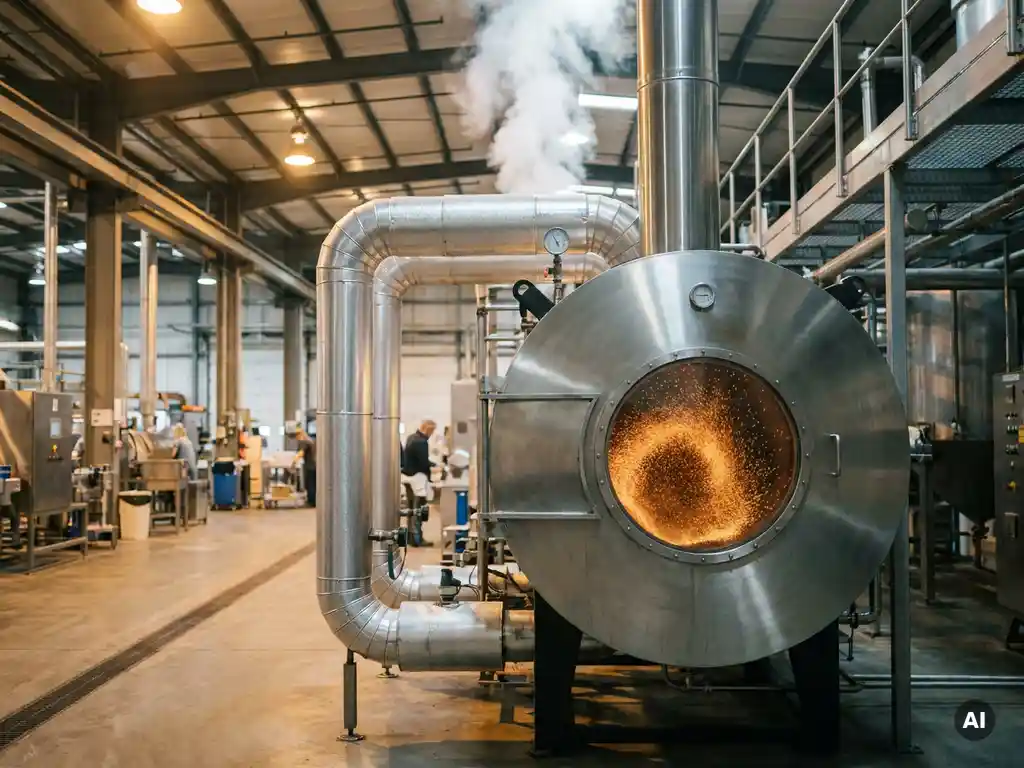
The process works like a rechargeable battery. Iron powder burns in the Iron Fuel Boiler to generate steam, hot water, or hot air for industrial processes. The flame can reach up to 2,000°C, making it suitable for high-temperature industrial applications. The boiler achieves an energy efficiency of up to 95%, which compares favourably with most conventional fossil fuel systems.
The only CO₂ output from the boiler comes from a small pilot safety flame, not from the iron combustion itself. This results in just 10 kg of CO₂ per megawatt-hour of thermal energy (MWhth). That figure should always be understood in context: it is a demo-scale result at TRL7, and it reflects the current system design rather than a theoretical zero.
After combustion, the iron oxide by-product is collected and transported to an Iron Fuel Production facility, where it is converted back into iron fuel using hydrogen. When low-carbon hydrogen is used as the feedstock and the EU greenhouse gas methodology is applied, the full production-to-combustion chain delivers a CO₂ reduction of 0.55 tonnes of CO₂ equivalent per tonne of iron fuel (tCO₂eq/t). It is important to note that this reduction figure applies specifically when low-carbon hydrogen, as defined under EU criteria, is used in production.
Which clean heat option suits food and beverage processes best?
For food and beverage manufacturers that need reliable, high-temperature heat without dependence on the electricity grid, iron fuel and biomass are currently the most practical clean heat options. The best fit depends on your specific process temperatures, site infrastructure, sustainability targets, and appetite for new technology.
Here is how the main options compare for typical food and beverage requirements:
- Iron fuel: Ideal for manufacturers needing high-temperature, continuous heat with zero direct CO₂ and no grid dependency. It integrates with existing boiler setups and offers a long-term fuel supply model. Best suited to sites where electrification is blocked by grid congestion or where hydrogen infrastructure is not available.
- Electrification and heat pumps: A strong option for lower-temperature processes and sites with reliable, affordable grid access. Less suitable where grid congestion is an issue or where process temperatures exceed what heat pumps can efficiently deliver.
- Biomass: Commercially mature and capable of high temperatures, but sustainability credentials vary significantly by feedstock. Supply chain reliability and local air quality regulations can complicate deployment.
- Green hydrogen: High decarbonisation potential but currently constrained by cost, infrastructure requirements, and supply availability. More relevant as a medium-to-long-term option as the hydrogen economy matures.
Food and beverage processes such as pasteurisation, sterilisation, and drying typically require consistent, controllable heat at temperatures that electrification alone may struggle to deliver cost-effectively. Technologies that offer security of supply, independence from volatile electricity prices, and compatibility with existing process equipment tend to score highest in practical evaluations for this sector.
Can clean heat solutions integrate with existing boiler infrastructure?
Yes, several clean heat solutions are designed to integrate with or complement existing boiler infrastructure, rather than requiring a complete replacement. The degree of integration depends on the technology chosen, but full system overhauls are not always necessary.
Iron fuel, for example, is specifically designed as a drop-in decarbonisation solution. The Iron Fuel Boiler is engineered to work alongside existing fossil fuel boilers, allowing manufacturers to phase in clean heat capacity without disrupting operations. This is a significant practical advantage: companies can maintain operational continuity while progressively reducing their Scope 1 emissions.
Biomass boilers can also be retrofitted into existing heat systems in many cases, though the handling and storage requirements for solid biomass feedstocks add logistical complexity. Electric boilers are generally easier to install but require grid connection upgrades that may not be feasible at all sites. Hydrogen combustion typically demands modifications to burners, pipework, and safety systems, the extent of which varies by boiler design and hydrogen concentration used.
For sustainability managers building the internal business case for clean heat, the ability to integrate with existing infrastructure is often a decisive factor. It reduces upfront CAPEX, shortens implementation timelines, and lowers the operational risk associated with switching heat sources. Any technology that requires a full boiler replacement will face a much higher hurdle in investment approval, which is why drop-in compatibility matters as much as emissions performance.
What does a clean heat transition actually cost for a food manufacturer?
The cost of transitioning to clean heat varies considerably depending on the technology chosen, the scale of heat demand, and the existing site infrastructure. The investment is typically evaluated across two dimensions: upfront capital expenditure (CAPEX) and ongoing operational expenditure (OPEX), including fuel costs and maintenance.
For iron fuel specifically, the Iron Fuel Boiler system requires a capital investment of 0.5 million euros per megawatt thermal (M€/MWth). Iron fuel itself is priced at 140 €/tonne, and the boiler consumes 0.52 tonnes of iron fuel per megawatt-hour of thermal energy. These figures provide a concrete basis for cost modelling, though actual economics will depend on the scale of deployment and site-specific factors.
Several broader cost factors apply across all clean heat technologies:
- CAPEX vs OPEX trade-offs: Technologies with lower upfront costs often carry higher fuel or operating costs over time, and vice versa. A full lifecycle cost comparison is essential before committing to any route.
- EU ETS exposure: As carbon prices under the EU Emissions Trading System rise, the cost of continuing to burn fossil fuels increases. This gradually improves the relative economics of clean heat alternatives.
- Grid connection costs: For electrification routes, the cost of upgrading grid connections, or the delay caused by grid congestion, can add significantly to the total investment.
- Funding and grants: EU Innovation Fund support and national subsidy schemes are available for industrial decarbonisation investments, which can meaningfully reduce the net cost of transition.
The honest answer is that clean heat is not yet cost-neutral compared to natural gas in most scenarios. But the gap is narrowing as carbon pricing increases, clean technology costs fall, and energy security concerns make fossil fuel dependency a strategic risk in its own right.
How RIFT helps food and beverage manufacturers decarbonise their heat
We develop and deliver industrial Iron Fuel Boilers, purpose-built clean heat systems that replace fossil fuel combustion with a fully circular, carbon-free alternative. For food and beverage manufacturers specifically, our technology addresses the core challenges that make decarbonisation difficult: grid independence, process compatibility, emissions performance, and long-term fuel security.
Here is what working with us looks like in practice:
- Zero direct CO₂ from combustion: Our Iron Fuel Boiler produces high-temperature heat with near-zero carbon emissions, just 10 kg of CO₂ per MWhth, stemming solely from a pilot safety flame, not from iron combustion itself.
- Up to 95% energy efficiency: The system is designed to make the most of every unit of fuel, outperforming many conventional fossil fuel boilers.
- No grid dependency: Iron fuel is a solid, storable energy carrier that does not rely on electricity grid availability, a critical advantage for sites affected by grid congestion.
- Drop-in integration: Our boiler is designed to complement existing industrial setups, reducing disruption and lowering the barrier to getting started.
- Long-term fuel supply: We provide iron fuel under a long-term supply agreement, giving manufacturers the cost predictability and security of supply that fossil fuel alternatives often cannot match.
- Backed by proven technology: Demonstrated at TRL7 and supported by €113.8 million in funding, including an EU Innovation Fund grant, our technology is ready for commercial deployment, not a distant promise.
If you are evaluating clean heat options for your food and beverage facility and want to understand whether iron fuel is the right fit for your processes and site, we would be glad to have that conversation. Get in touch with our team to discuss your specific heat requirements and explore what a transition could look like for your operation.
Frequently Asked Questions
How do I know if my food or beverage facility is a good candidate for iron fuel technology?
The strongest candidates are sites that require continuous, high-temperature heat, face grid congestion that blocks full electrification, and are under pressure to reduce Scope 1 emissions. If your facility relies on natural gas boilers for pasteurisation, sterilisation, or drying, and you are already feeling the financial impact of rising EU ETS carbon costs, iron fuel is worth a detailed feasibility assessment. RIFT’s team can evaluate your process temperatures, heat demand profile, and existing boiler setup to determine fit.
What are the most common mistakes manufacturers make when evaluating clean heat options?
The most common mistake is comparing technologies on upfront CAPEX alone, without accounting for long-term fuel costs, carbon pricing exposure, and grid connection costs. Another frequent error is assuming electrification is universally viable without first verifying grid capacity at the specific site, an oversight that can derail a project years into planning. A full lifecycle cost analysis, factoring in EU ETS trajectory and available grants, is essential before committing to any route.
How long does it typically take to implement a clean heat solution in an operational food manufacturing facility?
Implementation timelines vary significantly by technology. Electrification projects can be delayed by years if grid upgrades are required. Biomass retrofits depend on civil works and feedstock storage infrastructure. Iron fuel, designed as a drop-in solution that integrates with existing boiler infrastructure, is engineered to minimise implementation time and operational disruption. Working with RIFT, the timeline will depend on your site’s specific configuration, scale of deployment, and how the iron fuel system is phased alongside existing equipment.
Are there EU grants or funding schemes available to offset the cost of transitioning to clean industrial heat?
Yes, several funding mechanisms are available to industrial manufacturers pursuing heat decarbonisation. The EU Innovation Fund is one of the largest, specifically targeting low-carbon technology deployment at industrial scale — RIFT itself has received an EU Innovation Fund grant as part of its €113.8 million in funding. National subsidy schemes and energy transition grants also exist across EU member states, though eligibility criteria and availability vary by country. Engaging early with your national energy agency or a specialist grant advisor can meaningfully reduce the net cost of your transition.
What happens if green hydrogen becomes widely available — does that change the case for iron fuel?
Iron fuel and green hydrogen are complementary rather than competing technologies. The iron fuel cycle actually depends on hydrogen for the regeneration step, where iron oxide is converted back into iron fuel at the Iron Fuel Production facility. As green hydrogen becomes more available and affordable, the carbon intensity of iron fuel production will decrease further, strengthening its emissions credentials. This means iron fuel is designed to improve alongside the hydrogen economy, rather than be displaced by it.
Can iron fuel technology handle the fluctuating heat demands typical in food and beverage production?
Yes, industrial boiler systems — including the Iron Fuel Boiler — are designed to handle variable load profiles. Food and beverage production often involves batch processes, seasonal demand shifts, and varying throughput, all of which place dynamic demands on heat supply. The Iron Fuel Boiler’s design allows it to operate alongside existing fossil fuel boilers during a phased transition, providing flexibility to match clean heat output to actual process demand without compromising production continuity.
How does iron fuel compare to biomass on sustainability credentials, given that biomass is already widely used in the industry?
Biomass is commercially mature and widely deployed, but its sustainability credentials depend heavily on feedstock origin, supply chain transparency, and the emissions methodology applied — factors that are increasingly scrutinised under EU sustainability regulations. Iron fuel, by contrast, produces near-zero direct CO₂ during combustion regardless of feedstock sourcing decisions, and its circular fuel cycle — burning iron, collecting iron oxide, regenerating with hydrogen — is inherently closed-loop. For manufacturers facing tightening sustainability reporting requirements or investor scrutiny, iron fuel offers a more verifiable and stable emissions profile than biomass.
Related Articles
- What is the aim of green energy?
- How can companies use renewable energy?
- What are the biggest challenges of switching to renewable energy?
- What will replace fossil fuels in the future?
- Can homes run entirely on renewable energy?
This content was generated with the help of AI and it may contain mistakes