

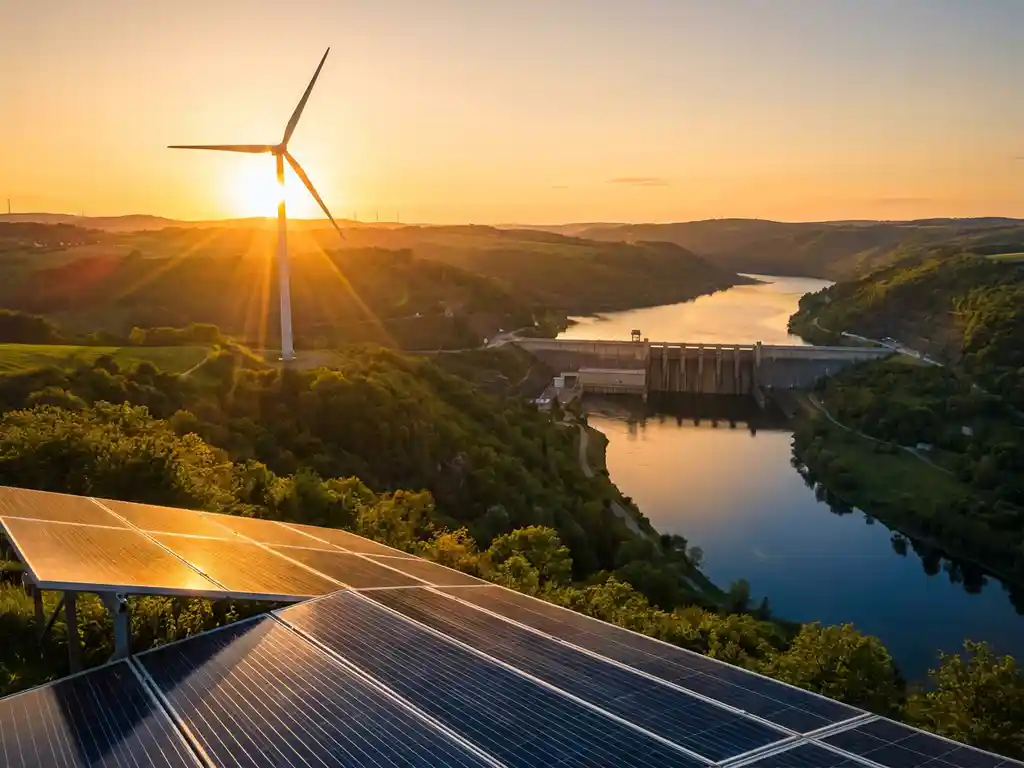
Renewable energy comes from natural sources that replenish continuously: sunlight, wind, moving water, heat from the Earth, and organic matter. Unlike fossil fuels, these sources do not run out and, in most cases, produce little or no carbon emissions during operation. As pressure mounts to cut greenhouse gas emissions across every sector of the economy, renewable energy has moved from a niche alternative to a central pillar of global energy strategy.
Sticking with fossil fuels is becoming a liability, not just an environmental choice
Energy costs driven by volatile fossil fuel markets are squeezing industrial margins. Regulatory pressure through mechanisms like the EU Emissions Trading System is adding a carbon price on top of that. Companies that have not started planning a transition are now facing a compounding problem: rising costs, tightening compliance requirements, and growing pressure from customers and investors who want to see credible decarbonisation plans. The fix is not necessarily a wholesale overhaul overnight. Starting with a clear audit of where your energy comes from and which processes are most carbon-intensive gives you a prioritised roadmap rather than an overwhelming list.
Waiting for the “perfect” renewable solution is holding back real progress
Many industrial operators are still waiting for a single renewable technology that ticks every box before committing. That wait is costly. Each year of delay means continued Scope 1 emissions, missed regulatory milestones, and a shrinking window to meet net-zero commitments. No single renewable source is perfect for every application, but that is not the right standard to apply. The practical question is which combination of available technologies can meet your specific energy needs now, with room to evolve. Choosing a solution that integrates with existing infrastructure is often the fastest route to measurable progress.
What is renewable energy and why does it matter?
Renewable energy is energy generated from natural processes that replenish on a human timescale. Solar, wind, hydropower, geothermal, and biomass are the primary sources. It matters because burning fossil fuels releases carbon dioxide that drives climate change, while renewable sources can deliver the same energy services with dramatically lower emissions across their full lifecycle.
The urgency is clearest in the numbers. Industry accounts for roughly 37% of total global energy consumption, and about two-thirds of that goes toward heat generation. The vast majority of that heat is still produced by burning fossil fuels. That is not a small inefficiency to trim around the edges. It is one of the largest remaining sources of carbon emissions in the global economy.
Renewable energy matters because it offers a credible path to breaking that dependency without sacrificing the energy output that industrial processes genuinely need. The challenge is matching the right renewable technology to the right application, which is where the conversation gets more specific.
What are the main types of renewable energy sources?
The main types of renewable energy are solar, wind, hydropower, geothermal, biomass, and emerging carriers such as green hydrogen and iron fuel. Each converts a naturally occurring energy source into usable electricity or heat, with different strengths depending on location, scale, and application.
- Solar energy: Photovoltaic panels convert sunlight into electricity. Solar thermal systems use sunlight to heat water or air directly. Best suited to electricity generation and low-to-medium-temperature heat.
- Wind energy: Turbines convert kinetic energy from moving air into electricity. Highly effective at scale, particularly offshore, but output is intermittent and location-dependent.
- Hydropower: Flowing or falling water drives turbines to generate electricity. One of the most established and reliable renewable sources, though it requires specific geography.
- Geothermal energy: Heat from within the Earth is used for electricity generation or direct heating. Consistent and dispatchable, but geographically limited to tectonically active regions.
- Biomass: Organic material is burned or converted to produce heat and electricity. Carbon-neutral in principle, though sustainability depends heavily on sourcing practices.
- Green hydrogen and iron fuel: Emerging energy carriers that store and transport renewable energy in chemical form, enabling decarbonisation in applications where direct electrification is not practical.
Each source has a distinct profile of availability, cost, scalability, and suitability for different end uses. Electricity generation has seen the most rapid renewable deployment. Heat production, particularly at high temperatures, remains a harder problem to solve.
Which types of renewable energy are best for industrial heat?
For industrial heat, the most relevant renewable options are biomass, green hydrogen, and iron fuel. Solar thermal can cover low-temperature needs, but high-temperature industrial processes above 500°C require energy-dense, combustion-capable fuels or highly concentrated energy sources that most standard renewable electricity systems cannot easily deliver.
Electrification using heat pumps or electric resistance heating works well for lower temperature ranges and is increasingly viable as grids become greener. But for processes requiring steam or direct flame above 1,000°C, electricity faces real physical and infrastructure limits. The grid capacity needed to electrify a large industrial site is often not available, and the capital cost of upgrading can be prohibitive.
Green hydrogen burns hot and produces no CO2 at the point of combustion, making it a strong candidate for high-temperature heat. The barriers are storage, transport, and the cost of production at scale. Hydrogen requires specialised infrastructure and carries safety considerations that add complexity to industrial adoption.
Iron fuel is a newer but increasingly credible option. Fine iron powder burns at temperatures up to 2,000°C, producing only iron oxide as a byproduct. That iron oxide is then regenerated back into iron fuel using hydrogen, completing a closed, circular cycle with no carbon emissions. You can read more about how this works on our Iron Fuel Technology page.
What’s the difference between renewable energy and clean energy?
Renewable energy refers to energy from sources that naturally replenish, like sun, wind, and water. Clean energy refers to energy that produces little or no harmful emissions during use. The two overlap significantly but are not identical. Nuclear power, for example, is clean but not renewable. Some biomass is renewable but not always clean, depending on how it is sourced and burned.
For sustainability managers evaluating industrial energy options, the distinction matters in practical terms. A renewable fuel that still emits significant NOx or particulates may not meet air-quality regulations or internal environmental targets. A clean energy carrier that relies on non-renewable inputs may not qualify under certain sustainability frameworks or corporate reporting standards.
The most valuable technologies for industrial decarbonisation are those that are both renewable and clean across their full lifecycle. That means looking beyond the point of combustion to the full chain: how the fuel is produced, transported, and what byproducts it generates at every stage.
How do renewable energy sources compare on efficiency and cost?
Renewable energy sources vary considerably in efficiency and cost depending on the application. Solar and wind have seen dramatic cost reductions over the past decade and are now among the cheapest sources of electricity in many markets. Geothermal and hydropower are highly efficient where available. Emerging carriers like green hydrogen and iron fuel are still scaling, with costs expected to fall as production increases.
Efficiency comparisons depend on what you are measuring. A solar panel converts roughly 15 to 22% of incoming sunlight into electricity under standard conditions. A wind turbine captures around 35 to 45% of the kinetic energy passing through its blades. These figures look modest, but the input energy is free, which changes the economic calculation significantly.
For industrial heat specifically, the efficiency of the delivery system matters as much as the source. RIFT’s Iron Fuel Boiler achieves up to 95% energy efficiency, meaning nearly all of the energy stored in the iron fuel is converted into usable heat. That compares favourably with many fossil fuel boilers and makes the overall system economics more competitive than a headline fuel-cost comparison might suggest.
Cost competitiveness for industrial users also depends on factors like infrastructure requirements, fuel logistics, and whether existing equipment can be adapted rather than replaced. A technology that integrates with current boiler infrastructure avoids large capital write-offs and accelerates the return on investment.
What are the biggest challenges of switching to renewable energy?
The biggest challenges of switching to renewable energy for industrial users are cost, infrastructure compatibility, supply reliability, and the mismatch between available technologies and specific process requirements. These barriers are real, but they are not equally severe for every technology or every sector.
Cost is often cited first. Renewable energy carriers can carry a price premium over fossil fuels, particularly when existing fossil fuel infrastructure has already been paid down. However, when carbon pricing, regulatory compliance costs, and long-term energy price volatility are factored in, the gap narrows considerably for many industrial operators.
Infrastructure is a more practical constraint. Full electrification of a large industrial site can require grid upgrades that take years and cost tens of millions of euros. Hydrogen requires dedicated pipelines or on-site storage that most existing facilities do not have. Technologies that are designed to work alongside or within existing boiler infrastructure remove a significant portion of that barrier.
- Assess your current heat demand: Identify which processes require which temperatures, and separate low-temperature from high-temperature needs. Different technologies suit different ranges.
- Evaluate infrastructure compatibility: Prioritise solutions that can integrate with existing equipment to reduce capital expenditure and deployment time.
- Model the full cost picture: Include carbon pricing, regulatory compliance, and energy price risk alongside the direct fuel cost comparison.
- Start with a pilot or phased approach: A partial deployment that decarbonises a portion of heat demand generates real operational data and builds internal confidence before committing to a full-scale transition.
Supply reliability is a concern that often goes underweighted in planning. Industrial processes cannot tolerate fuel shortages. Any renewable energy solution needs to come with a credible long-term supply agreement and a logistics chain that can be trusted. That is why commercial contracts, not just technology demonstrations, are the meaningful signal of a solution that is ready for industrial deployment.
How RIFT helps industrial companies switch to renewable heat
We built Iron Fuel Technology specifically to address the challenges that make industrial decarbonisation difficult in practice. Here is what that means in concrete terms:
- Zero direct CO2 emissions: Iron fuel combustion produces no carbon dioxide. The only CO2 in the system comes from a small pilot safety flame, totalling just 10 kg per MWh of heat produced.
- High-temperature heat: The Iron Fuel Boiler generates flame temperatures up to 2,000°C, covering the full range of industrial heat applications, including steam, hot water, and direct process heat.
- Drop-in compatibility: Our boiler is designed to complement existing fossil fuel infrastructure, reducing the capital barrier and allowing a phased transition without operational disruption.
- Up to 95% energy efficiency: The system converts nearly all the stored energy in the iron fuel into usable heat, making it competitive on a cost-per-MWh basis.
- Long-term fuel supply contracts: We provide iron fuel under long-term agreements, giving industrial operators the supply certainty they need to plan around.
If you are evaluating renewable heat options for your facility, our industrial solutions page outlines how the technology applies across different sectors and process types. And if you want to talk through your specific situation, get in touch with our team to start the conversation.
Related Articles
- What is EIA?
- What are the six sources of clean energy?
- Is renewable energy reliable enough for everyday use?
- How does biomass energy work?
- What are 10 renewable resources?
This content was generated with the help of AI and it may contain mistakes