

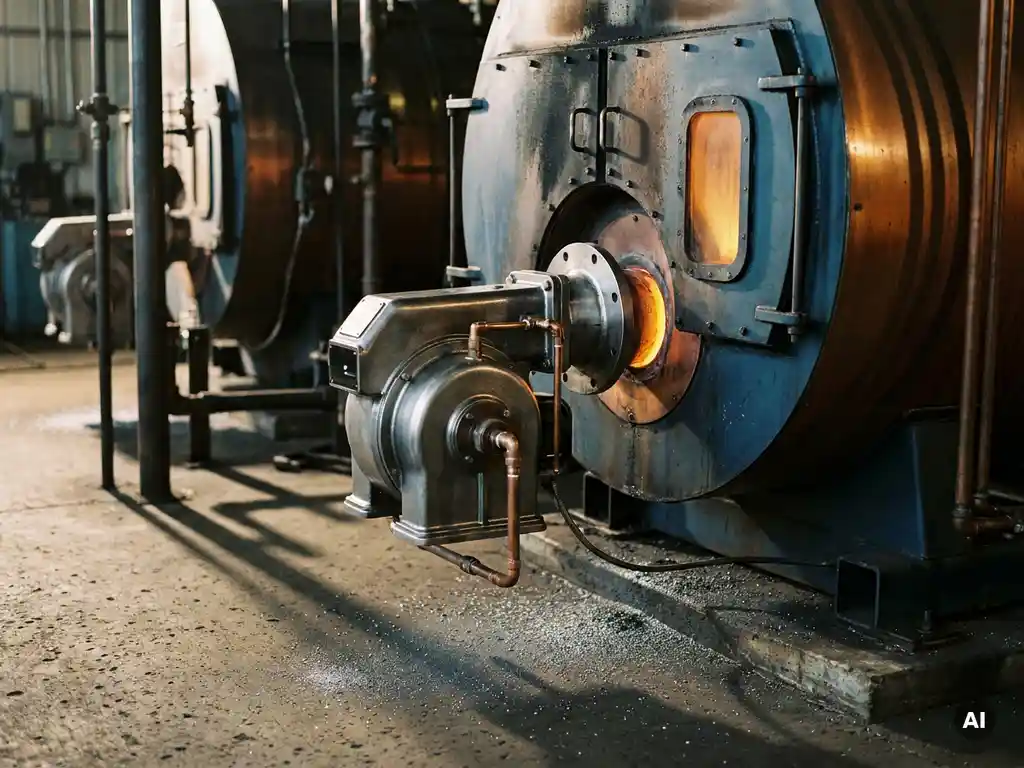
Iron fuel technology is highly compatible with existing industrial boiler infrastructure. Unlike hydrogen or full electrification, it is designed as a drop-in solution: the Iron Fuel Boiler integrates alongside existing fossil fuel boilers without requiring a complete overhaul of your heat generation setup. That makes it a practical first step for sustainability managers who need to cut Scope 1 emissions without halting operations or waiting for grid upgrades. Below, we answer the most common questions about how this works in practice.
How compatible is iron fuel technology with existing boiler infrastructure?
Iron fuel technology is built to complement, not replace, existing boiler infrastructure from day one. The Iron Fuel Boiler can be installed alongside your current fossil fuel boiler, allowing a phased transition rather than a full system replacement. This means industrial operators can begin decarbonizing heat generation without disrupting production continuity or committing to a complete infrastructure overhaul upfront.
This compatibility matters enormously in practice. Many industrial facilities have boiler systems that represent decades of capital investment. Ripping them out entirely to accommodate a new heat technology is rarely viable from a financial or operational standpoint. Because our Iron Fuel Boiler is designed to work in parallel with existing systems, companies can start with partial deployment and scale up over time as confidence in the technology grows and carbon reduction targets tighten.
Iron fuel itself is transported as fine iron powder in standard containers, which means it does not require the pressurized pipelines or specialized cryogenic infrastructure that hydrogen demands. This significantly lowers the barrier to adoption for sites that lack access to dedicated hydrogen infrastructure or face grid congestion that makes electrification impractical.
What does ‘drop-in’ mean in the context of industrial heat?
In the context of industrial heat, a drop-in solution is a technology that can be integrated into an existing heat generation setup without requiring fundamental changes to the surrounding infrastructure, process design, or energy delivery systems. For iron fuel, this means the boiler produces steam, hot water, or hot air in the same way a conventional fossil fuel boiler does, making the output compatible with downstream industrial processes.
The term is sometimes used loosely, so it is worth being precise. A true drop-in heat solution delivers the same outputs (high-temperature heat, steam, or process heat) at comparable or superior performance levels, while slotting into an existing operational environment. It does not require you to redesign your production line, retrain operators from scratch, or wait years for new energy infrastructure to be built in your region.
For sustainability managers evaluating the decarbonization of industrial heat, the drop-in quality of iron fuel technology is particularly relevant when weighing CAPEX versus OPEX. The upfront investment for the Iron Fuel Boiler system is 0.5 million euros per megawatt thermal (M€/MWth), with annual operations and maintenance costs at 2.5% of total system investment. That is a manageable entry point compared to the cost of full electrification or building out hydrogen supply chains from scratch.
How does iron fuel combustion actually produce industrial heat?
Iron fuel combustion produces industrial heat by burning fine iron powder with ambient air, generating a flame of up to 2,000°C. This high-temperature flame is used to produce steam, hot water, or hot air for industrial processes. After combustion, only iron oxide remains as a by-product, which is then regenerated back into iron fuel using hydrogen, completing a fully circular fuel cycle.
The chemistry is straightforward: iron reacts with oxygen in the air during combustion, releasing energy as heat. Because there is no carbon in iron, the combustion process produces zero CO₂. The only source of carbon dioxide in the Iron Fuel Boiler system is a pilot safety flame, which results in just 10 kg of CO₂ per megawatt-hour of thermal energy (MWhth). This is a near-total elimination of combustion-related carbon emissions compared to fossil fuel boilers.
The boiler consumes 0.52 tonnes of iron fuel per MWhth of thermal energy produced, and requires 43 kWh of auxiliary electricity to operate per MWhth output. This low parasitic electrical load contributes to the system’s overall energy efficiency of up to 95%, which outperforms many traditional fossil fuel boilers. You can learn more about how the full technology cycle works on our Iron Fuel Technology page.
What industries benefit most from a drop-in heat solution?
The industries that benefit most from a drop-in heat solution are those that rely heavily on high-temperature process heat and face significant barriers to electrification or hydrogen adoption. Food and beverage, specialty chemicals, and pulp and paper are the clearest examples, as these sectors have large, continuous heat demands that cannot easily be met by intermittent renewable electricity or by hydrogen where supply infrastructure is absent.
These sectors share a common challenge: their processes require reliable, high-temperature heat at scale, often around the clock. Electrification is frequently ruled out by grid congestion, insufficient local grid capacity, or the sheer cost of upgrading electrical infrastructure. Hydrogen faces its own barriers, including limited pipeline availability, high storage and transport costs, and security of supply concerns in many regions.
Iron fuel addresses this gap directly. Because it is transported as a solid powder in standard containers, it is not dependent on gas grid access or high-voltage electricity connections. For a food processing plant, a specialty chemicals manufacturer, or a paper mill that needs dependable, carbon-free heat without waiting for regional infrastructure to catch up, a drop-in iron fuel boiler is a realistic near-term option rather than a distant aspiration.
How does iron fuel compare to hydrogen and electrification for industrial heat?
Iron fuel, hydrogen, and electrification each offer a pathway to decarbonizing industrial heat, but they differ significantly in infrastructure requirements, cost profile, and practical feasibility for most industrial sites today. Iron fuel stands out as the most infrastructure-independent option, making it particularly suited to sites where grid constraints or hydrogen supply limitations make the other two routes impractical in the near term.
Iron fuel versus hydrogen
Hydrogen requires dedicated pipeline infrastructure or complex on-site storage, and its supply chain is still maturing in most European regions. Transporting hydrogen safely at scale involves pressurized or cryogenic systems that carry significant cost and safety considerations. Iron fuel, by contrast, is shipped as a stable powder in standard containers, requires no pressurized pipelines, and can be stored safely on-site. For companies concerned about security of supply or facing the replacement of natural gas without access to a hydrogen grid, iron fuel offers a more immediately deployable alternative.
Iron fuel versus electrification
Full electrification of industrial heat is technically possible in some contexts, but it is frequently blocked by grid congestion, the high cost of upgrading electrical connections, and the challenge of delivering continuous high-temperature heat from electricity at a competitive cost. For energy-intensive industries subject to the EU ETS, the cost of carbon allowances is rising, which increases pressure to decarbonize quickly. Electrification timelines often stretch beyond what regulatory and competitive pressures allow. Iron fuel can be deployed in parallel with existing boiler systems, delivering zero direct CO₂ emissions on a much shorter implementation timeline.
When evaluating CAPEX versus OPEX, iron fuel also compares favorably. The boiler system investment of 0.5 M€/MWth is predictable, and iron fuel is priced at 140 euros per tonne, providing cost visibility that volatile energy prices in electricity and gas markets cannot match.
What are the emissions and efficiency figures for an iron fuel boiler?
The Iron Fuel Boiler achieves an energy efficiency of up to 95%, with CO₂ emissions of just 10 kg per MWhth, attributable solely to the pilot safety flame. Iron fuel combustion itself produces zero CO₂. RIFT states that NOx emissions from the boiler are under 5 mg/MJ, which RIFT claims is the lowest NOx output of any fuel, though this is the company’s own claim rather than an independently verified benchmark.
To put these figures in context:
- Energy efficiency: up to 95%, outperforming many conventional fossil fuel boilers
- CO₂ from combustion: zero, as iron contains no carbon
- Total system CO₂ output: 10 kg CO₂/MWhth, from the pilot safety flame only
- NOx emissions: under 5 mg/MJ (RIFT’s claim, at TRL7 demonstration scale)
- Full-chain CO₂ reduction: 0.55 tonnes of CO₂ equivalent per tonne of iron fuel, calculated using low-carbon hydrogen as defined by EU definitions and applying EU Innovation Fund GHG methodology, including transport
It is important to note that these figures come from the TRL7 demonstration facility in Helmond, the Netherlands. They represent performance at advanced pilot scale, and commercial-scale deployment may yield different results as the technology matures. The full-chain CO₂ reduction of 0.55 tCO₂eq per tonne of iron fuel applies specifically when low-carbon hydrogen is used as feedstock according to EU definitions, and should not be presented as a universal figure independent of the hydrogen source.
For sustainability managers building a business case under frameworks such as the EU ETS or internal net-zero targets, these figures provide a credible and specific basis for carbon accounting, particularly given their alignment with EU Innovation Fund GHG methodology.
How RIFT helps with decarbonizing industrial heat
We develop and deliver industrial Iron Fuel Boilers that give energy-intensive companies a practical, carbon-free alternative to fossil fuel heat, without requiring them to wait for hydrogen infrastructure or grid upgrades. Here is what working with us looks like in practice:
- Drop-in integration: Our Iron Fuel Boiler is designed to complement your existing boiler setup, enabling a phased transition rather than a full system replacement.
- Zero direct CO₂ from combustion: Iron fuel burns without carbon emissions, with total system CO₂ output of just 10 kg/MWhth from the pilot safety flame.
- Up to 95% energy efficiency: Our boiler system delivers high-temperature heat at efficiency levels that match or exceed conventional fossil fuel systems.
- Long-term fuel supply: We provide iron fuel at 140 euros per tonne under long-term supply agreements, offering cost predictability in a world of volatile energy prices.
- No grid dependency: Iron fuel is transported as a stable powder in standard containers, making it independent of electricity grid capacity and hydrogen pipeline availability.
Our technology is already at TRL7, demonstrated at megawatt scale, and we have signed the world’s first commercial contract for industrial Iron Fuel Technology with Kingspan Unidek. Explore our industrial heat solutions or get in touch with our team to discuss what a transition to iron fuel could look like for your facility.
Frequently Asked Questions
How long does it typically take to install and commission an Iron Fuel Boiler alongside an existing system?
Because the Iron Fuel Boiler is designed as a drop-in addition to your existing boiler setup rather than a full replacement, installation timelines are significantly shorter than those associated with electrification or hydrogen infrastructure projects. Exact commissioning timelines depend on site-specific factors such as available space, existing heat distribution infrastructure, and local permitting requirements. We recommend contacting our team early in the planning process to get a realistic project schedule tailored to your facility.
What happens to the iron oxide by-product after combustion, and who is responsible for managing it?
After combustion, iron fuel leaves behind iron oxide — essentially rust — as its only by-product. This iron oxide is then regenerated back into iron fuel using low-carbon hydrogen, completing a circular fuel cycle with no waste material requiring disposal. Under RIFT’s supply model, the logistics of iron oxide collection and regeneration are managed as part of the long-term supply agreement, meaning industrial operators do not need to build or manage their own regeneration infrastructure.
Does iron fuel technology require any special on-site storage conditions or safety measures?
Iron fuel is transported and stored as a fine powder in standard containers, which means it does not require the pressurized vessels, cryogenic tanks, or specialized pipelines associated with hydrogen storage. However, as with any fine metal powder, standard industrial dust management and fire prevention protocols should be followed. RIFT provides site-specific guidance on safe handling and storage as part of the deployment process, and the technology has been demonstrated at TRL7 scale with these operational considerations already incorporated.
How does rising EU ETS carbon pricing affect the business case for switching to iron fuel?
As EU ETS carbon allowance prices rise, the cost of continuing to operate fossil fuel boilers increases directly, while the cost structure of iron fuel — priced at a fixed 140 euros per tonne under long-term supply agreements — remains stable and predictable. This means the financial case for iron fuel strengthens over time as carbon costs climb, making early adoption increasingly advantageous compared to waiting. For sustainability managers building internal business cases, modeling the trajectory of ETS pricing against a fixed iron fuel cost provides a compelling long-term cost comparison.
Can the Iron Fuel Boiler deliver the continuous, high-temperature heat that energy-intensive processes require around the clock?
Yes. Unlike intermittent renewable electricity sources, iron fuel combustion is not dependent on weather conditions or grid availability, making it capable of delivering continuous, on-demand high-temperature heat. The Iron Fuel Boiler produces flame temperatures of up to 2,000°C and operates at up to 95% energy efficiency, making it well-suited to industries such as food and beverage, specialty chemicals, and pulp and paper that require reliable, uninterrupted process heat at scale.
What is the full-chain carbon footprint of iron fuel, and does it depend on how the hydrogen used for regeneration is produced?
Yes, the full-chain carbon footprint of iron fuel is directly influenced by the source of hydrogen used to regenerate iron oxide back into iron fuel. The stated full-chain CO₂ reduction of 0.55 tonnes of CO₂ equivalent per tonne of iron fuel applies specifically when low-carbon hydrogen is used, as defined by EU standards and calculated using EU Innovation Fund GHG methodology including transport. If the hydrogen used in regeneration is produced from fossil fuels without carbon capture, the overall emissions benefit would be reduced, which is why sourcing low-carbon hydrogen is an important consideration when building your carbon accounting case.
What should a sustainability manager do first if they want to evaluate iron fuel for their facility?
The best starting point is a site-specific feasibility assessment that maps your current heat demand, existing boiler infrastructure, available on-site space, and carbon reduction targets against what an Iron Fuel Boiler deployment could deliver. RIFT’s team can support this process and help you understand the relevant CAPEX, OPEX, and emissions figures in the context of your facility. You can initiate this conversation by reaching out through the contact page on the RIFT website, or by reviewing the industrial heat solutions page to understand typical deployment configurations before your first discussion.
Related Articles
- How does VEKI support the business case for clean industrial heat investments?
- What is the difference between electrification and alternative fuel use for heat?
- Which renewable energy source is the cheapest?
- How do batteries store renewable energy?
- How recyclable are solar panels and wind turbines?
This content was generated with the help of AI and it may contain mistakes