

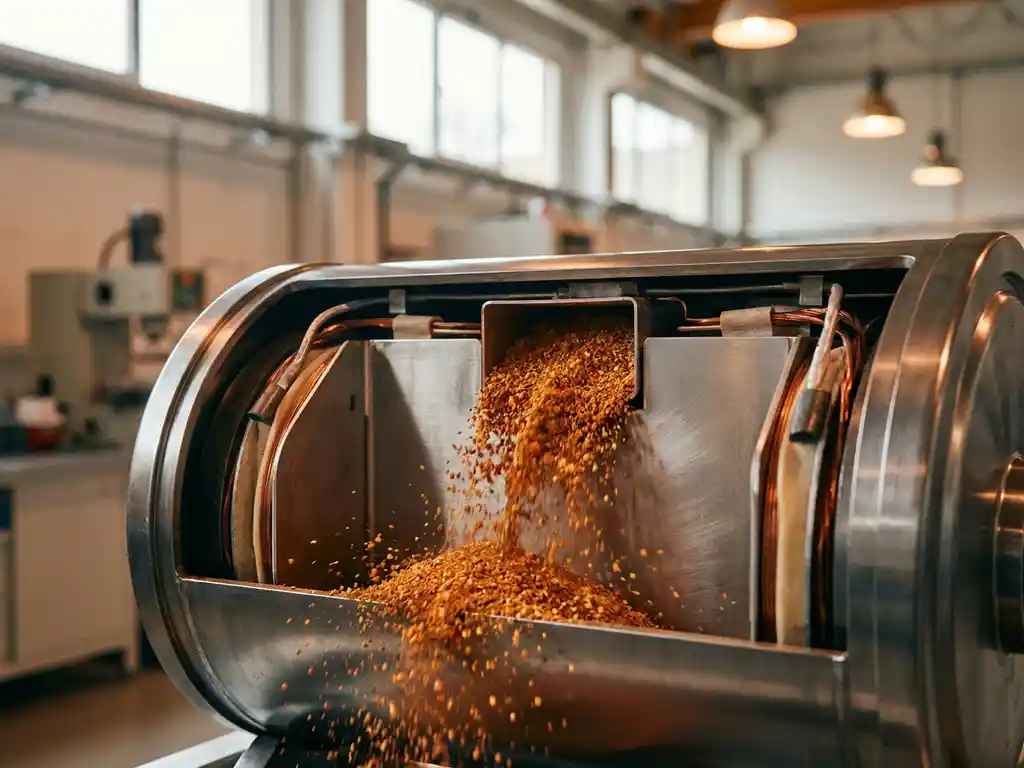
Batteries store renewable energy by converting electrical energy into chemical energy during charging, then reversing that process to release electricity when needed. Solar panels and wind turbines generate power intermittently, and batteries bridge the gap between when energy is produced and when it is actually used. The most common battery technologies rely on electrochemical reactions involving lithium, lead, or other materials to store and discharge energy on demand.
Intermittent renewable supply is leaving energy needs unmet at the worst possible times
Solar panels only generate power when the sun shines. Wind turbines only spin when the wind blows. The mismatch between when renewable energy is produced and when businesses and homes need it is one of the central problems of the clean energy transition. Without effective storage, surplus power generated at midday is wasted, while evening demand spikes drive grid operators back to fossil-fuel peaker plants. The fix is not simply generating more renewable energy—it is storing what is already being generated and deploying it when it counts. That requires understanding how different storage technologies work and where each one fits.
Relying on grid electricity alone is holding back industrial decarbonisation
For most homes and offices, grid-connected battery storage is a workable answer to the intermittency problem. For energy-intensive industries, it is rarely enough. Industrial processes require continuous, high-temperature heat that electricity grids and conventional batteries cannot reliably or cost-effectively provide at scale. Many sustainability managers in sectors such as food and beverage, specialty chemicals, and pulp and paper are discovering that storage technologies built for the electricity market were never designed with their heat demands in mind. The practical next step is to look beyond batteries and explore energy carriers that can store and deliver heat directly, without the conversion losses that come with electricity-based approaches.
What does it mean to store renewable energy?
Storing renewable energy means capturing surplus power generated by sources such as solar and wind, converting it into another form that can be stored safely, and releasing it later as usable energy. Storage acts as a buffer between unpredictable generation and steady demand, making renewable energy systems more reliable and reducing dependence on fossil-fuel backup.
Renewable energy sources are, by nature, variable. The sun does not shine at night, and wind speeds fluctuate constantly. Without storage, any electricity generated beyond immediate demand is lost. Storage technologies solve this by acting as a reservoir—filling up when supply exceeds demand and emptying when demand exceeds supply.
Storage can take many forms: chemical (batteries), mechanical (pumped hydro, flywheels), thermal (heat storage), or even solid-state energy carriers such as iron powder. What they all share is the ability to decouple energy production from energy consumption, which is the core challenge of a renewable-powered world.
How do batteries store and release electrical energy?
Batteries store electrical energy through electrochemical reactions. During charging, electrical current drives a chemical reaction that stores energy in the battery’s materials. During discharge, the reaction reverses, releasing electrons that flow as usable electrical current. The battery itself does not store electricity directly—it stores the chemical potential to produce it.
Inside a battery, two electrodes (an anode and a cathode) are separated by an electrolyte. When charging, ions move through the electrolyte from the cathode to the anode, building up stored chemical energy. When discharging, the ions flow back, and electrons travel through the external circuit, powering whatever is connected.
The efficiency of this process depends on the chemistry involved, the operating temperature, and how quickly the battery is charged or discharged. Most modern lithium-ion batteries achieve round-trip efficiencies in the range of 85 to 95 percent, meaning a relatively small share of energy is lost in the storage and retrieval cycle.
What are the main types of battery storage technologies?
The main types of battery storage technologies used in energy applications are lithium-ion, lead-acid, flow batteries, and solid-state batteries. Each uses different chemistry and is suited to different scales, durations, and use cases.
- Lithium-ion batteries are the most widely deployed, used in everything from consumer electronics to grid-scale storage. They offer high energy density, fast response times, and good efficiency, but degrade over time and raise concerns about raw-material supply chains.
- Lead-acid batteries are one of the oldest rechargeable technologies. They are inexpensive and well understood, but heavy, less efficient, and unsuitable for applications requiring frequent deep cycling.
- Flow batteries store energy in liquid electrolytes held in external tanks. Their capacity can be scaled independently of their power output, making them attractive for long-duration grid storage, though they tend to be bulkier and more complex than lithium-ion systems.
- Solid-state batteries replace the liquid electrolyte with a solid material, improving safety and potentially increasing energy density. They are still largely in development for large-scale applications.
For grid balancing and short-duration storage of a few hours, lithium-ion currently dominates. For storage durations beyond eight to twelve hours, alternative technologies become more competitive, and beyond that, batteries of any kind face significant limitations.
What’s the difference between battery storage and other energy storage methods?
Battery storage converts electricity into chemical energy and back again. Other energy storage methods use different conversion pathways: pumped hydro stores energy as gravitational potential, compressed air stores it as pressure, thermal storage holds it as heat, and chemical carriers such as hydrogen or iron fuel store it as molecular or solid-state energy. Each method differs in scale, duration, efficiency, and the form of energy it can deliver.
Pumped hydroelectric storage is the most established large-scale storage technology globally, accounting for the majority of installed grid storage capacity. It works by pumping water uphill when electricity is cheap and releasing it through turbines when demand rises. It is highly reliable and long-lasting, but requires specific geography and significant infrastructure investment.
Thermal energy storage captures heat directly, for example by heating molten salt or water, and releases it later for industrial or residential heating. This approach avoids the conversion losses that come with turning heat into electricity and then back into heat.
Chemical energy carriers, including hydrogen and iron fuel, store energy in a form that can be transported, stockpiled, and used on demand. Unlike batteries, they are not limited by charge-discharge cycles and can store energy over weeks or months without significant losses. You can explore how Iron Fuel Technology works as a circular energy carrier to understand how this principle applies to industrial heat.
Why can’t batteries alone solve industrial energy storage?
Batteries cannot solve industrial energy storage alone because most industrial processes need continuous, high-temperature heat rather than electricity. Converting electricity to heat at industrial scale is inefficient and expensive, and battery systems large enough to supply uninterrupted heat to a major manufacturing facility would be impractical in size and cost.
Industrial heat demand is substantial and often runs around the clock. A food processing plant or chemical facility may need steam at temperatures above 150 degrees Celsius continuously for days or weeks. Supplying this from battery storage would require an enormous installation, and the round-trip losses from converting electricity to heat add further inefficiency to an already expensive equation.
Infrastructure is another constraint. Many industrial sites are not connected to grids capable of delivering the power volumes needed to charge large battery systems quickly, and upgrading grid connections takes years and significant capital. For these companies, waiting for grid infrastructure to catch up is not a viable decarbonisation strategy.
This is why the conversation around industrial decarbonisation has expanded well beyond batteries. Technologies that store and deliver heat directly, without the electricity conversion step, are increasingly relevant for manufacturers that cannot wait for grid upgrades or absorb the cost of large-scale electrification.
What is the future of energy storage for industrial decarbonisation?
The future of energy storage for industrial decarbonisation lies in a mix of technologies matched to specific use cases: batteries for short-duration electricity balancing, long-duration storage for grid resilience, and solid-state or chemical energy carriers for high-temperature industrial heat. No single technology will cover every need, and the most effective decarbonisation strategies will combine multiple approaches.
For electricity grids, longer-duration storage technologies are advancing steadily. Flow batteries, compressed air, and gravity-based systems are all being developed to cover storage windows of twelve hours or more, which lithium-ion handles less efficiently. As renewable penetration grows, the value of long-duration storage will increase alongside it.
For industrial heat, the most promising path involves energy carriers that can be stored, transported, and combusted to produce heat directly. Hydrogen is one option, but its infrastructure requirements and handling challenges limit near-term deployment for many industrial operators. Solid-state energy carriers, which can be stored and transported using conventional logistics, represent a practical alternative for industries that need high-temperature heat without waiting for hydrogen pipelines or large-scale electrification.
- Short-duration electricity storage (under four hours): lithium-ion batteries, already commercially mature and widely deployed.
- Medium-duration storage (four to twelve hours): advanced lithium-ion and flow batteries, increasingly cost-competitive.
- Long-duration storage (twelve hours to seasonal): pumped hydro, compressed air, and emerging technologies still scaling toward commercial viability.
- Industrial heat storage and delivery: thermal storage, hydrogen, and solid-state energy carriers such as iron fuel, each suited to different temperature ranges and operational contexts.
The direction of travel is clear: storage technologies will need to diversify as decarbonisation targets tighten. For industrial operators, the most urgent question is not which storage technology will win in the long run, but which one can deliver clean heat reliably and cost-competitively today. You can see how different industrial heat solutions compare for companies evaluating their options now.
How Iron Fuel Technology helps with industrial energy storage
We developed Iron Fuel Technology specifically to address the gap that batteries and conventional storage cannot fill: reliable, high-temperature, carbon-free heat for energy-intensive industries. Iron fuel works on a rechargeable-battery principle—iron powder burns cleanly to produce heat, leaving only iron oxide, which is then regenerated into iron fuel using hydrogen. The cycle repeats indefinitely with zero direct CO₂ emissions.
Here is what that means in practice for sustainability managers evaluating storage and heat decarbonisation options:
- Storable and transportable: Iron fuel is a solid powder that can be stored and moved using standard logistics, with no need for pressurised tanks or dedicated pipelines.
- High-temperature heat delivery: The Iron Fuel Boiler generates flames up to 2,000°C and achieves up to 95% energy efficiency, outperforming many fossil-fuel systems.
- Drop-in compatible: Our boiler is designed to complement existing infrastructure, so companies do not need to replace everything at once.
- Near-zero emissions: Iron fuel combustion produces zero direct CO₂, with only a minor contribution from a pilot safety flame, totalling just 10 kg of CO₂ per MWh of thermal energy.
- Long-term fuel supply: We offer supply agreements that give industrial operators the planning certainty they need to commit to the transition.
If you are responsible for decarbonising your company’s industrial heat and want to understand whether Iron Fuel Technology fits your operations, get in touch with our team to start the conversation.
Related Articles
- How does renewable energy reduce carbon emissions?
- What is the most efficient form of renewable energy?
- How recyclable are solar panels and wind turbines?
- What is the environmental impact of large-scale solar farms?
- What are 20 examples of renewable resources?
This content was generated with the help of AI and it may contain mistakes