

There is no single best clean energy source. The right choice depends on the application, the industry, the infrastructure available, and the type of energy needed. For industrial processes that require high-temperature heat, the answer looks very different from it does for powering homes or vehicles. This article unpacks the key questions around clean energy to help industrial companies make sense of their options.
Why is there no single ‘best’ clean energy source?
Clean energy comes in many forms, and each one performs differently depending on the context. Solar panels excel at generating electricity in sunny regions. Wind energy works well at scale in open landscapes. But neither of these directly produces the high-temperature heat that industrial processes require. The best clean energy source is always the one that fits the specific application, location, and operational reality.
For industrial companies, this matters enormously. Heat generation accounts for roughly two-thirds of all industrial energy consumption, and the vast majority of that heat is still produced by burning fossil fuels. Replacing those fuels is not a one-size-fits-all challenge. Some industries can electrify their processes; others face infrastructure constraints or temperature requirements that make electrification impractical. The search for the best clean energy is therefore always a search for the best fit, not a universal ranking.
Sustainability managers navigating this landscape need to weigh emissions targets, operational continuity, cost, and infrastructure readiness at the same time. That complexity is precisely why the clean energy conversation is still evolving.
What are the main types of clean energy available today?
The main types of clean energy available today include solar, wind, hydropower, geothermal, biomass, hydrogen, and emerging technologies such as iron fuel. Each has its own strengths, limitations, and ideal use cases. Together, they form a broad toolkit for decarbonising different sectors of the economy.
Here is a brief overview of the most relevant categories:
- Solar energy: Converts sunlight into electricity via photovoltaic panels or concentrates heat through solar thermal systems. Best suited for electricity generation and low-temperature heat applications.
- Wind energy: Generates electricity from wind turbines, both onshore and offshore. Highly scalable but location-dependent and intermittent.
- Hydropower: Uses flowing water to generate electricity. Reliable and dispatchable, but geographically limited and increasingly constrained by environmental concerns.
- Geothermal energy: Taps heat from the earth’s core. Excellent for baseload power and direct heat in regions with volcanic activity.
- Biomass and bioenergy: Burns organic material to produce heat and power. Can be carbon-neutral depending on sourcing, but raises land use and sustainability questions.
- Hydrogen: A versatile energy carrier that can produce heat and power with zero direct emissions when made from renewable electricity. Infrastructure and cost remain significant barriers.
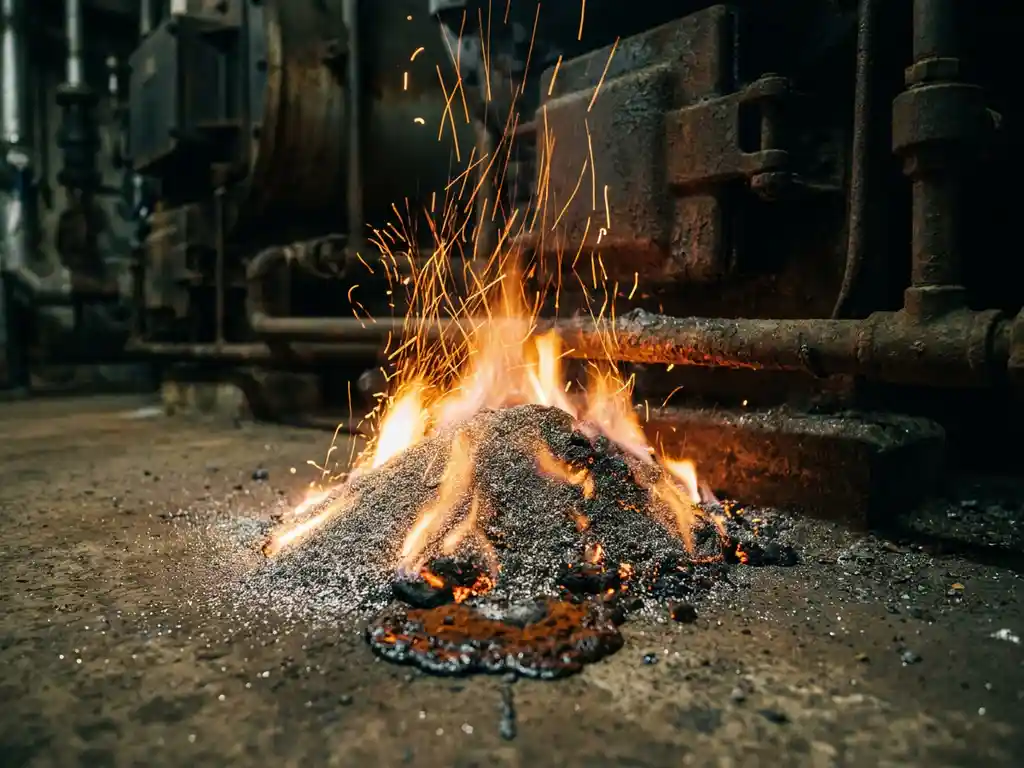
- Iron fuel: An emerging circular energy carrier that uses iron powder as a fuel. It burns cleanly to produce high-temperature heat, and the resulting iron oxide is regenerated using hydrogen, completing a fully closed loop.
For industrial companies focused on decarbonising heat specifically, the relevant options narrow considerably once temperature requirements and infrastructure constraints are factored in.
Which clean energy sources work best for industrial heat?
For industrial heat, the most viable clean energy sources are hydrogen, electrification via heat pumps or electric arc furnaces, biomass, and iron fuel. The best choice depends on the temperature level required, available infrastructure, and cost profile. High-temperature processes above 500°C are particularly difficult to decarbonise, ruling out many conventional options.
Low and medium-temperature heat, typically below 200°C, can often be addressed with heat pumps or solar thermal systems. These are mature technologies with proven track records in sectors such as food processing.
High-temperature industrial heat is a different challenge altogether. Processes in sectors like specialty chemicals, pulp and paper, and certain food and beverage applications require sustained temperatures that heat pumps cannot reach. For these applications, hydrogen combustion and iron fuel combustion are among the few clean alternatives capable of delivering the necessary thermal output.
Biomass has historically filled this gap in some industries, but concerns around supply chain sustainability and emissions accounting are making it a less straightforward choice. As a result, next-generation fuels like iron fuel are attracting growing interest from industrial operators looking for a clean, reliable, and circular heat source.
How does iron fuel technology compare to hydrogen and electrification?
Iron fuel, hydrogen, and electrification each offer a path to carbon-free industrial heat, but they differ significantly in practical terms. Iron fuel is safe to transport and store in standard containers, requires no new pipeline infrastructure, and produces zero direct CO₂ emissions. Hydrogen offers similar combustion flexibility but demands specialist infrastructure and carries safety considerations around storage and transport. Electrification is effective at lower temperatures but struggles to meet high-heat industrial demands cost-effectively.
The comparison becomes clearer when you look at specific factors side by side:
- Infrastructure requirements: Electrification depends on grid capacity upgrades; hydrogen requires dedicated pipelines or pressurised storage; iron fuel can be delivered in standard freight containers, much like coal or pellets today.
- Temperature capability: Electric heat pumps are limited to roughly 150 to 200°C in most industrial configurations; hydrogen and iron fuel can both produce flame temperatures well above 1,000°C, making them suitable for high-temperature processes.
- Circularity: Hydrogen is consumed in combustion and must be continuously produced. Iron fuel operates in a closed loop: iron powder burns to iron oxide, which is then regenerated back into iron powder using hydrogen. The iron itself is never consumed.
- Safety and transport: Hydrogen is flammable and requires pressurised or cryogenic storage. Iron powder is non-toxic, non-explosive, and stable, making logistics straightforward.
- Drop-in compatibility: Full electrification often requires significant process redesign. Iron fuel boilers are designed to integrate with existing industrial setups, reducing the need for costly infrastructure overhauls.
For industries where electrification is too slow or too costly, and where hydrogen infrastructure is not yet in place, iron fuel technology offers a practical and commercially viable bridge to carbon-free heat.
What makes a clean energy source truly circular?
A clean energy source is truly circular when the materials or carriers used in the energy cycle can be fully recovered, regenerated, and reused without producing waste or emissions. Circularity goes beyond simply avoiding CO₂ at the point of use. It means the entire lifecycle of the energy carrier, from production through combustion and back to regeneration, forms a closed loop.
Most clean energy technologies do not meet this standard in a strict sense. Solar panels and wind turbines generate clean electricity, but the panels and turbine components themselves have complex supply chains and end-of-life challenges. Hydrogen is a clean fuel at the point of combustion, but it must be continuously produced from water using energy, and it is not recovered after use.
Iron fuel stands out precisely because of its circular design. When iron powder burns, it produces heat and iron oxide. That iron oxide is then regenerated into iron powder using green hydrogen. The iron itself acts as a rechargeable carrier, cycling between its metallic and oxidised states indefinitely. No material is lost, no carbon is involved, and the only byproduct of combustion is the iron oxide that feeds directly back into the regeneration step.
This closed-loop model is what distinguishes a truly circular energy carrier from one that is simply low-carbon at the point of use. For sustainability managers building long-term decarbonisation strategies, circularity matters because it reduces dependency on continuous raw material inputs and limits the risk of future supply chain disruptions.
How should industrial companies choose the right clean energy solution?
Industrial companies should choose a clean energy solution by evaluating four key factors: the temperature requirements of their processes, the infrastructure available or feasible to build, the total cost of transition, and the long-term availability of the energy carrier. No single technology wins on all dimensions, so the right choice is the one that best matches the operational and strategic reality of the specific company.
A practical evaluation framework looks like this:
- Process temperature: Identify whether your heat demand falls below 200°C, where electrification is viable, or above that threshold, where hydrogen and iron fuel become more relevant.
- Infrastructure readiness: Assess whether your site has access to sufficient grid capacity for electrification, proximity to hydrogen pipelines, or the logistics to receive solid fuel deliveries.
- Transition speed: Consider how quickly you need to reduce emissions and whether a phased approach, starting with a complementary technology alongside existing boilers, is more realistic than a full replacement.
- Regulatory exposure: Factor in carbon pricing under schemes like the EU Emissions Trading System, which increases the financial cost of maintaining fossil fuel operations.
- Supplier reliability: Evaluate whether the technology provider has a credible commercial track record, stable funding, and a long-term fuel supply model.
The goal is not to find the perfect technology in isolation, but to find the right solution for your specific processes, timeline, and budget. For many industrial companies, the answer will involve combining multiple approaches, using electrification where it works and switching to a high-temperature clean fuel where it does not.
How RIFT helps industrial companies decarbonise their heat
We develop and deliver industrial Iron Fuel Boilers that replace fossil-fired heat generation with a fully circular, carbon-free alternative. Our technology is built specifically for the industries where electrification and hydrogen are not yet practical: Food and Beverage, Specialty Chemicals, and Pulp and Paper.
Here is what working with us looks like in practice:
- Zero direct CO₂ emissions: Our Iron Fuel Boiler burns iron powder with ambient air, producing high-temperature heat without any carbon emissions at the point of use.
- Drop-in compatibility: The boiler integrates with existing industrial infrastructure, so you do not need to redesign your entire operation to get started.
- Up to 95% energy efficiency: Our system outperforms many conventional fossil fuel boilers, making the transition financially compelling as well as environmentally sound.
- Long-term fuel supply: We provide a reliable, long-term iron fuel supply agreement, giving your organisation the certainty it needs to plan ahead.
- Proven at commercial scale: We signed the world’s first commercial contract for industrial iron fuel use with Kingspan Unidek, backed by €113.8 million in funding including an EU Innovation Fund grant.
If you are a sustainability manager looking for a pragmatic path to decarbonising your industrial heat, we would be glad to explore what Iron Fuel Technology can do for your operations. Learn more about our clean energy solutions or get in touch with our team to start the conversation.
Frequently Asked Questions
How long does it typically take for an industrial company to transition from fossil fuel boilers to a clean heat solution like iron fuel?
The transition timeline varies depending on the scale of your operations, the complexity of your existing infrastructure, and the clean energy solution you choose. Drop-in technologies like iron fuel boilers are designed to integrate with existing industrial setups, which can significantly shorten the transition period compared to full electrification projects that may require grid upgrades or process redesigns. A phased approach — running a clean fuel system alongside existing boilers before full replacement — is often the most practical route for minimising operational disruption.
What are the most common mistakes industrial companies make when evaluating clean energy options?
One of the most frequent mistakes is evaluating clean energy technologies in isolation from real operational constraints, such as process temperature requirements, site infrastructure, and logistics. Companies often default to electrification or hydrogen simply because they are more widely discussed, without fully accounting for the infrastructure investment or temperature limitations involved. Another common pitfall is underestimating the total cost of transition — including grid upgrades, process redesign, and downtime — rather than comparing full lifecycle costs across all viable options.
Is iron fuel technology commercially available right now, or is it still in the research and development phase?
Iron fuel technology has moved beyond the R&D phase and is now at the commercial deployment stage. RIFT signed the world’s first commercial contract for industrial iron fuel use with Kingspan Unidek, backed by €113.8 million in funding that includes an EU Innovation Fund grant. This marks a significant milestone, confirming that iron fuel is no longer a theoretical concept but a commercially viable solution available to industrial operators today.
How does carbon pricing under schemes like the EU Emissions Trading System (ETS) affect the financial case for switching to clean industrial heat?
Carbon pricing directly increases the operating cost of fossil fuel-based heat generation by placing a financial penalty on every tonne of CO₂ emitted. As EU ETS carbon prices rise over time, the cost gap between fossil fuels and clean alternatives like iron fuel or hydrogen narrows — and in many scenarios, reverses entirely. For sustainability managers building a business case for decarbonisation, factoring in current and projected carbon prices is essential, as it often makes the transition financially compelling well ahead of regulatory deadlines.
Can iron fuel technology be used in combination with other clean energy sources, such as solar or electrification?
Yes, and in many cases a combined approach is the most practical strategy. Electrification via heat pumps can handle low and medium-temperature heat demands efficiently, while iron fuel combustion covers the high-temperature processes that electrification cannot reach. Solar or wind-generated electricity can also power the iron oxide regeneration process, further strengthening the circular and renewable credentials of the overall energy system. A hybrid configuration allows companies to optimise for both cost and emissions reduction across their full range of heat demands.
What industries are best positioned to benefit from iron fuel technology right now?
Iron fuel technology is specifically designed for industries that require sustained high-temperature heat and where electrification and hydrogen are not yet practical at scale. The sectors best positioned to benefit today include Food and Beverage, Specialty Chemicals, and Pulp and Paper — all of which rely on high-temperature steam or direct heat and face significant decarbonisation pressure under current and upcoming regulations. Any industrial operator running fossil-fired boilers for process heat above 200°C is a strong candidate for evaluation.
What should a sustainability manager's first practical step be when exploring clean heat options for their facility?
The most valuable first step is conducting a detailed energy audit that maps your facility’s heat demand by temperature level, volume, and timing. This gives you a clear picture of which processes can be addressed with electrification and which require a high-temperature clean fuel solution. From there, you can assess infrastructure readiness, model the financial impact of carbon pricing on your current setup, and begin engaging with technology providers to understand what integration would realistically look like for your specific operations.
Related Articles
- What are 10 renewable resources?
- What does EIA stand for?
- What role does renewable energy play in fighting climate change?
- How does renewable energy affect local ecosystems?
- What countries use the most renewables?
This content was generated with the help of AI and it may contain mistakes