

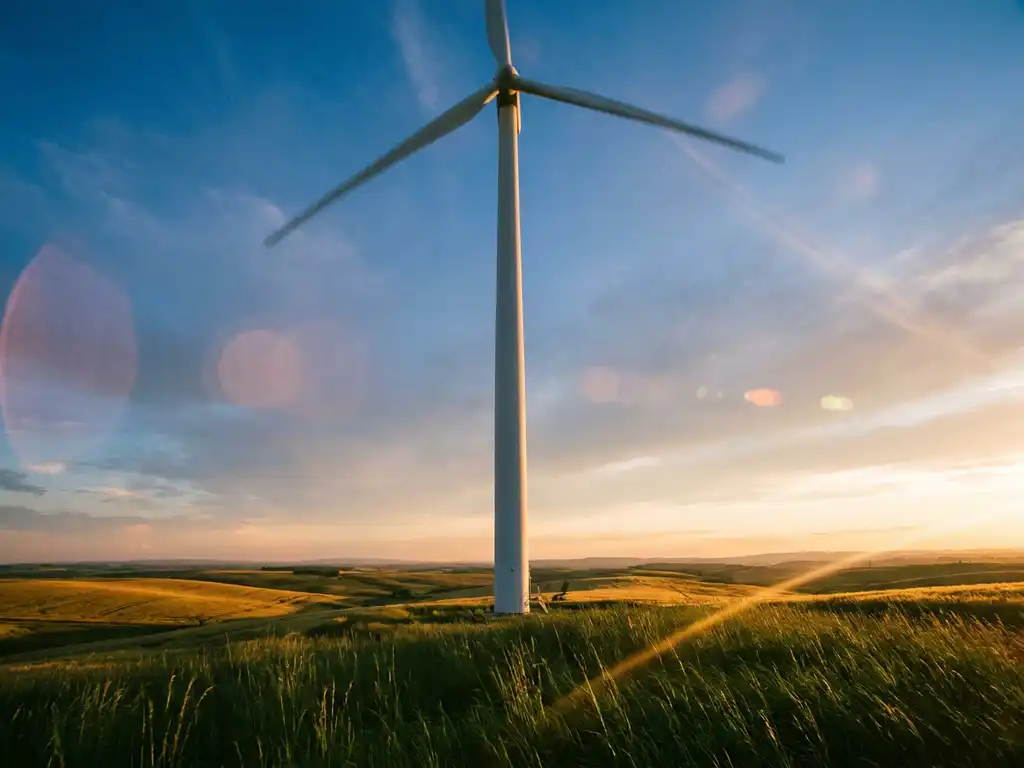
Wind energy is one of the most widely deployed forms of renewable energy in the world today. But if you work with industrial heat, you may have noticed something: wind power generates electricity, and electricity is not always the answer to decarbonising high-temperature industrial processes. Understanding how wind energy works, where it fits, and where it falls short provides useful context for any sustainability manager building a serious decarbonisation roadmap.
Relying on a single renewable source is slowing down your decarbonisation progress
Wind energy is expanding fast, but it generates electricity, not heat. For industries where two-thirds of energy consumption goes directly into heat generation, a wind-only or electrification-only strategy leaves a significant emissions gap unaddressed. High-temperature processes in sectors like food and beverage, specialty chemicals, and pulp and paper simply cannot be decarbonised by plugging into a greener grid alone. The solution is not to abandon wind energy, but to pair it with dedicated industrial heat solutions that directly target Scope 1 emissions from combustion.
Infrastructure gaps are blocking the clean heat transition before it starts
Even when sustainability managers identify the right technology, infrastructure constraints often stall progress. Grid capacity limits, hydrogen pipeline availability, and the cost of full boiler replacement create real barriers that can delay action by years. The consequence is continued fossil fuel dependency, rising carbon costs under frameworks like the EU Emissions Trading System, and missed internal net-zero targets. The practical path forward involves solutions that integrate with existing boiler infrastructure rather than replacing it entirely, reducing both capital risk and implementation time.
What is wind energy and how does it work?
Wind energy is a form of renewable energy that converts the kinetic energy of moving air into usable power, typically electricity. Wind turbines capture this movement through rotating blades connected to a generator. Because wind is a natural and continuously replenished resource, it produces no direct carbon emissions during operation.
Wind is created by differences in air pressure caused by uneven heating of the Earth’s surface by the sun. Warmer air rises, cooler air moves in to replace it, and that movement is what we experience as wind. Wind turbines are positioned in locations where this airflow is consistent and strong enough to generate power reliably.
The energy produced by wind turbines feeds into electricity grids, where it displaces power generated from fossil fuels. At a system level, this reduces carbon emissions from electricity generation. However, wind energy in its standard form addresses electricity demand, not direct heat demand, which is a meaningful distinction for industrial operators.
How do wind turbines generate electricity?
Wind turbines generate electricity by using wind to spin rotor blades, which turn a shaft connected to a generator. As the shaft rotates, the generator converts mechanical energy into electrical energy through electromagnetic induction. Most modern turbines also include a gearbox that adjusts the rotation speed to match the generator’s requirements.
The process works in several stages:
- Wind pushes against the angled rotor blades, causing them to rotate around a central hub.
- The hub connects to a main shaft, which transfers rotational energy into the nacelle at the top of the turbine.
- A gearbox (in most designs) increases the rotational speed to levels suitable for the generator.
- The generator converts rotational energy into alternating current (AC) electricity.
- A transformer steps up the voltage for transmission through the electricity grid.
Modern turbines include control systems that adjust blade pitch and turbine orientation to optimise output as wind speed and direction change. Most utility-scale turbines begin generating power at wind speeds of around 3 to 4 metres per second and reach peak output at around 12 to 14 metres per second.
What are the different types of wind energy?
Wind energy comes in two primary forms: onshore wind and offshore wind. Onshore turbines are installed on land, while offshore turbines are placed in bodies of water, typically on the seabed. A third category, distributed or small-scale wind, covers smaller turbines used at the building or community level.
- Onshore wind: The most established and cost-effective form of wind energy. Turbines are easier to build, maintain, and connect to the grid. Wind speeds on land are generally lower and less consistent than at sea.
- Offshore wind: Positioned in open water where wind speeds are higher and more stable. Offshore installations produce more energy per turbine but involve significantly higher construction and maintenance costs.
- Floating offshore wind: An emerging technology that places turbines on floating structures anchored to the seabed, enabling deployment in deeper waters where fixed foundations are not viable.
- Distributed wind: Small-scale turbines used to generate power locally, often for farms, industrial sites, or remote communities. Output is limited compared to utility-scale installations.
The choice between these types depends on geography, available land, grid infrastructure, and energy demand. For large-scale renewable energy targets, onshore and offshore wind currently carry the most weight in national energy strategies.
What are the advantages and disadvantages of wind energy?
Wind energy’s main advantages are that it produces no direct carbon emissions during operation, uses no water, and has low running costs once installed. Its main disadvantages are intermittency, land use, and the fact that it generates electricity rather than heat, which limits its direct applicability to industrial thermal processes.
On the positive side, wind is an abundant and free fuel source. Once a turbine is built, the ongoing cost of generating electricity is low compared to fossil fuels. Wind capacity has scaled rapidly over the past two decades, and the technology is mature and well understood. It also creates local employment and can coexist with agricultural land use in many onshore settings.
The limitations are real and worth understanding honestly. Wind does not blow consistently, which means turbines do not generate power at full capacity all the time. Grid operators must manage this variability through storage, backup generation, or demand flexibility. For industrial operators specifically, wind electricity cannot directly replace the high-temperature combustion heat that processes like steam generation, drying, or chemical reactions require. Electrification of these processes is possible in theory, but it often faces cost and infrastructure barriers in practice.
How does wind energy compare to other renewable energy sources?
Compared to solar, wind typically generates more energy per installation in northern climates and produces power at night. Compared to hydropower, wind is more widely deployable but less predictable. Compared to biomass or hydrogen, wind produces electricity rather than thermal energy, which affects its suitability for industrial heat applications.
Each renewable energy source has a different output type, cost profile, and deployment context. Solar photovoltaic is highly scalable and cost-effective in sunny regions but shares wind’s intermittency challenge. Hydropower is reliable and dispatchable but geographically constrained. Biomass can produce heat directly but raises sustainability questions around feedstock sourcing and land use.
For industrial decarbonisation specifically, the relevant comparison is not just cost per kilowatt-hour but whether the energy carrier can deliver heat at the right temperature, at the right time, with acceptable infrastructure requirements. This is where technologies that directly address combustion, rather than generating electricity for conversion, become relevant. You can explore how Iron Fuel Technology works as a direct heat solution for industrial processes that wind energy cannot easily reach.
What role does wind energy play in decarbonising industry?
Wind energy supports industrial decarbonisation primarily by supplying low-carbon electricity to power operations, electric motors, and potentially electric heating systems. It also plays an indirect role by powering the production of green hydrogen, which can be used as a feedstock in other clean energy processes. However, wind alone cannot decarbonise high-temperature industrial heat.
Industry accounts for roughly 37% of global energy consumption, and the majority of that energy goes into heat. Most of this heat is still generated by burning fossil fuels directly. Wind-generated electricity can replace some of this demand through electric boilers or heat pumps, but these technologies face practical limits at high temperatures and large scales. The economics and infrastructure requirements often make full electrification slow or unfeasible for many industrial operators.
Wind energy’s most meaningful industrial role in the near term may be as a power source for producing green hydrogen, which in turn enables other clean energy carriers. This is precisely how Iron Fuel Technology fits into the broader energy system: iron fuel is regenerated using hydrogen, and when that hydrogen is produced using renewable electricity from sources like wind, the full energy chain becomes genuinely low-carbon. You can read more about clean heat solutions for industrial processes that pair well with a renewable electricity strategy.
How Iron Fuel Technology helps with industrial heat decarbonisation
We at RIFT developed Iron Fuel Technology specifically to address the gap that wind energy and electrification cannot fill: high-temperature industrial heat with zero direct CO₂ emissions. Here is what that looks like in practice:
- Drop-in compatibility: The Iron Fuel Boiler integrates with existing boiler infrastructure, so you do not need to replace your entire setup to start reducing emissions.
- Zero direct CO₂ emissions from combustion: Iron powder burns cleanly, producing only iron oxide as a by-product. The total system CO₂ output is just 10 kg per MWh of thermal energy, attributable only to a pilot safety flame.
- Up to 95% energy efficiency: Our boiler system matches or outperforms many conventional fossil fuel systems on efficiency.
- Circular fuel cycle: Iron oxide is regenerated back into iron fuel using hydrogen, completing a closed loop with no waste and no carbon.
- Long-term fuel supply: We offer supply agreements that give you the certainty you need to plan ahead and build a credible business case internally.
If you are evaluating how to decarbonise your industrial heat operations and want to understand whether Iron Fuel Technology fits your situation, get in touch with our team, and we will walk you through the options.
Related Articles
- What is an EIA number?
- What is the best clean energy?
- What can green energy be used for?
- How do I switch to renewable energy at home?
- What are 20 examples of renewable resources?
This content was generated with the help of AI and it may contain mistakes