

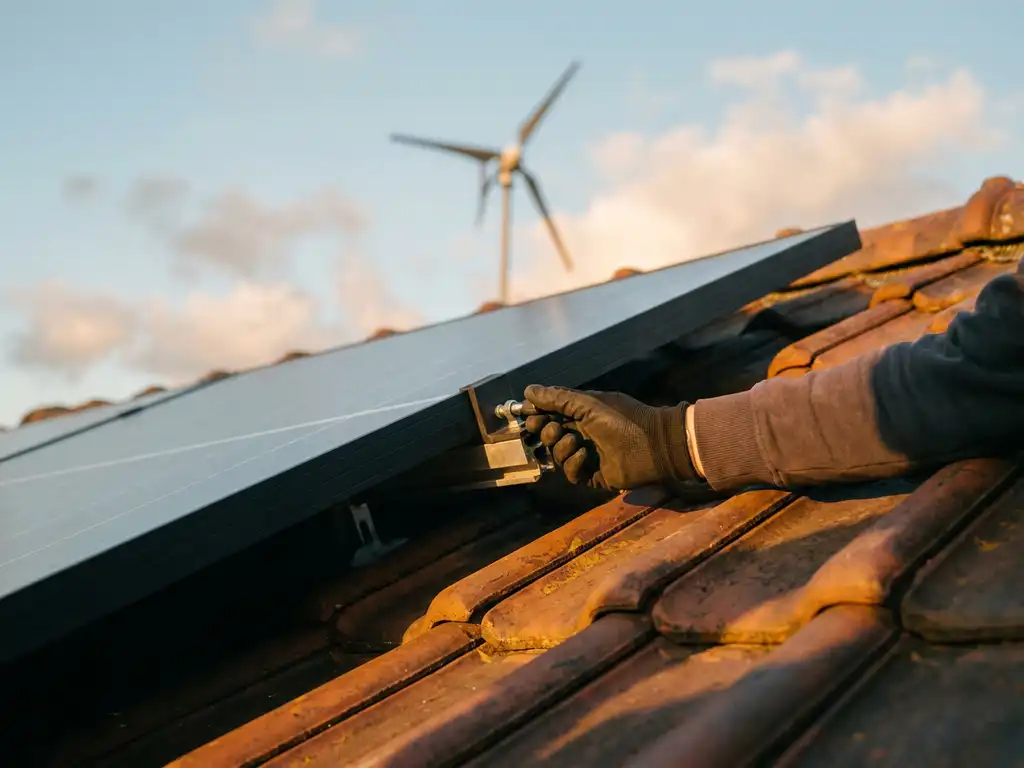
Switching to renewable energy at home means replacing fossil fuel-based electricity and heating with energy generated from natural, renewable sources such as the sun, wind, or geothermal heat. You can do this by installing your own generation equipment, such as solar panels, or by switching to a green energy tariff with your supplier. Most households can make at least one meaningful change without major disruption to their home or budget.
Sticking with your current energy setup is costing you more than you realise
Energy bills have risen sharply in recent years, and homes that rely entirely on grid electricity or gas heating are fully exposed to that volatility. Beyond the financial hit, there is a growing gap between what households say they want—lower emissions, lower bills, more control—and what a standard fossil fuel energy contract actually delivers. The fix is not necessarily a full home renovation. Many households start with a single change, such as switching to a green tariff or adding solar panels, and find that one step builds confidence and momentum for the next.
Waiting for the “perfect moment” to go renewable is holding back your energy savings
The cost of solar panels, heat pumps, and home batteries has fallen significantly over the past decade. Households that delayed switching five years ago missed out on years of bill savings and greater energy independence. Renewable energy options today are more accessible, better supported by government incentives, and easier to install than ever. The practical next step is to assess your home now, get quotes, and compare green tariff options, rather than waiting for technology to improve further or for costs to drop again.
What does switching to renewable energy at home actually mean?
Switching to renewable energy at home means changing how your home generates or sources its electricity and heat, moving away from fossil fuels such as gas and coal towards energy from wind, solar, hydro, or geothermal sources. It can mean installing your own equipment, signing up for a green energy tariff, or both.
The switch can happen in stages. Some households start by changing their electricity supplier to one that sources power from renewable generators. Others invest in on-site generation, typically solar photovoltaic panels, which produce electricity directly from sunlight. More comprehensive switches also address heating, replacing a gas boiler with a heat pump that runs on electricity.
The goal is to reduce your home’s direct carbon emissions and, over time, your dependence on energy prices set by fossil fuel markets. How far you go depends on your budget, your property, and your priorities.
What are the main renewable energy options for homes?
The main renewable energy options for homes are solar panels, heat pumps, green energy tariffs, solar thermal systems, and small-scale wind turbines. Solar panels and heat pumps are the most widely adopted, while green tariffs offer the lowest-barrier entry point for most households.
- Solar photovoltaic (PV) panels: Generate electricity from sunlight, reducing what you draw from the grid. Suitable for most homes with a south-facing roof.
- Heat pumps (air source or ground source): Extract heat from outside air or the ground to warm your home and water. They run on electricity and are highly efficient.
- Green energy tariffs: Your supplier matches your consumption with electricity from renewable sources. No installation required.
- Solar thermal systems: Use sunlight to heat water directly, reducing your boiler’s workload.
- Small wind turbines: Viable for rural properties with enough open space and consistent wind. Less common in urban areas.
- Home batteries: Not a generation source, but they store surplus solar energy for use when the sun is not shining, increasing self-sufficiency.
Most households combine two or more of these. A common starting combination is solar panels paired with a green electricity tariff, then adding a battery or heat pump as a second step.
How much does it cost to switch to renewable energy at home?
The cost of switching to renewable energy at home ranges from nothing, if you simply change to a green energy tariff, to tens of thousands of pounds or euros for a full system including solar panels, a battery, and a heat pump. The right starting point depends on how much you want to invest upfront versus how much you save over time.
A green energy tariff typically costs the same as a standard tariff, sometimes slightly more, sometimes less, depending on the market. There is no installation cost. Solar panel systems for an average home generally cost between £5,000 and £10,000 before any government incentives or grants. Heat pumps tend to be more expensive to install, often between £8,000 and £15,000, though grants in many countries can significantly reduce this.
The payback period for solar panels is typically between six and twelve years, after which the electricity they generate is effectively free. Heat pumps can reduce heating bills compared to gas, particularly as electricity prices stabilise and gas prices remain volatile, but the financial case depends heavily on your current heating costs and local incentives.
Government support schemes, such as the UK’s Boiler Upgrade Scheme or similar programmes across Europe, can reduce upfront costs substantially. Checking what is available in your country before getting quotes is a practical first step.
Which renewable energy option is best for my home?
The best renewable energy option for your home depends on your property type, your current energy use, your budget, and whether you prioritise reducing bills or reducing emissions. For most homeowners, solar panels offer the clearest financial return. For those who heat with gas, a heat pump addresses the largest source of home emissions.
A few factors help narrow down the choice:
If your roof faces south or south-west and receives good sunlight, solar panels are usually the highest-return investment. If your home is well insulated, a heat pump will perform more efficiently and deliver better bill savings. If you are renting or cannot make structural changes, a green energy tariff is the most accessible option.
For homes with high electricity use, adding a battery alongside solar panels increases the proportion of your own generation you actually use, improving the financial case. For homes in rural areas with land, ground source heat pumps and small wind turbines become more viable.
It is worth getting an energy performance assessment before committing to any major installation. Understanding where your home loses heat and how much energy you actually use helps you prioritise the change that will have the most impact.
How do you switch to a green energy tariff?
Switching to a green energy tariff takes a few minutes online. You compare available tariffs from energy suppliers, choose one that sources electricity from renewable generators, and complete the switch through the supplier’s website. Your physical supply does not change; only the contract and how your supplier sources the energy it buys on your behalf.
Here is how the process typically works:
- Gather your current energy bills so you know your annual usage in kilowatt-hours.
- Use a price comparison website to search for green or renewable tariffs in your area.
- Check what “green” means for each tariff. Some suppliers generate or buy renewable electricity directly; others purchase Renewable Energy Guarantees of Origin (REGOs) certificates to offset conventional supply. The distinction matters if you want a direct environmental impact.
- Compare the unit rate and standing charge against your current tariff.
- Complete the switch online. Your new supplier handles the transfer with your existing supplier.
- The switch typically takes two to three weeks. You do not need to change any wiring or meters.
One thing to check: some green tariffs lock you in for a fixed period. If energy prices are likely to fall, a shorter contract gives you more flexibility. If you want price certainty, a longer fixed term can protect you from increases.
What mistakes should you avoid when going renewable at home?
The most common mistakes when switching to renewable energy at home are choosing the wrong technology for your property, underestimating installation costs, skipping insulation improvements before installing a heat pump, and not checking available grants before paying full price. Each of these can reduce the financial return or leave you with a system that underperforms.
Installing a heat pump in a poorly insulated home is one of the most costly errors. Heat pumps work best at lower flow temperatures, which means they need to run longer to heat a space. In a draughty home, they struggle to keep up, and running costs rise. Improving insulation first—loft insulation, wall insulation, and draught-proofing—makes any heating system more effective and reduces the size of heat pump you need.
Another common mistake is choosing an installer based on price alone. Renewable energy systems, particularly heat pumps and solar with battery storage, need to be correctly sized for your home. An undersized solar array will not cover your consumption; an oversized heat pump will short-cycle and wear out faster. Always get at least two or three quotes and ask installers to explain how they calculated the system size.
Finally, many households miss out on grants and incentives simply by not looking for them. Support schemes change regularly, and what was unavailable a year ago may now be funded. Checking with your local authority and national government before committing to any purchase is worth the time.
How RIFT helps with industrial renewable energy
Home energy is one piece of the decarbonisation picture. Industrial heat, which powers factories, food production, chemical processing, and paper manufacturing, is one of the hardest sectors to clean up and one of the largest sources of global emissions. That is where we focus.
We developed Iron Fuel Technology, a circular, carbon-free energy carrier that burns iron powder to produce high-temperature industrial heat with zero direct CO₂ emissions. Our Iron Fuel Boiler integrates with existing industrial infrastructure, so companies do not need to rebuild their operations from the ground up.
Here is what makes our approach practical for industrial operators:
- Up to 95% energy efficiency, outperforming many conventional fossil fuel systems
- Zero direct CO₂ emissions during combustion, with only 10 kg CO₂ per MWh from the pilot safety flame
- Plug-and-play integration alongside existing boilers, with no major infrastructure overhaul required
- Long-term fuel supply agreements that give operators cost certainty and supply reliability
- Cost-competitive pricing aligned with fossil fuel benchmarks
We work with companies in Food & Beverage, Specialty Chemicals, and Pulp & Paper—sectors where high-temperature heat is essential and alternatives such as full electrification are often not viable. Our industrial heat solutions are designed for sustainability managers who need to reduce Scope 1 emissions without compromising production continuity.
If you are responsible for decarbonising industrial heat at your organisation and want to understand whether Iron Fuel Technology is a fit, get in touch with our team, and we will walk you through the specifics for your site.
Related Articles
- What is VEKI?
- What is the importance of green energy?
- What are the benefits of renewable energy?
- What is energy poverty and can renewables help solve it?
- What is geothermal energy used for?
This content was generated with the help of AI and it may contain mistakes