

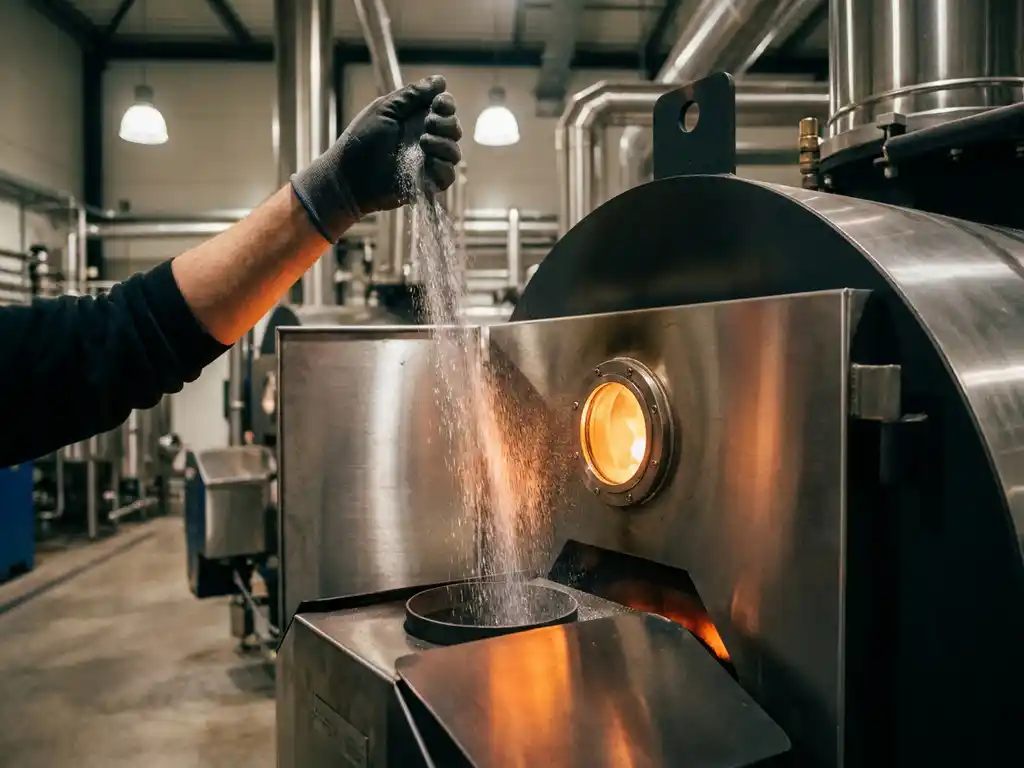
Clean energy refers to energy sources and technologies that produce little to no greenhouse gas emissions or harmful pollutants during operation. Examples include solar, wind, hydropower, geothermal, nuclear, and emerging technologies such as iron fuel. What makes clean energy distinct is not just the absence of carbon dioxide emissions, but the ability to deliver usable energy—heat, electricity, or motion—without degrading air quality or accelerating climate change. This article walks through the most important clean energy examples and helps you understand which sources are best suited for different industrial applications.
How is clean energy different from renewable energy?
Clean energy and renewable energy are closely related but not identical. Clean energy is any energy source that produces minimal emissions and environmental harm, while renewable energy specifically refers to sources that are naturally replenished—such as sunlight or wind. All renewable energy is generally considered clean, but not all clean energy sources are renewable. Nuclear power, for example, is widely regarded as clean due to its near-zero operational emissions, but it relies on finite uranium resources.
The distinction matters in practice. A technology can be clean without being renewable if it avoids harmful emissions while drawing on a limited resource. Conversely, a renewable source could theoretically cause environmental harm in other ways, such as land use or habitat disruption. For industrial decision-makers focused on decarbonisation, the relevant question is often both: does this energy source avoid CO₂ emissions, and is its supply chain sustainable over the long term?
What are the most common examples of clean energy?
The most widely deployed clean energy sources today include solar, wind, hydropower, geothermal, nuclear, and hydrogen. Each has distinct characteristics in terms of the type of energy it delivers, its scalability, and where it is best applied. Together, they form the backbone of the global clean energy transition.
- Solar energy: Converts sunlight into electricity via photovoltaic panels or into heat via solar thermal collectors. Highly scalable and rapidly cost-competitive.
- Wind energy: Generates electricity through turbines driven by moving air. Effective at large scale onshore and offshore.
- Hydropower: Uses flowing or falling water to generate electricity. One of the oldest and most reliable clean energy sources.
- Geothermal energy: Taps heat from within the earth for electricity generation or direct heating applications.
- Nuclear energy: Produces large amounts of electricity with near-zero operational CO₂ emissions, though it involves radioactive waste management.
- Hydrogen: A versatile energy carrier that produces only water when combusted or used in fuel cells, though its cleanliness depends on how it is produced.
- Iron fuel: An emerging clean energy carrier that uses iron powder as a circular, carbon-free fuel for high-temperature industrial heat generation.
Which clean energy sources can produce industrial heat?
Producing industrial heat cleanly is one of the hardest challenges in the energy transition. Most clean energy sources generate electricity effectively, but industrial processes often require high-temperature heat that electricity and many renewables struggle to deliver efficiently. The clean energy sources best suited for industrial heat include geothermal, hydrogen, biomass, and iron fuel.
Geothermal energy can supply process heat but is geographically limited and typically constrained to lower temperature ranges. Hydrogen can produce very high temperatures when combusted, but its infrastructure requirements and production costs remain barriers for many industrial sites. Biomass offers a renewable heat source but raises questions around supply chain sustainability and emissions from combustion.
Iron fuel stands out as a particularly promising option for industrial heat applications. When iron powder combusts, it generates a flame reaching up to 2,000°C—sufficient for the most demanding industrial processes—while producing zero direct CO₂ emissions. The only combustion byproduct is iron oxide, which can be regenerated back into iron fuel using hydrogen, completing a fully circular cycle.
What is iron fuel and how does it work as a clean energy source?
Iron fuel is a clean energy carrier that uses fine iron powder as a fuel. When burned with ambient air, iron powder releases high-temperature heat with zero direct CO₂ emissions. After combustion, only iron oxide remains, which is then regenerated back into iron powder using hydrogen—making it a fully circular, rechargeable energy system. It functions much like a battery: energy in, energy out, with the carrier material reused indefinitely.
The iron fuel technology cycle works in three stages:
- Combustion: Iron powder burns with air, producing high-temperature heat for industrial processes—with no carbon dioxide released.
- Collection: The resulting iron oxide is collected after combustion, ready to be returned to the fuel cycle.
- Regeneration: Iron oxide is converted back into iron powder using green hydrogen, restoring the fuel for repeated use.
Iron fuel is safe to handle and transport in standard containers—unlike hydrogen, which requires specialised infrastructure. It is abundant, cost-competitive, and compatible with existing industrial boiler setups, making it a practical clean energy option for energy-intensive industries that cannot easily electrify or access hydrogen networks.
Which industries benefit most from clean energy alternatives?
Industries with high and continuous heat demand benefit most from clean energy alternatives, particularly those where electrification is impractical or prohibitively expensive. The sectors with the greatest potential for impact include food and beverage, specialty chemicals, and pulp and paper—all of which rely heavily on fossil fuel-fired heat for their core production processes.
In food and beverage, steam and hot water are essential for cooking, pasteurisation, and sterilisation. In specialty chemicals, precise high-temperature heat is required for reactions and distillation. In pulp and paper, large volumes of steam are used throughout the drying and processing stages. For all three sectors, switching to a clean heat source that integrates with existing infrastructure—without requiring a complete overhaul—is a critical factor in making decarbonisation viable.
Beyond these sectors, clean energy alternatives are increasingly relevant for any industrial company facing tightening emissions regulations, rising carbon costs under schemes like the EU Emissions Trading System, and growing pressure from customers and investors to demonstrate credible Scope 1 emissions reductions.
How do you choose the right clean energy source for your operations?
Choosing the right clean energy source depends on the temperature of the heat your process requires, the infrastructure available at your site, your budget for upfront investment, and the reliability of supply you need. There is no single answer that fits every operation—but a structured evaluation of these factors quickly narrows the field.
Key questions to guide your evaluation include:
- What temperature does your process require? Low-temperature applications may be served by solar thermal or heat pumps; high-temperature industrial processes need sources like hydrogen or iron fuel.
- What infrastructure exists on site? Hydrogen requires specialised storage and piping; iron fuel can be stored and transported in standard containers and integrated into existing boiler systems.
- What is your timeline? Some clean energy technologies are still scaling; others, like iron fuel boilers, are entering commercial deployment now.
- What are your total cost expectations? Upfront investment, fuel supply costs, and operational efficiency all factor into the business case.
- How disruptive can the transition be? Solutions that complement existing equipment reduce downtime and implementation risk.
Sustainability managers should also consider the regulatory trajectory in their region and sector. Technologies that qualify for support under frameworks like the EU Innovation Fund or that reduce exposure to carbon pricing schemes can significantly improve the financial case for switching.
How RIFT helps you decarbonise industrial heat
We developed the Iron Fuel Boiler specifically to solve the challenge this article addresses: delivering clean, high-temperature heat to industries where electrification and hydrogen are not yet viable. Our solution is designed to integrate with your existing setup, minimising disruption while eliminating direct CO₂ emissions from your heat generation.
Here is what working with us looks like in practice:
- Drop-in compatible boiler: Our Iron Fuel Boiler is designed to complement existing fossil fuel boilers, so you can transition without replacing your entire infrastructure.
- Up to 95% energy efficiency: Our system outperforms many traditional fossil fuel setups, delivering cost-competitive heat from day one.
- Zero direct CO₂, ultra-low NOₓ: The combustion of iron powder produces no carbon dioxide and minimal nitrogen oxide emissions.
- Long-term fuel supply included: We provide iron fuel on an ongoing basis, giving you supply security alongside the technology.
- Proven at commercial scale: We signed the first commercial contract for industrial Iron Fuel Technology with Kingspan Unidek, the world’s first deployment of this technology at industrial scale.
If you are evaluating clean energy alternatives for your operations and want to understand whether iron fuel is the right fit, we would be glad to have that conversation. Get in touch with our team to explore what Iron Fuel Technology can mean for your decarbonisation goals.
Frequently Asked Questions
How does iron fuel compare to hydrogen in terms of safety and ease of deployment?
Iron fuel has a significant practical advantage over hydrogen when it comes to on-site safety and logistics. Hydrogen requires specialised high-pressure storage, dedicated piping, and strict handling protocols due to its flammability and low energy density by volume. Iron powder, by contrast, is a solid material that can be stored and transported in standard containers with no special infrastructure, making it far easier and less costly to deploy at existing industrial sites.
What is the difference between green, blue, and grey hydrogen, and why does it matter for clean energy?
The colour of hydrogen describes how it was produced and, critically, how clean that process was. Grey hydrogen is produced from natural gas via steam methane reforming and carries significant CO₂ emissions. Blue hydrogen uses the same process but captures the CO₂, reducing but not eliminating emissions. Green hydrogen is produced by electrolysing water using renewable electricity, making it genuinely carbon-free. For clean energy applications—including the regeneration stage of iron fuel—only green hydrogen delivers the full emissions benefit.
Can a business use a mix of clean energy sources rather than committing to just one?
Absolutely, and in many cases a hybrid approach is the most practical path to decarbonisation. For example, a facility might use rooftop solar to offset electricity consumption while deploying an iron fuel boiler to replace fossil-fuelled process heat. Different energy needs within the same site—lighting, low-temperature heat, high-temperature process heat—often have different optimal clean energy solutions. A phased, mixed approach also reduces transition risk and allows investment to be spread over time.
How long does it typically take to transition an industrial site from fossil fuels to a clean heat source like iron fuel?
The timeline varies depending on site complexity, existing infrastructure, and regulatory requirements, but a transition to iron fuel is generally faster than alternatives that require entirely new infrastructure. Because the Iron Fuel Boiler is designed to integrate with existing boiler setups, the physical installation phase can be relatively short. The most time-intensive elements are typically the feasibility assessment, permitting, and fuel supply logistics, which is why engaging early with a technology provider is advisable for companies with near-term decarbonisation targets.
Does switching to clean industrial heat help with EU Emissions Trading System (EU ETS) compliance?
Yes, directly. The EU ETS requires industrial operators to hold allowances for every tonne of CO₂ they emit, and carbon prices have risen significantly in recent years. Switching to a clean heat source that eliminates direct CO₂ emissions—such as an iron fuel boiler—reduces the number of allowances a facility needs to surrender, translating into measurable cost savings. As carbon prices are expected to continue rising under EU climate policy, the financial case for switching strengthens over time.
What should sustainability managers prioritise when building an internal business case for clean industrial heat?
The strongest internal business cases combine three elements: regulatory risk reduction (lower carbon costs and compliance exposure), total cost of ownership over a 10–15 year horizon rather than just upfront capital, and alignment with Scope 1 emissions reduction commitments that are increasingly demanded by customers, investors, and lenders. It also helps to quantify the reputational and commercial risk of inaction—particularly for companies supplying sectors or customers with their own net-zero targets. Engaging a technology provider early to model site-specific scenarios can significantly strengthen the numbers behind the proposal.
Is iron fuel technology commercially available right now, or is it still in a research phase?
Iron fuel technology has moved beyond the research and pilot phase and is now entering commercial deployment. RIFT signed the first commercial contract for an industrial Iron Fuel Boiler with Kingspan Unidek, marking the world’s first deployment of this technology at industrial scale. This means industrial operators evaluating clean heat options today can consider iron fuel as a commercially viable solution rather than a future technology, with real-world performance data beginning to emerge.
Related Articles
- How do rising carbon costs change the economics of industrial heat decarbonization?
- How can companies use renewable energy?
- How does renewable energy affect local ecosystems?
- How recyclable are solar panels and wind turbines?
- What is energy independence and how do renewables enable it?
This content was generated with the help of AI and it may contain mistakes